REVIEW · BUDAPEST
Buda Castle Private Walking Tour: A Kingdom of Many Nations
Book on Viator →Operated by Insight Cities · Bookable on Viator
Castle Hill doesn’t sit still; it layers centuries. This private walking tour threads you through Budapest’s historic core with an in-depth historian guide and the kind of context that makes stone and street corners feel political, personal, and surprisingly human.
I love how the walk balances big-name sights with the smaller details that explain why this area looks the way it does today. I also like that you’re not rushed through a checklist; the private format leaves room for questions and for the story to land at each turn.
One consideration: it’s a walking tour on Castle Hill’s uneven ground, and some of the big sights are not covered by entrance tickets you’ll need to plan for if you want to go inside.
In This Review
- Key moments that make this tour worth your time
- Why this private Castle Hill walk hits differently
- Price and value: paying for a small-group historian
- Getting there: the meeting point you’ll actually find
- Stop 1: Buda Castle on Castle Hill’s cobbled, royal stage
- Stop 2: The palace story—rebuilt, burned, and rebranded
- Stop 3: Sándor Palace and how Hungary’s leadership lives inside history
- Stop 4: Matthias Church—roof details and a 19th-century reconstruction fantasy
- Stop 5: Fisherman’s Bastion—seven towers, serious views, and a planned delay
- Stop 6: Vienna Gate—your final view with a Roman punchline
- Private guide notes: when the storytelling lands
- What to wear and how to pace yourself on the hill
- Tickets strategy: how to avoid disappointment
- Morning vs afternoon: picking the best light
- Who should book this tour
- Should you book this Buda Castle Private Walking Tour?
- FAQ
- FAQ
- How long is the Buda Castle private walking tour?
- Is this tour private?
- What language is the tour offered in?
- Are admission tickets included?
- Where do we meet the guide?
- Is pickup available?
- How big is the group?
- When should I book?
- Is a mobile ticket used?
Key moments that make this tour worth your time
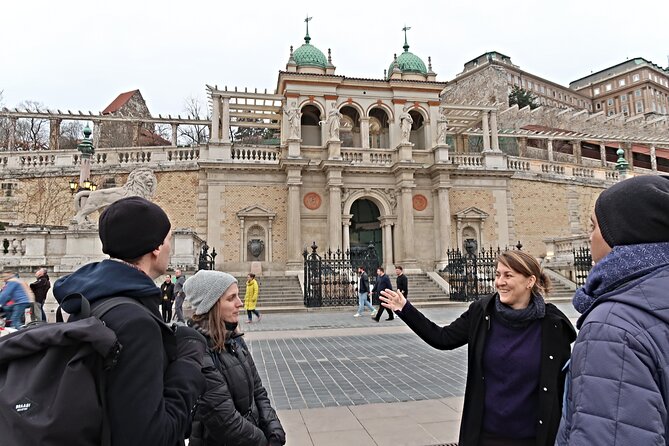
- Historian-style storytelling that connects power, architecture, and everyday geography on Castle Hill
- Private pacing with room to ask questions and linger where you care most
- Matthias Church and Fisherman’s Bastion viewpoints without the usual herd-pressure
- Sandor Palace’s modern role and how the building’s purpose evolved into today’s Hungary
- Ending at Vienna Gate with a quick shift in time toward Roman Aquincum
Why this private Castle Hill walk hits differently
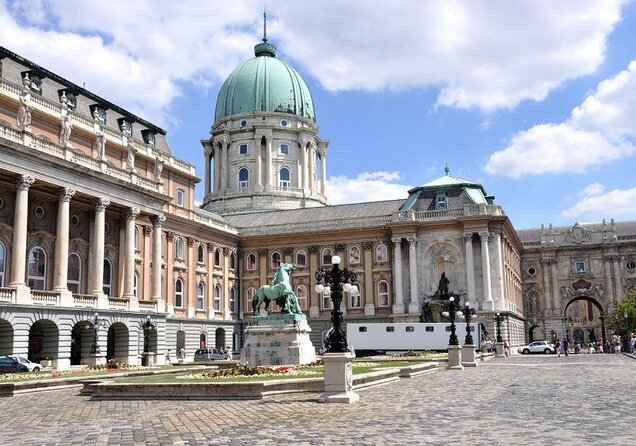
A lot of Budapest tours describe what you see. This one tries to explain why you’re seeing it. That shift matters, because Castle Hill can feel like you’re looking at postcards—until you hear the layers: Mongol devastation, royal Renaissance swagger, Ottoman rule, Habsburg control, war damage, and postwar rebuilding.
That historical back-and-forth is what makes the area click. You start understanding that buildings aren’t just pretty backdrops; they’re the physical record of who held power and what that power needed. Even the street layout starts making sense—tight, cobbled, and meant for a hill settlement rather than a modern stroll.
With a private guide, you also avoid the problem that ruins many city walks: the guide speed. Here, the pace can flex. If you want more time near the church roof details, you can usually slow down. If you’d rather focus on palace history, the guide can steer you there.
You can also read our reviews of more walking tours in Budapest


Price and value: paying for a small-group historian
The price is listed per group (up to 10), for about 3 hours of guiding. That structure can be a great deal if you’re traveling with friends or family, because you’re effectively buying one strong brain for the whole time—not paying separate rates for each person and hoping the group tour doesn’t get cancelled or cut short.
There’s also a smart trade-off: entrance tickets are not included for places like Matthias Church and Fisherman’s Bastion, and the Buda Castle ticket situation is separate. The tour itself gives you the “why this matters” piece, plus exterior views and interpretation. If you want to actually go inside specific interiors, you’ll still need to handle those tickets yourself.
For most people, that’s fine. You’ll get plenty without feeling like the tour is a thin shell waiting for you to pay extra at every stop. Still, if your dream includes long museum time inside the palace areas, plan for more time than the walking window alone.
Getting there: the meeting point you’ll actually find
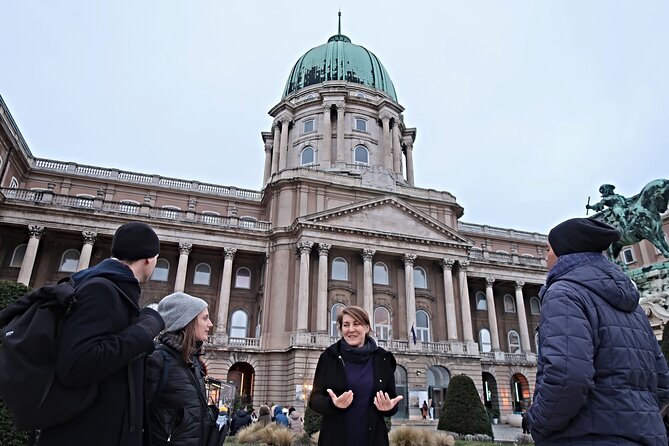
Meet your guide at Országház u. 31, 1014 Budapest near the Castle Hill side. The common default meeting point is a hotel with a café at Bálthazár, about 50 meters from the first bus stop on Castle Hill (at Bécsi kapu tér). If you’ve arranged pickup through the operator, you’ll be collected; otherwise you’ll walk yourself to that spot.
A small timing tip: arrive about 15 minutes early. Castle Hill roads can feel confusing at first, and you’ll want a calm start rather than a sprint.
Stop 1: Buda Castle on Castle Hill’s cobbled, royal stage
You begin on Castle Hill, where two “faces” of the same landscape dominate. One is the massive palace presence at the hill’s southern tip, and the other is the striking color and shape of Matthias Church nearby, with its famous tower silhouette.
This first stretch is where you get oriented. The guide’s job here is to help you see the hill as a whole—narrow lanes, cobbles, and facades that look like they’re from different centuries because they are. Baroque and Gothic details can be right next to each other, and the tour makes that contrast feel logical instead of random.
What I like about this opening is that you’re not just staring at monuments. You’re learning how the hill’s geography set the stage for defense and power. Once you understand that, the palace stops being a single building and becomes a system.
Stop 2: The palace story—rebuilt, burned, and rebranded
Next, you move into the deep narrative of how the palace kept changing hands—and kept changing shape. The guide talks about the cycle you see across European capitals: build, expand, suffer damage, rebuild, and then reshape again for the next era.
The details help a lot. The fortress tradition here goes back to King Béla IV, who erected a fortress around 1250 after the Mongol invasion. Later, King Matthias turned the court into one of Europe’s major centers at the end of the 15th century. Then came Turkish pashas ruling for over 150 years, followed by successive Hapsburg emperors.
You’ll also get a practical takeaway from this part of the tour: why the palace looks the way it does now. The current eclectic appearance is tied to rebuilding after World War II. That means you can look at details and think, oh—this isn’t just style, it’s restoration and survival.
There’s also a built-in discussion element here: the changing function of the building over time. That’s the kind of thing that makes you feel smarter after a tour, not just visually satisfied.
You can also read our reviews of more private tours in Budapest





Stop 3: Sándor Palace and how Hungary’s leadership lives inside history
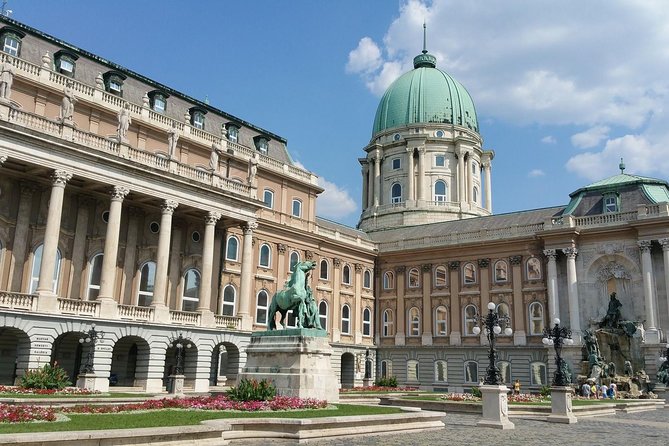
Then the mood shifts. Sándor Palace is the official residence and office seat of the President of Hungary, serving in that role since 2003. The original palace was built in 1806 in a Neoclassical style, commissioned by Count Vincent Sándor, described as an aristocrat and philosopher in the Austro-Hungarian Empire.
This is a great stop if you like the overlap between old-world architecture and modern governance. You’re not only looking back; you’re seeing how historical buildings keep getting reused when the country’s needs change.
One reason this stop works: it reminds you that “heritage” is not trapped behind ropes. It can still function. Even when you’re just looking from outside, you feel the continuity.
Stop 4: Matthias Church—roof details and a 19th-century reconstruction fantasy
Matthias Church is the tour’s visual magnet. From the outside, the roof decoration is the star: vivid patterns and ornate work that make your brain want to zoom in. Inside, it’s noted for an impressive interior too, and the guide’s commentary helps you understand the style logic.
The church today is described as a Neo-Gothic reconstruction from the end of the 19th century, and it’s specifically framed as a beautifully executed fantasy of Gothic form rather than a random pastiche. That matters, because if you arrive thinking it’s purely medieval, you miss the real story: people in later eras wanted this style and built it to feel like a glorious past.
The ticket reality: entrance to Matthias Church is not included, so you’ll likely need to decide on the spot whether you want the interior experience enough to pay separately. If you’re someone who always wants the inside view, factor that time and ticket cost into your plan.
Stop 5: Fisherman’s Bastion—seven towers, serious views, and a planned delay
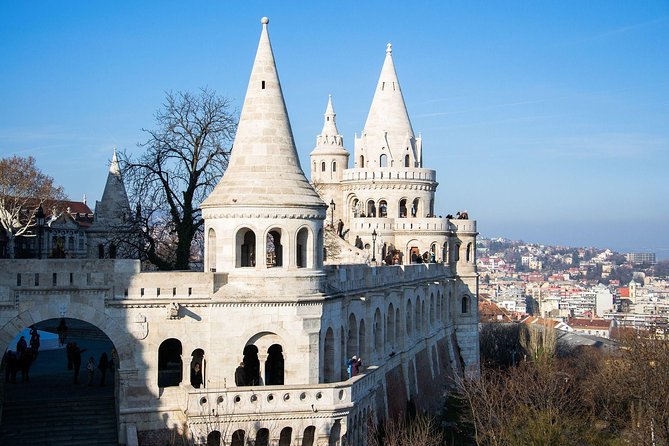
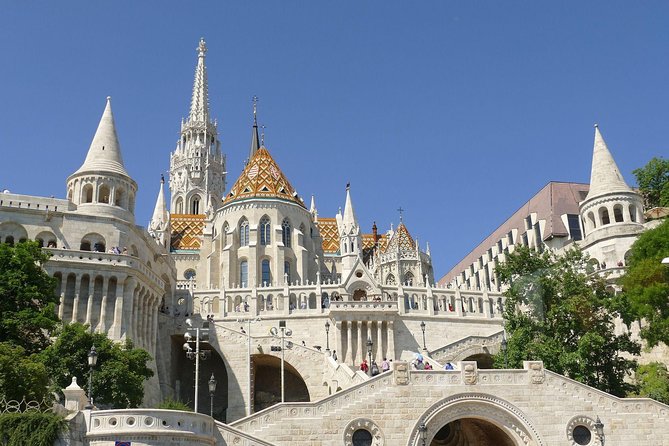
Next is Fisherman’s Bastion, an architectural fantasy built between 1895 and 1902 in neo-Gothic and neo-Romanesque styles. The most memorable detail here is symbolic: the seven towers represent the seven Magyar tribes that settled in the Carpathian Basin at the end of the 9th century.
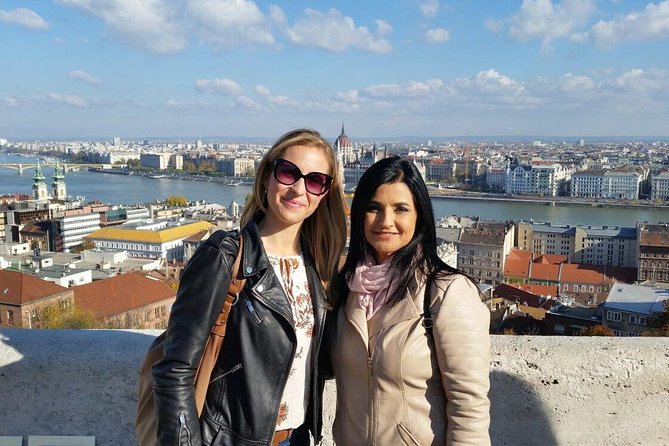
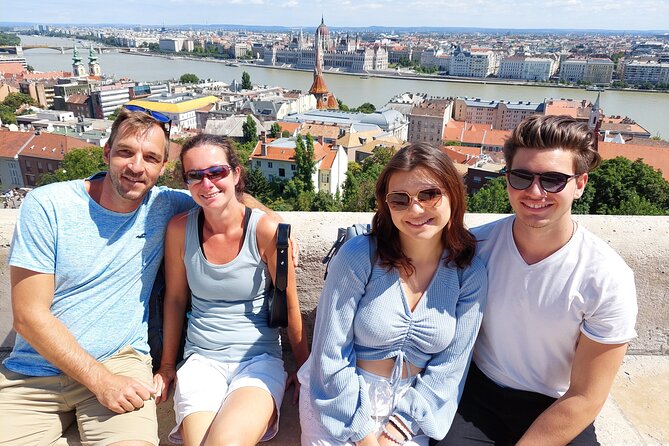
And yes, it’s a classic photo spot. But the value of the tour is that it doesn’t treat it like scenery. You learn what the forms are “saying,” then you get the payoff: from the terrace you get a panoramic view over the Danube, Margaret Island, Pest, and toward Gellért Hill.
The ticket piece is the same situation: Fisherman’s Bastion tickets are not included. For many people, that’s not a dealbreaker, because you might still appreciate the area’s viewpoint approach even if you choose not to pay for specific access options. If you’re strict about interiors and paid viewpoints, plan ahead and budget accordingly.
Stop 6: Vienna Gate—your final view with a Roman punchline
The walk closes at Vienna Gate, where the landscape gives you a neat ending frame. From here you can see toward Obuda (Old Buda), the area where the Romans founded the city called Aquincum.
This last stop is more than a sight. It’s a time reset. You go from medieval and early modern politics to Roman beginnings in one glance. It’s the kind of ending that keeps the whole tour from feeling stuck in one era.
If you like tours that leave you with a mental map instead of a pile of dates, this ending does the job.
Private guide notes: when the storytelling lands
Small details from guide quality matter here, and the feedback I’ve seen points to guides who do more than recite facts. Names that come up include Kata and Julia—both praised for making the history feel real and historically relevant, with lots of context and subtle details.
That kind of guide makes a difference on Castle Hill, because many buildings look like they’re competing for attention. A good guide helps you choose what to focus on so you leave with a story you can repeat.
What to wear and how to pace yourself on the hill
Castle Hill is not a flat, easy promenade. Expect narrow, cobbled streets and some uneven walking. This is a place where you’ll enjoy the tour more if you wear shoes with real traction and you’re okay with a steady walking pace.
Also plan for weather. If it’s hot, you’ll feel it on open terrace areas like Fisherman’s Bastion. If it’s windy, it can cut the comfort of the views. Either way, bring water if you don’t want to think about it during the walk.
If you have limited stamina, the private format can help you manage pacing, but it still won’t turn cobbles into pavement. This is still a walking tour.
Tickets strategy: how to avoid disappointment
The main thing to understand is this: the tour focuses on guiding and commentary through the sights, but tickets for Buda Castle, Matthias Church, and Fisherman’s Bastion are not included.
So if your expectation is that you’ll be walking through palace interiors as part of the base price, you may feel shortchanged. If your expectation is that you want the history, the viewpoints, and the meaning behind the architecture—and you’re fine paying entrance fees separately when you want them—you’ll likely find it a clean setup.
A simple way to approach it: decide in advance which interiors actually matter to you. If Matthias Church interior and Fisherman’s Bastion access are your priorities, budget for those. If not, you can still get a lot from the exterior-focused story.
Morning vs afternoon: picking the best light
You can choose a morning or afternoon departure. My practical advice is to match the light to your priorities.
- If you’re a photo person and want softer light for facades and views, mornings often feel easier.
- Afternoons can work if you prefer a slower start to the day, and if you’re pairing the tour with other Castle Hill wandering afterward.
Either way, expect you’ll be taking in terraces and viewpoints, so you’ll want weather-friendly layers and a phone with enough battery for the Danube panorama finale.
Who should book this tour
This is a good fit if you want:
- A private historian guide and a more human pace than big group tours
- A deep narrative linking royal power, Ottoman rule, and modern Hungary
- A Castle Hill walk that explains architecture instead of just pointing at it
- Top view stops at Matthias Church and Fisherman’s Bastion without feeling like a photo factory
It might not be the best match if:
- You want a long, ticket-heavy museum day inside palace rooms as the core experience
- You hate hill walking and uneven cobblestones
- You expect all major sites to be included with your ticket price
Should you book this Buda Castle Private Walking Tour?
I think it’s worth booking if you’re the type of traveler who likes to understand what you’re looking at. Castle Hill is too layered to enjoy only as scenery. With a historian guide and the freedom of a private format, you’ll leave with a clear sense of how power changed the city—and how the buildings still carry that story.
If you do book, set yourself up for success: wear good shoes, plan for separate ticket choices at Matthias Church and Fisherman’s Bastion, and arrive early enough to start calm. Also, if you care about the story staying focused on your interests, this is exactly the kind of tour where your questions will shape the walk.
FAQ
FAQ
How long is the Buda Castle private walking tour?
It runs for about 3 hours.
Is this tour private?
Yes. It’s a private walking tour with a professional guide.
What language is the tour offered in?
The tour is offered in English.
Are admission tickets included?
No. Buda Castle, Matthias Church, and Fisherman’s Bastion tickets are listed as not included. Some views and areas are available without tickets.
Where do we meet the guide?
The default meeting point is Bálthazár, a hotel with a café at Országház u. 31, 1014 Budapest.
Is pickup available?
Pickup is offered if you arrange it.
How big is the group?
The booking is limited to a small group. The maximum stated is 8 people per booking, and the activity may have up to 10 travelers.
When should I book?
This experience is often booked around 12 days in advance on average.
Is a mobile ticket used?
Yes, the tour includes a mobile ticket.