REVIEW · BUDAPEST
A Journey through Jewish Budapest – Walking Tour
Book on GetYourGuide →Operated by insightcities.com · Bookable on GetYourGuide
One neighborhood change the way you see a city. This 3-hour Jewish Budapest walk connects pre-WWII Jewish life, big synagogue architecture, and the hard reality remembered at the Shoes on the Danube memorial. I love the way the tour uses major sites like Dohány Synagogue and Kazinczy Street to show how Jewish communities differed in practice and style, and I love that you end with time to reflect instead of rushing past the memorial. One thing to consider: the tour includes an extra Dohány Synagogue ticket fee and you must plan for the shoulders-and-knees dress code.
The guides are academic types—professors, doctoral students, historians, journalists, art critics, and published authors—so you get story plus specifics, not just vibes. And since the group is often private or small, you’ll have a better shot at asking questions and getting real answers.
In This Review
- Key takeaways before you go
- What this 3-hour Jewish Budapest tour really covers
- Starting at Kamara Café and getting your bearings
- Herzl’s birthplace stop: modern Zionism in a Budapest setting
- Entering Dohány Street Synagogue: Moorish Revival and the Hero’s Temple
- From the Ghetto Wall Memorial (2014) to Jewish ritual life
- Rumbach Street Synagogue facade and the Status Quo Ante stream
- Shoes on the Danube: memory you can’t speed past
- Price and value: what $123 buys (and what to budget extra)
- The pacing and group style that make it work
- Who this tour is best for
- Who should think twice (or come prepared)
- Should you book this Jewish Budapest walking tour?
- FAQ
- How long is the tour?
- What is included in the price?
- Is the Dohány Synagogue ticket included?
- What is the meeting point?
- What language is the tour in?
- Are private or small groups available?
- Is there free cancellation?
- Can I reserve and pay later?
- What should I wear for the Dohány Synagogue visit?
Key takeaways before you go
- Historian-led, English-speaking guide: think classroom clarity, but on the sidewalk
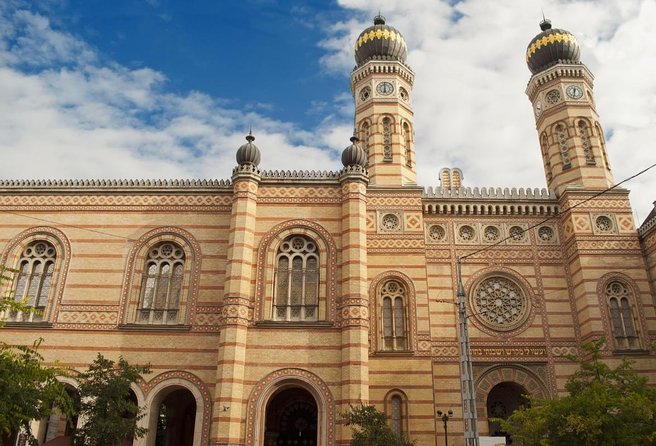
- Dohány Synagogue inside access includes context: Moorish Revival plus on-site museum and memorial spaces
- Ghetto Wall Memorial and the Mikve stop: you see how daily Jewish religious life sat next to danger
- Status Quo Ante thread: you’ll understand why some congregations followed different rules and leadership
- Shoes on the Danube ending: a slow, respectful stop for Holocaust remembrance
What this 3-hour Jewish Budapest tour really covers
This isn’t a quick “look at a building” walk. It’s a guided story of Jewish Budapest before WWII, when roughly a quarter of the city’s population was Jewish, and Jewish life was anything but one-size-fits-all. You’ll move through places tied to Zionism, major religious institutions, orthodox communities, and the shadow that fell over all of it.
I like how the tour treats architecture as evidence. Dohány Synagogue isn’t just pretty. It shows what a strong public Jewish community could build. The smaller orthodox exteriors you pass help you see that religious Judaism had different streams and textures. Then you end at the Shoes memorial, where the facts stop being abstract.
You can also read our reviews of more walking tours in Budapest



Starting at Kamara Café and getting your bearings
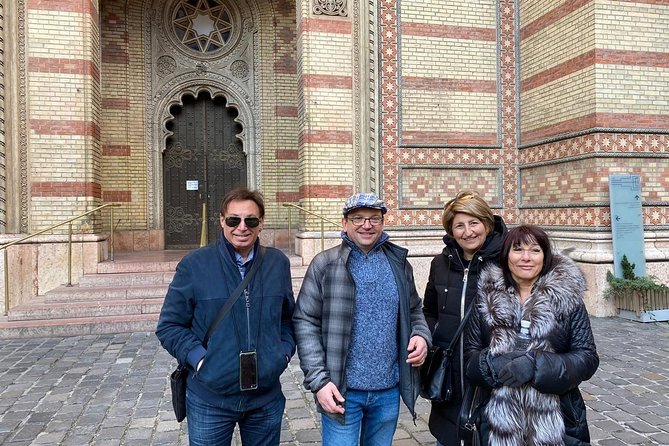
You meet at Kamara Café, Dohany utca 1/A. The location is handy because it puts you in the right neighborhood right away, without a long preamble of “where even are we?” You’ll start with a guided walk through central Jewish sites, and the flow keeps you moving at a comfortable walking pace for a three-hour slot.
If you’re the kind of traveler who likes your history grounded in street-level reality, you’ll appreciate this style. You won’t just hear about what happened. You’ll stand near what remains.
Herzl’s birthplace stop: modern Zionism in a Budapest setting
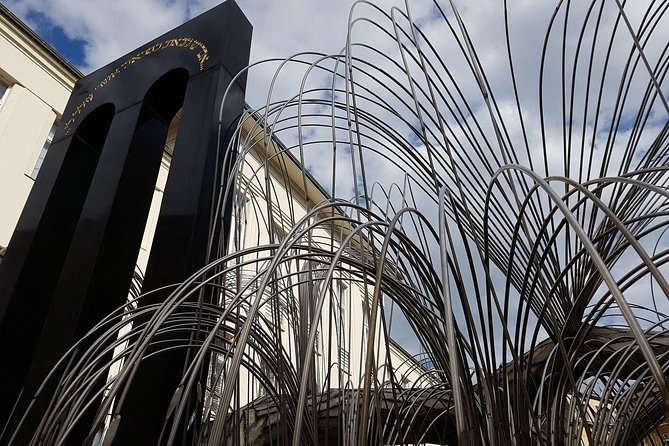
The tour begins at the square where Theodor Herzl, often called the father of modern Zionism, was born. Even if you only know Herzl as a name, this stop gives you a geographic anchor. You’ll connect political ideas with the place they came from, and you’ll see how Budapest fit into larger European Jewish currents before the catastrophe.
This is also a good reset moment. Before you hit the biggest synagogue, you get a reminder that Jewish history in Budapest wasn’t only religious life—it included thought leadership and political dreams too.
Entering Dohány Street Synagogue: Moorish Revival and the Hero’s Temple
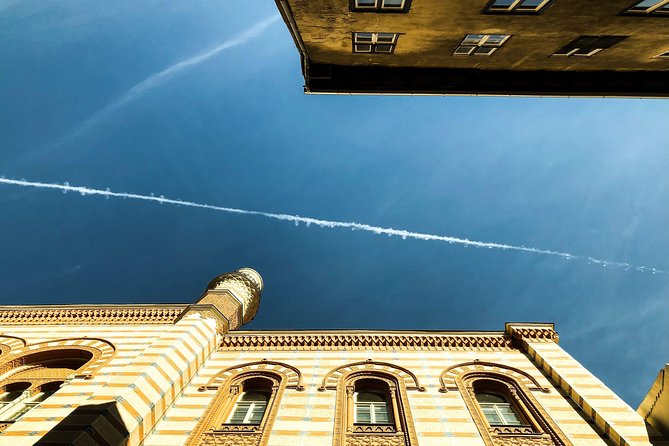
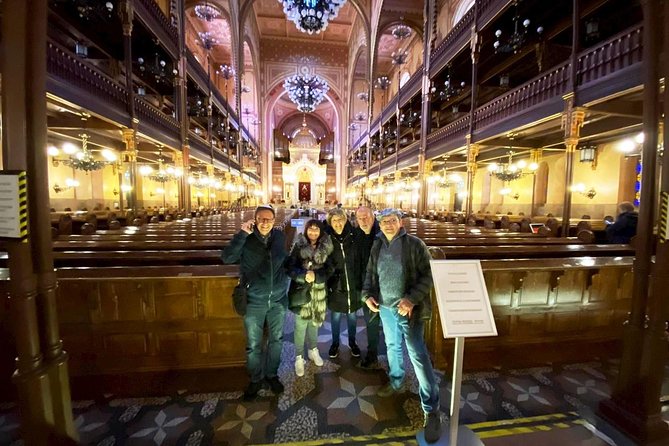
Next up is the Dohány Street Synagogue, and you’ll get guidance that goes beyond “this is large.” The tour includes an assisted visit with a Jewish Studies Scholar, which matters because you’ll understand what you’re seeing instead of guessing.
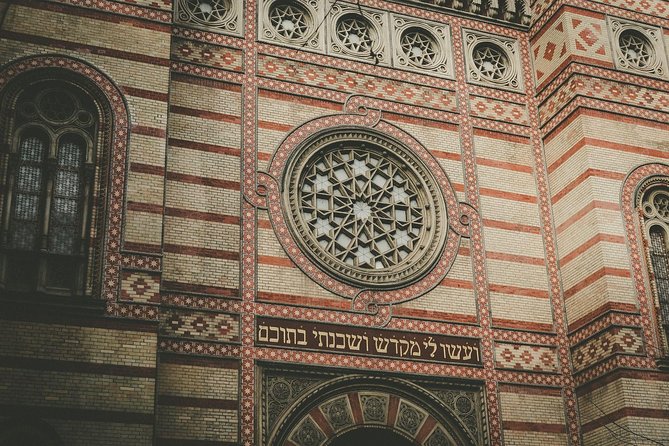
The Dohány Synagogue is famous for its lavish Moorish Revival style. But the most useful part is how the guide explains why grandeur showed up here. In a city where Jewish life was deeply rooted, this building represented public presence and communal strength.
A practical note: Dohány Synagogue tickets are not included. The entry cost is listed as 14500 Ft per individual. Also, visitors are requested to have shoulders and knees covered. Bring something simple you can adjust—this is one of those rules that can turn a great visit into an awkward wait if you’re not ready.
Inside the complex, you’ll also visit or pass through key on-site spaces: the Temple of Heroes, the Jewish Museum, and a Memorial Park. This matters because they keep the story moving. You’re not stuck staring at one room; you’re guided through the way memory and education live in the same place.
From the Ghetto Wall Memorial (2014) to Jewish ritual life
After Dohány, the tour shifts from big public symbolism to tighter, harder edges of history. You’ll walk to the Ghetto Wall Memorial, erected in 2014. The point of this stop is direct: the wall isn’t just a historical detail. It becomes a reminder of confinement and the way persecution turned neighborhoods into cages.
One of the most interesting transitions comes right after that: you’ll pass a Mikve, a Jewish ritual bath. It’s a moment that can be easy to overlook in a normal sightseeing day, but on this tour it does heavy lifting. It shows how religious practice connected to everyday life—before the Nazis erased normal life and replaced it with rules designed to control and destroy.
Then you continue toward the Kazinczy Street area, including exterior views of an Art Nouveau orthodox synagogue. The word exterior matters. You’re not touring every building inside, but you’re learning how the architecture still tells you something about the community behind it.






Rumbach Street Synagogue facade and the Status Quo Ante stream
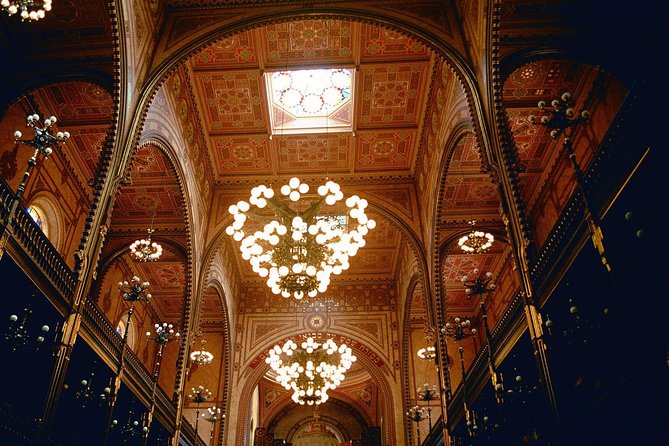
You’ll also see the impressive facade of the Rumbach Street Synagogue. The big idea here is the Status Quo Ante stream of Judaism—part of a broader story about how different communities handled religious authority, governance, and tradition.
This stop works well because it avoids a common trap. Instead of treating Jewish history like one straight line, the tour shows that communities negotiated identity and leadership. From a traveler’s view, it’s a practical lesson: when you see multiple synagogues and styles close to each other, you’re usually looking at different groups with different answers to the same question—how to practice and how to lead.
Shoes on the Danube: memory you can’t speed past
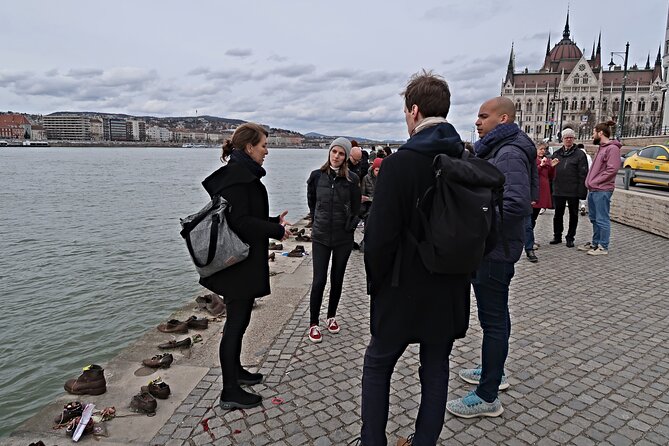
The final stop is one of the most powerful memorials in Budapest: Shoes on the Danube Bank. You’ll spend guided time here, with reflection focused on the Jewish lives lost at this site.
This is the kind of place where the guide’s role becomes more than “inform.” You’ll be encouraged to pause and take in the memorial’s meaning instead of treating it like a photo-op checkpoint. I also like that the tour frames this ending as part of a continuing story, not just a closed chapter. You’ll consider the revitalization of Budapest’s Jewish community today, which keeps the memorial from becoming only an ending.
If you’re sensitive to Holocaust-related content, plan for that going in. This stop is meant to land. It’s not the moment to rush through with headphones blasting.
Price and value: what $123 buys (and what to budget extra)
At $123 per person for a 3-hour walking tour, you’re paying for two big things: time with a historian guide and guided access to multiple meaningful stops across the Jewish quarter.
What makes it feel like good value is the academic caliber of the guide. The tour isn’t just “someone who likes history.” The format explicitly includes scholars and published authors, and the pacing is designed to fit a short, focused block of time. For a city visit, that’s a practical win: you get a coherent storyline without spending hours researching each stop yourself.
Your main extra cost is the Dohány Synagogue ticket (listed as 14500 Ft). Plan that ahead so you don’t hit the one place you need to pay twice for entry. If you’re comparing options, include that fee when you estimate total cost.
The pacing and group style that make it work
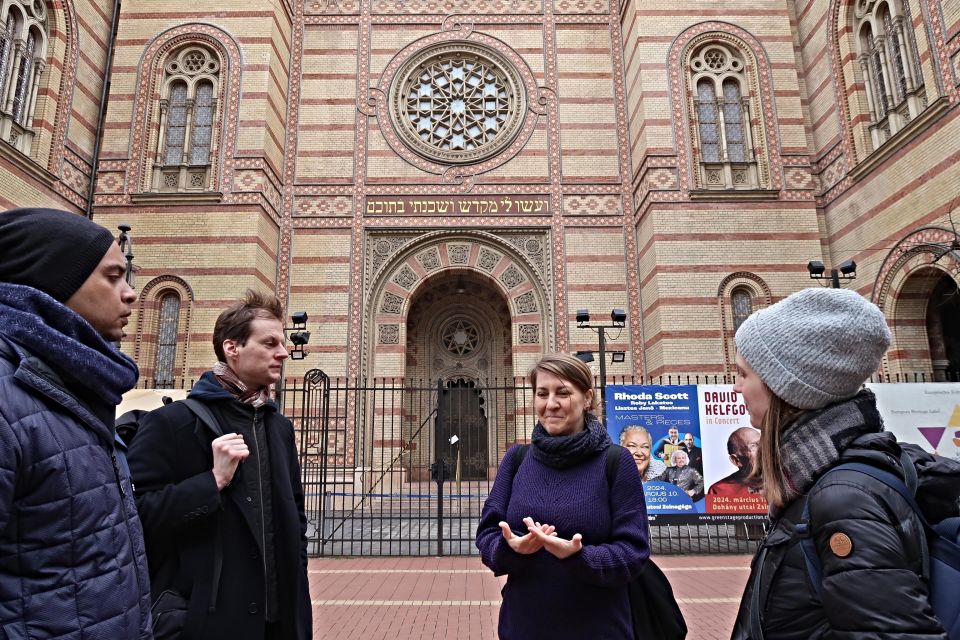
This experience often runs as private or small groups, and that changes everything. In a small group, questions don’t get lost in the crowd, and you don’t feel like you’re speed-walking through serious sites while trying to keep up.
The tour also has a thoughtful rhythm. Guides take you from one place to another, then slow down where the story needs attention—especially at Dohány and at the Danube memorial. You’ll also find that the guide checks in so the group can move at a pace that feels OK.
Who this tour is best for
You’ll likely love this tour if you want history with street context—how ideology, religion, and community life showed up in buildings and neighborhoods. It’s also a good fit if you’re drawn to art and architecture but don’t want architecture separated from what people actually lived.
It’s especially smart for travelers who want more than facts-by-bullet. This route is built around meaning: Herzl ties you to modern Zionism, Dohány ties you to communal presence, the ghetto wall and mikve tie you to what life looked like under pressure, and the Shoes memorial ties you to remembrance with care.
Who should think twice (or come prepared)
Two practical considerations stand out.
First, the Dohány Synagogue dress code request (shoulders and knees covered) can catch people off guard. If you’re visiting in clothing that won’t work, bring a light layer or plan ahead.
Second, you’re walking for three hours. The tour is structured, but you should still be comfortable on your feet and able to handle stops that may require waiting your turn to enter or move through spaces.
Should you book this Jewish Budapest walking tour?
I’d book it if you want a tight, meaningful Jewish history route that covers major landmarks without turning into a rushed museum sprint. The blend of major sites—Dohány Synagogue, the Ghetto Wall Memorial, the Kazinczy Street orthodox area, and the Shoes on the Danube—gives you a full arc from community life to remembrance.
I’d skip or choose a different format if you’re not ready for Holocaust-related memorial content, or if the extra Dohány ticket fee and dress code feel like too much friction for your trip style. Otherwise, this is a strong choice for anyone who wants Budapest to make sense, not just look pretty.
FAQ
How long is the tour?
The tour lasts 3 hours.
What is included in the price?
Included is the 3-hour walking tour with a historian guide.
Is the Dohány Synagogue ticket included?
No. The Dohány Synagogue tickets are not included and are listed as 14500 Ft per individual.
What is the meeting point?
The meeting point is Kamara Café, Dohany utca 1/A.
What language is the tour in?
The tour guide speaks English.
Are private or small groups available?
Yes. The tour offers private or small groups.
Is there free cancellation?
Yes. You can cancel up to 24 hours in advance for a full refund.
Can I reserve and pay later?
Yes. You can reserve now & pay later.
What should I wear for the Dohány Synagogue visit?
You’re requested to have shoulders and knees covered when visiting the Dohány Synagogue.