REVIEW · BUDAPEST
7 Days Balkan tour to historic Croatia and Bosnia Herzegovina
Book on Viator →Operated by goEUgo International Limited · Bookable on Viator
A Balkan road trip that stacks wow sites into one week. You’ll get a guided route through Croatia and Bosnia and Herzegovina, with a mix of Gothic city centers, national-park nature, and major history stops. The standout, from what I hear, is the human touch—guide Kenny mixes Mandarin and English storytelling (plus a good sense of humor), so even long drive days feel like they have a point.
Two things I’d bet you’ll like right away: the smart pairing of city highlights with a real nature day at Plitvice Lakes, and the fact that you’re not just handed a map—you get organized time at each location, often with local guides in some cities. One consideration: the days are tightly scheduled with several short stops, so if you prefer unstructured wandering, you’ll want to protect some energy for the free time you can find.
In This Review
- Key Highlights That Make This Tour Work
- A Fast-Filled Route Through Croatia and Bosnia
- Zagreb Cathedral, Jelačić Square, and St. Mark’s in One Morning
- Plitvice Lakes: The 4-Hour Nature Day You’ll Remember
- Zadar’s Sea Organ and Split’s Roman Backbone
- Dubrovnik’s Old Town, Walls, and the Mountain Cable-Car Idea
- Bosnia on the Road: Počitelj, Blagaj, and Mostar
- Sarajevo’s Old Town Stories: Latin Bridge and the Meeting of Cultures Line
- Pécs, the Turkish Ruins, and a Clean Return to Budapest
- Price and What You’re Really Paying For
- Tips to Make a Packed Week Feel Comfortable
- Who This Tour Fits Best (and Who Should Skip It)
- Should You Book This 7-Day Balkan Tour?
- FAQ
- What is the meeting point and start time?
- Where does the tour end?
- How much of the tour is guided and in what language?
- What’s included in the price?
- Are attraction tickets included?
- How much is the gratuity?
- What are the baggage limits?
- Are hotels at least 3-star?
- What travel documents do I need?
Key Highlights That Make This Tour Work
- Kenny’s bilingual guiding (Mandarin and English) keeps the story clear and the group moving
- Plitvice Lakes National Park gets the heavy-hitter time—4 hours in the park
- Dubrovnik is covered with multiple key sights, plus a cable-car option for city views
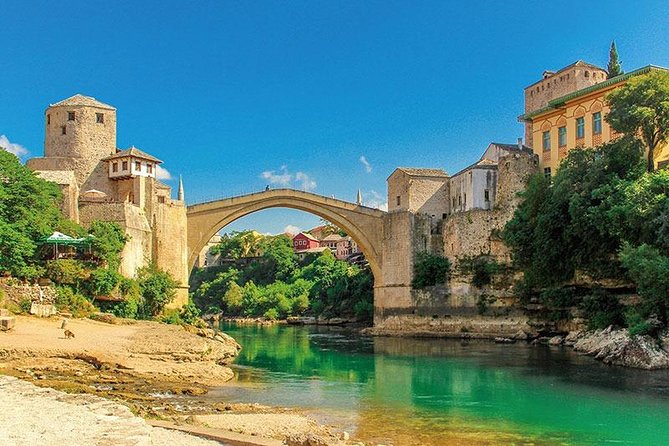
- Bosnia’s Počitelj, Blagaj, and Mostar give you medieval layers, a cliffside monastery, and the bridge-area views
- Sarajevo brings the WWI-era Latin Bridge story and the Meeting of Cultures line into the Old Town route
- Up to 30 people means you get group energy without feeling lost in a massive crowd
A Fast-Filled Route Through Croatia and Bosnia
This isn’t a slow, single-city kind of trip. It’s a one-week “best-of” loop that uses bus days to connect the dots between major stops: Zagreb → Plitvice Lakes → Zadar/Split → Dubrovnik → Počitelj/Blagaj/Mostar → Sarajevo → Pécs → Budapest. If you like seeing a lot, with a guide translating context along the way, this kind of pacing makes sense.
What makes it feel practical is how the route alternates types of experiences. You get historic squares and churches, then you get water-and-walks at Plitvice, then back to coastal cities and fortifications, and finally Sarajevo’s layered modern-and-historic mix. That change of pace matters when you’re traveling with a group.
The main trade-off is time. Most stops are designed as focused viewing blocks—often about an hour, sometimes longer—so you’ll want to decide in advance what you’ll prioritize if something sparks your interest.
You can also read our reviews of more historical tours in Budapest

Zagreb Cathedral, Jelačić Square, and St. Mark’s in One Morning
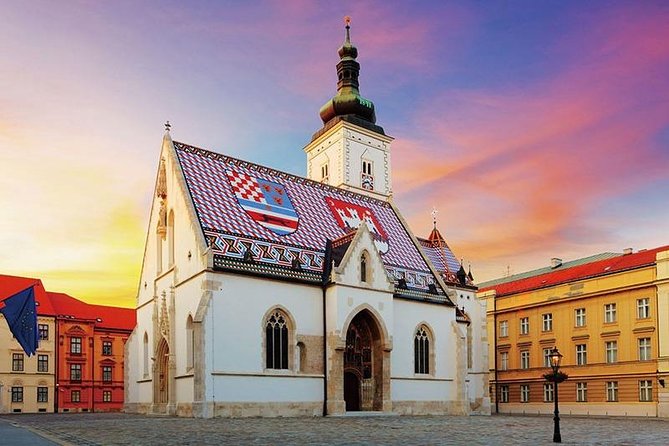
Your first day centers on Zagreb, a city that carries war scars in its story but keeps a lot of its historic architecture standing. You’ll visit three headline anchors: Zagreb Cathedral, Ban Josip Jelačić Square, and St. Mark’s Church. The structure of the morning is perfect for getting your bearings quickly—less time searching, more time looking.
Here’s why this is a good opener: Zagreb is a comfortable “orientation city.” You can see Gothic-style details and fine decorations up close, then immediately connect them to the way the city feels alive today. Add the Mediterranean-style dining and local wines you’re told to expect, and it’s a solid start before the heavier driving begins.
A practical note: the itinerary lists admission as not included for these stops. So if you’re planning on going inside multiple churches, budget for paid entries or be ready to keep some moments exterior-focused.
Plitvice Lakes: The 4-Hour Nature Day You’ll Remember
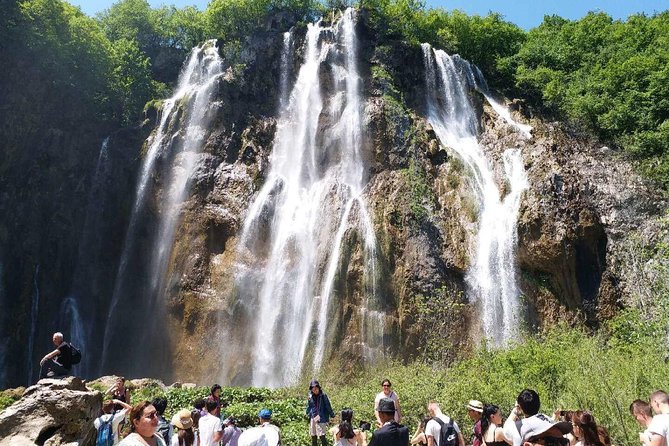
Day 2 is your nature anchor: Plitvice Lakes National Park, often nicknamed the Jiuzhaigou of Europe. You’re scheduled for about 4 hours with a guided visit, which is exactly the right amount of time to feel the place instead of just passing through.
Plitvice is described as 16 lakes linked by waterfalls, walkways, and hiking trails. The core visual is the travertine formations—layers of calcium carbonate barriers that create natural dams—and the water’s special silver tone, reflecting trees and forming tiny crystals. That combination of geology and scenery is what turns this from a walk into an experience you’ll talk about later.
The big value here isn’t only the view. It’s that the tour doesn’t just drop you at a viewpoint. You’re guided through the park’s flow (lakes, waterfalls, trails) so you understand what you’re seeing.
Also good: the itinerary lists admission for Plitvice as free. That’s a genuine money-saver compared to tours where you pay big entrance fees on top of everything else.
Zadar’s Sea Organ and Split’s Roman Backbone
After Plitvice, the trip shifts to coastal history with Zadar and then continues toward Split (even if you’re spending most of the time in sights and short guided blocks). This is a smart pairing: Zadar gives you the medieval-feeling streets, while Split gives you the Roman scale.
In Zadar, the itinerary points to a city with a strong religious atmosphere and narrow streets that feel like you’ve stepped backward. Then near the waterfront you’ll see the Sea Organ (Morske Orgulje) and the Sun Salutation, described as a solar light display. Even if you’re not into “modern art” in a strict sense, these features help explain how the Adriatic coast keeps mixing old and new.
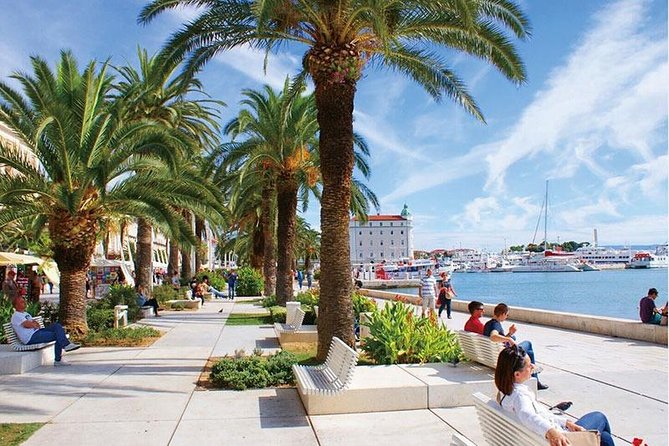
Then you move on to Split highlights: it’s framed as the second-largest city in Croatia, with Roman buildings going back more than 1,700 years. The key anchor here is Diocletian’s Palace, built in the 4th century, plus an included stop for the Peristyle area.
One consideration: not all entries are included. The itinerary marks some stops as free and others as not included, so check what you plan to go inside versus what you can view from outside.
Also watch your pacing. You’re likely to feel “history overload” if you’re hungry for fewer stops and longer hangs. If you enjoy compression—getting the big story and moving on—this day style is a good fit.
Dubrovnik’s Old Town, Walls, and the Mountain Cable-Car Idea
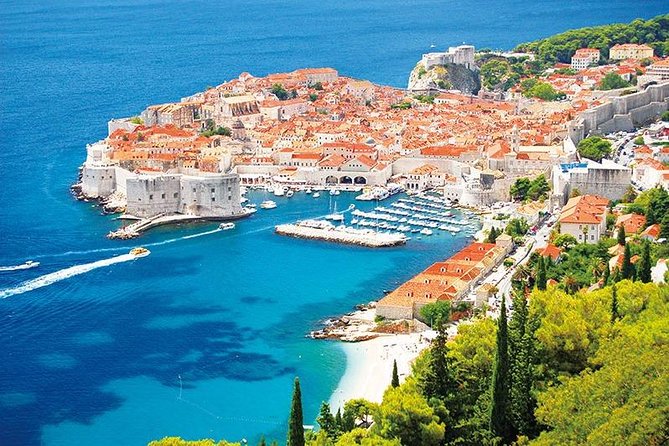
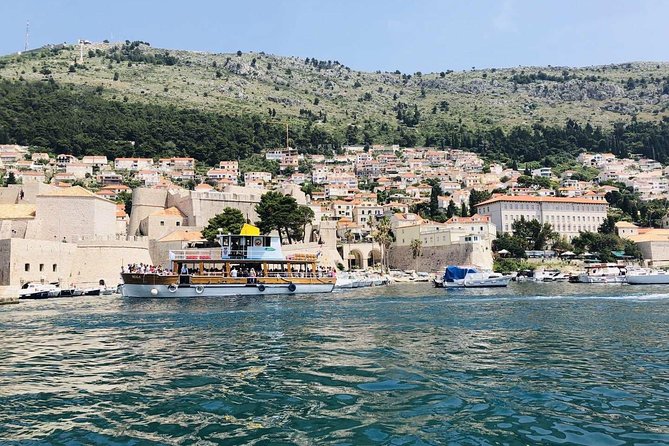
Dubrovnik is the kind of city where you can’t really fake it. Your tour gives you a structured walk through top sights: the old town, city walls, a defensive tower, Rector’s Palace, and the Franciscan Church and Monastery. You’ll also have an option to take a cable car up the mountain for city views.
The itinerary leans into Dubrovnik’s pop-culture pull (Miyazaki’s inspiration and Game of Thrones connections), but the real value is practical: you’re shown the core landmarks that define the city’s identity—fortification and stone beauty. And since Dubrovnik is famous for being photogenic from almost every angle, you’ll likely appreciate the guided selection.
Admission varies across stops. Some are listed as free, while key areas are marked not included. If you’re the type who wants to walk the walls end-to-end, plan for paid tickets.
When Dubrovnik fits you best: if you want a guided “greatest hits” route and you’re okay with a busy schedule in exchange for maximum coverage in one day. If you’d rather settle into cafés and take long scenic walks without a clock, you might find this day feels fast.



Bosnia on the Road: Počitelj, Blagaj, and Mostar
Day 5 is where the itinerary flips from Croatia’s coastal rhythm to Bosnia’s Ottoman-era and medieval layers—starting with Počitelj, then Blagaj, then Mostar.
Počitelj is described as a stepped medieval fortress village included on the World Cultural Heritage List. That matters because it signals that the place is not just scenic—it’s protected for its cultural significance. Your time here is focused, so treat it like a “see it, understand it, remember it” stop.
Then you go to Blagaj and the Dervish Monastery, set into a 200-meter-high cliff and described as surrounded by crystal clear streams. This is the kind of setting that makes a tour bus feel worth it: you arrive, you look, and you instantly get why this region is often photographed.
Next is Mostar, specifically the Old Bridge area. You’re set up to cross the river visually using the magnificent historic arch bridge and to take in scenery on both sides. The itinerary notes that the Old Bridge area’s admission is not included, so don’t assume everything here is free.
Why this day is strong: it doesn’t treat Bosnia as one stop. It gives you three distinct “feels”—fortress village, cliffside monastery, and the river-and-bridge heart of Mostar.
Sarajevo’s Old Town Stories: Latin Bridge and the Meeting of Cultures Line
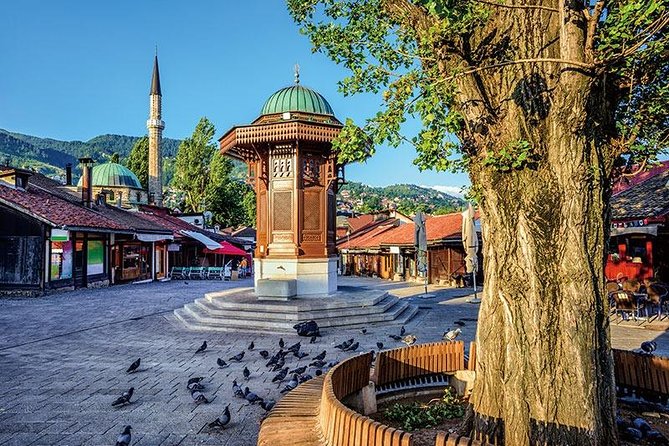
On Day 6, you visit Sarajevo, described as a former gateway to the East with a mix of religions and cultures. It’s framed as having a different European style, and it also references recent recognition from Lonely Planet as a top travel destination.
What you focus on is history you can actually point to. The itinerary highlights the assassination at Latin Bridge, tied to the start of World War I, and it mentions the Sarajevo Meeting of Cultures Line on the ground you’ll find in the Old Town. This is one of those places where a guide’s explanation can change how you look at streets and buildings—you stop seeing them as scenery and start seeing them as evidence.
After the Sarajevo visit, you cross the border into Croatia and stay overnight around Vinkovci (or city nearby), in a min 3-star hotel.
Practical takeaway: Sarajevo is often emotionally heavier than some of the earlier stops, so give yourself permission to slow down on the Old Town sections and absorb the context.
Pécs, the Turkish Ruins, and a Clean Return to Budapest
Your last day brings you back to Hungary with Pécs and then drives you back to Budapest.
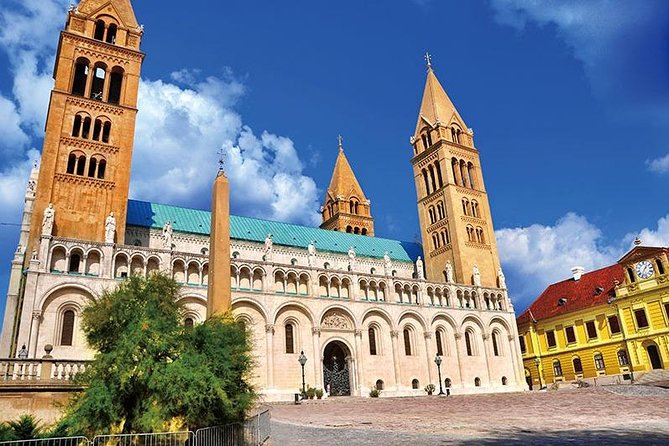
Pécs is described as a city between the Danube and the Drava, with a pleasant climate and long history. You’ll also be guided toward its museum and what the itinerary calls the best Turkish ruins in Hungary, plus cultural references to music, opera, and ballet. The highlight stop is Pécs Cathedral, towering over Szent István Square.
This ending makes sense because it gives you a different flavor than the Croatian and Bosnian cities. It’s not all stone walls and waterfront towers. Instead, it feels like layered Central European city life, with religious architecture and a historical timeline shaped by multiple empires.
At the end, you drive back to Budapest in the afternoon. The tour ends back at the meeting point.
Price and What You’re Really Paying For
This tour costs $1,160.11 per person for about 7 days. On paper, that can sound like a lot for a bus trip—until you look at what’s included: min 3-star hotels with private facilities, daily transportation on modern air-conditioned coaches, an experienced tour manager, and breakfast included for 6 mornings.
When breakfast is listed at 6 for a 7-day tour, it usually means at least one morning will be on your own. So factor in a little extra daily food budget. Also note that admission tickets are mixed: some are marked free, many are marked not included.
The other cost to plan for is gratuities: €10 per person per day, collected in cash by the tour manager. That’s common for group tours, but it’s still real money you should budget so it doesn’t surprise you at the end.
Is the value good? For me, it depends on your travel style:
- If you want guided context and don’t want to piece together logistics across countries, this price is easier to justify.
- If you’d rather travel independently, pick hotels, and pay only the entrances you choose, you might find better value booking city-by-city. But that requires more planning effort.
This tour also has a maximum of 30 travelers, which usually keeps things organized and reduces “lost in the crowd” stress.
Tips to Make a Packed Week Feel Comfortable
1) Pack for long days and quick windows. Many stops are hour-style visits. If you tend to linger, set mental priorities so you don’t miss the important views.
2) Bring cash for gratuities. The €10/day is collected in cash, and you’ll want to be ready.
3) Expect that some entries cost extra. The itinerary labels some attractions as not included, and Dubrovnik/Mostar-style places often need tickets if you want the full experience.
4) Use the guide for context. This is where you get your money’s worth—Kenny’s storytelling and humor help you understand why each place mattered historically and culturally.
5) Follow the baggage rule. You’re allowed one luggage piece up to 30kg plus one small hand carry on. If you pack light, you’ll feel calmer at every hotel and bus stop.
Who This Tour Fits Best (and Who Should Skip It)
This tour is a strong match if:
- You want a guided highlights route that covers Croatia plus Bosnia in one week.
- You like seeing both big-name cities (Dubrovnik, Sarajevo) and signature natural scenery (Plitvice).
- You’re comfortable moving often and spending some time inside a bus without getting bored.
You might skip it if:
- You prefer slow travel with lots of downtime.
- You want to spend most of your time in museums or only one city without switching lodging areas.
- You’re building a trip around fully independent, timed ticket planning.
Should You Book This 7-Day Balkan Tour?
If you want a practical “first time in the Balkans” week, I’d say yes—especially if you’re drawn to the mix of Plitvice Lakes and the major historic anchors of Zagreb, Dubrovnik, Mostar, and Sarajevo. The big selling point is not just the sights; it’s the way the trip is organized so you get context fast, plus the helpful bilingual guidance that keeps the stories clear even when the group mix is mixed.
Book it if you’re okay with a packed pace and you treat it like a highlights reel with enough structure to be easy. Don’t book it if you’re chasing slow afternoons and long, independent wandering. For a first or “see it all once” trip, though, this route is a strong use of your time.
FAQ
What is the meeting point and start time?
The tour meets at Budapest-Keleti, Budapest, Kerepesi út 2-4, 1087 Hungary, with a start time of 8:30 am.
Where does the tour end?
It ends back at the same meeting point in Budapest-Keleti.
How much of the tour is guided and in what language?
The tour is offered in English. The operator may combine English and Chinese speaking customers on the same bus, with one tour leader who can speak both English and Chinese.
What’s included in the price?
Included are min 3-star hotel accommodation (private facilities), daily transportation on modern air-conditioned coaches, services of an experienced tour manager, and breakfast for 6 mornings.
Are attraction tickets included?
Not always. The itinerary shows some admissions as free and others as not included. Optional activities and tickets for attractions not included in the itinerary are also not included.
How much is the gratuity?
Gratuities are €10 per person per day, collected by the tour manager in cash while on tour.
What are the baggage limits?
You can bring one luggage item up to 30kg and one small hand carry on (like a purse, backpack, or camera bag).
Are hotels at least 3-star?
Yes. Accommodation is listed as comfortable 3-star (minimum) hotels with private facilities.
What travel documents do I need?
You’re responsible for ensuring your passport is valid for at least 6 months and that you meet any visa, health, insurance, and other entry requirements for all countries visited.