Budapest feels big until you walk it with someone who’s done it a thousand times. This private Grand Budapest walking tour gives you a smart first pass at both sides of the river, with Hungarian history tied to the buildings you’re seeing. I especially like how your guide can shape the route around your plans (so you don’t repeat what you already booked), and you get a real “local friend” vibe rather than a script. One consideration: it’s a long day of walking, so bring shoes you trust and keep a moderate fitness level.
You also get a strong mix of headline sights and story behind the stone. Buda Castle District, Heroes’ Square, Parliament, the Great Synagogue, and City Park are all in one day, which is ideal when you want bearings fast. The main drawback is that several stops have admission fees you handle yourself, so your total cost can creep up if you plan to go inside everything.
Private tour means it’s only your group, guided in English, with hotel/hostel pickup available. If you want a smooth overview and you like asking questions, this is a great way to start a Budapest trip.
In This Review
- Key things I’d plan for before you go
- A 7-hour private sweep that gets you oriented fast
- How the Buda Castle District stop actually sets the tone
- Heroes’ Square and St. Stephen’s Basilica: symbols you’ll recognize later
- Parliament and Chain Bridge: when architecture turns political
- Synagogue and Opera House: two different Budapest worlds in one thread
- City Park (Varosliget): your last hour, plus what may cost extra
- Price and value: what $350 per group really buys you
- Who this tour suits best (and who might want a different plan)
- Final verdict: should you book the Grand Budapest walking tour?
- FAQ
- How long is the Grand Budapest walking tour?
- Is this tour private?
- What is the meeting time and where do we start?
- Do you offer hotel pickup?
- Is the tour in English?
- Are admission tickets included?
- Is lunch included?
- Can I cancel and get a full refund?
Key things I’d plan for before you go
- Private group size (up to 6) so you can ask questions and adjust pace
- Flexible route design that can help avoid overlap with your other Budapest activities
- Two-guide setup (a local guide plus a professional guide) for better context
- A well-timed sweep of both Buda and Pest with a Chain Bridge crossing in the middle
- Admission varies by stop, with some ticket-free landmarks and others not included
- Long walk day (about 7 hours), best for travelers with moderate stamina
A 7-hour private sweep that gets you oriented fast
This is a private, English-speaking walking tour, priced per group (up to 6). In a city where trams, hills, and architectural styles can feel like a puzzle, a day like this turns guesswork into clarity. You start at 9:00 am in Budapest, and the tour runs about 7 hours, which is long enough to feel complete but not so long that you’re dragging yourself home.
The “private” part matters more than you might think. When you’re not sharing your guide with strangers, you can slow down at the spot you care about most, or speed through the part you’re less interested in. And guides named Katalin, Susan, Zsuzsanna, and Kate have stood out in how they balance facts with a friendly, question-friendly tone.
The other big value is pairing quick landmarks with context. Instead of just naming places, your guide connects monuments to the eras that shaped Hungary’s politics and identity.
You can also read our reviews of more walking tours in Budapest



How the Buda Castle District stop actually sets the tone
You’ll begin in Buda Castle District with the Royal Palace area, Matthias Church, and Fisherman’s Bastion. This is one of the best ways to start because the views instantly make sense of the city: hills on one side, the river between, and the flatter “Pest” half across the water. You’ll also get the sense that Budapest’s story didn’t grow in a straight line.
This segment is about 2 hours, and admission is listed as free for this stop (as presented). That’s great value if you want the big visual payoff without having to budget for entry fees right away.
Matthias Church is especially useful early on. It’s the kind of place that looks stunning, but it also works as a launch point for understanding shifting power across centuries. And Fisherman’s Bastion gives you that classic postcard angle, but your guide’s historical linking makes it more than just a viewpoint.
A quick practical note: you’re in a historic hill zone, so plan for uneven ground and stairs. If your knees aren’t happy with that, wear supportive shoes and go slow where needed.
Heroes’ Square and St. Stephen’s Basilica: symbols you’ll recognize later
Next you head to Heroes’ Square for about 30 minutes. This square feels like a “national stage,” and it’s a strong place for your guide to explain how Hungary represents itself through art and monuments. Nearby you’ll pass the Fine Arts Museum and the Modern Art Museum, which helps you connect royal or national themes with later cultural identity.
Then it’s St. Stephen’s Basilica (Szent István Bazilika) in St. Stephen’s Square for another 30 minutes. Admission is not included here, so treat this stop as a focused orientation and exterior viewing window unless you decide to pay for interior access on the day. Still, even without going inside, the basilica helps you “read” the city. Your guide can connect why certain religious and political themes show up again and again in Budapest.
If you’re the type who likes to understand what you’re looking at, this is a good segment. If you’re mostly there for photos, you’ll still get iconic moments, but you may find you want a bit more time to savor details.
Parliament and Chain Bridge: when architecture turns political
The walk continues to the Hungarian Parliament Building at Kossuth Square for about 30 minutes. Admission is not included. Even so, this is worth your attention because the building is a statement, not just a pretty facade. Your guide’s job here is to translate the style and positioning into meaning, so you don’t just memorize a landmark name.
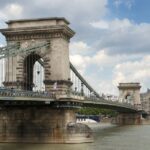
After that, you cross over at Szechenyi Lanchid (Chain Bridge) for about 30 minutes. This stop shows admission ticket free, which is a nice break in cost. The crossing also works as a pacing reset: you move from Pest’s monument-heavy squares toward the Jewish quarter area, while the river gives you that “Budapest is one city” feeling.
The value of this mid-tour placement is timing. By now you’ve seen enough Buda to understand the geography, and you’ve reached a point where Parliament and the bridge help you mentally map the city. It’s a good moment to look back at what you came from.
Synagogue and Opera House: two different Budapest worlds in one thread
Next up is the Dohány Street Synagogue (Great Synagogue) for about 30 minutes. Admission is not included for this stop, so you’ll likely focus on orientation and what you can see from outside unless you choose to add ticketed time. This is still a key stop because it gives Budapest its full picture: the city isn’t only royal and political; it’s also cultural and community-driven.
Then you’ll visit the Hungarian State Opera House (Magyar Állami Operaház) for about 30 minutes, also with admission not included. Your guide can tie opera house grandeur to the social side of history—who had access, what public culture meant, and how art shows up in national identity.
If you love architecture, this is a satisfying pairing because the synagogue and opera represent different voices. If you’re short on energy mid-day, this is also where the private format helps. You can keep moving at a pace that fits your legs, while still getting the context.






City Park (Varosliget): your last hour, plus what may cost extra
The tour ends with Varosliget / City Park for about 1 hour. This is where you’ll see Vajdahunyad Castle and the Széchenyi Baths area. Admission is not included here, which matters because these are the kinds of places where the “optional inside visit” can add real cost and time.
If you don’t plan to go into the baths, you can treat this as a great finishing walk: a big open-air space that contrasts with the dense historic core. If you do want to add time at the Baths, it’s smart to plan how you’ll handle your post-walk logistics so you’re not rushed at the end.
One more practical point: after 7 hours, you’re unlikely to feel like turning into a museum marathon person. So I like using this final stop as a chance to pick one “extra” (either a ticketed site or a longer photo break) rather than trying to do everything.
Price and value: what $350 per group really buys you
At $350 per group (up to 6), you’re not paying for a “see the sights” checklist. You’re paying for a private guide experience with pickup options (hotels, hostels, apartments, AirBnB) and for a tour design that aims to connect landmarks to Hungarian history from kings to Communism.
Admission pricing is mixed. Some areas are listed as free (like the Buda Castle District stop and Chain Bridge), while other major stops have admission tickets not included (Parliament, Basilica, Synagogue, Opera, and City Park highlights). That means your final day cost depends on whether you go inside places or keep it to exteriors.
But here’s the value math I’d use: a private guide helps you avoid time-wasting confusion. In a city as visually dense as Budapest, that saved time can be worth more than the price difference between a budget walking tour and a private one. Plus, the ability to tailor your route around your own schedule is the kind of flexibility you can’t always get with group tours.
Also, lunch is not included, so budget for a meal stop that fits your day. Your guide can usually help you decide when to eat so you’re not too full right before hill walking, but the tour itself doesn’t provide lunch.
Who this tour suits best (and who might want a different plan)
This tour is a good fit if you:
- want a first-time Budapest overview that ties stories to sights
- like history, but also want it explained in a human way
- prefer a private format where your questions don’t compete with other groups
- might have other booked activities (like a river cruise) and want to avoid overlap
It’s less ideal if you:
- get sore easily with uneven sidewalks, hills, and stairs
- prefer a very museum-focused day with lots of ticketed interior time
- want every stop to be an entry without extra cost (because admission is not included for several key buildings)
The moderate physical fitness note matters. This tour can still be enjoyable at a slower pace, but it’s built as a walking day, not a sit-and-glance day.
Final verdict: should you book the Grand Budapest walking tour?
If you’re planning a tight Budapest schedule and you want to get your bearings fast while learning what makes the city tick, I’d book this. The best reason is the combo of a private group, a guide who can shape the route, and an itinerary that balances iconic landmarks with historical context.
I’d especially choose it if you already have a Danube cruise or other timed activities and you want your Budapest sightseeing to fit around them. The flexible tailoring shown by guides like Katalin and Susan is exactly what helps a first trip feel organized instead of chaotic.
If you want to see a long list of places and you’re okay paying some admissions on the spot, you’ll get a lot out of this. If you want the day to be mostly free-entry exterior viewing, just know that some of the most famous buildings here are marked as not included for tickets.
FAQ
How long is the Grand Budapest walking tour?
The tour runs about 7 hours.
Is this tour private?
Yes. It’s a private tour/activity, and only your group participates, up to 6 people.
What is the meeting time and where do we start?
The start time is 9:00 am, and the tour starts in Budapest, Hungary. Pickup is offered, and it ends back in Budapest.
Do you offer hotel pickup?
Yes. Pickup is offered from hotels, hostels, apartments, and AirBnB.
Is the tour in English?
Yes, it’s offered in English.
Are admission tickets included?
Some stops are listed as admission free (like the Buda Castle District stop and Chain Bridge), but many other stops are listed as admission tickets not included.
Is lunch included?
No, lunch is not included.
Can I cancel and get a full refund?
Yes. You can cancel up to 24 hours in advance for a full refund.