REVIEW · BUDAPEST
Walking Tour Budapest incl. the Shoes on the Danube Bank
Book on Viator →Operated by Luna Tours Budapest · Bookable on Viator
Budapest can feel big and confusing, but this walk keeps it simple. In just about 2 hours, you cover the core landmarks with a guide leading the way and sharing stories as you go. You’ll also get built-in photo moments that work even if you’re short on time.
I love two things most: first, the no-map route. Second, the way the guide turns quick stops into memorable context, from the Danube memorial to street-level details in central Pest.
One consideration: it’s a short, fast-paced highlights tour. If you want deep time in buildings (or a more detailed, specialist take on the Holocaust memorial), you may feel slightly rushed.
In This Review
- Key things I’d plan around
- Why this 2-hour Budapest highlights walk works so well
- Meeting point and the pace you should expect
- Stop 1: Szent István Bazilika in 15 minutes
- Stop 2: Shoes on the Danube Bank memorial and what to look for
- Stop 3: Hungarian Parliament Building without admission
- Stop 4: Liberty Statue on Gellért Hill for the best quick panorama
- Stop 5: Vörösmarty Square (Vorosmarty ter) and seasonal atmosphere
- Stop 6: Váci Street, a fashion-forward central stroll
- Stop 7: Little Princess Statue and a Budapest legend for your camera roll
- Stop 8: Gresham Palace and the Four Seasons connection
- Stop 9: Hungarian Academy of Sciences and language-survival moments
- Stop 10: Széchenyi Lánchíd (Chain Bridge) and why it matters
- Stop 11: Erzsébet ter, Budapest Eye, and Andrássy Avenue’s starting point
- Price and value: what $3.63 buys you in real time
- The guides: where the experience really shines
- When you might want to plan around the drawbacks
- Who this tour fits best (and who should skip it)
- Should you book this Budapest walking tour?
Key things I’d plan around

- A compact loop of major sights that works well on a first morning
- The Danube bank Shoes memorial with a focused, briefing-style stop
- Gellért Hill and the Liberty Statue panorama built into the route
- Iconic Pest streets and squares like Vörösmarty Square and Váci Street
- Photo-friendly culture hits such as the Little Princess Statue
- Guide energy matters, and this tour often runs with guides like Klaudia, Claudia, and Juan
Why this 2-hour Budapest highlights walk works so well
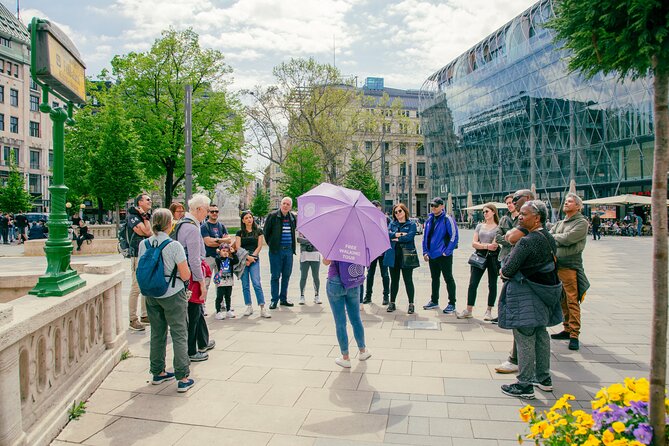
If you only have a day or two in Budapest, trying to DIY your route can turn into a time-sink. This tour is built for orientation: you walk, you look up, you learn why each spot matters, and you move on while the city is still new in your head.
The format is straightforward. A guide leads you through central landmarks, and the commentary gives you the missing pieces most people don’t know to look for. It’s an easy way to get your bearings fast and start planning your next days with more confidence.
You can also read our reviews of more walking tours in Budapest



Meeting point and the pace you should expect
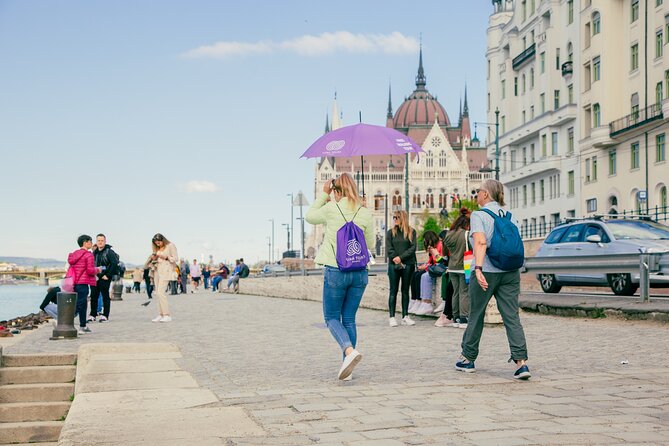
You start at Bajcsy-Zsilinszky út 16, 1051 Hungary, with a 11:00 am start. The walk ends at the Hungarian Parliament Visitor Centre, Kossuth Lajos tér 1, 1055 Hungary. Plan to arrive a few minutes early, because the whole experience depends on staying on schedule.
This is a walking tour with frequent short stops. Expect sidewalks, crowds near big attractions, and at least some uphill effort when you reach Gellért Hill for the Liberty Statue. Wear shoes that won’t punish you after 2 hours, especially in summer heat or winter cold.
What I’d bring:
- Water, even if coffee isn’t included
- A hat and sunscreen in warm months
- A light layer if it’s chilly, because weather can change how comfortable the walk feels
Stop 1: Szent István Bazilika in 15 minutes

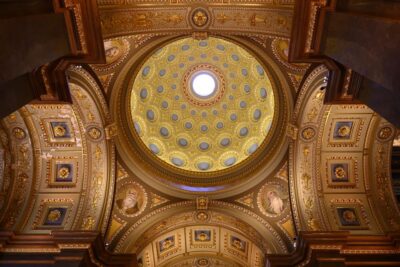
You begin at Szent István Bazilika, the largest Roman Catholic church in Budapest. With about 15 minutes, this stop is mainly about quick orientation: what the basilica is, why it’s central to Budapest’s identity, and what to notice visually before you move on.
Because admission isn’t included here, don’t count on long time inside. Still, the exterior and the immediate area give you a strong “this is the city center” feeling. If you want a deeper visit, you’ll have to schedule separate church time later.
The upside of a short stop is momentum. You see enough to recognize it later when you’re walking around on your own, and you avoid the trap of spending too much time too early.
Stop 2: Shoes on the Danube Bank memorial and what to look for
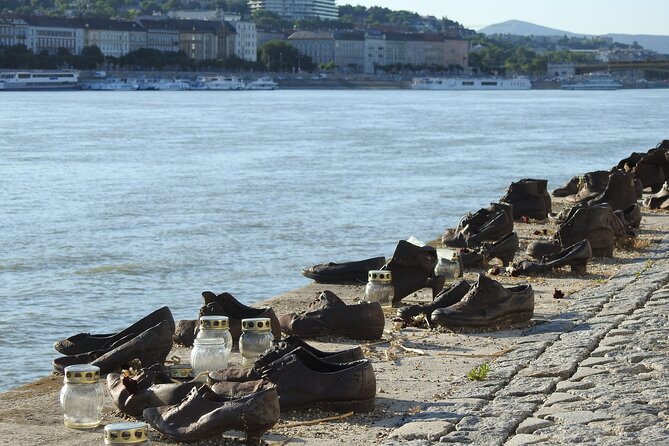
Then you reach the Shoes on the Danube Bank memorial. The core detail: it features 60 pairs of shoes, erected in 2005. This is a Holocaust memorial on the riverbank, and it’s one of those places where the meaning hits instantly.
The tour keeps this to around 10 minutes, so you’ll get a guided framing rather than a long, emotionally layered deep dive. That can be good if you want a quick but respectful introduction. It can also be tough if you were hoping for more context, more nuance, or a slower pace.
Practical tip: take a moment before taking photos. The spot is designed for reflection, not a backdrop for a casual selfie sprint. If you’re sensitive to Holocaust-related material, consider whether this “highlights overview” length fits what you need today. Some people prefer a specialist visit with more time.
Stop 3: Hungarian Parliament Building without admission
Next comes the Hungarian Parliament Building, where you’ll have about 15 minutes. Admission isn’t included, so this stop is about seeing the building and understanding its place in Hungary’s story rather than touring inside.
Even from outside, the Parliament’s scale is the point. You’re seeing a symbol of national life that’s both political and architectural. If you later book a full Parliament tour, this stop becomes your reference anchor: you’ll know what you’re looking at.
One small drawback: Parliament-area crowds can slow down movement. The guide’s job is keeping you moving and keeping everyone informed, which is where guide quality really matters.






Stop 4: Liberty Statue on Gellért Hill for the best quick panorama
After Parliament, the route climbs toward Gellért Hill for the Liberty Statue. You get about 10 minutes, with a built-in emphasis on the panorama over Gellért Hill and Castle Hill.
This is one of the smartest “short stop” choices in Budapest. In a limited time window, you get the big-picture view that helps the city finally make spatial sense. When you later stand in Castle area or look toward the hills from down by the river, it feels like you’ve already mapped it in your head.
Because this is a hilltop moment, weather matters. Wind can be strong and temperatures can feel different than down in the city streets. Dress for that, especially if you’re going outside the warmer months.
Stop 5: Vörösmarty Square (Vorosmarty ter) and seasonal atmosphere
At Vörösmarty Square, you’ll have around 10 minutes. This is one of Budapest’s most iconic inner-city squares. It’s also where Christmas and Easter markets take place, so the atmosphere can shift a lot depending on the season.
Even if you’re not traveling during a market, this square gives you something the earlier stops didn’t: everyday city energy. It’s a place to reset, look around, and understand how locals move between monuments and daily life.
If you’re thinking about shopping or snacks later, this stop is useful. You’ll get a sense of where the foot-traffic funnels and which nearby streets feel easy to return to.
Stop 6: Váci Street, a fashion-forward central stroll
Then it’s Váci Street, known as a fashion street in Budapest. You’ll spend about 10 minutes here.
This part is more about street texture than big-ticket sights. It’s a classic central corridor where you can quickly orient yourself for later wandering. If you like people-watching and storefront browsing, you’ll enjoy this stretch because it keeps your feet moving while you still get local context.
Don’t expect long “shopping time” from this stop. It’s a corridor moment, not a shopping session.
Stop 7: Little Princess Statue and a Budapest legend for your camera roll
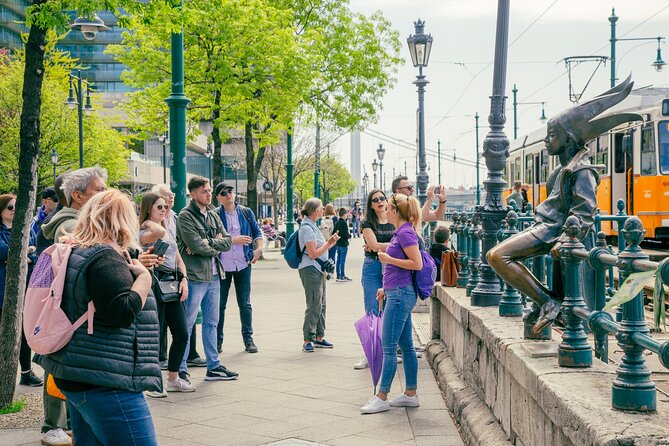
Next is the Little Princess Statue. The tour frames it as the first non-communist statue of Budapest, and it also comes with a legend that she brings good luck.
You get about 10 minutes. This is one of those stops where the short timing works because the statue is meant to be discovered, photographed, and then filed away in your memory as a “Budapest detail” instead of just another landmark.
If you’re taking photos, look for angles that include the surrounding streets rather than only the statue itself. It helps your future self remember where you were in the city, not just what you captured.
Stop 8: Gresham Palace and the Four Seasons connection
You briefly pass Gresham Palace, described as the Four Seasons hotel in Budapest. This stop is short, around 5 minutes, so it won’t feel like a major attraction.
Still, it’s helpful because it shows how Budapest mixes old grandeur with modern luxury. Even if you don’t go inside, this kind of stop teaches you to notice layers: different eras living side by side in the same walking corridor.
It’s also a quick palate cleanser. After memorial and Parliament, it’s nice to shift back to architecture and street rhythm.
Stop 9: Hungarian Academy of Sciences and language-survival moments
At the Hungarian Academy of Sciences, you’ll spend about 10 minutes. The guide uses this stop to share Hungarian language phrases to help you survive, plus mentions Hungarian scientists and inventions.
This is one of those “small but useful” segments. You come away with at least a few practical phrases and a reminder that Budapest isn’t only about landmarks. It’s also about ideas and invention.
The best part here is how it’s tied to a real place. You’re not just learning words in a vacuum; you’re learning them while standing near an institution tied to science and research.
Stop 10: Széchenyi Lánchíd (Chain Bridge) and why it matters
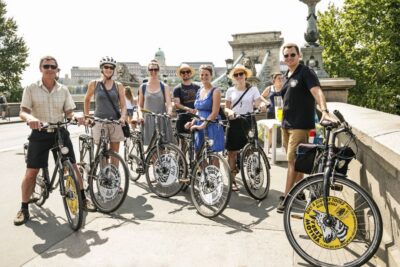
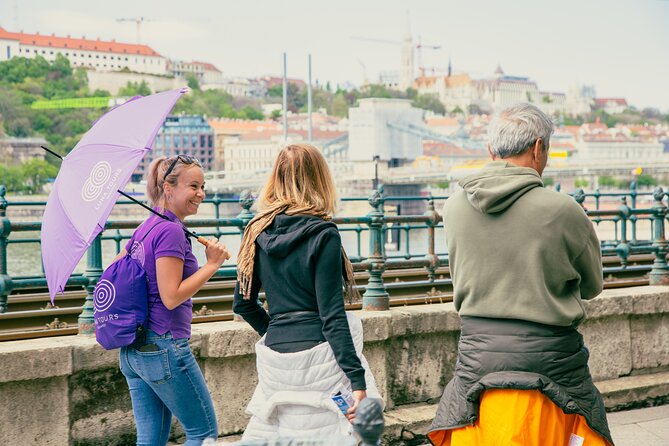
You then cross into the most famous river crossing area: Széchenyi Lánchíd, the Széchenyi Chain Bridge. You’ll have about 10 minutes here.
Even without a bridge walk, the view is powerful. The Chain Bridge is Budapest’s “I’ve arrived” marker, and it’s also a key piece of how the city connects across the Danube.
This stop is excellent for photos. If you’re aiming for shots that show both riverbank life and the bridge shape, the guide’s pacing helps you catch a clear moment without turning the whole tour into a photo session.
Stop 11: Erzsébet ter, Budapest Eye, and Andrássy Avenue’s starting point
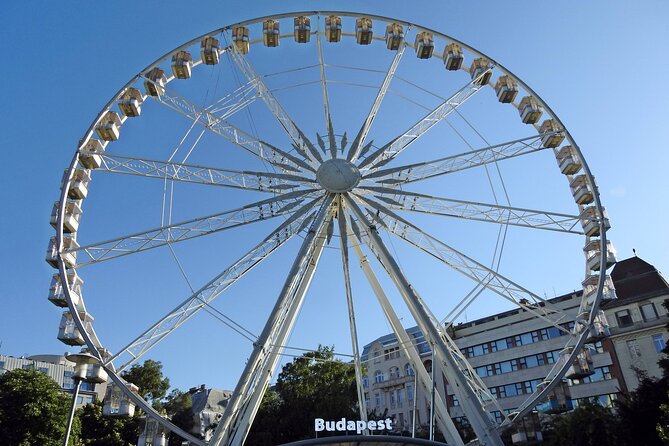
Finally you reach Erzsébet ter, described as a main square in the heart of Budapest. This area connects to the Budapest Eye, and Andrássy Avenue starts here.
You get about 10 minutes, which is enough to take in the “junction” feeling of the city center. It’s the kind of end-stop that makes your next choices easier: you can branch off toward Andrássy Avenue for more grand boulevard walking or plan a closer look at areas you liked most earlier.
It also means the tour naturally ends in a tourist-friendly zone close to transport options and major sights.
Price and value: what $3.63 buys you in real time
At around $3.63 per person, this tour is priced like an entry-level experiment, not a premium sightseeing package. For that money you get a tour guide and a tight 2-hour route that hits multiple top-name landmarks plus smaller “Budapest detail” stops.
The value isn’t just the number of stops. It’s the structure. A guide helps you avoid time-wasting detours, and you get quick context so each landmark clicks into place. Without that, you’d likely spend more time figuring out what to see, what’s worth your attention, and what to skip.
If you’re the type who likes building a mental map early, this price is a bargain. If you prefer slow travel and want museum-style time inside major buildings, you’ll still enjoy the overview, but the short stops might feel like a taste, not a meal.
The guides: where the experience really shines
One of the most praised parts is how the guide tells the story. Names like Sau, Rebecca, Sophie, Juan, and Marc show up in feedback for being friendly, funny, and clear. Claudia and Klaudia also appear for staying organized and keeping the group together even when numbers are larger than you might expect.
That matters because this tour is “many stops, short time.” A guide who can speak up, keep you on route, and give the right amount of detail makes the difference between a smooth highlight walk and a frantic sprint.
If you get an engaging guide, you’ll likely come away with more than photos. You’ll understand why the Danube Shoes memorial is placed where it is, why the Parliament building dominates the river skyline, and why Budapest’s squares feel like social hubs, not just scenic dots.
When you might want to plan around the drawbacks
This is where I’d be honest with you.
First, the tour can feel a bit rushed if you’re hoping for lots of in-depth time at each stop. One person noted feeling rushed and wanted more photo time. Another mentioned that weather and conditions can affect the Danube-bank route, with some stops missed if the Danube area was flooded.
Second, the Danube Shoes memorial is emotionally heavy. A quick guided framing is helpful for many people, but some may want deeper historical accuracy and more detailed context than a highlights route provides. If you’re expecting specialist-level Holocaust history, you might consider adding another visit later with more time.
Finally, meeting up on time matters. There’s feedback about confusion around the meeting address on one day. Your best move is simple: confirm the exact start location in your booking details and arrive early at Bajcsy-Zsilinszky út 16.
Who this tour fits best (and who should skip it)
This tour is a great match if you:
- Are in Budapest for a short time and want a fast overview
- Like learning how places connect to history, politics, and everyday life
- Prefer walking with guidance instead of building a route yourself
- Want photo moments without heavy planning
You might skip (or add extra time elsewhere) if you:
- Want long, ticketed visits inside major sites like the basilica or Parliament
- Need a slower pace with extended time at the Holocaust memorial
- Dislike walking on hills or in extreme weather
Should you book this Budapest walking tour?
I think you should book it if you want an efficient introduction to Budapest that goes beyond postcard sightseeing. The route hits the big names you’ll hear about anyway—Szent István Basilica, Danube Shoes, Parliament, Chain Bridge—and it also adds useful city texture like Váci Street, Vörösmarty Square, and the quirky legend at Little Princess.
If you’re the kind of traveler who values a good guide and wants a smart first-day plan, this one is easy to recommend. Just set expectations: you’re getting a curated highlight walk, not a long museum-style experience.
If you do book, do this for better results: bring comfortable shoes, arrive early at the start point, and be ready to move often. Then use the rest of your stay to return to the spots that grabbed you most.