REVIEW · BUDAPEST
The beginner’s guide to Budapest – Budapest Sightseeing Tour
Book on Viator →Operated by Budapest Urban Walks · Bookable on Viator
Budapest clicks fast on this smart route. This 3.5-hour introduction strings together major sights with public transport tickets included, plus a real local break with coffee and cake. One thing to watch: a few big-ticket interiors are not included, so you may want to budget extra time and money for Vajdahunyad Castle, St. Stephen’s Basilica, and the Hungarian Parliament Building.
I like that this tour stays practical. You meet at the Hungarian State Opera on Andrássy út, you move by tram/metro-style transit (with those included tickets), and you get a handy souvenir map and recommendations to keep exploring after the walk.
The group stays small (up to 15), and the pacing leaves space for questions with guides like Ferenc, László, and Fanni. The only drawback is simple: it’s a “see it, learn it, move on” format, so don’t expect long, slow museum time at every stop.
In This Review
- Key highlights worth your attention
- Meeting at the Opera and moving around with included transport
- Heroes’ Square: Hungary’s national story in stone
- Széchenyi Baths: the biggest medicinal-bath legend, fast and clear
- Vajdahunyad Castle: a quick taste, interior costs extra
- Andrássy Avenue: the World Heritage boulevard you’ll walk through
- Hungarian State Opera House: architecture, not just a photo stop
- St. Stephen’s Basilica and Liberty Square: the meaning behind religious and political monuments
- The Parliament, the Chain Bridge, and Shoes on the Danube Bank
- Coffee, cake, snacks, and the map that keeps paying off
- Price and logistics: what you really get for $94.63
- Who should book, and who might prefer a different pace
- Should you book this Budapest sightseeing tour?
- FAQ
- How long is the Budapest beginner sightseeing tour?
- Is the tour offered in English?
- What’s included in the price?
- Do I need to buy tickets for every stop?
- Where does the tour start, and where does it end?
- How large is the group?
- What is the cancellation policy?
Key highlights worth your attention
- Public transport tickets included so you can focus on the route instead of ticket math
- Coffee and cake plus snacks/tea built into the experience
- A tight greatest-hits walk from Heroes’ Square to the Danube memorials
- Széchenyi Baths context including the thermal spring temperatures (74°C and 77°C)
- World Heritage vibes on Andrássy Avenue with Neo-renaissance façades
- Two Danube-side reminders of history ending at Shoes on the Danube Bank
Meeting at the Opera and moving around with included transport
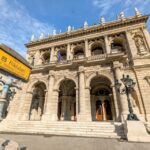
You start at the Hungarian State Opera House on Andrássy út 22. It’s a great launch point because it sits right on the grand boulevard that defines central Budapest, so you immediately get the city’s “big idea” architecture: long lines, proud façades, and streets meant for strolling.
The big practical win is that tickets for public transport are included. That matters because Budapest can feel like it has two tempos: scenic walking and efficient transit. With the ticket sorted, you can keep your legs from turning into jelly every time the schedule calls for a quick ride.
This is also a mobile ticket experience, and you’ll be on a route that’s near public transportation. The tour is designed for all weather, so pack for rain and wind. And since it lists moderate physical fitness, it’s not a marathon, but you should expect steady walking between stops.
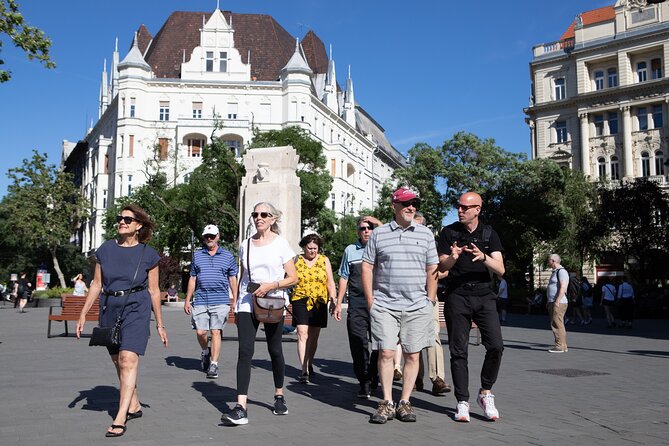
Finally, you’re not stuck in a giant group. With a maximum of 15 travelers, the guide can actually answer questions and adjust pacing. That’s where the reviews shine through: guides like Ferenc and Fanni are known for keeping a good pace while still letting people ask what they actually want to know.
You can also read our reviews of more guided tours in Budapest



Heroes’ Square: Hungary’s national story in stone
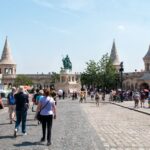
Your first stop is Heroes’ Square (Hősök tere). This is one of Budapest’s signature plazas, and it hits hard visually—especially the statue complex at the center. You’ll see the Seven chieftains of the Magyars plus other important Hungarian national leaders, all framed by a monumental setting that’s made for photographs and for pausing.
There’s also the Memorial Stone of Heroes. One interesting detail to keep in your mental toolbox: it’s often mistakenly referred to as the Tomb of the Unknown Soldier. Knowing that saves you from repeating a common mix-up and helps you read the space like a local.
This stop runs about 20 minutes and is free to enter. You don’t need tickets, and you don’t need to rush. I’d treat this as your orientation moment—get your bearings, then use what you learned here to understand the next layers of the city.
Széchenyi Baths: the biggest medicinal-bath legend, fast and clear
Next comes Széchenyi Medicinal Bath and Pool. Széchenyi is described as the largest medicinal bath in Europe, and the reason it matters is simple: it’s not just a “nice pool” stop. It’s a defining Budapest institution tied to thermal springs.
Here’s the useful science detail you get: the water is supplied by two thermal springs at 74°C (165°F) and 77°C (171°F). That temperature range is exactly the kind of information that turns a postcard image into something you can picture in your head—even if you don’t spend hours soaking.
Your time here is about 15 minutes. Since the admission ticket is marked free, you can focus on seeing the bath area and understanding what makes it special. Just don’t treat it as a full spa session. This is more about context and a quick look, not a long unwind.
Practical tip: if you want to do more than look—like stepping into water—you’ll need to plan accordingly with your own readiness. The tour’s role here is the intro, not a guarantee of extra soaking time.
Vajdahunyad Castle: a quick taste, interior costs extra
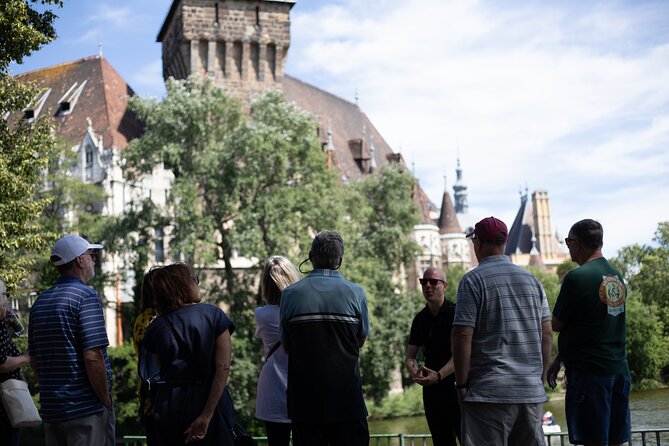
From there you head to City Park for Vajdahunyad Castle (Vajdahunyad vára). You only get about 10 minutes, and the tour notes that admission is not included.
So what can you do with that short window? You can still get a lot. The castle was built in 1896 for the Millennial Exhibition that celebrated 1,000 years of Hungary since the conquest of the Carpathian Basin in 895. That “built for a milestone” detail helps explain why the castle can feel like a collage of styles rather than a single-era fortress.
If you want to go beyond the exterior—into exhibitions or parts of the castle—you’ll need your own ticket and a bit more time than this tour provides. I’d think of this as: see the landmark, decide if you want a deeper stop later, and move on with your day.
Andrássy Avenue: the World Heritage boulevard you’ll walk through
Andrássy Avenue (Andrássy út) is next, and it’s a stop that feels almost like a moving museum. This boulevard dates back to 1872, and it connects Erzsébet Square with Városliget. The tour keeps it to about 10 minutes, but you’ll still get the main point: the façades are a big part of the experience.
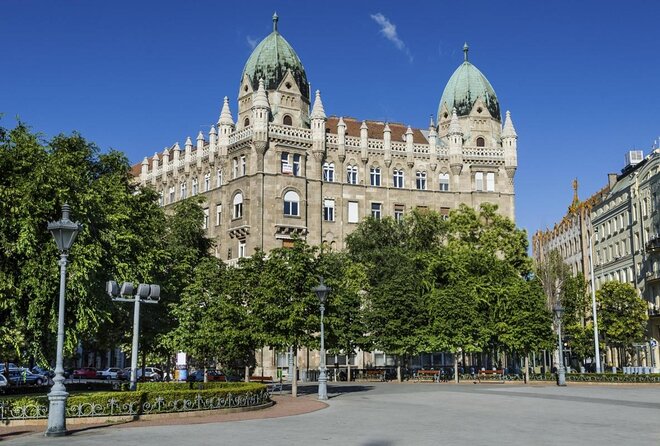
It’s recognized as a World Heritage Site (since 2002). That recognition isn’t just a stamp. It’s why this area looks designed to impress—Neo-renaissance mansions and townhouses, plus the strong “main street” axis that makes Budapest feel grand.
This portion is free to enjoy, so treat it like a slow glance moment. Look up. Notice the symmetry and the ornamentation. Then you’ll be better prepared for the Opera House stop right after.






Hungarian State Opera House: architecture, not just a photo stop
The Hungarian State Opera House (Magyar Állami Operaház) is your next highlight. It’s a neo-Renaissance opera house on Andrássy út, originally known as the Hungarian Royal Opera House. The architect named in the tour info is Miklós Ybl, one of Hungary’s major 19th-century figures.
You get about 10 minutes, with free admission for the tour stop itself. Since you start here too, this can double as a reminder: you’re not rushing past a landmark—you’re using it as a reference point for the whole route.
Even if you’re not an opera person, the building helps you understand Budapest’s cultural ambitions. The style choices are about pride and identity, not just aesthetics. And since the tour begins and passes through this area, your guide can connect the city’s history to what you’re seeing right in front of you.
St. Stephen’s Basilica and Liberty Square: the meaning behind religious and political monuments
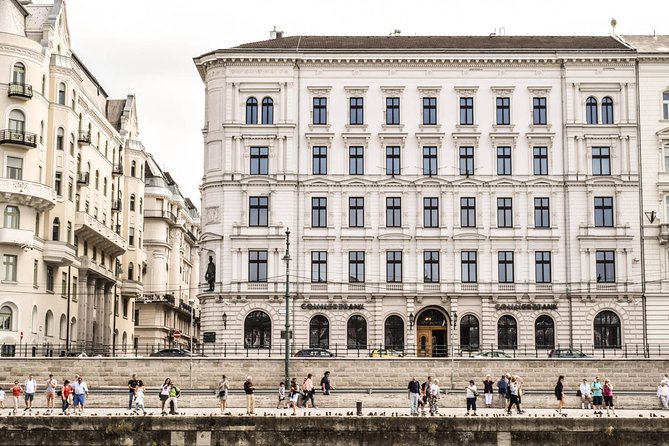
Two stops add serious layers: St. Stephen’s Basilica and Liberty Square (Szabadság tér).
At St. Stephen’s Basilica, you’ll spend around 15 minutes, and the admission ticket is not included. The basilica is named for Stephen, the first King of Hungary (c 975–1038). A key detail you might hear is that Stephen’s right hand is housed in the reliquary. Even if you don’t go inside, that fact gives the building more gravity than a quick glance suggests.
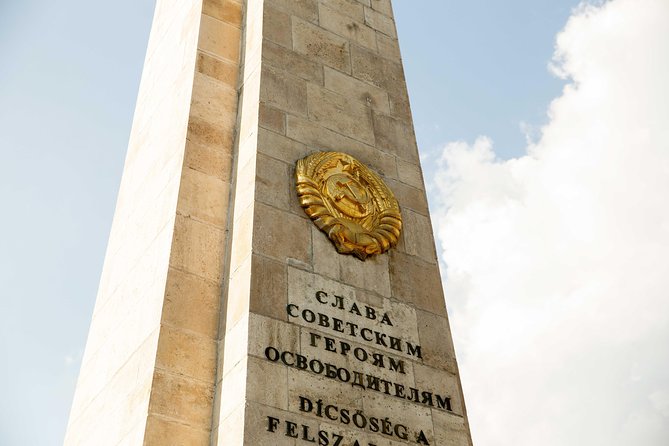
Next is Liberty Square, about 20 minutes and free. This is where Budapest doesn’t let you stay in postcard mode. The square is known for two controversial memorials: one commemorating Hungarian Jewish victims of the Holocaust, and another tied to Soviet soldiers who liberated Budapest from the Nazis in 1945. On the square’s west side, you’ll also see the historicist-style headquarters of the Hungarian National Bank and the United States Embassy in Hungary.
I like how this part of the tour shifts from beauty to meaning. It reminds you that monuments aren’t only for commemoration—they’re also for debate, memory, and national storytelling.
The Parliament, the Chain Bridge, and Shoes on the Danube Bank
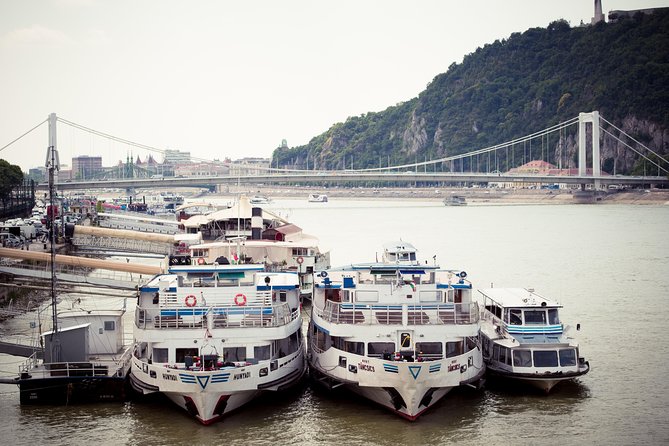
Now you hit the Danube axis, and the route keeps getting more emotionally direct.
The Hungarian Parliament Building (Országház) is next for about 10 minutes. It’s not included for admission, so you’ll likely view it as a landmark stop rather than an inside visit. Still, it’s the seat of the National Assembly of Hungary and one of Budapest’s most famous silhouettes—so even a quick look can feel like a proper “there it is” moment.
After that, you cross into bridge-and-banks territory with the Széchenyi Chain Bridge. This chain bridge spans the Danube between Buda and Pest. If you’ve only seen Budapest from one side, this stop helps you understand the city as a two-part capital held together by the river.
Finally, the tour ends at Shoes on the Danube Bank. This is not just a memorial—it’s a carefully built reminder of atrocity. The memorial honors Jews massacred by fascist Hungarian militia linked to the Arrow Cross Party during World War II. It’s marked as free and takes about 10 minutes.
I think this is one of the strongest endings you can ask for, because it brings the tour full circle: from grand national monuments to the human cost of history. You finish walking with an understanding of Budapest that goes beyond architecture.
Coffee, cake, snacks, and the map that keeps paying off
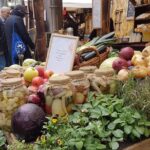
A good city tour gives you more than photos—it gives you momentum. This one includes coffee and cake at a local café, plus snacks and coffee and/or tea. That’s not a gimmick. It keeps energy up so you can stay present during the longer sightseeing portions instead of burning out mid-route.
You’ll also receive a handy souvenir map and additional recommendations. I like maps that help you continue the day or the week after the tour ends, especially in a city like Budapest where the “best next stop” can change depending on which side of the river you’re standing on.
And because you get those public transport tickets included, the map actually becomes usable right away. You’re not just collecting information. You’re able to move on it.
Price and logistics: what you really get for $94.63
At $94.63 per person for about 3 hours 30 minutes, the price makes sense when you look at what’s bundled.
You’re getting:
- Guided walking and landmark time across a high-value route
- Public transport tickets included
- Coffee and cake, plus snacks and coffee/tea
- A souvenir map and recommendations
- A small group size (max 15)
It’s also useful that most stops are marked as free for the tour admission portions: Heroes’ Square, Széchenyi Baths stop, Andrássy Avenue, Opera House, Liberty Square, Chain Bridge, and Shoes on the Danube Bank.
The places where you may pay extra are the stops explicitly noted as not included: Vajdahunyad Castle, St. Stephen’s Basilica, and the Parliament Building. So the real decision is whether you want only exterior/overview views there, or if you want to add separate time and tickets for interiors.
If you’re visiting for the first time, or you want your first day to feel organized rather than random, this tour is good value. It gives you a structured way to see the big highlights, then lets you choose what to revisit later.
Who should book, and who might prefer a different pace
This tour fits best if you:
- Want a fast orientation across central Pest landmarks
- Like learning from a guide with real pacing and room for questions
- Prefer a small group format over a large bus-style shuffle
- Appreciate a mix of architecture, public monuments, and Danube memorial history
You might choose a different option if you:
- Want deep museum time at St. Stephen’s Basilica, Parliament, or inside Vajdahunyad Castle during the same session
- Dislike short stop durations and prefer longer, sit-down visits
The weather factor is handled well: it operates in all weather conditions. That means you’ll want to dress for rain and wind so you don’t spend the tour fighting the elements.
Should you book this Budapest sightseeing tour?
Yes, if you want a confident first pass through Budapest that combines major landmarks with practical transit help. The included public transport tickets and the café break mean you can keep moving without constantly making decisions. And the Danube memorial ending gives you a meaningful finish rather than a quick shopping-corner exit.
I’d book this especially if you’re new to Budapest or short on time. It’s structured, it stays focused, and it sets you up to explore on your own after you learn what matters where.
FAQ
How long is the Budapest beginner sightseeing tour?
It runs for about 3 hours 30 minutes.
Is the tour offered in English?
Yes, the tour is offered in English.
What’s included in the price?
Coffee and cake at a local café, snacks, coffee and/or tea, a souvenir map with further recommendations, and tickets for public transport. It also uses a mobile ticket.
Do I need to buy tickets for every stop?
Not all stops require entry tickets. Heroes’ Square, Széchenyi Baths, Andrássy Avenue, the Opera House stop, Liberty Square, Széchenyi Chain Bridge, and Shoes on the Danube Bank are listed as free. Vajdahunyad Castle, St. Stephen’s Basilica, and the Hungarian Parliament Building are listed as not included.
Where does the tour start, and where does it end?
It starts at the Hungarian State Opera House (Andrássy út 22, 1061 Hungary) and ends back at the meeting point.
How large is the group?
The tour has a maximum of 15 travelers.
What is the cancellation policy?
You can cancel for a full refund up to 24 hours before the experience starts. If you cancel less than 24 hours before, the amount paid is not refunded.