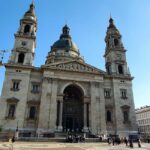
Budapest wears Art Nouveau like jewelry. This private tour is built around Secession and Art Nouveau landmarks, and I love the professional art historian guide approach plus the complimentary coffee stop in an Art Nouveau café. It is also easy logistically with hotel or port pickup and drop-off. One thing to watch: pre-tour meeting messages can be inconsistent, so confirm the exact meet-up point as soon as you receive it.
The pacing keeps you looking at details, from mosaics to ornate bank façades, without turning the day into a speed-walk. Guides such as Michael, Szóke Zsuzsanna, Suzy, and Bogata are praised for tying architecture to Hungarian music and history, so ornament actually has a reason.
The tour runs about 4 hours, and it is sold as a private group (up to 15 people), so you get questions answered as you go. Book early: it often gets booked around 20 days in advance, and it operates in all weather, so smart casual layers help.
In This Review
- Key Reasons This Art Nouveau Tour Works
- Starting With a Landmark’s Exterior and Interior Art Nouveau Details
- Parisian Passage Café: Art Nouveau in a Passage You Can Actually See
- Liszt Academy: Mosaics and Secession-Style Music-House Drama
- Walking Váci Street’s Palaces Without Losing the Plot
- Török-Bankház: The Art Nouveau to Art Deco Transition Moment
- Postatakarék Bank: Lechner’s Hungarian National Secession Look
- House of Hungarian Art Nouveau: Secession’s National Style, Up Close
- Budapest Zoo Area Architecture and the Museum of Applied Arts Facade
- Why the Private Guide Experience Is the Real Value
- Price and Logistics: What $243.53 Per Group Really Means
- Who This Tour Is Best For
- Should You Book This Private Art Nouveau Tour?
- FAQ
- How long is the Private Art Nouveau Tour Budapest?
- What group size is this tour for?
- Is the tour offered in English?
- Do you offer hotel or port pickup and drop-off?
- Is coffee or tea included?
- Which stops will we visit?
- Is admission included for the stops?
- What should I wear and how does it handle bad weather?
- Are public transportation tickets included?
Key Reasons This Art Nouveau Tour Works
- Private group feel: up to 15 people means you can ask questions and adjust pacing.
- Art historian guide, not a script: multiple named guides are noted for connecting buildings to Hungarian culture.
- Coffee (and the room it’s in): a complimentary coffee/tea stop is part of the experience, not an afterthought.
- Stops that show the whole movement: from Art Nouveau to Secession and even the Art Nouveau-to-Art Deco transition.
- Convenient pickup and drop-off: hotel/port service keeps your day from getting tangled in transport.
Starting With a Landmark’s Exterior and Interior Art Nouveau Details
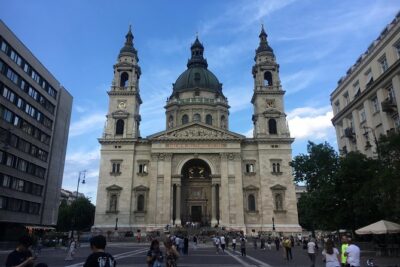
Your tour begins at one of Budapest’s iconic buildings that clearly carries Art Nouveau features. You get time for both the exterior and the interior, which matters because a lot of the best design is hiding in plain sight inside—stairways, ceiling work, and the overall sense of flow.
This is the right kind of first stop: it sets your eye for what you’ll notice later. Once you see how the style moves from street-level decoration into interior structure, the rest of the walk makes more sense.
You can also read our reviews of more private tours in Budapest


Parisian Passage Café: Art Nouveau in a Passage You Can Actually See
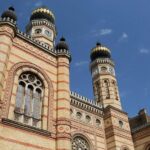
Next up is the Parisian Passage Café—recently renovated, and the tour takes you through its passage. If you love architecture that feels like a stage set, this is a great place to slow down and look at how space is composed.
You’ll get about 30 minutes here, and the tour notes free admission for the stop. In practical terms, that means you’re not spending your limited time on ticket lines or surprise costs—you’re spending it on observing the passage itself.
One extra bonus from the experience style here: the guides treat the café moment as part of the design story. That’s why guests talk about the coffee stop with real excitement—it’s not just caffeine, it’s setting.
Liszt Academy: Mosaics and Secession-Style Music-House Drama
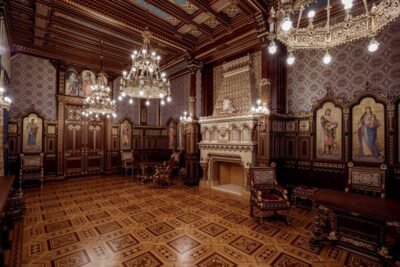
Then you’ll move to Liszt Academy, in the heart of the city. The building is presented as a homage to Hungarian music and also a standout example of the international secession style.
You’ll venture inside the hall to see the mosaics and other interior details. The time on-site is shorter—around 15 minutes—but the payoff is that you’re looking at the kind of decoration that proves this style wasn’t only about façades. It was built to shape how you feel in a room.
Also, this stop works well even if you’re not a music-history person. The style and symbolism come through fast, and an art historian guide can point out what to look for without turning it into homework.
Walking Váci Street’s Palaces Without Losing the Plot
Váci Street is Budapest’s famous fashion and shopping street. Here, the tour shifts from big landmark interiors to street-level architecture—stopping at various urban palaces with Art Nouveau heritage.
You get about 30 minutes in this area, and admissions are listed as free for the stops. The value is that you’re seeing how Secession-style details sit right inside everyday city life, not behind gates or on remote detours.
If you’ve only done a quick drive-by of this part of Budapest, you’ll leave with a completely different way to look at it. The point isn’t shopping. The point is learning what the ornament is doing and why the designers cared.
Török-Bankház: The Art Nouveau to Art Deco Transition Moment
One of the most fun parts of this tour is how it explains architectural evolution rather than treating buildings like isolated artworks. At Török-Bankház, you’ll see a transition between two major pre-war styles: Art Nouveau and Art Deco.
This stop is also associated with MIKSA ROTH, and that name helps anchor the story. You get roughly 15 minutes, with free admission noted, so you’re not stuck waiting around—just enough time to spot the stylistic shift and understand what changed.
This is a great stop for first-timers because it gives you a mental timeline. Instead of memorizing shapes, you start recognizing why certain features fade in or out as the decades move forward.






Postatakarék Bank: Lechner’s Hungarian National Secession Look
Next is the Postatakarék Bank, described as a fine example of Secession’s Hungarian national branch. You’re in the world of Hungarian National Style, and you’re told to expect marvellous architecture and castle-like details.
LECHNER is explicitly tied to this stop, which is useful. If you want to keep learning after the tour, having a named architect gives you something real to search for later.
You’ll have around 15 minutes here with free admission noted. The short time can feel tight, but the guide-led approach helps. You’re not just taking photos—you’re learning what to look for so you can keep spotting the style on your own afterward.
House of Hungarian Art Nouveau: Secession’s National Style, Up Close
The tour then moves to the House of Hungarian Art Nouveau, a dedicated stop for the Secession period in Hungarian architecture. This is where you get a clearer sense of the Hungarian National Style and its influences.
You’ll spend about 15 minutes here, with free admission noted. Think of it as a framework stop—less about one single building and more about understanding why Hungarian Secession looks the way it does.
If you’re the kind of traveler who likes to know what connects everything, this stop helps you connect the dots between the banks, passage architecture, and the music hall.
Budapest Zoo Area Architecture and the Museum of Applied Arts Facade
After the House of Hungarian Art Nouveau, the tour includes buildings in the Budapest Zoo area. The idea is a journey through the diversity of Art Nouveau and Secession architecture, seen in a different setting than the city core.
Then you finish at the Museum of Applied Arts. The building is described as carrying Hungarian National Style trademarks of Secession, but you’ll only explore the facade because it’s still under renovation.
This is a good way to manage expectations. You still get a visual ending, and the guide can connect the museum exterior to what you’ve seen earlier—so you don’t feel like you ended on a tease.
Why the Private Guide Experience Is the Real Value
The best part of this tour is the guide effect. Named guides like Michael, Szóke Zsuzsanna, Suzy, and Bogata come up again and again for the same reasons: passion, enthusiasm, and strong linking of architectural details to cultural context.
I like tours that teach you how to see. Here, that skill shows up in practical ways, not just lectures. One standout theme in feedback is adaptation—like adjusting pacing and transport options for limited walking ability using taxis and public transportation when needed.
Another theme is personalization. One guest described an added side stop to a beautiful art museum, which signals that the guide isn’t stuck reciting from a card. If you book this type of private tour, you should expect that your guide is watching for your interests and your comfort level.
And yes, the coffee stop really does matter. A complimentary coffee/tea in an Art Nouveau setting gives you a pause button during a dense architecture day. It’s also a chance to look again with fresh eyes before you move on.
Price and Logistics: What $243.53 Per Group Really Means
The price is $243.53 per group for up to 15 people, and the tour runs about 4 hours. That pricing structure can be surprisingly good if you’re traveling with family or friends, because your cost is shared at the group level.
If you fill closer to 15 people, the math works out to roughly $16 per person. If you’re only a couple, your per-person cost will be higher—but you’re still paying for a private art historian guide with pickup and drop-off, plus time inside key sites.
Hotel/port pickup and drop-off is included, and that’s not a small detail in Budapest. Time saved from figuring out meeting points and transit gets you more actual seeing, and it also lowers stress.
You also get a mobile ticket, and the tour language is English. Public transportation tickets aren’t included, so if you decide to hop around on your own before or after, budget for transit separately.
Who This Tour Is Best For
This is ideal if you want Art Nouveau and Secession explained clearly and you’d rather have a guide than a self-guided scavenger hunt. It’s also a strong match for first-timers, because the stops are varied—passage architecture, music-hall interiors, banks, and street palaces—so you get a full visual education in one afternoon.
It also works well for small groups who want comfort. With private touring and pickup/drop-off, it’s a good choice if your group includes someone who may not love long, unplanned walking.
If you only care about one or two famous buildings and hate schedules, you might feel this is too many stops. But if you enjoy architecture as a story—how styles shift, how symbolism shows up, how designers shaped daily spaces—this fits well.
Should You Book This Private Art Nouveau Tour?
Yes, if you want a guided architecture day that’s organized, comfortable, and designed to help you see what matters. The combination of hotel/port pickup, a professional art historian guide, and multiple named-style stops makes it feel like good use of time, not just sightseeing.
Book it early because it’s often scheduled about 20 days out. And when you get your confirmation, double-check the exact meeting point details right away. That one small step can protect you from start-day stress and help you get straight into the buildings.
FAQ
How long is the Private Art Nouveau Tour Budapest?
The tour lasts about 4 hours.
What group size is this tour for?
It is a private tour for your group, with up to 15 people.
Is the tour offered in English?
Yes, it is offered in English.
Do you offer hotel or port pickup and drop-off?
Yes. The tour includes hotel/port pickup and drop-off, and you are picked up at the ports or hotels you specify.
Is coffee or tea included?
Yes. Coffee and/or tea are included, and there is a complimentary coffee stop during the experience.
Which stops will we visit?
You will visit a major Art Nouveau landmark with exterior and interior time, plus sites including Parisian Passage Café, Liszt Academy, stops along Váci Street, Török-Bankház, Postatakarék Bank, the House of Hungarian Art Nouveau, buildings in the Budapest Zoo area, and the Museum of Applied Arts facade.
Is admission included for the stops?
The itinerary lists admission tickets as free for the listed sites.
What should I wear and how does it handle bad weather?
Dress code is smart casual, and the tour operates in all weather conditions, so dress appropriately.
Are public transportation tickets included?
No. Public transportation tickets are not included.