Some places in Budapest hit you in stages. This private walk through the Jewish Quarter connects synagogues, ghetto remnants, and Holocaust memorials into one easy-to-follow story. If you’re visiting on a weekday, you also get the chance to focus on the sites that are often rushed or missed.
I like that the tour is genuinely people-first. Guides such as Suzy Szoke, Joel, and Bogato are praised for patient pacing (even with groups of guests in their 70s), thoughtful explanations, and solid answers to questions that come up on the sidewalk. One potential drawback: some synagogue buildings cost extra to enter (and one key stop, Kazinczy Street Synagogue, is not enterable right now), so you should budget for that if you want the full inside look.
In This Review
- Key highlights I’d plan around
- The “Jewish Quarter in depth” promise you’ll feel in 4 hours
- Private guide plus pickup: how the logistics support the day
- The walking route, step by step (and what each stop really gives you)
- Stop 1: The Jewish Quarter streets—wall remnants and yellow-star context
- Stop 2: Dohány Street Synagogue (Nagy Zsinagoga)—Europe’s largest functioning one
- Stop 3: Kazinczy Street Synagogue—renovation means outside-only viewing
- Stop 4: Rumbach Street Synagogue—recently renovated, with inside access by request
- Stop 5: Carl Lutz Memorial—why one person mattered to thousands
- Stop 6: Szimpla Kert—ruin-bar atmosphere as a modern layer
- Stop 7: Shoes on the Danube Bank—Arrow Cross terror remembrance
- Stop 8: Király Street—an original segment of the Great Ghetto
- Food tastings and how to time your day
- Price and value: what you’re paying for and how to avoid surprises
- When to book: Saturday caution and the pace reality
- Should you book this Jewish Budapest private city walk?
- FAQ
- How long is the Jewish Budapest Private City Walk?
- Is this a private tour?
- What group size is it for?
- What language is the tour offered in?
- Is hotel or port pickup included?
- Are entrance fees included?
- Can I enter Kazinczy Street Synagogue?
- Are the synagogues open on Saturdays?
- Is food included?
- Can I cancel for a full refund?
Key highlights I’d plan around
- Private group pacing: up to 15 people, with a guide who doesn’t rush the story.
- Synagogue contrasts: Dohány Street’s major landmark, plus outside-only viewing for Kazinczy right now.
- Holocaust remembrance stops: Shoes on the Danube Bank and the Carl Lutz Memorial are built into the route.
- Ghetto-site details: you’ll see wall remnants, yellow-star house context, and an original segment under Király Street.
- Food tastings during the walk: built in so you’re not hunting for a bite halfway through.
The “Jewish Quarter in depth” promise you’ll feel in 4 hours
This is a private, half-day city walk in Budapest’s Jewish Quarter, designed to turn scattered landmarks into a clear timeline. The route is meant to be flexible too, so if you want more architecture, more history, or more on-the-ground context, you can usually steer the guide that way.
The schedule runs about four hours, which is a sweet spot for a topic like this. You get time to stand still at memorials, walk through the streets that shaped daily life, and then reset your focus at the next stop. One review noted the tour ran longer than the advertised time, which can be good if your group likes questions and slower pacing.
What I’d watch: the day includes a lot of walking and a lot of listening. Even when the guide is engaging, you’ll want comfortable shoes and a willingness to process heavier material. If you prefer light and scenic, this won’t be that kind of tour.
You can also read our reviews of more walking tours in Budapest


Private guide plus pickup: how the logistics support the day
The tour is private (only your group), offered in English, and priced per group at $342.93 (up to 15). That price can sound like a lot until you think about what’s included: a dedicated guide, hotel and port pickup/drop-off, and a structured route that’s hard to replicate on your own—especially with entry timing and what’s closed.
Pickup matters more than it seems. This experience offers hotel/port pickup and drop-off, and cruise-ship passengers are asked to provide ship name and timing details so they can coordinate with you. If you’re staying in Budapest for only a short window, being met and returned to your hotel saves time and avoids the “now what bus do we take?” part of travel.
You also get a mobile ticket, and you’ll receive confirmation at booking. For most people, the tour is set up so it’s manageable, and service animals are allowed.
The walking route, step by step (and what each stop really gives you)
Stop 1: The Jewish Quarter streets—wall remnants and yellow-star context
The tour begins in Budapest’s Jewish Quarter with a look at remaining parts of the wall that once surrounded the former ghetto area, along with context around yellow-star houses. Even if you’ve seen Holocaust-related sites elsewhere, this part tends to hit differently because it’s grounded in street-level details.
The value here is orientation. You start to understand the physical boundaries—what was close, what was cut off, and how a neighborhood became a restricted space. The tour time at this stop is short, about 20 minutes, but it works like an opening chapter: it sets the terms for everything after.
Practical consideration: expect to look up and down as you move. These areas reward slow attention, and the guide helps translate what you’re looking at.
Stop 2: Dohány Street Synagogue (Nagy Zsinagoga)—Europe’s largest functioning one
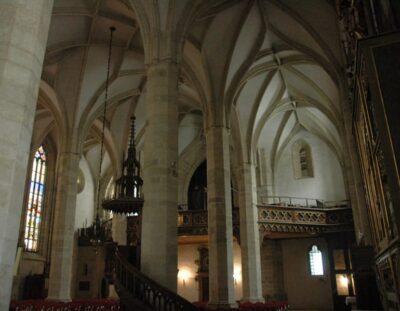
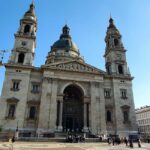
Next is the Great / Central Synagogue, also called the Dohány Street Synagogue (Nagy Zsinagoga). This is described as the biggest functioning synagogue in Europe, and the guide uses that fact as more than trivia. You get architecture you can actually see, plus a clear introduction to the turbulent history tied to the building.
Here’s the budget reality: entry for this stop is not included. The tour description notes that the guide can take you through the whole building upon request for an extra entrance fee. So your experience here can vary depending on whether you choose to pay for full inside access.
If you want the landmark experience, plan on paying something extra here. If you’re staying outside-focused, you may still gain a lot from the history lesson and exterior viewpoints, but it won’t feel “complete” the way an inside visit does.
You can also read our reviews of more city tours in Budapest



Stop 3: Kazinczy Street Synagogue—renovation means outside-only viewing
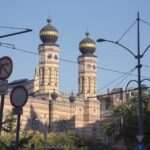
Kazinczy Street Synagogue is temporarily closed due to renovation work, and the tour can’t enter it right now. You’ll see it from the outside, and the guide explains what it represents—an early-1900s synagogue (erected in the 1910s) with Art Nouveau connections and deep ties to Budapest’s Jewish community.
This is one of the biggest “plan around it” points in the itinerary. If inside access is your top priority, you’ll need to know ahead of time that this stop won’t deliver that the way it might on a different day.
At about 10 minutes, it’s quick, but the guide still gives you the cultural and architectural context so you don’t feel like you just drove past a closed door.
Stop 4: Rumbach Street Synagogue—recently renovated, with inside access by request
Rumbach Street Synagogue is included as a stop for outside viewing, with a key detail: tickets to visit the building are not included. However, upon request the guide can show you inside as well.
This is a nice compromise. If your group wants more than street views, you can ask, and if time and entry rules allow, you may get that extra layer. If not, you still get a sense of the building’s role in community life and the architecture that people come to see.
Expect about 30 minutes here. That’s enough time for photos, for the guide’s storytelling, and for your group to decide whether inside access is worth any extra cost.
Stop 5: Carl Lutz Memorial—why one person mattered to thousands
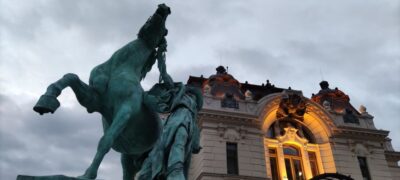
Then comes the Carl Lutz Memorial, a public statue and memorial site honoring the Swiss diplomat who helped thousands of Jewish people avoid the death camps. The tour’s tone shifts here from building-focused history to moral and human stakes, and the guide walks you through Carl Lutz’s story and the horrors of the era that he worked against.
This stop is about 15 minutes, but it’s heavy. I’d treat it like a pause: give your group time to read what you can, then let the guide’s explanation do the rest.
Stop 6: Szimpla Kert—ruin-bar atmosphere as a modern layer
After the memorial weight, you’ll stop at Szimpla Kert, part of Budapest’s VII district and one of the best-known ruin bars. The tour frames it as a main attraction and focuses on the atmosphere and design that draw people from around the world.
This stop is “light” compared with the memorials, which is useful. It reminds you that the Jewish Quarter is not only a museum-like space. It’s also lived-in, layered, and continually changing—sometimes in surprising ways.
It’s also only about 15 minutes, so don’t expect a full bar visit here. Think of it as a modern contrast point.
Stop 7: Shoes on the Danube Bank—Arrow Cross terror remembrance
Shoes on the Danube Bank is a remembrance site for people shot into the Danube during the Arrow Cross terror. The itinerary gives it around an hour, which matters. This isn’t a quick stop where you glance and move on.
This is one of those places where your attention changes as you read. The long time slot lets you absorb the memorial and hear the context from the guide without feeling rushed.
Practical note: bring your patience. The Danube bank area can be busy depending on the time of day, and your group may want extra moments.
Stop 8: Király Street—an original segment of the Great Ghetto
The final stop is Király Street, specifically under Király str. number 15, where you can find an original segment of the Budapest Great Ghetto. This is another moment where street-level evidence helps you understand the historical scale—called the second largest WWII ghetto in the world in the tour description.
At about 15 minutes, it’s shorter, but it gives a clear ending: you’ve now seen boundaries, religious life, forced segregation, remembrance, and then the physical footprint of the ghetto itself.
Food tastings and how to time your day
One of the standout points of this tour is that food tastings are included, and the tour is designed to feel complete as a half-day experience. One review specifically mentioned a snack stop at a strudel house during the tour, which sounds like a smart way to keep energy up while still staying on the walking plan.
But don’t confuse tastings with a full meal. Lunch is not included, and alcoholic drinks are not included (they can be purchased). If you’re prone to getting hungry on walking days, plan to eat before you start or be ready to treat the tastings as a boost rather than a full lunch replacement.
Also, because this tour includes heavier Holocaust remembrance stops, a small food break can help your group stay steady and attentive.
Price and value: what you’re paying for and how to avoid surprises
At $342.93 per group (up to 15) for about four hours, the biggest value driver is the “private” part: you’re paying for a dedicated guide and a tight route that matches the story. You’re not paying for a generic hop-on-hop-off stroll.
Here’s the trade-off: entrance fees are not included, and some of the most important inside moments depend on paying extra. The Dohány Street Synagogue is the clearest example—entry is not included, and extra access may come with an entrance fee. Kazinczy Street Synagogue is closed right now, so even if you budget for it, you won’t be walking inside.
If you want the fullest experience, your best move is simple: decide in advance whether you want to pay for Dohány Street Synagogue inside access, and be mentally flexible for Kazinczy.
When it clicks, it’s excellent value. When it doesn’t, it’s usually because someone assumed all synagogues would be entered without extra cost. Reviews show that confusion can happen, so you’ll do yourself a favor by planning for those fees from the start.
When to book: Saturday caution and the pace reality
This tour is not recommended on Saturdays because Jewish holidays can mean synagogues are closed. If your trip lands on a Saturday, you may get a version of the walk that’s less satisfying—especially around the synagogue stops.
Timing also matters for the other major stop, Shoes on the Danube Bank. The itinerary gives it a full hour, so pick a day when your group can handle the time without rushing.
Finally, consider pace. Reviews praise guides for patience and not rushing, but the content is serious and the walking adds up. If you’re traveling with older family members or anyone with mobility limits, you’ll want to talk with the operator about what pace works for your group.
Should you book this Jewish Budapest private city walk?
Yes—if you want a structured, guide-led way to understand the Jewish Quarter without turning it into a scavenger hunt. I’d especially recommend it if your group likes asking questions and you’re hoping for a smooth connection between buildings, street remnants, and remembrance sites.
Book it with two expectations set upfront: some synagogue access costs extra, and one synagogue (Kazinczy) can’t be entered right now due to renovation and community restrictions. If you’re okay with those two realities, you’ll get one of the more meaningful ways to see Budapest’s Jewish history in a half day—plus the built-in tastings and pickup that make it easier than DIY.
FAQ
How long is the Jewish Budapest Private City Walk?
The tour runs about 4 hours.
Is this a private tour?
Yes. It’s private, so only your group participates.
What group size is it for?
The price is per group and the group size can be up to 15 people.
What language is the tour offered in?
The tour is offered in English.
Is hotel or port pickup included?
Yes. Hotel and port pickup and drop-off are offered. Cruise ship passengers need to provide ship name and docking/disembarkation/re-boarding times.
Are entrance fees included?
Entrance fees are not included. Some sites are listed as free (for example, the ghetto wall area, Carl Lutz Memorial, and Shoes on the Danube Bank), but synagogues such as the Great / Central Synagogue have admission not included.
Can I enter Kazinczy Street Synagogue?
No. It is closed temporarily for renovation works, and the tour cannot enter it right now; you can only see it from the outside.
Are the synagogues open on Saturdays?
This tour is not recommended on Saturdays because Jewish holidays can mean synagogues are closed.
Is food included?
Food tastings are included. Lunch is not included, and alcoholic drinks are not included (available to purchase).
Can I cancel for a full refund?
Yes. You can cancel up to 24 hours before the experience starts for a full refund.