REVIEW · BUDAPEST
Gems of the Budapest Castle District Walking Tour
Book on Viator →Bookable on Viator
The Castle Hill route feels like a storybook. I especially like the tight stop-by-stop pacing and the photo-ready viewpoint time. One consideration: it is a lot of uphill walking, so good shoes matter.
This tour works because it keeps you moving while still stopping long enough to look up, not just past the sights. Our guide, Antel, is the kind of person who makes details click, with very clear English and a knack for turning sculptures, symbols, and buildings into something you can picture.
For value, the price is eye-catching at $3.61 per person for a live guided outing, and it books up fairly well (around a month in advance on average). You will want to start with a 3:00 pm departure in mind, and come prepared for good weather since the experience runs best outdoors.
In This Review
- Key things that make this tour worth your feet
- Setting off at Szentháromság u.: Holy Trinity Column to Matthias Church
- Fisherman’s Bastion: double-cross symbolism, statues, and Pest views
- Kings, popes, and the National Archives: Innocent XI through WWII ruins
- Setany after the siege: the Arpad Toth Promenade and Andras Hadik
- Under the hill: the Labyrinth cave and the Dracula/Vlad connection
- Independence War symbols, Houdini House, and Szent György Street secrets
- Funicular, Turul bird, and King Matthias fountain: symbols you can spot fast
- Entering the castle core: Lions Court, Royal Riding Hall, and Prince Eugene
- Bridges, Marian statue, Castle Garden, and the Várkert Bazar finish
- Group size, timing, and what to pack for a 2h 10m walk
- Should you book this Budapest Castle District walking tour?
- FAQ
- What is the tour duration?
- Where does the tour start and end?
- How much does it cost?
- Is the tour offered in English?
- Do I need to buy admission tickets for the stops?
- Is there a mobile ticket?
- What is the group size limit?
- What happens if the weather is bad?
Key things that make this tour worth your feet
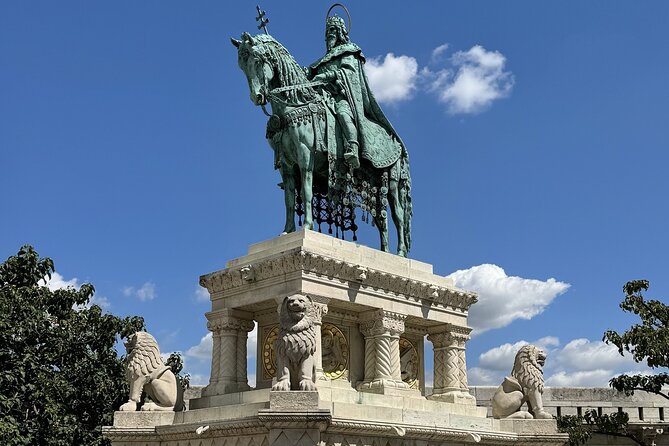
- Antel’s English + pacing make the history feel practical, not just dates and plaques
- Fisherman’s Bastion gets actual time for photos and that big Pest view
- WWII memory stops (Setany and church ruins) add context without turning it into a lecture
- The Labyrinth cave mixes dungeon vibes with the Dracula/Vlad connection
- Buda Hill Funicular + Turul bird add variety beyond churches and courtyards
- Castle Garden and Várkert Bazar finish with architecture you can actually see up close
Setting off at Szentháromság u.: Holy Trinity Column to Matthias Church
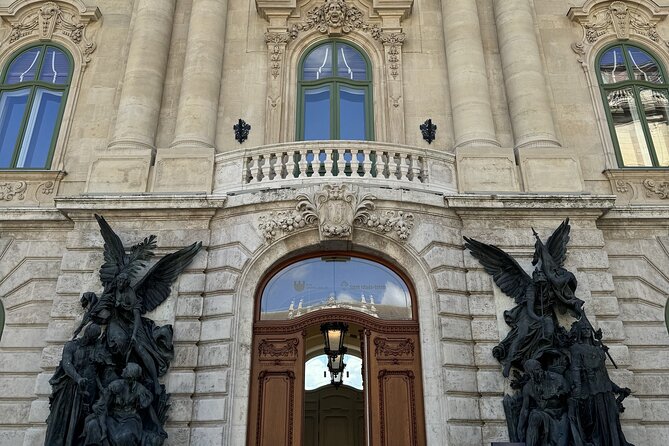
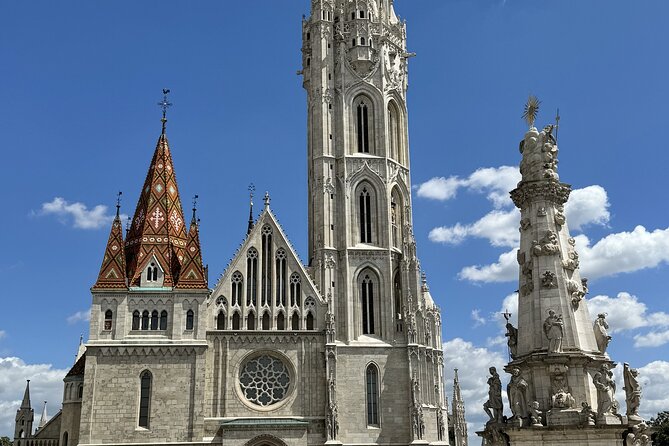
Your walk begins at the Holy Trinity Statue area on Szentháromság u., right by the castle hill zone. The first stop focuses on the Holy Trinity column—how it was constructed and what the figures mean. Instead of treating it like a nice landmark, you get a quick guide to what each part is symbolizing, so when you look back at it later, you understand why the sculpture is arranged the way it is.
Then you head to Matthias Church, one of the big name sights in Budapest. Here, the talk shifts to the church’s foundation and architectural details. The payoff is simple: you stop seeing it as just a postcard church and start noticing the features that make it feel like it belongs to a royal-and-religious power center. The time at each early stop is short, but that’s part of the tour’s logic.
Practical note: since the route is packed, don’t plan to linger on your own at the first two sites. You can always return later, but the tour is built for momentum.
You can also read our reviews of more walking tours in Budapest


Fisherman’s Bastion: double-cross symbolism, statues, and Pest views
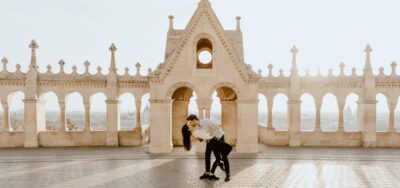
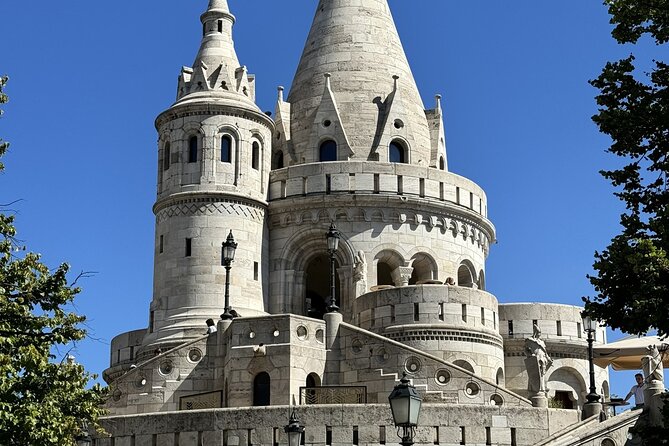
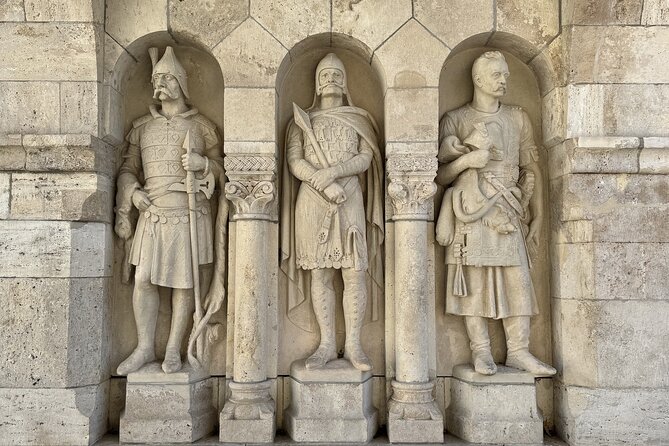
Fisherman’s Bastion is the star for most people, and this tour treats it like one. You get time to explore the statues and learn about the relation of the double cross to the Hungarians. It’s the kind of detail that instantly changes the way you read the place—suddenly the carvings aren’t just decoration.
There are also legends tied to the bastion, plus a short break built in for photos. That photo break is useful because the views over Pest are a big part of why you’re here in the first place. If you’ve ever tried to get a good panorama while rushing with a group, you know how annoying it is. This tour gives you a bit of space to do it right.
Small drawback: Fisherman’s Bastion draws crowds. During busy moments, the view is still there, but the walkways can feel tight, so plan to be patient.
Kings, popes, and the National Archives: Innocent XI through WWII ruins
After the bastion comes a stretch of monuments that feel like a guided tour through political symbolism. You’ll reach the Statue of Pope Innocent XI, but the point is the cluster of religious and royal references nearby: Pope Sylvester II, plus the coronation statue connected with King Matthias. One detail worth filing away is that this stop is described as tied to the oldest building in Hungary, which helps explain why the area carries so much weight.
Next up is the National Archives of Hungary. This is where architecture lovers will feel rewarded. You’ll notice architectural wonders, the Vienna gate, and the Golden signatures by the Uri street. Even without going inside, you get help reading what you’re seeing—how the facade and nearby statues tell stories, not just how they look.
Then you shift to the Church of Saint Mary Magdalene. The focus here is on the monument tied to the coronation mantle of Hungarian kings, plus ruins from World War II. This is one of the more emotionally grounded stops on the route. It’s handled with the same tour style—short, focused explanation—so you understand why the scars remain without getting stuck in doom scrolling mode.
If you prefer your sightseeing to be mostly light, this section may feel heavier than the rest. Still, it adds context that makes the castle district feel like living history rather than museum scenery.
Setany after the siege: the Arpad Toth Promenade and Andras Hadik
Heading onward, the Arpad Toth Promenade (Setany) brings in World War II in a very direct way. You’ll hear about the first flag after the WWII and also see a row of cannons. The walk includes views of the Buda hills and a statue of the Szekely Knight, and the story connects the siege of Budapest into what you’re actually standing in front of.
I like that this stop avoids vague talk. Instead, it ties the war history to objects on the ground. That matters because it keeps you from treating the castle district like an isolated fairytale. Budapest went through a brutal period, and the city leaves reminders.
From there you reach the Statue of Mounted Andras Hadik, described as the most famous Hungarian knight. The guide also points out local trends connected to the statue, and even an Oldest Hungarian Confectionery reference nearby. That small food/culture hook is smart. It breaks the history rhythm and keeps the area feeling human instead of purely monumental.
Under the hill: the Labyrinth cave and the Dracula/Vlad connection
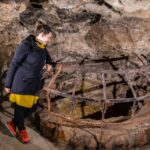
This part of the route adds variety, which is important because walking tours can start to feel repetitive: church, view, plaque, photo. The Labyrinth stop breaks the pattern. You’ll see a natural cave that was used as a dungeon, and the tour connects it to the Dracula/Vlad the Impaler story line.
Even if you’re not a horror fan, I think this stop works because it’s about atmosphere. A dungeon cave under a castle hill is exactly the kind of setting that turns legends from abstract into believable. The guide’s job here is to keep it fun but grounded, giving you enough background to enjoy the myth without pretending it’s a documentary.
Keep in mind: this is a cave/dungeon-themed stop, so the ground and steps may feel different than the outdoor streets. Wear shoes you trust.






Independence War symbols, Houdini House, and Szent György Street secrets
Next comes the Statue of Independence War, with a focus on the Hungarian revolution of 1848. You’ll get the background of that revolution and the way the statue symbolisms connect back to the original conflict. This is another moment where you see how the district is curated over time by political memory.
The tour also mentions House of Houdini near this stop. It’s the sort of side reference that keeps the walk from becoming only serious. You’re not just tracing crowns and popes. You’re seeing Budapest as a layered city where entertainment history can sit close to national symbolism.
Then you walk to Szent György Street, where offices of the president and prime ministers are mentioned, plus ruins of medieval castles. The tour includes secret-story type details here, which helps the street feel like more than a formal government strip. Even in a short stop, you end up with a better mental map of where the power centers sit.
Funicular, Turul bird, and King Matthias fountain: symbols you can spot fast
The Buda Hill Funicular stop is a handy reset because it ties transit to heritage. You’ll hear it’s the second oldest funicular and see mention of the zero kilometer stone. There’s also a reference tied to the oldest bridge of Hungary, which helps you connect the castle district to the wider city geography.
After that comes the Turul Bird Statue. You learn about Hungary’s national bird and the background of the name story tied to the Hungarians. I like this because it’s quick but memorable. You can walk past the Turul without a second thought, but with the explanation it becomes a strong piece of national identity you’ll recognize later in other parts of Hungarian life.
Then you reach the Fountain of King Matthias. The tour frames it as the prettiest fountain in Budapest and pairs it with a romantic-tragedy story. This is a useful contrast to war and architecture stops. It gives you something lighter to carry into the next phase of the castle area.
Entering the castle core: Lions Court, Royal Riding Hall, and Prince Eugene
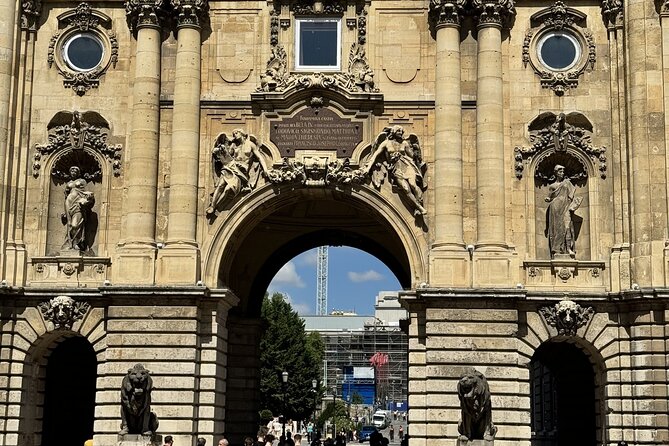
As you reach the Buda Castle courtyards, the tone shifts toward grandeur and stonework details. In the Lions Court (Buda Castle), you get the courtyard view and explanations of mythical statues on the facade. This is a stop where looking up matters. The guide helps you know what you’re looking at, so you’re not just standing below impressive walls.
Next is the Royal Riding Hall, described as the royal Hungarian stable. There’s also mention of interesting local trends connected to the space. The benefit of stopping briefly here is that you get a taste of the castle’s functional past—this wasn’t only about ceremonies and cathedrals. It was also about horses, work, and daily life supporting the elite.
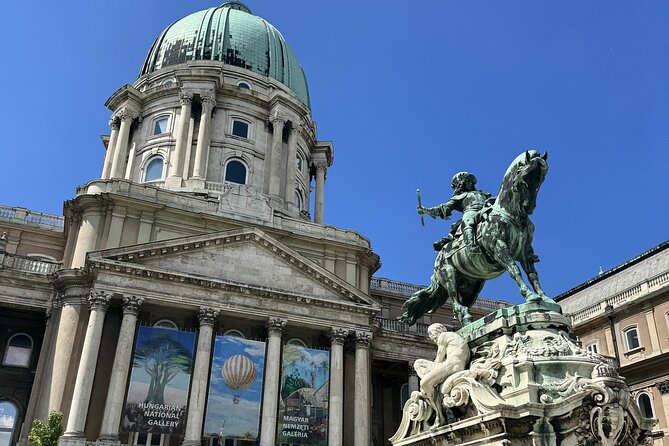
Then you see Prince Eugene of Savoy’s equestrian statue, called the biggest statue in the castle district. The talk focuses on him as a liberator of the Hungarians from the Ottomans, plus fun facts. That theme matters because it shows another layer of conflict and power beyond the 1848 and WWII stories you already encountered.
By now, the walk has given you a full emotional arc: royal religion, national identity, war memory, and then the large-scale military history behind Budapest’s survival.
Bridges, Marian statue, Castle Garden, and the Várkert Bazar finish
The last stretch slows down the intensity by shifting from monuments to views and garden architecture. You’ll reach S. Maria Mater Dei, with the statue of Virgin Mother Mary and baby Jesus. The tour connects this stop with bridges of Budapest and how they relate to Hungarian monarchs. Even if you don’t immediately connect every bridge, the explanation gives you a framework for reading Budapest’s bigger skyline later.
Then comes Castle Garden, the garden of the castle. You’ll get a look at the spiral staircase tower and the Triton fountain. This is one of the more peaceful moments on the route, and it helps reset your senses before the final building-area finish.
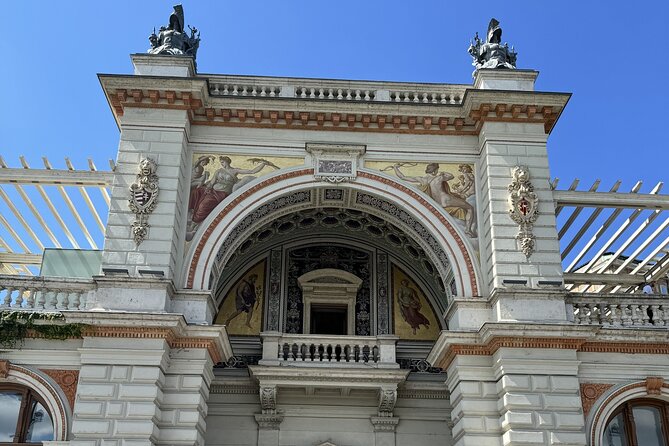
The tour ends at Castle Garden Bazaar at the foot of the castle hill by Várkert Bazar, right by Ybl Miklós tér. The focus is on the architecture of the Várkert Bazar and statues by the facade of the infrastructure. It’s a clean landing point. You get a sense of the castle district not as a single hilltop, but as a district that connects into the city below.
If you still have energy after the tour, this is a good spot to wander independently. You’ll have a better sense of what matters and why.
Group size, timing, and what to pack for a 2h 10m walk
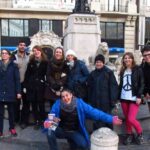
The tour runs about 2 hours 10 minutes, and it’s built for a group size up to 45. That means you’ll get a real guide, but you still need to keep moving. Most stops are around 5 minutes, with longer time at Fisherman’s Bastion and Labyrinth.
Since the meeting time is 3:00 pm, you’ll often catch late-day light on stone. That’s not guaranteed, but it’s usually a nice match for photography. Plan to arrive a few minutes early so you’re not sprinting uphill before the first explanation starts.
What to pack:
- Comfortable shoes for uneven hill paths and stone steps
- A light layer, since castle districts can feel cooler as the evening approaches
- A phone camera ready for quick photo windows (the tour builds in time, but only short ones)
This experience is offered in English, and a mobile ticket is used, which keeps it simple.
Should you book this Budapest Castle District walking tour?
I recommend it if you want the castle district story without spending your whole day bouncing between tickets and plaques. The guide style—clear explanations, humor, and just enough time at the big viewpoints—makes it easier to remember what you saw.
It’s also a good choice for a first or second day in Budapest. You cover major sights like Matthias Church and Fisherman’s Bastion, then add WWII context, plus the Labyrinth cave connection to Dracula/Vlad. That mix is hard to assemble on your own in a way that still feels coherent.
I’d skip it or choose a different format if you hate walking uphill, or if you need long unhurried time inside major buildings. This route is efficient, not slow and lazy.
If you can handle stairs and you like understanding symbols behind the scenery, book it. It’s a strong way to make the castle district feel like one connected place.
FAQ
What is the tour duration?
The walking tour is about 2 hours 10 minutes.
Where does the tour start and end?
It starts at the Holy Trinity Statue area (Szentháromság u., 1014 Hungary) and ends at Castle Garden Bazaar by the Várkert Bazar (Ybl Miklós tér 2-6, 1013 Hungary).
How much does it cost?
The price is $3.61 per person.
Is the tour offered in English?
Yes, the tour is offered in English.
Do I need to buy admission tickets for the stops?
The stops are listed as admission ticket free in the tour details.
Is there a mobile ticket?
Yes, you get a mobile ticket.
What is the group size limit?
The tour has a maximum of 45 travelers.
What happens if the weather is bad?
This experience requires good weather. If it’s canceled due to poor weather, you’ll be offered a different date or a full refund.