REVIEW · BUDAPEST
Budapest Jewish Heritage: Synagogues, Shoes, Secrets & Flódni
Book on Viator →Operated by Fungarian · Bookable on Viator
Budapest remembers in stone and silence. This Jewish heritage walk links Jewish Quarter landmarks with major wartime sites, from the Great Synagogue to the Shoes on the Danube Bank memorial. You’ll leave with a clearer picture of what life meant here before the war—and what the city chose to remember afterward.
I especially like the feel of the tour with an expert Jewish guide. When guides such as Gabriella share stories, the details connect fast, and when guides like Miklós teach, the pace makes you think instead of just rushing from stop to stop. I also love finishing the walk with flódni, a traditional Jewish pastry, served right after the heavier parts of the story.
One possible drawback: several of the synagogues require entrance tickets that are not included, so you’ll want a little extra budget and patience for lines and timing.
In This Review
- Key highlights at a glance
- How this 2h45 walk makes history feel human
- Starting at the Great Synagogue: why this one is different
- Rumbach Street Synagogue and Otto Wagner: the Moorish surprise
- Carl Lutz Memorial: a rescue story that changes the tone
- Kazinczy Orthodox Synagogue: modern design with art nouveau flair
- Shoes on the Danube Bank: how to face a memorial without rushing
- The ghetto wall and the streets you can still feel
- Flódni finish: a food ending that doesn’t feel like an afterthought
- Price and value: is $102.95 a fair deal
- Who should book this Jewish heritage walk
- Should you book Budapest Jewish Heritage: Synagogues, Shoes, Secrets & Flódni?
- FAQ
- What is included in the tour price?
- Do I need to buy entrance tickets for the synagogues?
- How long is the tour?
- Is this a private tour?
- Where does the tour start and end?
- Is pickup available?
Key highlights at a glance
- Great Synagogue (Nagy Zsinagóga) scale and Neolog context, including its place as the largest synagogue in Europe
- Rumbach Street Synagogue built in 1872 by Otto Wagner, with a Moorish look and careful restoration
- Carl Lutz Memorial, honoring the Swiss diplomat who helped save tens of thousands of Jews
- Shoes on the Danube Bank, unveiled April 16, 2005, marking victims who were forced to remove shoes before being shot
- What’s left of the WWII ghetto wall, and how your guide helps you picture the missing streets
- Flódni at the end, giving you a taste of living heritage, not only monuments
How this 2h45 walk makes history feel human
This tour moves at a thoughtful pace. You’re not just looking at buildings; you’re stitching together why they matter—architecture, community life, and what happened during World War II in Budapest. Even when the subject turns dark, the guide keeps pulling the story back to people, neighborhoods, and choices.
The time window is also practical. At about 2 hours 45 minutes, you can fit it in on a sightseeing day without feeling like you’ve been walking all afternoon. It’s private for your group, and that usually means you can ask questions without worrying about slowing everyone down.
If you’re the type who likes meaning with your sightseeing, this format works well. You start around Herzl Square and the Great Synagogue area, then the walk systematically shifts from religious life to wartime survival and remembrance. By the end, flódni gives you a simple but important emotional reset: history doesn’t end at a memorial plaque.
You can also read our reviews of more historical tours in Budapest



Starting at the Great Synagogue: why this one is different
The Dohány Street / Great Synagogue (Nagy Zsinagóga) is the headline stop for a reason. It’s the largest synagogue in Europe, with seating for about 3,000 people, and it served the Neolog community in Hungary. Your guide doesn’t treat it like a photo stop. You get context for the architecture and what it represented for Hungarian Jewry.
Two things tend to click here if you pay attention:
- The building’s size isn’t just impressive; it signals how established and confident this community was.
- The story the guide ties to the synagogue connects religious life to the political pressures that escalated during WWII.
A tip: if you’re going inside, wear shoes that handle uneven stone and keep water nearby. This stop can be emotionally intense, even before you reach the memorials on the riverbank.
Admission is not included for the synagogue itself, so plan on adding the ticket cost. But it’s usually worth budgeting for this one because you’ll understand it more after the guide sets the stage.
Rumbach Street Synagogue and Otto Wagner: the Moorish surprise
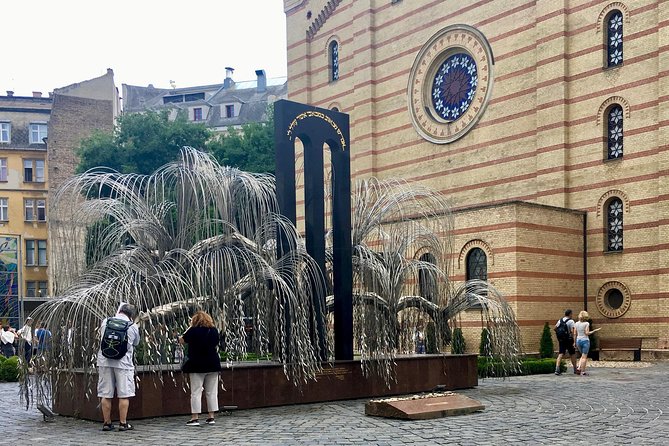
Next comes the Rumbach Street Synagogue, a different kind of spectacle. Built in 1872 by Austrian Secessionist architect Otto Wagner, it was created for the moderate Conservative community. The exterior gets you curious; the interior keeps you there.
What I like about this stop is how it breaks the “one-style synagogue” assumption. Budapest’s Jewish landscape wasn’t uniform. Different branches of Judaism expressed themselves through different buildings, ornament, and community identity.
You’ll also hear how the interior looks after restoration work. The decorations catch light in a way that feels almost old-fashioned in the best way—like the building is remembering its former glow rather than trying to look new.
Admission is not included here either, so again: have a little cash or card time set aside for entry.
Carl Lutz Memorial: a rescue story that changes the tone
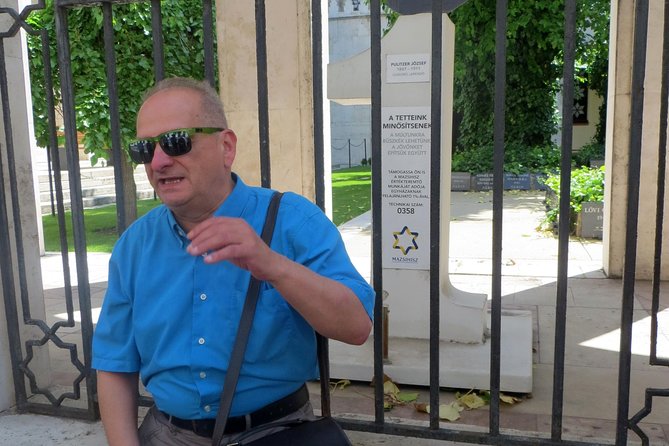
Then the tour shifts from architecture to courage, with a stop at the Carl Lutz Memorial. This commemorates Carl Lutz, the Swiss diplomat credited with helping save tens of thousands of Jews in Budapest from persecution and deportation.
This is one of those stops where you’ll notice a mental shift. The narrative doesn’t only focus on what was taken; it highlights how some people used influence, paperwork, and risk to protect others. It’s the kind of context that prevents the story from turning into only despair.
The memorial sits in the area associated with the former Budapest ghetto, which makes the nearby context feel sharper. Even if you can’t see every detail from wartime days anymore, your guide helps you connect geography to events.
This stop is short, but it matters. If the earlier synagogues felt like a world of community and worship, Carl Lutz gives you a different kind of “community story”—one about rescue.
Kazinczy Orthodox Synagogue: modern design with art nouveau flair
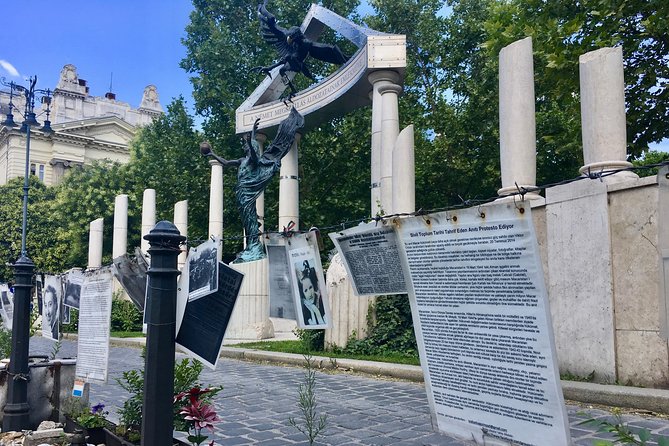
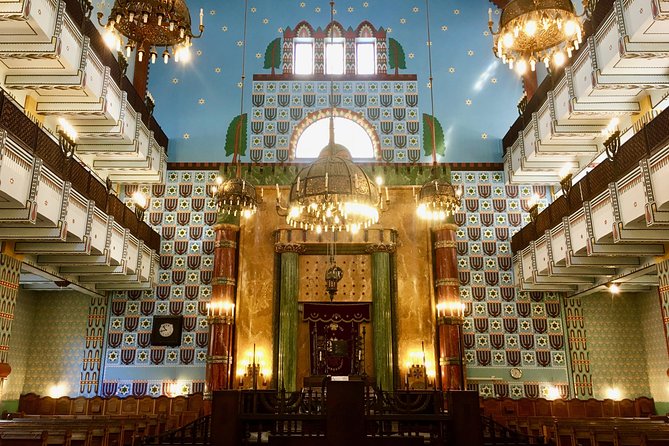
In a smaller side-street, you’ll find Budapest’s Orthodox synagogue built in 1913. What makes it interesting is that it was designed in a period that many people associate with older styles. Here, the building shows late Art Nouveau touches and bright colors throughout.
Look up at the stained-glass windows in the ceiling. They were designed by Miksa Róth, which adds another layer: not only was this a place of worship, it was also a place where Hungarian artists helped shape the atmosphere.
Admission is not included for this stop, but the payoff is clarity. After seeing Neolog and Conservative-related architecture earlier, the Orthodox synagogue gives you a third angle on how Jewish practice and identity expressed themselves in built form.






Shoes on the Danube Bank: how to face a memorial without rushing
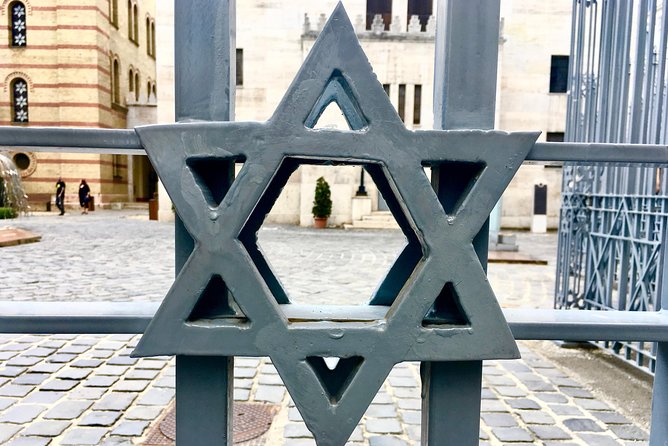
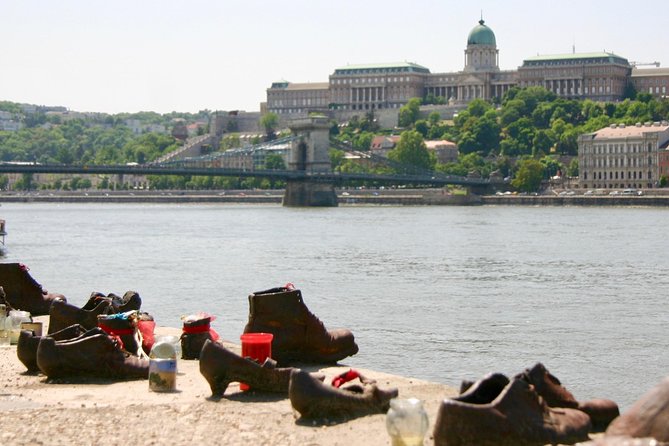
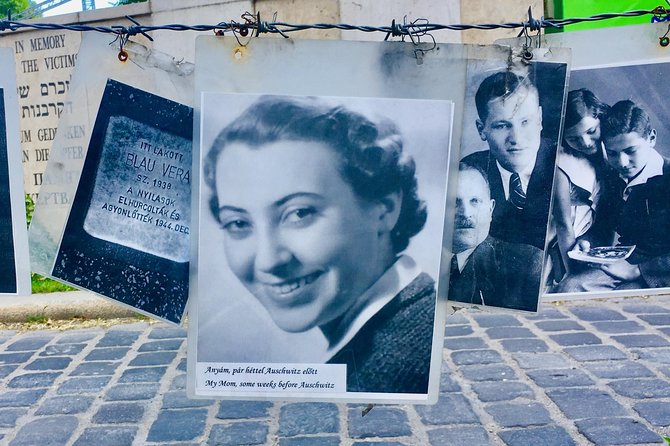
Now the tour comes to one of Budapest’s most haunting memorials: Shoes on the Danube Bank. The sculpture was unveiled on April 16, 2005. It marks the victims who were murdered at this location during World War II.
The memorial is specific and brutal in its wording: victims were forced to remove their shoes before being shot at the riverbank, and their bodies were carried away by the Danube. The sculpture shows the shoes left behind, making absence feel visible.
This is the kind of stop where you should slow down rather than treat it like a quick photo. If your group tends to move fast, gently ask your guide for a minute to stand and read the details. The guide’s job here isn’t just to explain facts; it’s to help you hold the emotion in a way that feels respectful.
Good news for logistics: the Danube memorial stop includes the relevant admission ticket in the tour price.
The ghetto wall and the streets you can still feel
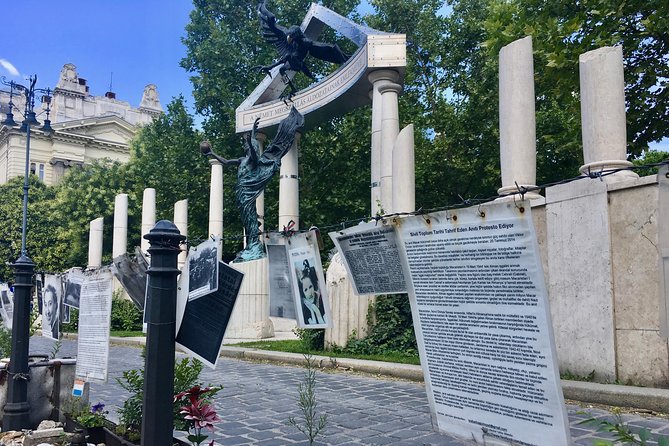
Towards the end, you’ll spend time in the Jewish Quarter area where part of the WWII ghetto wall still stands. Even though much of the original neighborhood layout is gone or changed, the presence of surviving wall sections helps your brain anchor the story.
Your guide will talk about what life inside the ghetto meant, how people were confined, and what happened to them eventually. This is where the tour earns its “secrets” promise—not by promising mystery, but by giving you the human logic behind what you’re seeing and what you’re not.
A practical mindset helps here: don’t expect a time machine. Expect a guided reconstruction. Your guide will help you picture the street-level reality even if today’s Budapest looks different.
If you’re visiting with school-age kids or anyone who needs a kinder pace through heavy history, tell the guide at the start. A well-run private tour can adjust how long you linger at each emotional moment.
Flódni finish: a food ending that doesn’t feel like an afterthought
The tour ends with flódni, a traditional Jewish pastry. This matters more than it sounds. After synagogues and memorials, you’re left with a question: what did culture feel like day to day?
Flódni gives you an answer through taste—something warm, filling, and connected to Hungarian Jewish food traditions. It also keeps you from leaving the neighborhood feeling like you only came for tragedy.
Timing-wise, it’s a nice close to a 2h45 walk. You get a moment to sit, chew, and talk with your guide while everything in the head is still fresh.
Price and value: is $102.95 a fair deal
At $102.95 per person for a nearly three-hour private tour, the value comes from what’s bundled and what’s not.
Included items that add real value:
- A historian guide and a genuine Jewish guide
- Hotel pickup
- A snack at the end with flódni
- A mobile ticket
- Private format, meaning your questions don’t compete with strangers
What to plan for:
- Entrance tickets are not included for the synagogues (the Great Synagogue, Rumbach Street Synagogue, and the Orthodox synagogue). The Shoes on the Danube Bank stop is included.
In other words, the base price is paying for skilled storytelling and on-foot access to multiple key sites, while you top up for specific entries. If you hate paying separate ticket fees, this is your main consideration. If you want a guided thread connecting all the places, it’s a strong deal.
Also note: this tour tends to be booked about two months ahead on average. If your dates are tight, lock it in early so you don’t get stuck with fewer time options.
Who should book this Jewish heritage walk
This is a great fit if you want:
- Context, not just photos (synagogue architecture tied to community identity)
- WWII sites explained with a human, local lens
- A guide who can handle questions and emotional content with care
It’s especially rewarding if your group likes discussion. Some guides on this program bring a teaching style and personal context. For example, you might meet guides such as Miklós who frame the tour around what you hope to understand, or Kata who shares personal family reflections connected to Hungarian Jewish life.
If your goal is only the Great Synagogue exterior and you hate walking, this may feel like a lot. But if you want “one connected story” across several stops, the structure works.
Should you book Budapest Jewish Heritage: Synagogues, Shoes, Secrets & Flódni?
Book it if you want a guided walk where places connect—synagogues, ghetto context, and the Danube memorial—ending with food that reminds you this culture was alive. It’s a thoughtful, private format with strong guide impact.
Skip it (or choose another option) if entrance fees would stress your budget, or if you prefer a lighter agenda with fewer memorial moments. Also consider this: some stops are emotionally heavy, so if you need a gentler rhythm, tell the guide early and ask how they handle pacing.
If you do book, wear comfortable shoes, bring a little extra money for synagogue entry tickets, and give the Danube memorial the time it asks for. You’ll get much more out of the story when you slow down at the right moments.
FAQ
What is included in the tour price?
The tour includes a historian guide, a genuine Jewish guide, hotel pickup, a snack, and a mobile ticket. The Shoes on the Danube Bank memorial stop also has admission ticket included.
Do I need to buy entrance tickets for the synagogues?
Yes. Entrance tickets are not included for the synagogues on the route. The Shoes on the Danube Bank stop is listed as included, while other stops are free or not included.
How long is the tour?
The tour lasts about 2 hours 45 minutes.
Is this a private tour?
Yes. It’s private, meaning only your group participates.
Where does the tour start and end?
It starts at Budapest, Dohány u. 1, 1074 Hungary, and ends back at the same meeting point.
Is pickup available?
Yes. Hotel pickup is offered.