REVIEW · BUDAPEST
Budapest: Danube River Views Bike Ride
Book on GetYourGuide →Operated by Yellow Zebra Tours · Bookable on GetYourGuide
City views, pedaled at human speed. This Budapest bike loop is a smart way to see big landmarks without spending the whole day in buses and lines. I like how it blends Danube riverside panoramas with the grand streets of Andrassy Avenue, and it pairs the visuals with clear stories about what made the city tick.
Two things I really appreciate: the ride covers sights on both sides of the Danube, and the guide turns the stops into something you can actually remember. One drawback to consider is that the biking is mostly continuous for up to around 3 hours, and you may face some uphill sections depending on the day and route.
In This Review
- Quick take: why this Danube bike ride works
- Getting rolling: Yellow Zebra Bikes on Karoly korut 16
- Andrassy Avenue and the Hungarian State Opera House
- St. Stephen’s Basilica, Liberty Square, and Parliament from the bike lane
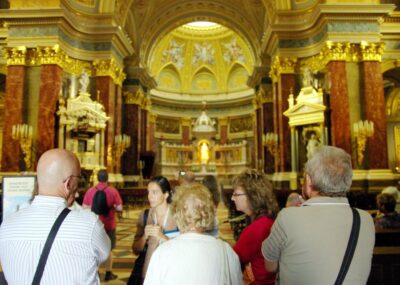
- St. Stephen’s Basilica
- Liberty Square and Parliament
- A quick practical note
- Crossing the Danube: Chain Bridge and Elisabeth Bridge as moving viewpoints
- Why this bridge segment is more valuable than it sounds
- Margit Bridge into Buda: Ottoman-era context while you ride west
- The “feel” of Buda from the ride
- Clark Adam Square, Hotel Gellért, and the thermal-baths area
- Hotel Gellért area
- Rudas Thermal Baths area
- Pest side momentum: riding back across Elisabeth Bridge
- The Opera House finish: how the tour wraps and what to do next
- What I recommend you do after
- Price and value: is $41 fair for 2.5 hours?
- Biking level and the one thing to plan for
- What can happen with bike types
- Weather and safety reality check (because Budapest has opinions)
- Who this tour suits best
- Should you book this Budapest Danube River Views Bike Ride?
- FAQ
- How long is the Budapest Danube River Views Bike Ride?
- What’s included in the price?
- What sights do you see during the ride?
- Is food or museum entry included?
- Where does the tour start?
- What language is the tour guide?
- Is the tour suitable for children?
- Do you go in bad weather?
- Is there flexibility for booking and cancellation?
Quick take: why this Danube bike ride works
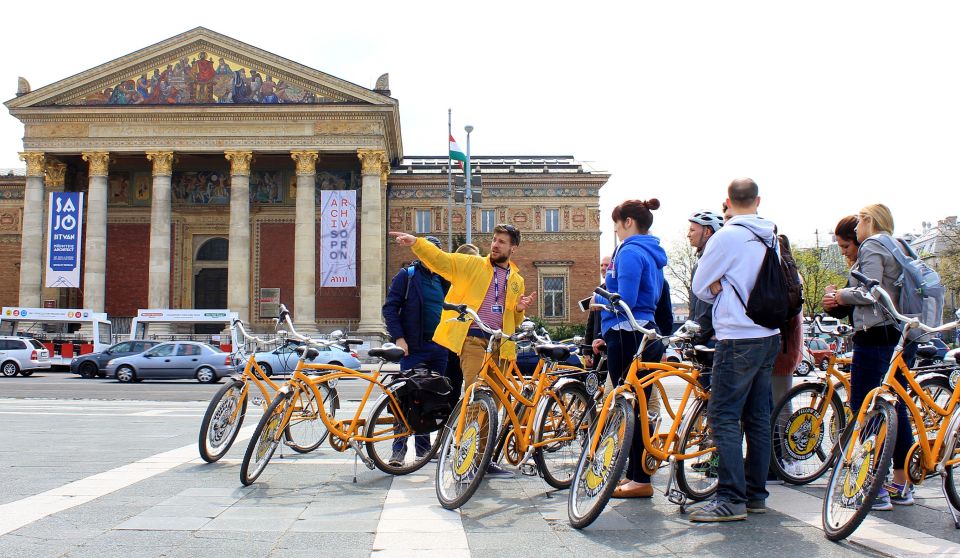
- UNESCO Andrassy Avenue + Opera House along a grand, classic corridor of architecture
- Bridges as viewpoints, not just crossings: you’ll ride over and past major ones like Széchenyi Chain Bridge and Elisabeth Bridge
- Both Buda and Pest promenade bike lanes, so the city feels like two connected worlds
- History that fits the motion: you’ll hear siege and Ottoman-expansion context while you’re actually looking at the Danube
- A guide can make-or-break it, and the reviews consistently highlight storytelling and humor
- Small group (up to 10), which usually means more time for questions and quicker course corrections
Getting rolling: Yellow Zebra Bikes on Karoly korut 16
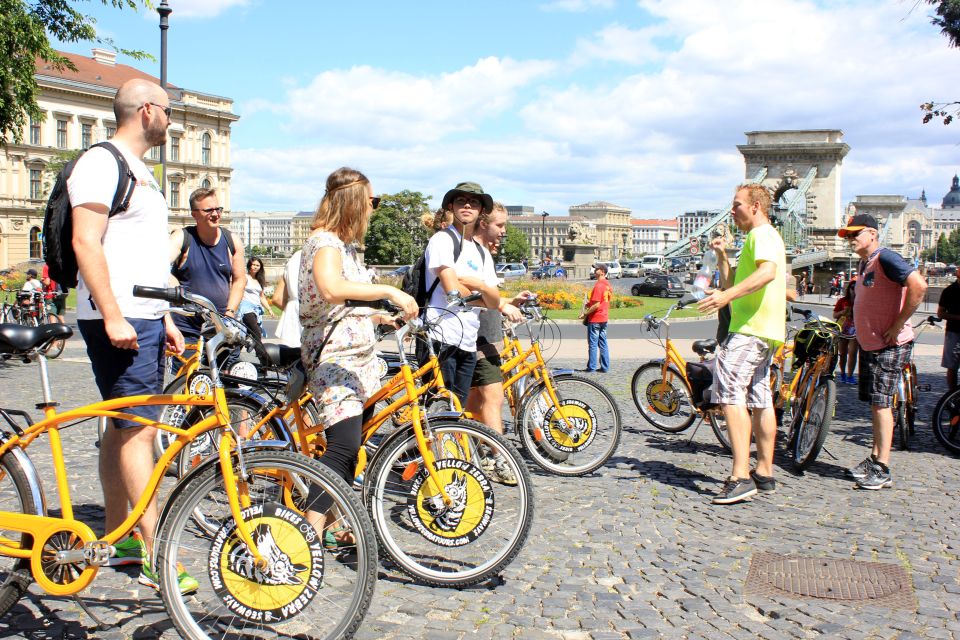
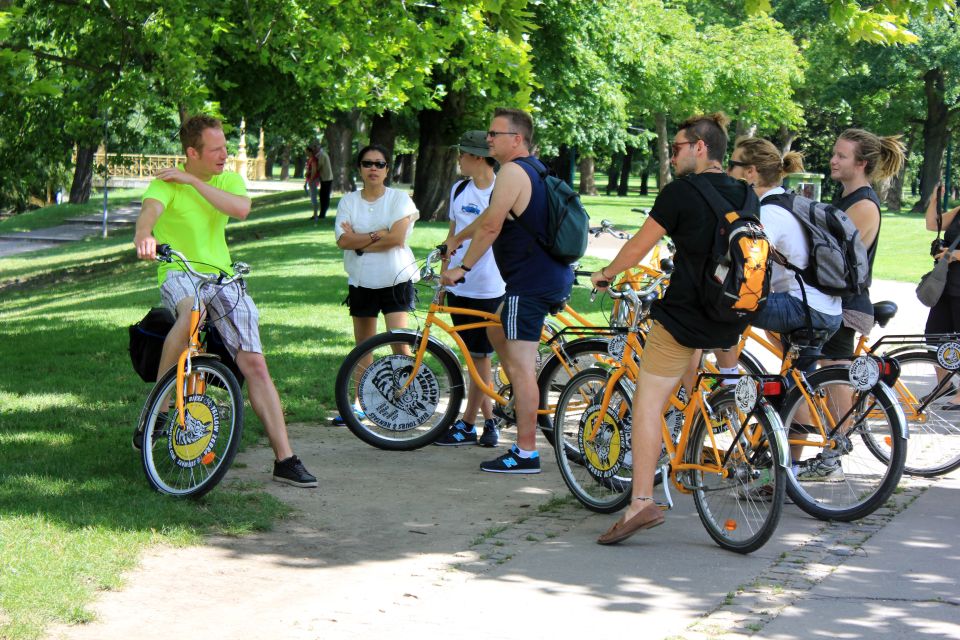
You start at Yellow Zebra Bikes & Segways, 1052 Budapest, Karoly korut 16, in the courtyard. There’s a doorbell labeled 6, so don’t be shy about using it if the bikes aren’t immediately visible. The tour runs with an English live guide, and it’s built for a small group—limited to 10 participants—so the pace stays friendly.
This kind of setup matters. When a bike tour is too big, you end up waiting at every corner. Here, the smaller group size keeps the ride fluid, which is exactly what you want when your payoff is long views down the river and quick glimpses between major landmarks.
You’ll want to arrive with comfortable shoes and weather-appropriate clothing. The tour goes in all weather, so plan around rain or wind instead of expecting a cancellation. Also note that public transport tickets to and from the start/end points aren’t included, so factor in how you’ll get there.
You can also read our reviews of more cycling tours in Budapest

Andrassy Avenue and the Hungarian State Opera House
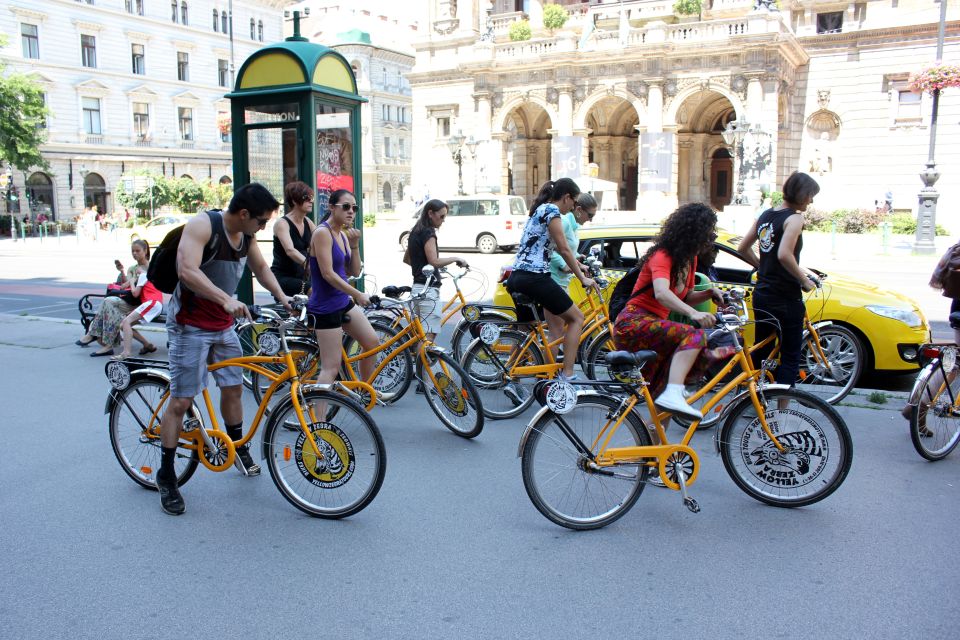
One reason this tour is worth the money is that it doesn’t only do the Danube. It also gives you Andrassy Avenue, a UNESCO World Heritage Site, which is where Budapest shows off its grand “capital-city” face.
On the tour route, you’ll cruise past the area around the 19th-century Hungarian State Opera House. Even if you never go inside, seeing it from the street gives you a feel for the scale and style of the building. It’s the kind of spot that helps you understand why Budapest became such a cultural center in Europe during that era.
Andrassy Avenue is also a great mental switch from the river. From the water you get breadth and skyline views. On this avenue, you get formality: long sightlines, street geometry, and a sense that the city planners were thinking far ahead.
St. Stephen’s Basilica, Liberty Square, and Parliament from the bike lane
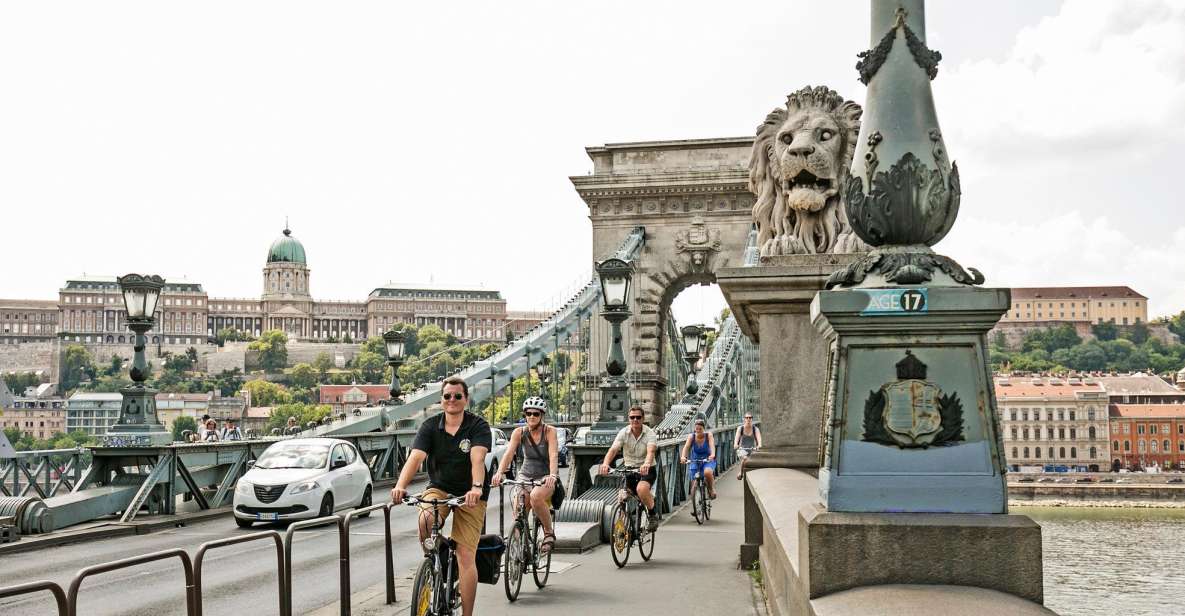
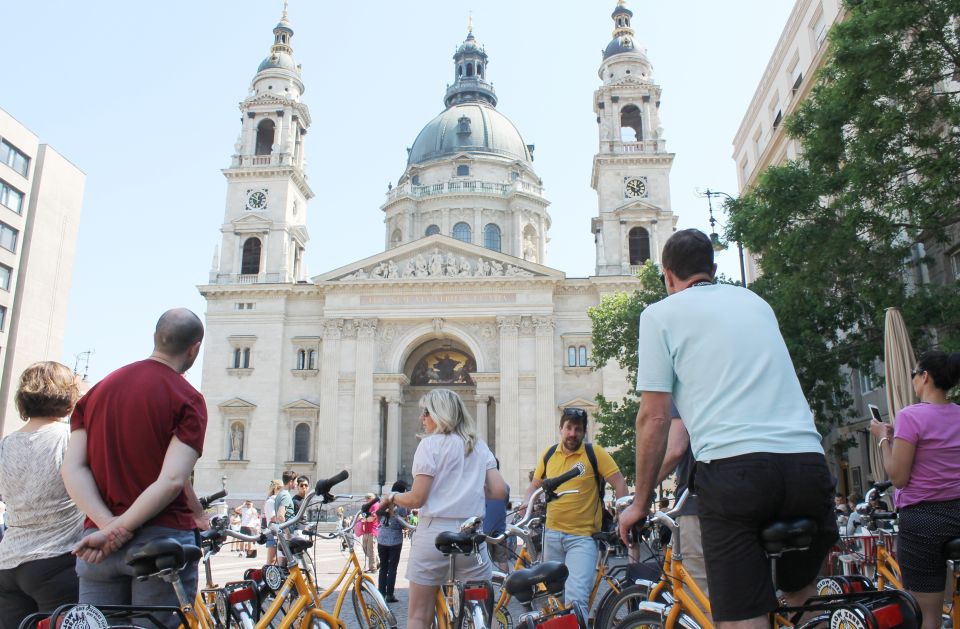
From Andrassy Avenue, the ride pushes you toward some of the most recognizable civic landmarks: St. Stephen’s Basilica, Liberty Square, and the Parliament building area. The nice part about seeing these by bike is timing. You’re not stuck waiting for a museum schedule, and you’re not losing time in taxis while the city reshapes itself around you.
St. Stephen’s Basilica
You’ll get a clear sightline and the right context for why it matters. A basilica is more than a photo object here—it’s part of Budapest’s identity, and it anchors your understanding of the city’s timeline.
Liberty Square and Parliament
This is where your ride starts to feel like a “walk through the big moments” of the city. Parliament is dramatic and unmistakable. Looking at it from a bike lane and moving past it gives you a different angle than standing still. It also helps you notice the city’s layout: how the road lines and river position work together.





A quick practical note
You’re riding on urban streets and promenade bike lanes. That means you should expect traffic noise and occasional tight turns at intersections. It’s manageable, just don’t show up in flip-flops and a hope-it’s-fine attitude.
Crossing the Danube: Chain Bridge and Elisabeth Bridge as moving viewpoints
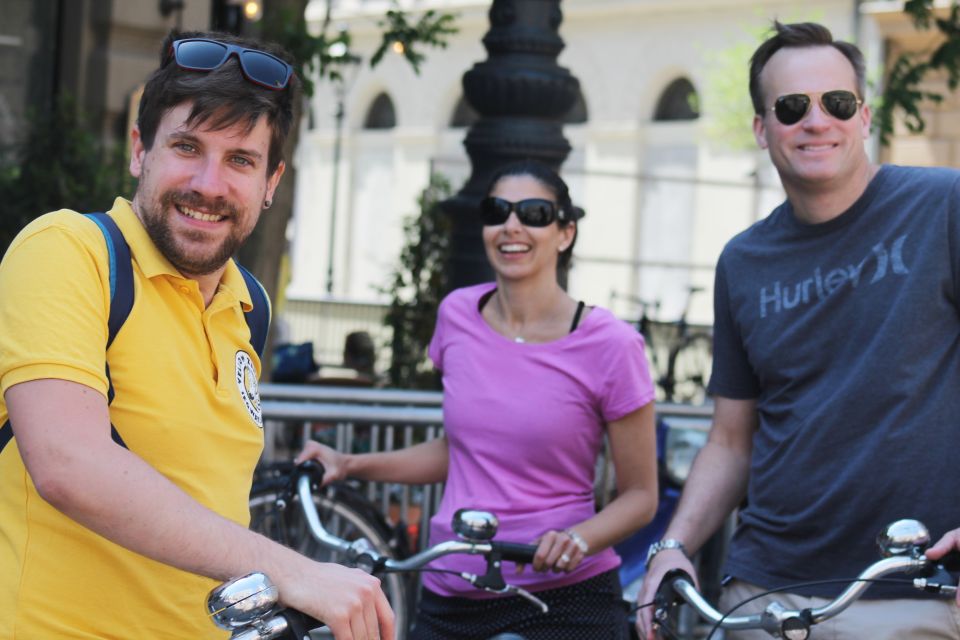
The heart of this tour is the Danube corridor. You’ll ride along the river and zip over major bridges, including Széchenyi Chain Bridge and Elisabeth Bridge. Bridges are useful stops on a bike tour because they compress effort and reward: you get a big view with one continuous movement.
You also hear stories that tie the bridge to the city’s changing power centers. That matters because Budapest’s beauty can feel like it’s just scenery until someone explains how the river and the bridges shaped movement, trade, and defense.
Why this bridge segment is more valuable than it sounds
Seeing bridges from the sidewalk is fine. But crossing by bike means you’re “in” the structure. You get uninterrupted sightlines across the water, and the city reads like a map rather than scattered landmarks.
Also, because you’re moving, you see the river as a thread. You don’t just collect one postcard after another—you connect them.
Margit Bridge into Buda: Ottoman-era context while you ride west
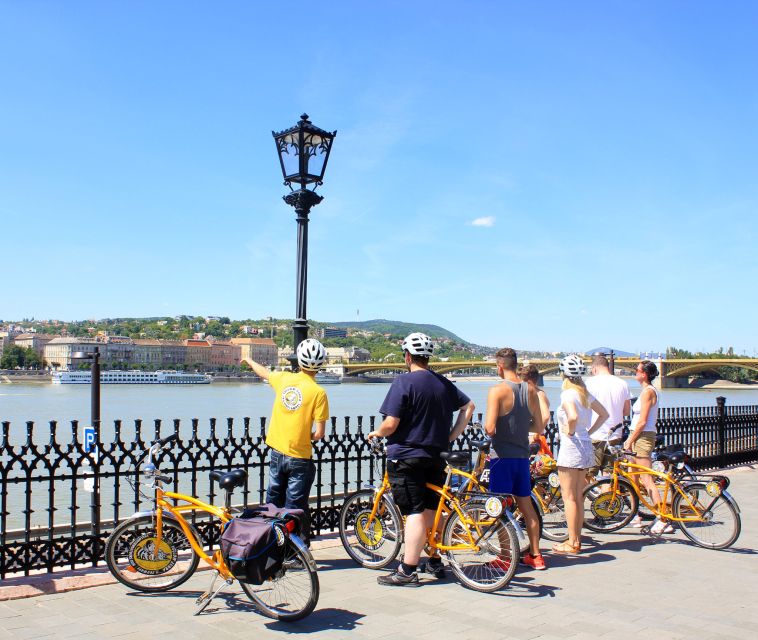
Once you cross to the west bank, the tour shifts into Buda mode. You’ll cross the Margit Bridge to reach Buda’s side of the Danube, and this is where the history becomes especially practical.
You’ll learn about Buda’s past of sieges and conquests during the Ottoman expansion, which nearly decimated the city’s population at one point. That kind of information is more than trivia. It helps you understand why the city’s layout and fortification instincts mattered so much here—and why the riverfront and surrounding hills became strategic.
On a bicycle, that context clicks faster because you’re not stuck staring at a plaque. You’re riding through the same urban geography that shaped those battles.
The “feel” of Buda from the ride
Buda tends to make you notice elevation and angles more. Even when it isn’t a full-on hill climb, you’ll likely feel a shift in rhythm—slower pedaling, tighter breathing, and more frequent glances at how the streets align with the river.
If uphill sections are a concern, check with the operator when you confirm your bike type and be honest about your comfort level.
Clark Adam Square, Hotel Gellért, and the thermal-baths area
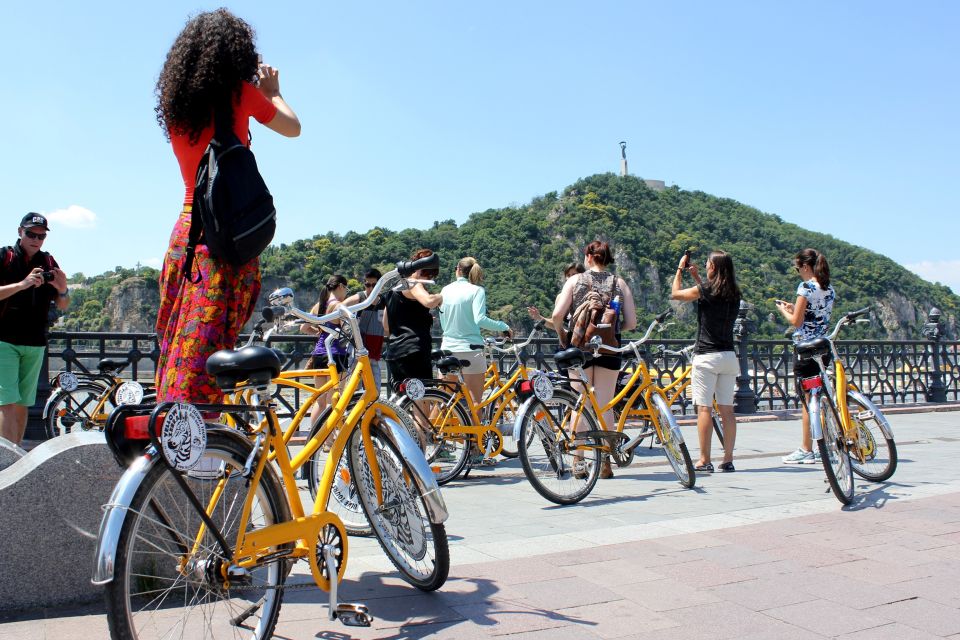
The tour then heads toward sights around Clark Adam Square, the Hotel Gellért, and the Rudas Thermal Baths area. This is a key part of the “Budapest package” because it shows you the city’s relationship with heritage and leisure.
Even if you’re not going into any of the buildings, these stops help you understand why Budapest is famous for its thermal culture and why the city’s most photographed views often cluster near the river.
Hotel Gellért area
You’ll get a sense of the grandeur that lines up with the river corridor. It’s the kind of location that makes you stop pedaling for a second—just to look, not to rush.
Rudas Thermal Baths area
This is another spot that reinforces what Budapest does well: turning everyday life, relaxation, and history into a single city identity. You’re not paying an entrance fee as part of the tour, so treat the ride as a great way to orient yourself—and then decide later if you want to go inside during free time.
Pest side momentum: riding back across Elisabeth Bridge
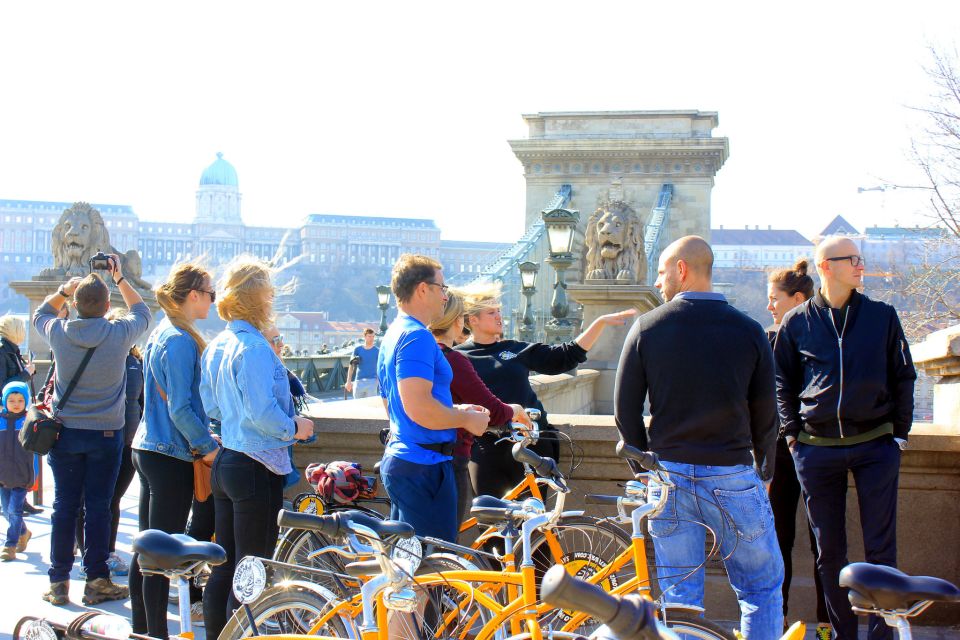
After Buda, you’ll cycle back across Elisabeth Bridge into Pest downtown. This is a satisfying shift. Pest tends to feel more open and street-forward, while Buda has more of that layered, historic hill-and-river vibe.
The tour includes prominent Pest sights you’ll connect to earlier segments, including the feel of the downtown core. You also pass by major landmarks like the Great Synagogue too—another “big silhouette” moment that’s easiest to enjoy while you’re moving.
If you’re the type who likes to understand how neighborhoods connect, this back-and-forth routing is the point. You’re not just seeing famous structures—you’re learning the city’s flow.
The Opera House finish: how the tour wraps and what to do next
The ride concludes back around Andrassy Avenue, where you’ll have a chance to see the area of the Hungarian State Opera House again. This works well because it gives you a finale in the grand “show street” zone after you’ve spent the rest of the tour reading the river and bridges.
What I recommend you do after
You’ll likely finish with enough orientation to explore on your own. Since entrance fees and food aren’t included, you’re free to choose your own pace for lunch, coffee, or museum time. If you’re already thinking ahead, keep an eye on what looks closest to your hotel from the end point on Andrassy Avenue.
Price and value: is $41 fair for 2.5 hours?
At $41 per person for about 2.5 hours (with a note that the ride can run up to about 3 hours with short breaks), this tour is priced for a specific kind of value: getting maximum “major landmarks per hour” without paying for attractions.
What you get included:
- Bike hire
- Optional helmet
- Live English guide
What you don’t get:
- Food and beverages
- Entrance fees
- Public transport tickets
Is that good value? Yes, if your goal is orientation and sight coverage rather than museum time. You’re buying efficient access to the big hits—Opera House area, Basilica, Parliament vicinity, key bridges, and Buda/Pest river context—while keeping your sightseeing costs controlled.
If you want to go inside every stop, you’ll pay extra anyway. So I’d treat this ride as the best first chapter of your Budapest day, not as a full replacement for paid attractions.
Biking level and the one thing to plan for
This isn’t a leisurely pedal-in-a-park tour. It’s light but mostly continuous biking, with short breaks, up to around 3 hours. You should be fit enough to keep moving for that stretch.
You should also expect that the route can include uphill parts. One review mentioned uphill sections as something to consider when booking, and that’s fair advice. If you’re not sure how you’ll handle hills, it’s worth discussing your comfort level when you’re there.
What can happen with bike types
One review noted a scheduling mishap that turned a regular bike plan into an e-bike experience. The ride was still fun and still covered good sights, but it wasn’t what was expected. If you care about whether your bike is electric or not, I’d confirm the bike type at the start so there are no surprises.
Weather and safety reality check (because Budapest has opinions)
The tour goes in all weather conditions. Refunds or exchanges aren’t provided due to adverse weather, so pack your common sense. Wind off the Danube can feel sharper than you expect, and rain can make signage and intersections harder to read.
The operator also isn’t responsible for unforeseen delays or accidents, and intoxication isn’t allowed. That’s standard, but it’s good to know up front: this is a moving-safety situation, not a sightseeing stroller parade.
Who this tour suits best
This is a strong match for you if:
- You want a guided overview of Budapest’s top sights without ticket queues
- You like seeing the city’s structure by bike—bridges, river lanes, and avenues
- You enjoy history told in story form while you’re looking at the places
- You want a small group setting and a guide who keeps things entertaining
It may be less ideal if:
- You want a totally flat, stop-and-start style tour
- You’re bringing kids under 12 (not suitable)
- You plan to treat the ride as an easy walk alternative
Should you book this Budapest Danube River Views Bike Ride?
I’d book it if you want the best first pass at Budapest’s highlights in one motion-filled afternoon. The combination of Danube views, UNESCO Andrassy Avenue, and the major civic landmarks is exactly the kind of “value-per-hour” travel move that pays off later when you explore on your own.
The guiding factor is the guide experience. Reviews consistently point to guides who tell good stories and keep the mood light. If you’re the kind of person who pays attention during history talk and likes a bit of humor, this tour tends to land well.
If you’re fragile with hills or hoping for strictly slow, leisurely pacing, check the biking level expectations carefully. Otherwise, this is a practical, enjoyable way to get your bearings fast—and enjoy the city while you’re doing it.
FAQ
How long is the Budapest Danube River Views Bike Ride?
The tour runs for about 2.5 hours.
What’s included in the price?
Bike hire is included, and an optional helmet is available.
What sights do you see during the ride?
You’ll see highlights including the Opera House on Andrassy Avenue, the Great Synagogue, St. Stephen’s Basilica, Parliament, Liberty Square, and bridges such as the Széchenyi Chain Bridge and Elisabeth Bridge, plus areas around Clark Adam Square, Hotel Gellért, and Rudas Thermal Baths.
Is food or museum entry included?
No. Food and beverages, plus entrance fees to sights and museums, are not included.
Where does the tour start?
The meeting point is Yellow Zebra Bikes & Segways, 1052 Budapest, Karoly korut 16, in the courtyard (doorbell 6).
What language is the tour guide?
The live tour guide speaks English.
Is the tour suitable for children?
No, it’s not suitable for children under 12.
Do you go in bad weather?
The tour proceeds in all weather conditions. Refunds or exchanges are not given due to adverse weather.
Is there flexibility for booking and cancellation?
You can cancel up to 24 hours in advance for a full refund, and there’s an option to reserve now and pay later.