REVIEW · BUDAPEST
Buda Castle Walking Tour: A Kingdom of Many Nations
Book on Viator →Operated by Insight Cities · Bookable on Viator
The best part of Budapest is really up a hill. This small-group Buda Castle District walk strings together centuries of power, faith, and city-making—from royal palaces to the Danube view spots. I like that the tour runs in a tight group (maximum six) so the guide can shift to what you care about, and I also like the way guides such as Peter and Kata bring the stories to life with real local detail. One thing to plan around: Matthias Church and Fisherman’s Bastion tickets aren’t included, so you’ll still pay onsite for the big-ticket interiors/views.
If you want “Budapest in one afternoon,” this is a smart way to do it. You’ll pass the UNESCO-protected Castle Hill streets (cobbled, steep, and full of atmosphere) and learn why the skyline looks the way it does after war and rebuilding. Still, expect walking on uneven historic terrain and some tight spots around major sights—great on a sunny day, less fun if the cobbles are wet.
In This Review
- Key highlights to look forward to
- Why Castle Hill Feels Like Multiple Eras at Once
- Price and What You Get for $126.15
- Small-Group Pace, Timing, and the Best Way to Use Your Afternoon
- From Royal Fortress to Rebuilt Power: Walking the Buda Castle Area
- Sandor Palace: Where Modern Hungary Lives Beside Ancient Streets
- Matthias Church: Ticketed Interior Worth the Extra Step
- Fisherman’s Bastion: The Danube View That Actually Means Something
- Vienna Gate Finish: A View Toward Obuda and Aquincum
- Who This Tour Is Best For (and Who Might Skip It)
- Should You Book This Buda Castle District Walking Tour?
- FAQ
- FAQ
- What’s the duration of the Buda Castle walking tour?
- How big is the group?
- Are tickets for Matthias Church included?
- Are tickets for Fisherman’s Bastion included?
- Is the Buda Castle area ticketed?
- Where does the tour start and end?
- Do I need hotel pickup?
Key highlights to look forward to

- Small group, maximum six people: a pace that works for questions and photo stops
- Castle Hill’s UNESCO zone: narrow lanes, Gothic/Baroque facades, and layered architecture
- A guided “who ruled when” story: Béla IV to Matthias to Ottoman and Habsburg eras
- Matthias Church as a true crown-jewel stop: richly decorated roof and interior (ticket extra)
- Fisherman’s Bastion panoramas: seven towers tied to the Magyar tribes (ticket extra)
- Finish at Vienna Gate: a clear view line toward Obuda and the Roman site of Aquincum
Why Castle Hill Feels Like Multiple Eras at Once
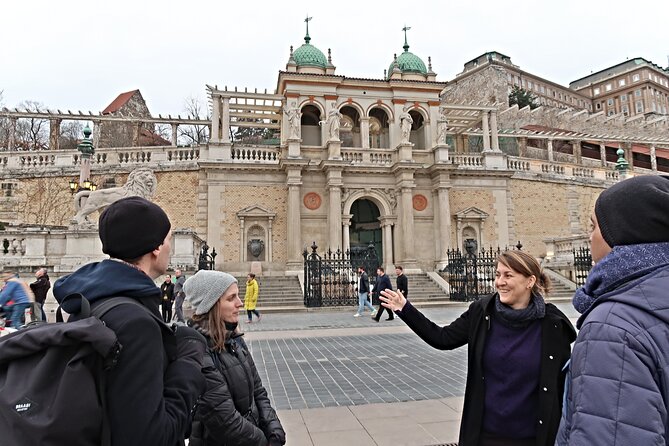
Castle Hill is where Budapest starts to make sense. From ground level, the city looks grand and modern. Up here, the view is only half the story. The other half is how often this hill changed hands—and how that shows up in the buildings.
You’ll walk through an area that’s older than most big European capital “hits,” and it wears its history openly. The palace area mixes styles you’d expect from different centuries: baroque and Gothic facades, Renaissance influence from the height of Matthias’s court, and later reconstructions. And because the district took serious damage during World War II and was rebuilt, you get that extra layer of “what got saved, what got rebuilt, and what got reinvented.”
This is the kind of tour where the guide makes you look up. It’s not just point-and-shoot sightseeing. You’ll learn what you’re seeing—why a roof color matters, why a steeple is shaped a certain way, why certain buildings ended up with royal roles. That’s what makes the time feel worth it, even though it’s only about three hours.
You can also read our reviews of more walking tours in Budapest


Price and What You Get for $126.15
$126.15 for a three-hour guided walk is not “budget,” but it isn’t outrageous for a small-group, history-heavy tour in a prime location. The value is less about ticket access (two major sites cost extra) and more about guide time and group size.
Here’s what you’re paying for in practical terms:
- A professional guide for the full walking stretch
- A max of six people (with a total cap listed as eight for the activity) which helps cut the “herding cats” factor
- A built-in route through multiple key points on Castle Hill in a logical order
- Context so you’re not just looking at famous names on a wall
And here’s the trade-off: entrance tickets for Matthias Church and Fisherman’s Bastion are not included. The tour time still covers them, but you’ll need to budget for onsite entry. If you’re the type who hates surprises, this is worth knowing up front.
Small-Group Pace, Timing, and the Best Way to Use Your Afternoon
This tour runs as a guided walk with no hotel pickup. That means you start at a clear meeting point: Budapest, Országház u. 31, 1014 Hungary. It’s near public transportation, which matters because you’ll likely want a simple transfer after you connect from wherever you’re staying.
Departure can be morning or afternoon depending on the day, so you can match it to your energy. I like afternoon options when I want softer light for photos and a more relaxed pace. Morning can be great too—just check the weather, since Castle Hill’s cobbled lanes are best enjoyed when you’re not battling rain.
What also helps: the tour is designed for a group that’s small enough for the guide to adjust. In guides like Peter, Judith, Kata, and Veronica’s stories, the common thread is flexibility—slower pace if you want to linger, more structure if you want the big facts fast.
A practical tip: if you’re the “I read every plaque” type, this is still a guided route, not a museum marathon. You’ll get plenty of explanation along the way, but you’ll want to accept that you’re seeing highlights, not every inch.
From Royal Fortress to Rebuilt Power: Walking the Buda Castle Area

Your tour’s core starts on Castle Hill itself. You’ll notice right away this place isn’t a single building you tour. It’s a district with important structures around narrow, older streets. That matters because it keeps the walk feeling like moving through a living neighborhood—not just passing by a single monument.
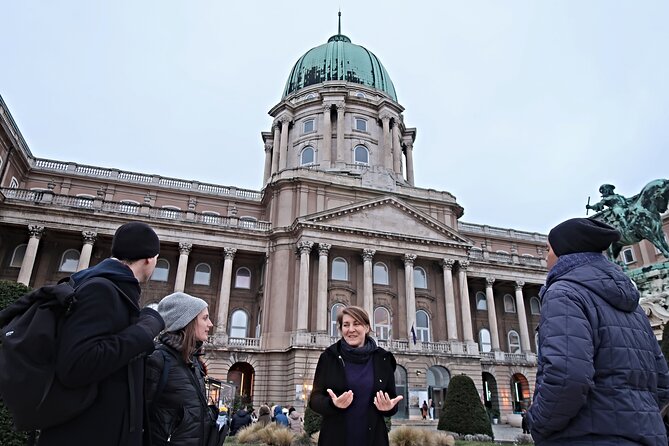
A major anchor here is the palace area. The guide frames it as a power center that never stayed still. It was rebuilt, extended, burned down, and rebuilt again multiple times. That’s not trivia. It explains why the architecture looks the way it does today.
A few big story points you’ll hear as you walk:
- King Béla IV erected a fortress around 1250, after Mongol devastation.
- In the Renaissance, King Matthias turned the court into one of Europe’s famous political and cultural centers.
- Then came long rule by Ottoman forces, often called Turkish pashas in local history discussions.
- After that, the Habsburg emperors took the reins.
- And after World War II, the palace gained its current mixed look in the post-war rebuilding period.
This is where the tour really earns its price. Without guidance, the palace complex can feel like “big walls and courtyards.” With the storyline, you understand what each period left behind. You start to see the building as a map of who held authority—and how each era re-shaped the meaning of the space.
If you love architecture, keep an eye on the facades. The area’s mix of baroque and Gothic elements is part of the visual argument for all those centuries of change.
Sandor Palace: Where Modern Hungary Lives Beside Ancient Streets

A short walk brings you to Sándor Palace, the official residence of the President of Hungary and also the seat of the President’s office since 2003.
What’s useful here is how the guide ties the building to place rather than treating it like a random “another palace.” The original palace dates to 1806 and is described as Neoclassical, commissioned by Count Vincent Sándor, an aristocrat and philosopher of the Austro-Hungarian Empire.
This stop adds a nice contrast: you’re moving from medieval and early-modern power stories into a modern state setting. Even if you can’t go inside (the tour timing here is brief), it helps you understand Budapest isn’t only a set of postcard ruins. It’s also a working capital with real governance at work.






Matthias Church: Ticketed Interior Worth the Extra Step

If you want one place that sells the tour idea, it’s Matthias Church. The outside is unmistakable with its colorful roof and a tall steeple, but the real payoff is what the guide helps you notice when you look closer.
Expect a stop focused on two things:
- The exterior character, including the roof and the “crown” shape that makes it a visual landmark
- The church’s interior artistry, which is described as an amazing experience
Here’s the catch: Matthias Church entry is not included. You’ll pay onsite. That doesn’t make the tour worse—it just means you should treat this as a planned add-on rather than a surprise bill.
From a practical angle, this stop is the moment when the walk becomes more than history. It becomes a cultural reset. If you’ve been skimming cities for photos, you’ll likely slow down here.
And based on the quality of guides in this route (you’ll see names like Kata and Marianna in the guide roster mentioned), you’ll probably appreciate the way the guide connects the church to Hungary’s royal legacy—matters like coronation history come up in the way the tour frames the site.
Fisherman’s Bastion: The Danube View That Actually Means Something

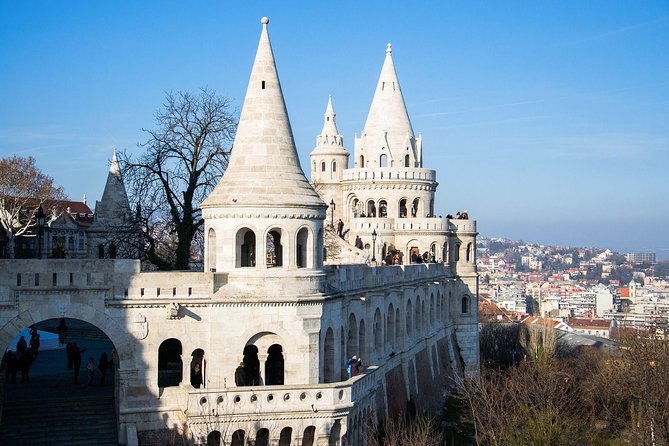
Then you reach Fisherman’s Bastion, and yes—the view is famous. You can see out toward the Danube, Margaret Island, Pest, and Gellért Hill.
But the best part is that you get a reason for the symbolism, not just a “stand here and look” moment. Fisherman’s Bastion is described as an architectural fantasy built between 1895 and 1902, drawing on neo-Gothic and neo-Romanesque styles. The seven towers represent the seven Magyar tribes that settled in the Carpathian Basin around the end of the 9th century.
So when you’re standing with the towers behind you, you’re not just looking at cute stone. You’re looking at a 19th-century story about identity and origins told in architecture.
This stop is also ticketed (not included). The guide will still get you positioned for the best viewpoint time. Still, I’d plan mentally for extra effort at the entrance.
One small reality check: the terrace view is popular. If you’re going during peak times, you’ll likely share space. The upside of a small group is that you spend less time stuck in long slow lines and more time actually looking.
Vienna Gate Finish: A View Toward Obuda and Aquincum
The tour ends at Vienna Gate, and that finish point is a smart choice. It gives you a last line of sight rather than a final indoor moment.
From here, you can look toward Obuda (Old Buda), where the Romans founded the city called Aquincum. That last bit matters because it widens your timeline. The walk started with medieval power; it closes with ancient roots.
It also helps you “map” Budapest in your head. After Castle Hill, Obuda becomes less of an abstract district name and more of a continuing story.
Who This Tour Is Best For (and Who Might Skip It)
This is a strong match if you want:
- A small-group way to see Castle Hill without getting stuck in huge crowds
- A guided history thread that connects architecture to real political shifts
- A walk that includes both major photo stops and less obvious meaning
It’s also great for people who like talking. The consistent praise across guide stories is that they answer questions patiently and match your pace.
You might think twice if:
- You hate paying separate onsite tickets, since Matthias Church and Fisherman’s Bastion aren’t included
- You’re limited on walking or dislike cobblestones and hill terrain
- You want a long, museum-style experience with deep time in one building (this is a district walk, not a full interior day)
Should You Book This Buda Castle District Walking Tour?
I’d book it if you want a clean, efficient way to understand Castle Hill instead of collecting unrelated sights. The small group size makes it easier to ask questions and get a route that actually hangs together. And with guides like Peter, Judith, Kata, Veronica, Marianna, and Runa showing up as examples of the kind of storytelling quality you can expect, the tour’s biggest strength is how well it turns landmarks into context.
If you’re already planning to visit Matthias Church and Fisherman’s Bastion anyway, the route helps you do it in a smarter order—with explanation on the way. Just remember to budget for the separate entrances, wear shoes for old-street walking, and bring a little patience for crowding at the famous viewpoints.
FAQ
FAQ
What’s the duration of the Buda Castle walking tour?
The tour is about 3 hours.
How big is the group?
It’s a small-group experience with a maximum of six people per booking, and the activity has a maximum of eight travelers.
Are tickets for Matthias Church included?
No. Matthias Church tickets are not included.
Are tickets for Fisherman’s Bastion included?
No. Fisherman’s Bastion tickets are not included.
Is the Buda Castle area ticketed?
The tour description lists admission ticket-free time at the Buda Castle/palace stops, while other major sites have tickets you pay separately.
Where does the tour start and end?
It starts at Budapest, Országház u. 31, 1014 Hungary. It ends at Vienna Gate in Budapest.
Do I need hotel pickup?
No hotel pickup and drop-off is included. You meet at the given start location.