REVIEW · BUDAPEST
Tiny Sculptures, Big Stories: Kolodko mini statue tour
Book on GetYourGuide →Operated by ET Alternative · Bookable on GetYourGuide
Kolodko’s tiny bronze legends turn Budapest into a scavenger hunt. I like how the walk is built around Mihail Kolodko mini statues, and I really enjoy ET’s street-art storytelling that ties each figure to a neighborhood idea or legend.
One thing to consider: this is partly a find-and-walk experience, so you’ll want comfy shoes and patience for spotting figures on busy corners.
In This Review
- What you’ll do in this tour (the short version)
- Key highlights worth booking
- Why Kolodko’s mini statues are a perfect Budapest “first impression”
- Starting at New York Café, ending at Szent Gellért tér
- The Kolodko statue hunt: how you’ll actually spot them
- Danube and synagogue time: why these stops fit the theme
- Public transport included: a smart way to cover Budapest without burning out
- Who ET is and what he brings to the tour
- Price and value: is $35 for 2.5 hours worth it?
- The best kind of traveler for this mini statue tour
- What to bring and how to get the most out of it
- Should you book this tour?
- FAQ
- How long is the Kolodko mini statue tour?
- Where do we meet and where does the tour finish?
- How much does the tour cost?
- Is the tour in English?
- Is public transport included?
- What group size is this tour?
- What will we see besides Kolodko statues?
- Is free cancellation available, and can I pay later?
What you’ll do in this tour (the short version)
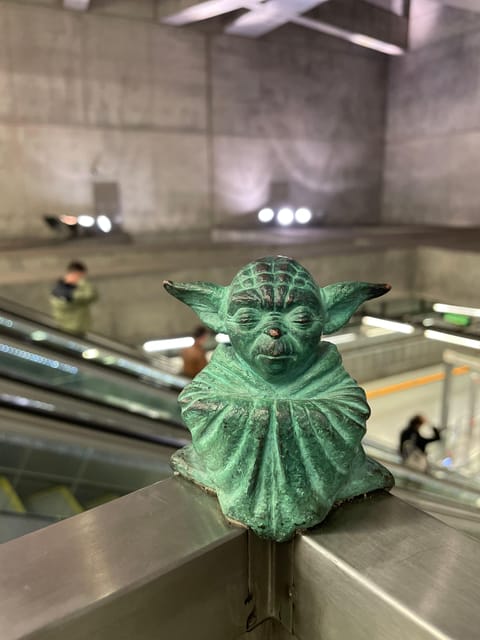
You meet at New York Café Budapest, start on the Pest side, and finish on the Buda side at Szent Gellért tér. Along the way, ET leads you by tram, metro, and other public transport, then pauses often so you can hunt for statues and learn what they’re referencing. The group stays small (up to 10), and the whole tour runs in English for about 2.5 hours.
Key highlights worth booking
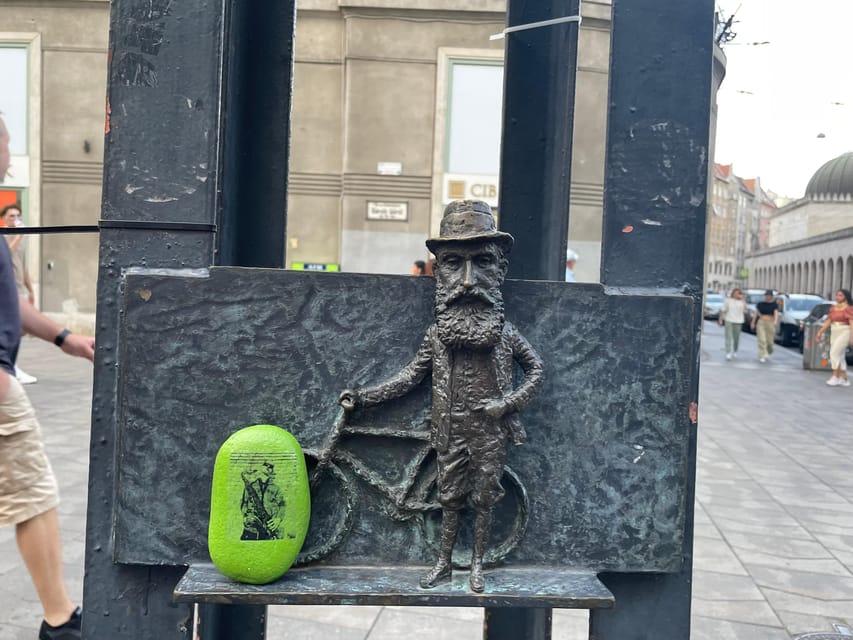
- Kolodko’s bronze miniatures as your guidebook
- ET’s lively, interactive storytelling in English
- Pest-to-Buda route with public transport tickets included
- Time near a synagogue and with Danube-area scenery
- Small-group pace that lets you ask questions
You can also read our reviews of more tours and experiences in Budapest.



Why Kolodko’s mini statues are a perfect Budapest “first impression”
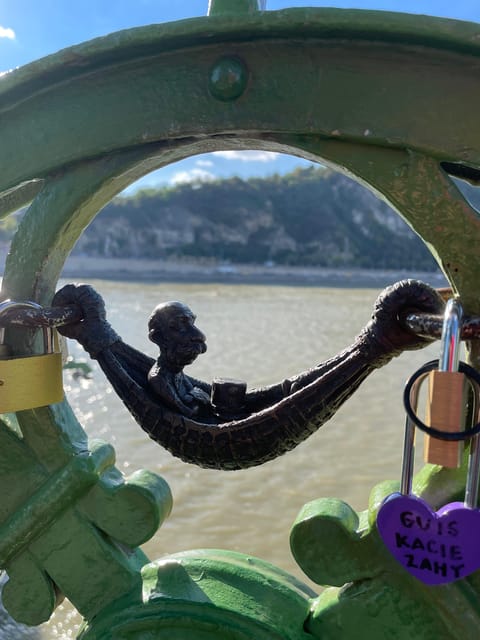
Budapest is famous for the big stuff—grand facades, major squares, classic views. This tour flips the script. You spend your time looking down, around, and slightly sideways for Mihail Kolodko’s small bronze works scattered across the city.
The magic is that these aren’t random decorations. The statues are designed to connect to local folklore and to the feel of different neighborhoods. So instead of only learning dates and buildings, you learn how Budapesters think: what they joke about, what they remember, and how they comment on their world through art. That’s why the experience can feel more personal than a typical sightseeing loop.
And since you’re searching for small objects rather than staring at huge monuments, your brain stays switched on. You keep noticing details you’d normally miss—street corners, facades, and the odd little space where a statue can hide.
Starting at New York Café, ending at Szent Gellért tér
This tour begins right where it’s easy to orient yourself: in front of New York Café Budapest. From there, you move out with ET and start tracking the statues on the Pest side. You’re not stuck in one tight walking lane. You’ll switch between foot travel and public transport, which helps the route feel more like a neighborhood tour than a long march.
The finish point is Szent Gellért tér—a great end location because it’s central and makes it simple to continue exploring or head back toward your lodging area. If you like tours that end in a place that feels usable afterward (not stuck on the edge of nowhere), this one has that advantage.
One practical note: since your start and finish are different sides of the river, it helps to plan the rest of your day with that in mind. The tour is built around that Pest-to-Buda flow.
The Kolodko statue hunt: how you’ll actually spot them
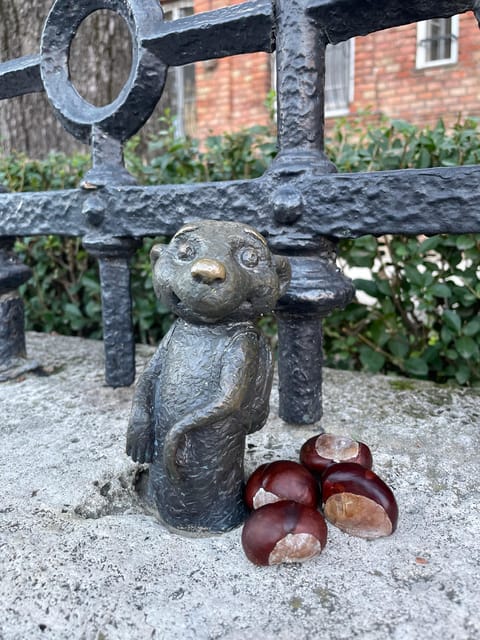
Kolodko’s works are small, sometimes tucked into places you’d never check twice. That’s why the guide matters. ET doesn’t just point once and move on. The experience is built to teach you how to look—so you start seeing patterns in how the statues are placed and what kind of story each one is trying to tell.
In terms of quantity, the number of statues you notice can vary with pace and conditions. Based on the range people share, you can plan on something like around 15 to 25 mini statues during a single run. Even if you don’t catch every one, you’ll still leave with a strong sense of what Kolodko is doing and why it works.
What I like about the structure is the rhythm:
- You find (or get help finding) a statue.
- You learn the meaning behind it in plain language.
- Then you move on and keep training your eye for the next one.
This makes it feel less like a museum and more like walking with someone who knows where the jokes are hidden.
Possible drawback: because the statues are tiny, weather can change your experience. In cold or poor visibility, you may need to slow down and focus more on the hunt, not just the scenery. Still, that’s part of the fun—think treasure-hunt energy, not checklist tourism.
Danube and synagogue time: why these stops fit the theme
The highlights include both the Danube and a synagogue. Those aren’t there just as bonus landmarks. They help anchor the street-art stories to real Budapest locations and communities.
The Danube connection matters because Budapest’s identity is tied to the river. When you’re chasing mini statues across neighborhoods, a Danube-area moment gives you scale. It reminds you that these small works are commenting on a city with deep geography and long memory.
The synagogue element is also important. Kolodko’s art often reflects local life and neighborhoods, and adding a religious landmark to the mix helps keep the tour grounded. It’s not only pop-culture or street-level humor; it’s also about the city’s character and layers of community.
If you want a tour that moves beyond “one viewpoint photo after another,” these built-in landmark moments help the route feel balanced: street art on one hand, major city context on the other.



Public transport included: a smart way to cover Budapest without burning out
One of the best value points here is that the tour uses public transport, and the tickets are included. That’s huge for comfort and for time. Budapest neighborhoods are spread out, and hopping between areas by tram and metro keeps the energy up so you can focus on spotting statues rather than slogging.
In practice, this means the route feels like an efficient way to reach different parts of the city while still getting plenty of street-level walking for the hunt. ET also handles the flow well, so you’re not standing around figuring out which line goes where.
And because you’re riding transit with the guide, you get a little bonus: you see how the city moves day-to-day. That’s one of those small things that makes the whole experience feel more “real Budapest” than a controlled route.
My practical advice: even with transport included, wear shoes you can stand in for a couple hours. You’re walking enough to feel it, and you’ll often stop suddenly when a statue is spotted.
Who ET is and what he brings to the tour
The guide name you’ll hear is ET (also referred to as Etele). He’s known for a high-energy, friendly style and for shaping the route based on what the group wants to hear. That’s not a small detail. When the guide tailors the emphasis—pop culture, local culture, even politics depending on your interests—the tour stops feeling like a script and starts feeling like a conversation.
ET is also praised for how he explains the statue stories in a short, clear way so you don’t get lost in information overload. Instead of turning each statue into a lecture, he keeps it moving and interactive. People often mention the same pattern: ET tells you what to look for, you spot it, and then you get the story behind it.
There’s also a personal-city factor. Since ET knows Budapest deeply—especially the small details and sculpture locations—the tour can feel like learning the city from someone who lives there, not just someone who reads about it.
Price and value: is $35 for 2.5 hours worth it?
At $35 per person for about 2.5 hours with an English-speaking guide, a small group limit of 10, plus included public transport tickets, the price makes practical sense. You’re not paying only for “walking plus facts.” You’re paying for:
- A guide who knows where the statues are and how to help you spot them
- Time spent interpreting local folklore and neighborhood references
- Transit help so you can move efficiently across Budapest
This is especially good value if you’re the type of traveler who likes to ask questions. With a small group size, you’re more likely to get direct answers and customize the pace a bit.
If you’re expecting a classic museum-style guide with long indoor stops, you might feel the value is lower. But if you want Budapest to feel quirky, local, and a little playful, $35 is a reasonable trade.
The best kind of traveler for this mini statue tour
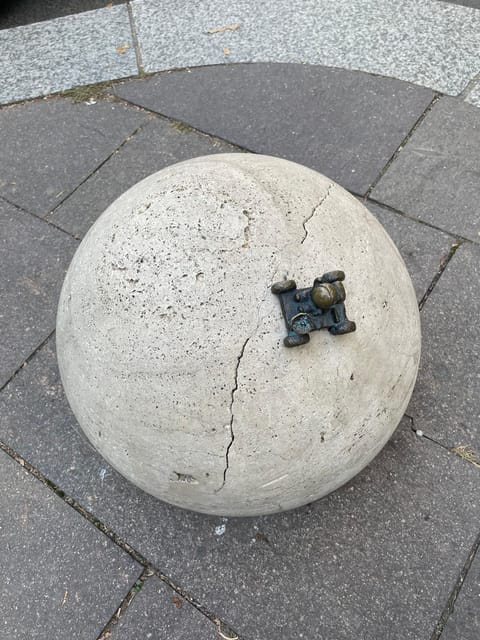
This tour is a strong match if you:
- Like street art and want Budapest’s art scene through small details
- Enjoy wandering but still want a guide to connect the dots
- Prefer interactive experiences over strict sightseeing checklists
- Want an early start to learning how neighborhoods feel, not just what landmarks look like
It may be less ideal if you:
- Hate walking and stopping often to look closely
- Get frustrated searching for very small objects in public spaces
- Want only “big sights” and minimal transit
The good news is that ET works to keep it lively and to handle transit smoothly. Still, the experience is built around noticing tiny things, so bring the right mindset.
What to bring and how to get the most out of it
Even though this is a guided tour, you’ll get more out of it with a couple choices:
- Comfy shoes (you’ll be on your feet and stopping often)
- Warm layers in cooler months (the hunt can mean time outside)
- A curious attitude. When ET explains a statue’s story, it clicks faster if you’re ready to see the joke or message
Also, don’t worry if you miss one or two. These are small works in real public spaces. The point is to learn how the art connects to Budapest, not to win a statue-spotting contest.
Should you book this tour?
If you want Budapest to feel specific and lived-in, I think this one is worth it. The combination of Kolodko’s mini statues, a guide like ET who knows the city’s small details, and included public transport tickets makes the tour feel like smart, fun time.
Book it if you enjoy quirky art, local legends, and walking routes that take you off the standard postcard track. Skip it if you only want major monuments or you dislike searching for small details.
If you’re making one choice for a street-art flavored afternoon with actual city texture, I’d put this high on your list.
FAQ
How long is the Kolodko mini statue tour?
The tour duration is listed as 2.5 hours.
Where do we meet and where does the tour finish?
You meet in front of the entrance of New York Café Budapest and the tour finishes at Szent Gellért tér.
How much does the tour cost?
The price is $35 per person.
Is the tour in English?
Yes, the tour is offered with a live English guide.
Is public transport included?
Yes. The tour uses public transport, and the public transport tickets are included.
What group size is this tour?
It’s a small group limited to 10 participants.
What will we see besides Kolodko statues?
The stated highlights include Kolodko statues, a synagogue, and the Danube.
Is free cancellation available, and can I pay later?
You can cancel up to 24 hours in advance for a full refund. There is also a reserve now & pay later option to keep travel plans flexible.