REVIEW · BUDAPEST
Rise Against the Soviet: The 1956 Revolution – Private Tour
Book on Viator →Operated by Fungarian · Bookable on Viator
Budapest remembers 1956 in full-size street scenes. This private tour brings the Hungarian Revolution into focus with stops tied to real turning points, not just theory, and I really like the way the guide uses personal stories to explain what people actually felt. You also get handouts plus a small souvenir to take home. The only catch is time: three hours is fast for a topic this huge, so if you want nonstop 1956-only detail, you may want more.
What makes this worth your time is the pacing plus logistics. You can start from your hotel (or a central meeting point), ride along by tram/walk as needed, and keep your group small—up to five—so questions don’t get lost.
If you’re drawn to communist-era legacies and the places where the Soviet-backed crackdown played out, this hits the right notes. One booking experience centers on figures like Imre Nagy and finishes in the fighting atmosphere around Corvin Cinema, which is exactly the kind of end-to-end story most short Budapest tours skip.
In This Review
- Key things I’d put on your radar
- Why this Budapest 1956 tour works (even in 3 hours)
- Kossuth Lajos Square: where the government’s violence shows up in plain sight
- Margaret Bridge and the Communist “White House” memory
- Bem Square and Bambi Eszpresszó: students, Poland, and an old intellectual hangout
- Petőfi Statue: revolution as a public language
- Radio Budapest on Sándor Bródy Street: the plea to the world
- Corvin Cinema and Corvin köz: where young resistance met Soviet tanks
- Price and value: is $228.66 per group worth it?
- What it’s like with the guides: history made human
- Who should book this (and who might skip it)
- Should you book Rise Against the Soviet: The 1956 Revolution – Private Tour?
- FAQ
- How long is the private tour?
- What does it cost, and how big is the group?
- Do you offer pickup in Budapest?
- Is the tour private?
- What language is the tour offered in?
- Is free cancellation available?
Key things I’d put on your radar
- A small private group (up to 5) means you can ask real questions without waiting your turn
- Hotel pickup available makes it easy to fit into a busy Budapest day
- Kossuth Square to Corvin köz covers both symbolism and street-level resistance
- Personal testimony style helps you connect events to everyday fear, courage, and consequences
- Free admission at the planned stops keeps the day simple
- Guides like Peter and Miklos are noted for turning dates into human stories
Why this Budapest 1956 tour works (even in 3 hours)
The Hungarian Revolution of 1956 can feel like a list of dates until someone links it to physical places you can stand in front of. That’s the trick here. You move through Budapest sites that shaped the revolt’s momentum—mass demonstrations, party power centers, radio pleas, and resistance fighting on neighborhood streets. You’re not just collecting sights. You’re learning the story behind them.
I like that the guide doesn’t always keep the timeline locked inside 1956. In past tours, guides have connected the uprising to longer pressures and earlier struggles in Hungary, even reaching forward to how communism ended in 1990. That “cause and consequence” approach is what helps the revolution feel real instead of sealed in a museum case.
Still, the drawback is math. Three hours isn’t enough to cover every important street, every debate, and every lesser-known site you might read about later. Some people finish feeling the tour could have gone on longer for a topic this big. My advice: treat it like a focused starter course. If it sparks your interest, you’ll have plenty to research and revisit on your own.
You can also read our reviews of more private tours in Budapest
Kossuth Lajos Square: where the government’s violence shows up in plain sight
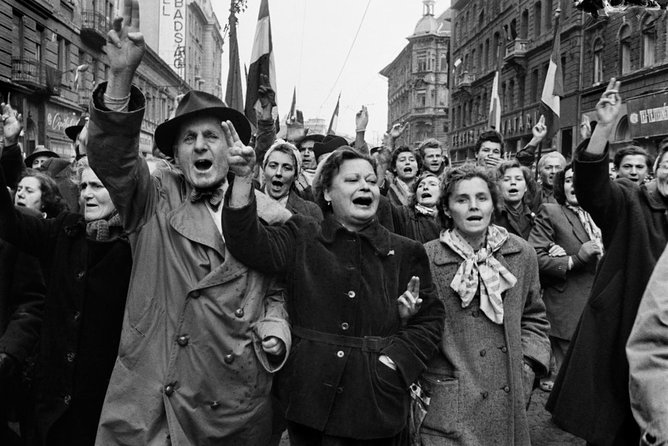
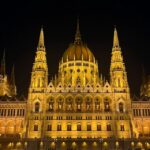
You start at Kossuth Lajos Square, where Hungary’s parliament stands. The point isn’t just architecture. It’s what happened there after the 1956 demonstrations. The guide sets the scene for the moment when a mass demonstration turned into a brutal crackdown, with dozens killed by the government.
What I like about starting here is clarity. Once you understand that this is the political heart of the country, the rest of the day makes sense: why symbols mattered so much, and why protesters risked everything to be seen. Even if you’ve studied 1956 before, seeing it tied to a specific place sharpens the details.
Plan on about 25 minutes here. Admission is listed as free for this stop, so you’re not budgeting time for ticket lines. This is mostly “look, listen, connect,” and that’s exactly the right format for a political story like this.
Margaret Bridge and the Communist “White House” memory
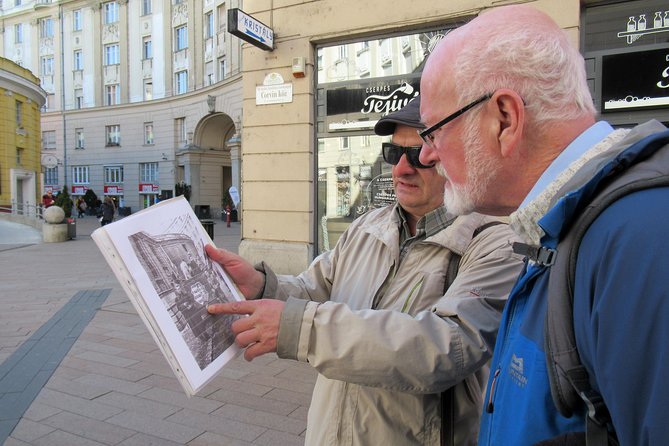
Next up is the Danube stretch around Margaret Bridge. Close by, there’s a building that communist authorities nicknamed the White House. It served as the party headquarters of Hungary’s communist government, so it’s one of those locations where you can almost feel the contrast between public power and private fear.
You’ll also see the statue of Imre Nagy, the prime minister during 1956 who was later murdered. This stop is emotionally heavy, but it’s also important, because it forces the story to be about more than tanks and slogans. It’s about leadership, betrayal, and what happens when political negotiation turns into repression.
You’ll spend around 20 minutes here. The practical benefit: it’s a short walk-and-look segment that still carries real weight. If you like history that connects policy to human outcomes, this is one of the strongest moments in the loop.
Bem Square and Bambi Eszpresszó: students, Poland, and an old intellectual hangout
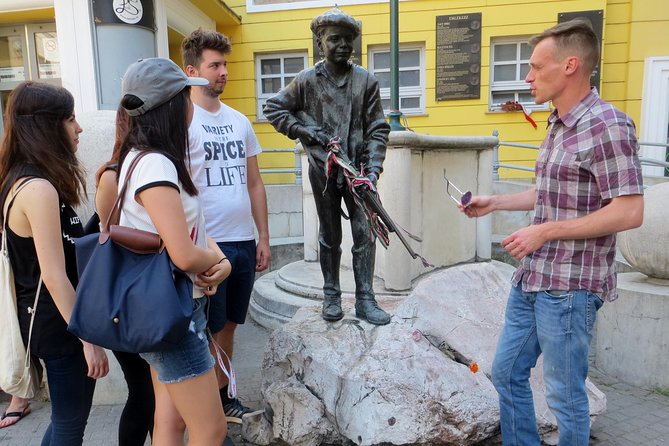
From Margaret Bridge you head toward Bem Square, also tied to the Bem Jozsef Memorial. This area links directly to a huge student rally: around 200,000 Hungarian students protesting Soviet rule in 1956. A key detail worth holding onto is that the rally was originally organized to support Polish workers. That cross-border solidarity matters, because it shows how anti-Soviet energy spread through the region.
Then you add a quieter, everyday layer with a stop at Bambi Eszpresszó on Frankel Leó utca. It’s described as a shelter for Buda-side intellectuals, operating since the 1960s and keeping the same interior look and feel. This is a reminder that political life doesn’t only happen in squares. It also happens in cafés where ideas are traded, where people gather, and where the mood of a city can shift.
You’ll spend about 30 minutes around this stop. The benefit of mixing a protest site with a long-running café is that your brain gets a chance to breathe—without losing the thread of the revolution. It also makes for memorable photos that aren’t just monuments.
Petőfi Statue: revolution as a public language
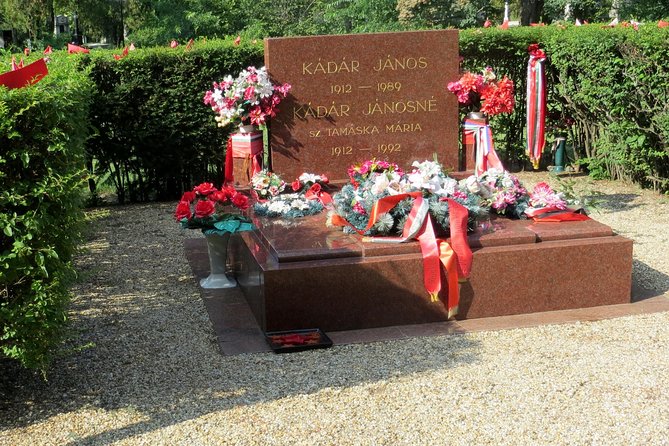
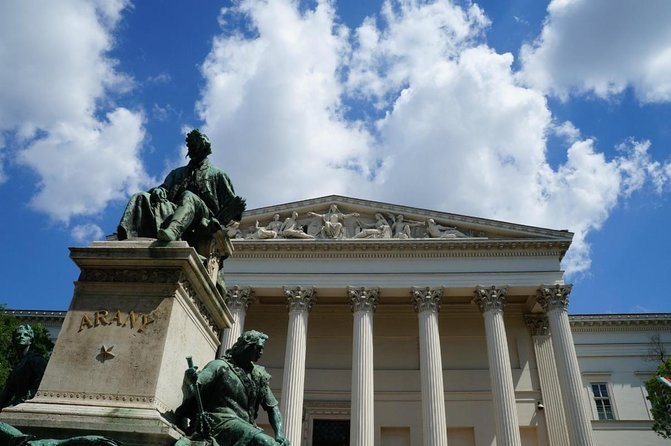
Sándor Petöfi’s statue is next, and the guide uses it like a “reference point” for understanding resistance. Petöfi is remembered as a key figure in the 1948 revolution, so he became a symbol for struggle against government. The statue is still a meeting place for political events and protesters today, which is a useful reminder: history doesn’t always stay frozen.
In 1956, Hungarian actor Sinkovits Imre came here and recited Petöfi’s words, the kind of lines that stirred people toward revolution. He was arrested and imprisoned afterward. That story adds a sharp edge. It’s not just that crowds gathered. It’s that words and performance had consequences.
Time here is about 15 minutes—short, but focused. If you’re the type who likes to learn what names mean in real street culture, this is a great stop. If you prefer long museum-style narration, you might wish it lasted more, but the day moves on for a reason.


Radio Budapest on Sándor Bródy Street: the plea to the world
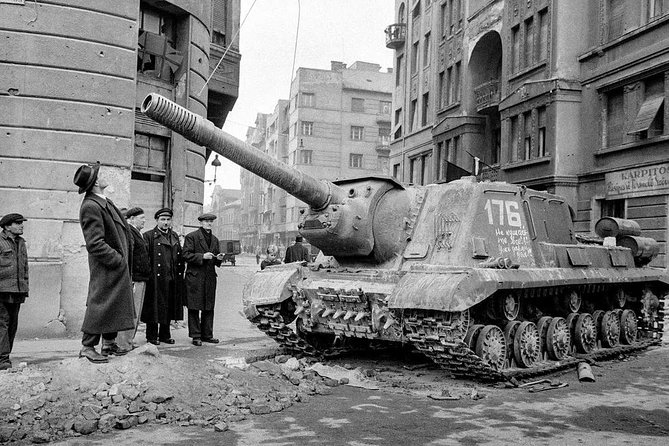
After that, you head to one of the more intense locations: the Magyar Rádió Building, also known as Radio Budapest. The building sits along tiny, one-way Sándor Bródy Street, which makes it feel a bit tucked away compared to major avenues.
This is described as an epicenter of fighting in 1956. Even more striking is the detail that from here revolutionaries begged for help from the world at large. That’s a sobering line: the uprising wasn’t only fighting on the ground. It also depended on communication and hope beyond the city walls.
Expect around 20 minutes here. In a tour like this, a radio building works because it broadens the story. It turns 1956 into a conflict about visibility—what people could broadcast, who could hear, and how quickly outside attention could change the outcome.
If you’re into “how information shaped events,” don’t skim this stop. Give it the full attention, because that’s where the political stakes start to feel global.
Corvin Cinema and Corvin köz: where young resistance met Soviet tanks
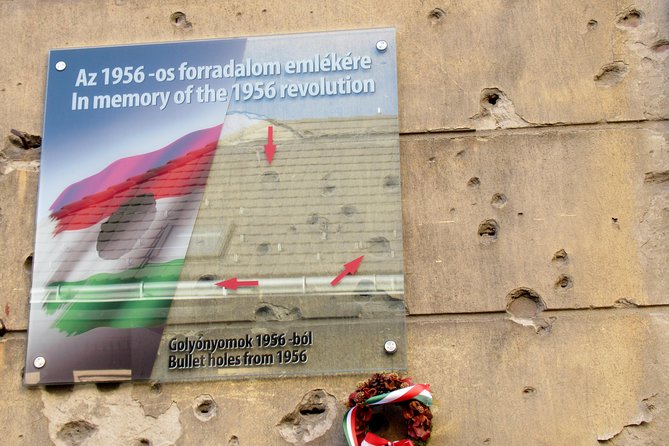
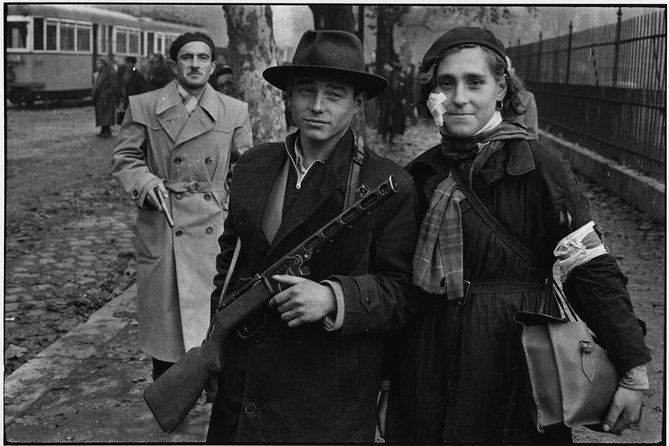
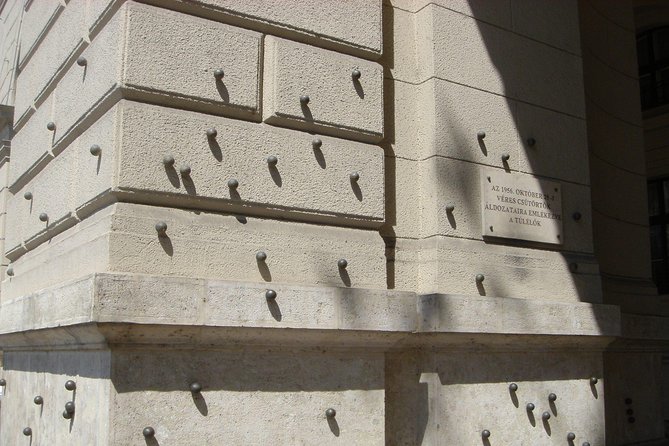
You finish on the south-east side of Budapest around Corvin Cinema and Corvin köz, described as the major resistance center. This is the part of the story that feels most like a street fight: local youngsters fighting invading Russians with Molotov cocktails and guns they stole from soldiers to fight Soviet tanks.
The day doesn’t treat this as a clean hero movie. The guide brings in the invasion of 1956 and the aftermath, so you understand the cost. You’re also looking at physical reminders of where battles happened, which helps explain why this area stayed in memory.
Plan for about 30 minutes at the end of the route. And based on how other bookings have run, there’s sometimes an extra layer of reflection in the mix—like time at an underground memorial connected to the 1956 revolution. In at least one past experience, the guide also took time for a cemetery visit for people killed in 1956. Those kinds of add-ons can make the finale feel both historic and personal.
Practically, finishing here is a win because it lands you in an area that feels like living Budapest, not just a set of landmarks. When the guide’s story ends, you’re still in the city.
Price and value: is $228.66 per group worth it?
At $228.66 per group (up to five), you’re paying for three things: a private format, guided interpretation, and an efficient route across meaningful sites. For Budapest, that’s a fair structure if you’re traveling with a small crew (friends, family, or a mix of ages) and you want the guide’s narrative to connect the dots.
What keeps the value strong:
- Admission is listed as free for the stops on the route, so you aren’t hit with extra entry costs mid-day.
- Handouts and a souvenir are included, which helps you remember details later.
- Pickup from your hotel or a central point saves time and stress.
- The guide can adjust to your group’s needs. In one past experience, a guide named Peter slowed down to keep up with an older parent, keeping the story relevant rather than pushing a rigid script.
The main reason it might not be worth it for everyone: if you already know the revolution deeply and only want 1956 specifics, the overall flow can feel broad. Some people felt the tour moved a bit past certain areas for the length of time. That’s not a dealbreaker. It just sets expectations: this is a focused guided sampler, not a full semester course.
What it’s like with the guides: history made human
Two names came up in strong ways in past experiences: Peter and Miklos. The common theme wasn’t just facts. It was story delivery—making the timeline feel understandable instead of abstract.
One booking highlighted that Peter had personal insight because of life during the communist era and could connect before-and-after realities. Another experience noted that Miklos was great and very informative, and also that the tour involved a mix of walking and tram rides around the city. That matters. If you’re going to cover a wide area, moving efficiently by transit keeps the day from turning into leg torture.
Also, one experience credited the guide with being personable, answering questions, and creating room for discussion. That’s a big deal for political history. You don’t want a lecturer. You want a guide who can explain, then respond to your curiosity.
Finally, one powerful detail from a past booking: the group included someone whose family escaped Hungary during the 1956 revolution. The guide adapted to what mattered most for that person. That’s the kind of sensitivity that can make this tour more than a checklist.
Who should book this (and who might skip it)
Book this if you:
- care about Communist legacies and how Soviet control shaped Hungarian life
- like guided storytelling tied to street-level locations
- want a small-group day that covers key points from Kossuth Square to Corvin köz
- enjoy the added context—connections stretching beyond 1956 into later consequences
Consider skipping or adding a second source visit if you:
- only want ultra-detailed, 1956-only analysis and you’ve already studied the subject
- expect lots of time at each site, beyond quick stops and narration
- are sensitive to heavy topics. This route includes massacre references and political repression themes.
For most people, the sweet spot is a first serious look at 1956. It gives you names, places, and a storyline you can carry into further reading.
Should you book Rise Against the Soviet: The 1956 Revolution – Private Tour?
I’d book it if you want a guided, private Budapest day focused on the places that made the 1956 revolution what it was. The route has strong historical logic: start at the political center, move to party power and protest, hit the radio hub of communication, and end where young people fought back in the street.
If you’re on a tight schedule and you want your hotel pickup plus free entry stops plus handouts, it’s a practical choice. If you’re the kind of person who hates being rushed through big topics, you should be aware that the day is only about three hours. In that case, treat it as a strong overview and plan at least one follow-up visit.
FAQ
How long is the private tour?
The tour lasts about 3 hours.
What does it cost, and how big is the group?
It costs $228.66 per group, up to 5 people.
Do you offer pickup in Budapest?
Yes. Pickup is offered, either from your hotel or from a central point you agree upon.
Is the tour private?
Yes. It is a private tour/activity, and only your group participates.
What language is the tour offered in?
The tour is offered in English.
Is free cancellation available?
Yes, you can cancel for a full refund up to 24 hours in advance of the experience’s start time.