REVIEW · BUDAPEST
Hungarian Cooking and optional Local Market Tour
Book on Viator →Operated by Chefparade Cooking School · Bookable on Viator
In This Review
- Hungarian cooking is better when you make it
- Key things that make this Budapest class worth your time
- A 4-hour Hungarian menu you cook from scratch, not just taste
- Central Market Hall and Páva Street: the optional shopping-walk that sets up your meal
- Stop points and the flow: where you start, cook, then return
- Starter: goulash soup and the paprika-and-vegetable foundation
- Main course: chicken paprikash (or mushroom paprikash) with homemade spätzle
- Why the homemade spätzle matters
- What to expect during cooking
- If you’re vegetarian
- Dessert time: thin layers and apple strudel comfort
- Wines, palinka, and the cultural talk that makes it feel real
- Small group size: more time at your station and fewer awkward pauses
- Price and value in Budapest: what $126.98 buys you
- Who this class is for (and who might want a different plan)
- Should you book the market tour option?
- Bottom line: book it if you want Hungarian comfort food you can repeat
- FAQ
- How long is the Hungarian cooking experience?
- What does the class include?
- Where is the meeting point?
- Where does the cooking class take place?
- Is the market tour optional?
- Is a vegetarian menu available?
- What language is the experience offered in?
- What’s the group size limit?
- What’s the cancellation policy?
Hungarian cooking is better when you make it
Budapest’s food scene is great, but this takes you one step closer: you cook a 3-course Hungarian meal from scratch. In about 4 hours, you’ll turn classic dishes into something you can actually repeat at home, with wine on the table, plus stories about gastronomy and traditions while you cook and eat.
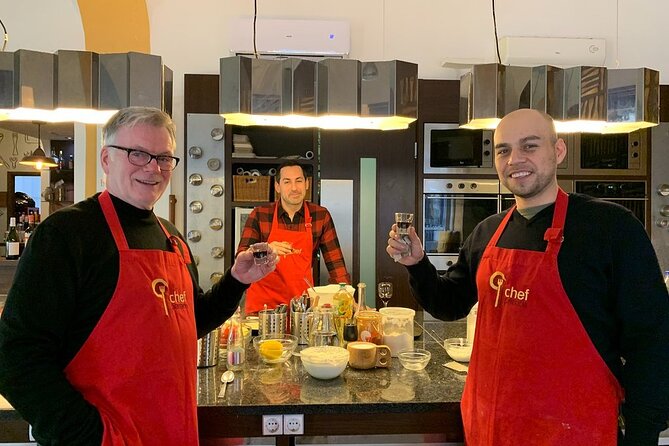
I especially love the hands-on flow. You prep, bake, and cook, not just watch. I also love the small group setup (maximum 15), which means your instructor can stay patient and focused on what’s happening at your station.
One drawback to consider: the optional market time can feel tight, so if you’re hoping for a relaxed browse and lots of shopping, you may want to arrive hungry for food and not for spending lots of time selecting items.
Key things that make this Budapest class worth your time
- Three-course meal you build yourself, from soup and sauce to strudel
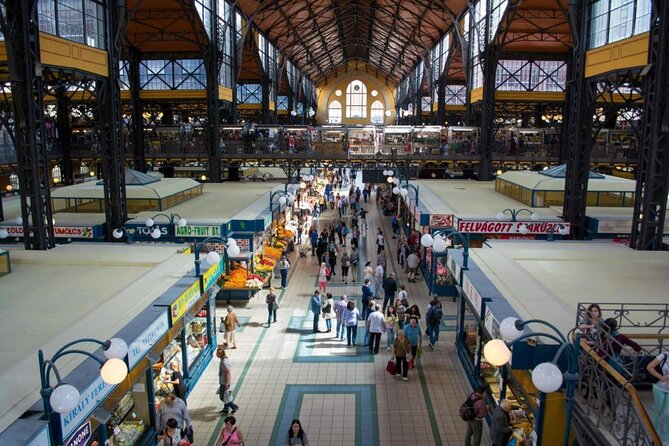
- Market-walking atmosphere at Central Market Hall and the Páva Street area (optional add-on)
- Small group size (max 15), so you get more than one-way instruction
- Classic flavors with real technique, like paprikash sauce and homemade spätzle
- Wine and a touch of Hungarian spirits (including a little palinka tasting)
You can also read our reviews of more shopping tours in Budapest
A 4-hour Hungarian menu you cook from scratch, not just taste
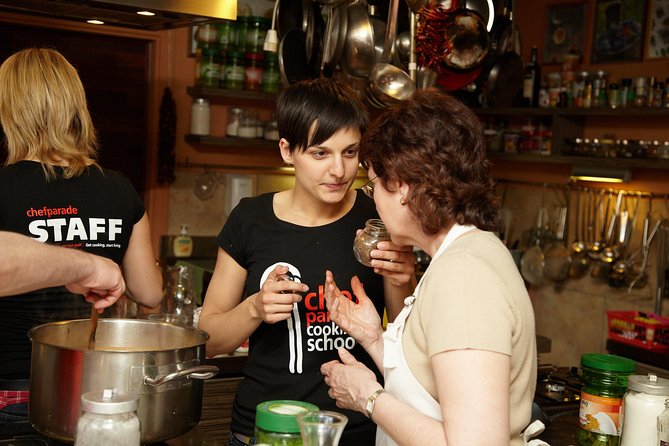
This is built like a workshop, not a sit-down dinner. You’ll spend the morning or afternoon cooking and baking Hungarian-style, then eat what you made as the meal. The pacing is tight enough to finish a full menu, but it’s still hands-on, which is the point.
In your kitchen, you’re working through a typical Hungarian rhythm: chop and prep, make a base (often with vegetables and paprika), then cook low and steady until the dish tastes right. That’s why the class sticks with you. It’s not only the recipes; it’s understanding how Hungarian cooking gets its comfort flavor.
Menus follow a classic structure:
- Starter: Goulash soup
- Main: Chicken paprikash with homemade spätzle or mushroom paprikash with homemade spätzle
- Dessert: Apple strudel
And while the menu is set up as a “typical” Hungarian list, you may notice some variation depending on the running of the class. In past sessions, guests have mentioned other Hungarian dishes too, like potato soup, porkolt, and palacsinta-style pancakes. So think of it as a Hungarian cooking day anchored by recognizable favorites, with some flexibility.
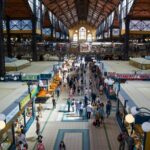
Central Market Hall and Páva Street: the optional shopping-walk that sets up your meal
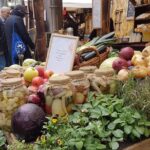
If you choose the optional Local Market Tour, you get the context behind what you’re cooking. You’re guided through the market-walking vibe rather than a quick checklist of items. The useful part here is that the guide helps you understand what you’re looking at: produce, meats, cheeses, spices, and pastries are all part of the Hungarian flavor logic.
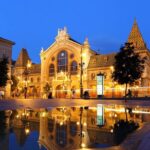
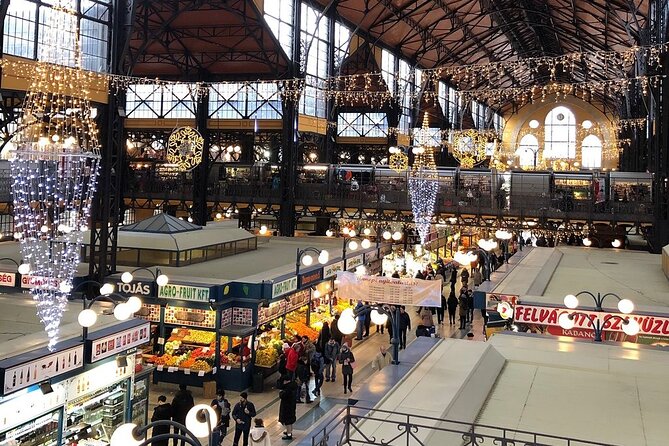
Central Market Hall is the big draw. It’s the kind of place where you can see the ingredients that Hungarian home cooks rely on, not only restaurant versions. And the Páva Street area gets folded in as part of the local-feel experience, so the morning isn’t just standing inside a food hall.
One thing to keep your expectations practical: one review experience described the market portion as rushed, with little time to buy things. So if market shopping is your main goal, treat it like a curated taste of the place, not a free-for-all. You’ll still get samples and guidance, but you shouldn’t count on hours of shopping time.
Stop points and the flow: where you start, cook, then return
The experience starts around Central Market Hall in Budapest (meeting point is listed there). The activity then ends back at the meeting point, even though the actual cooking happens at a school location.
Your cooking school ends at one of these addresses (depending on which side of Budapest the class uses that day):
- Bécsi street 27 (Buda)
- Páva street 13 (Pest)
That split matters because it affects travel time and how you plan your day. If you have limited time that day, build in a buffer so you’re not rushing between the market area and the kitchen space.
Starter: goulash soup and the paprika-and-vegetable foundation
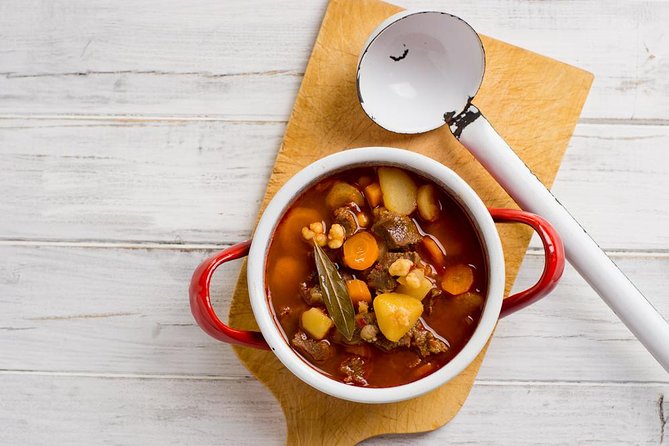
The starter is goulash soup, and that choice is smart. Goulash is where Hungarian cooking shows its signature: paprika, slow-simmered depth, and vegetables that soften into the broth.
In class, you’re not just eating soup. You’re learning what makes it taste right:
- how the beef and vegetables behave as they cook
- how the soup develops body
- what the finished bowl should feel like (hearty, not watery)
This is a dish that works well as a starter because it’s forgiving for first-time cooks but still teaches technique. And it gives you a baseline flavor profile for the rest of the meal.
If you end up pairing this with the market walk, you’ll also understand why certain spices and produce get so much attention in Hungarian cooking. The market isn’t decoration here; it’s setup.
You can also read our reviews of more tours and experiences in Budapest
Main course: chicken paprikash (or mushroom paprikash) with homemade spätzle
Paprikash is the dish people talk about, and for good reason. The sauce is creamy, paprika-forward, and designed to cling to whatever you’re serving with it.
You’ll make it in one of two main versions:
- Chicken paprikash with homemade spätzle
- Mushroom paprikash with homemade spätzle
Why the homemade spätzle matters
Spätzle isn’t just a side. It’s the texture partner for paprikash. In a lot of restaurants, noodles or dumplings get treated like an afterthought. In this class, you make spätzle fresh, so you taste the difference between tender homemade dough and anything pre-made.
That’s also why this class is a good deal for learning. You get the full equation: sauce + dumpling, not just one element.
What to expect during cooking
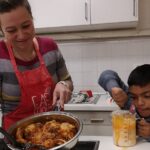
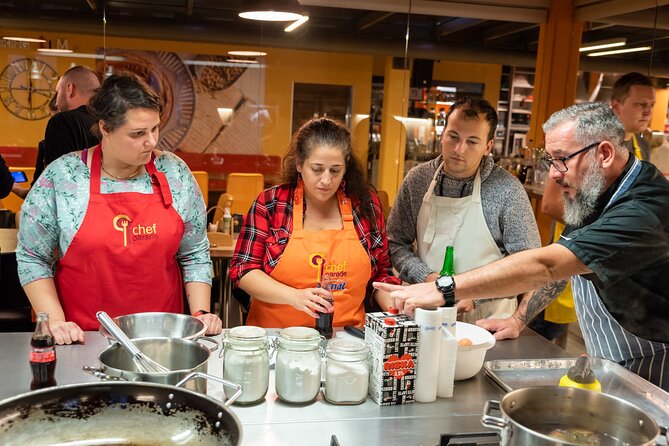
Based on how the class runs in past sessions, the instructor guides you through active steps, like stirring and timing so the sauce cooks properly and the chicken/mushrooms stay tender. One guest noted constant attention during chicken paprikash—turning the chicken and stirring the sauce—because paprikash sauce can’t be half-hearted.
If you’re vegetarian
A vegetarian menu is available on request. So if you’re not doing meat, ask for the vegetarian option when booking and you can still expect the same “three-course Hungarian day” structure.
Dessert time: thin layers and apple strudel comfort
Apple strudel is a perfect finale because it ties Hungarian home baking into the meal. In this class, you’ll work with thin phyllo pastry and an apple-cinnamon filling to make strudel the Hungarian way.
What you’re really learning here is structure:
- how to handle phyllo without it turning into a sticky disaster
- how to balance filling and pastry so the strudel bakes cleanly
- how the cinnamon-sweet aroma signals the end of the cooking session
And yes, you’ll eat what you make. Strudel is the kind of dessert that tastes even better when you remember how much work went into those thin layers.
Wines, palinka, and the cultural talk that makes it feel real
This class doesn’t treat food as a separate activity. It connects cooking to Hungarian life—gastronomy, traditions, and how people think about eating.
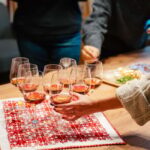
You’ll enjoy amazing wines while you cook and eat, and there’s also a little palinka tasting. That matters because palinka is part of the Hungarian flavor identity, not just a random shot.
The cultural storytelling shows up through how instructors teach. Guests have described instructors like Vesna, Bernadette, Brigitte, Betty, Adrienne, and Sylvia as lively in the way they connect techniques to everyday Hungarian attitudes toward food.
So you leave with more than a recipe card. You’ll understand why paprika and slow cooking are central, why spätzle is a real companion to paprikash, and why strudel shows up as a comfort dessert rather than a fancy-only treat.
Small group size: more time at your station and fewer awkward pauses
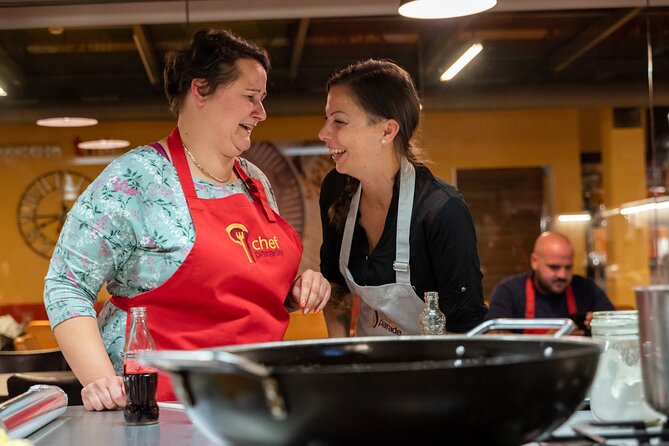
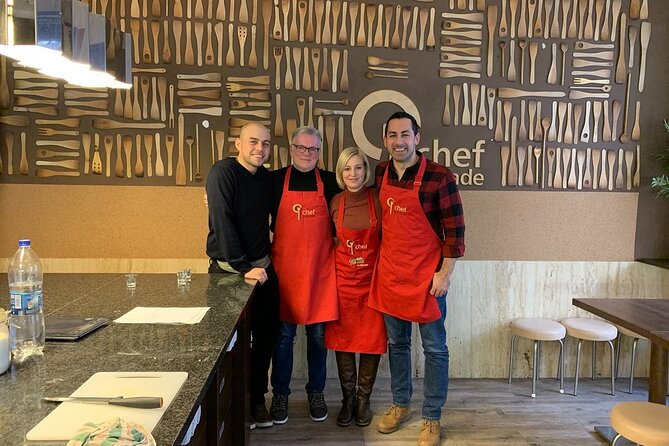
This runs with a maximum of 15 travelers, which is exactly the right size for a cooking class. It’s big enough to be fun and social, but small enough that you don’t disappear behind a crowd.
In practice, this tends to mean:
- your instructor can correct technique as you cook
- you get patience when you’re learning something new (like spätzle)
- the class doesn’t feel like a production line
In reviews, people repeatedly praised the instructors for being patient and clear, especially with hands-on cooking. And when you’re cooking three dishes in one session, that kind of attention is the difference between you learning the method and you just getting lucky.
Price and value in Budapest: what $126.98 buys you
At $126.98 per person for about 4 hours, you’re paying for a full experience, not just ingredients.
Here’s how the value breaks down:
- You get a three-course meal you help prepare.
- You get hands-on instruction through multiple dishes (starter, main, dessert).
- You get wine during the experience and a palinka tasting.
- You may also add the market tour option for ingredient context and tasting.
If you compare this to eating out, the price starts to make sense because restaurants will feed you, but they usually won’t teach you how to cook. You’re essentially buying the “how,” plus a meal that’s actually memorable because you made it.
Also, booking tends to happen well in advance (on average around 44 days). That’s a hint this is a popular class, and time slots may sell out around peak travel weeks.
Who this class is for (and who might want a different plan)
This works best if you:
- want a real cooking lesson, not a short tasting
- like classic Hungarian dishes and want to learn the technique behind them
- enjoy pairing food with wine and short cultural explanations
- prefer a small group experience with more interaction
It may be less ideal if you:
- expect lots of free time to shop at the market
- want a fully “guided tour of Budapest” rather than a focused food day
- are sensitive to time pressure, because the schedule is designed to finish the full menu in one sitting
Should you book the market tour option?
If you’re curious about ingredients and want the “how to shop like a local” angle, the market add-on is a strong match. It gives you a reason to care about what you’re cooking and tasting.
If you mostly want the cooking lesson and you’d rather keep shopping flexible on your own, you could still do the cooking class without the optional market portion. The cooking experience is the core value.
My practical advice: choose the market option if you like food markets and want structure. Skip it if shopping time is the only thing on your mind, because the market portion can be tight.
Bottom line: book it if you want Hungarian comfort food you can repeat
I’d recommend booking this Hungarian cooking class if you want to leave Budapest with more than photos and restaurant memories. You’ll cook a full three-course meal, learn paprika-and-sauce technique, make spätzle from scratch, and finish with apple strudel. The small group size keeps it personal, and the wine plus palinka tasting makes the day feel properly festive.
If you’re the type who loves markets and likes a guided food walk, add the Local Market Tour. Just go in expecting guided sampling and smart shopping guidance, not hours of leisurely browsing.
FAQ
How long is the Hungarian cooking experience?
It’s about 4 hours.
What does the class include?
You’ll prepare and eat a three-course Hungarian menu (goulash soup, chicken paprikash or mushroom paprikash with spätzle, and apple strudel).
Where is the meeting point?
The experience starts at Central Market Hall, Budapest 1093 Hungary.
Where does the cooking class take place?
The activity ends in the cooking school at either Bécsi street 27 (Buda) or Páva street 13 (Pest), and then the activity ends back at the meeting point.
Is the market tour optional?
Yes. There’s an optional Local Market Tour focused on the market atmosphere and tasting Hungarian flavors.
Is a vegetarian menu available?
Yes, a vegetarian menu is available upon request. Dietary needs should be specified at booking since options for allergies and religious restrictions may be limited.
What language is the experience offered in?
It’s offered in English.
What’s the group size limit?
There is a maximum of 15 travelers.
What’s the cancellation policy?
You can cancel for a full refund up to 24 hours in advance. After that, the amount paid won’t be refunded.