REVIEW · BUDAPEST
From Budapest: Danube Bend & Szentendre Tour with Lunch
Book on GetYourGuide →Operated by Program Centrum Ltd · Bookable on GetYourGuide
History tastes better with river views. From Budapest, this day trip strings together Esztergom basilica with the Danube crossing views and finishes with a boat return when the season allows. I like the mix of big monuments and small-town walking, and I also like how the narration connects the places instead of treating each stop like a separate postcard. One thing to plan for: the boat return may not drop you at the exact same spot where you started.
My favorite part is Visegrád, especially the walk over old stones tied to the formal Royal Residence—plus the Danube Valley panoramas that make that history feel real. You also get a 3-course Hungarian lunch built into the stop, which means you’re not hunting for food while everyone else is already moving on.
In This Review
- Key highlights you’ll actually feel on the day
- Entering the Danube Bend story from Budapest
- How the timing works (so you don’t feel lost)
- Mária Valéria Bridge: the first clue to what you’ll see all day
- Esztergom basilica: Hungary’s biggest church and a Slovakia-facing view
- What makes Esztergom worth the drive
- How long you’ll be here
- Visegrád: walking 750-year-old stones with Danube Valley panoramas
- The royal-residence viewpoint effect
- Lunch happens here for a reason
- A note on food expectations
- The time you get
- Szentendre: the artists’ village feel, plus time to browse
- What I’d focus on during your walk
- How much time you get
- The return to Budapest: boat on weekends, bus in mid/late season
- When the boat works
- When you’ll ride the bus instead
- Boat crowding and seating reality
- Guide quality: why names keep coming up
- Lunch at Visegrád: what’s included, what to watch, and how to handle dietary needs
- Dietary needs
- Service pace
- Price and value: is $128 fair for what you get?
- Who this tour fits best
- Should you book this Danube Bend & Szentendre tour?
- FAQ
- How long is the Danube Bend & Szentendre tour?
- Where do I meet for the tour?
- Is lunch included?
- How do I return to Budapest?
- What languages are the guides?
- What should I bring?
Key highlights you’ll actually feel on the day
- Esztergom’s massive basilica stop: set by the river, with a Danube-facing view toward Slovakia
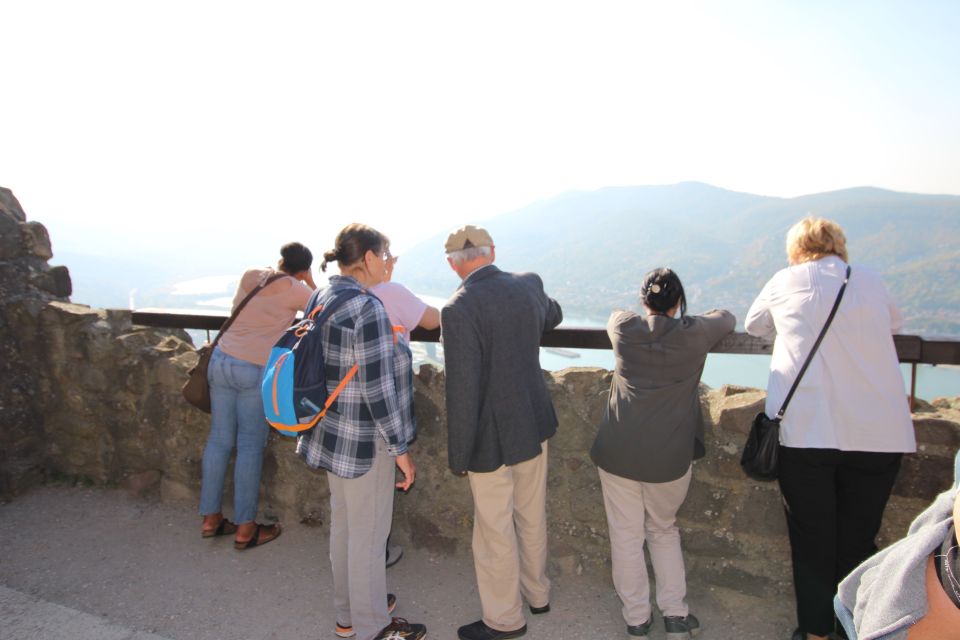
- Visegrád Royal Residence stones: a real walk on centuries-old ground, paired with sweeping valley viewpoints
- Danube Valley photo moments: planned stops plus scenic breaks that don’t feel like pure waiting
- Szentendre’s artists village vibe: baroque streets, browse-time shops, and classic Danube-and-hills scenery
- Return by boat (most weekends) or bus (mid/late season): the season changes how the ride feels
Entering the Danube Bend story from Budapest
If you only do Budapest highlights, you miss how the Danube shaped the country. This tour takes you north along the river and turns it into a timeline you can walk through: church power in Esztergom, medieval royal ambition at Visegrád, and the arty personality of Szentendre.
The pace is full-day, not rushed chaos. You’re on the move for part of the day, then you get real walking blocks at each main town. And you’re not just taking photos—you’re getting the context to understand why these places mattered.
You can also read our reviews of more tours and experiences in Budapest



How the timing works (so you don’t feel lost)
The day starts with a transfer out of Budapest and then a chain of short rides between stops. There’s a quick photo stop early at Mária Valéria Bridge, then the group heads to Esztergom for the church and river views. After that, it’s onward to Visegrád, where lunch sits right in the middle of the sightseeing. Finally, you finish with Szentendre, with walking time and free browsing before returning to Budapest.
By the end, you’ll have spent a big chunk of the day looking at the same river from different angles: from grand steps in Esztergom, from height in Visegrád, and from town streets in Szentendre.
Mária Valéria Bridge: the first clue to what you’ll see all day
The Mária Valéria Bridge stop is short, but it matters. It’s the kind of photo break that helps you line up the mental picture before you leave the city core behind. From there, you start heading into the Danube Bend area, where the river turns into the country’s main stage—politically, spiritually, and economically.
If you’re the type who likes to read the terrain as you go, this early stop helps you spot the pattern: the bends create viewpoints, and those viewpoints become the places people built for power and defense.
Esztergom basilica: Hungary’s biggest church and a Slovakia-facing view
Esztergom is right across from Slovakia, and the tour uses that geography on purpose. You’ll pause at the largest cathedral/basilica in Hungary, and you’ll also be pointed toward the burial sites of famous cardinals. Even if you’re not a “church architecture” person, this stop lands because it combines scale with location.
What makes Esztergom worth the drive
Two things work well here:
- Scale you can feel. When a church is the biggest in a country, it tends to dominate the surroundings.
- The river helps the story. Standing near the basilica gives you a Danube-facing frame that brings another country into the same view.
The tour also includes an element that feels like a bonus: you get the chance to cross over for the view from the opposite side. That makes Esztergom more than a single monument visit—it turns it into a borderland perspective.






How long you’ll be here
You get a guided visit plus time to wander. That balance is good. It lets you catch the main points during the narration and then adjust for your own pace while you’re there.
Visegrád: walking 750-year-old stones with Danube Valley panoramas
Visegrád is where the tour shifts from big religious importance to medieval power and ambition. One of the standout claims here is that you’ll walk upon 750-year-old stones connected to the formal Royal Residence. That’s not just a trivia line—it changes how the stop feels. You’re not only looking at history from a distance; you’re moving over it.
The royal-residence viewpoint effect
Visegrád also delivers on the “why here” part. The Danube Valley views show you what rulers and strategists would have cared about: sightlines, river control, and defensible elevation. When you look down at the bend from higher ground, the region makes more sense.
Lunch happens here for a reason
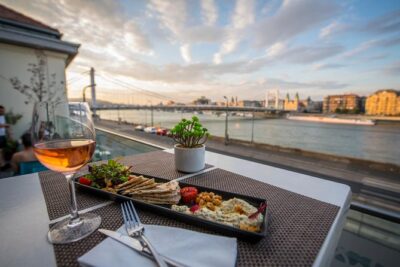
Lunch is built into the Visegrád stop, so you’re not losing half the day to finding a restaurant in a place you just learned the name of. You’ll be served a 3-course Hungarian meal at a set menu. In practice, that usually means you’ll eat with less waiting and fewer decisions—good when the day is already tightly planned.
A note on food expectations
Most people seem pleased with the lunch spot and the meal format, and several guides have been praised for handling special requests (including vegetarian). Still, you should treat lunch as a set menu, not a choose-your-own-adventure restaurant meal. One person found the lunch disappointing, so your personal tastes could swing depending on what’s on that day’s menu.
The time you get
You’ll have enough time for lunch and sightseeing, plus photo and scenic breaks on the way. It’s a balanced stop: you get history and you get views, without spending the entire block staring at one wall.
Szentendre: the artists’ village feel, plus time to browse
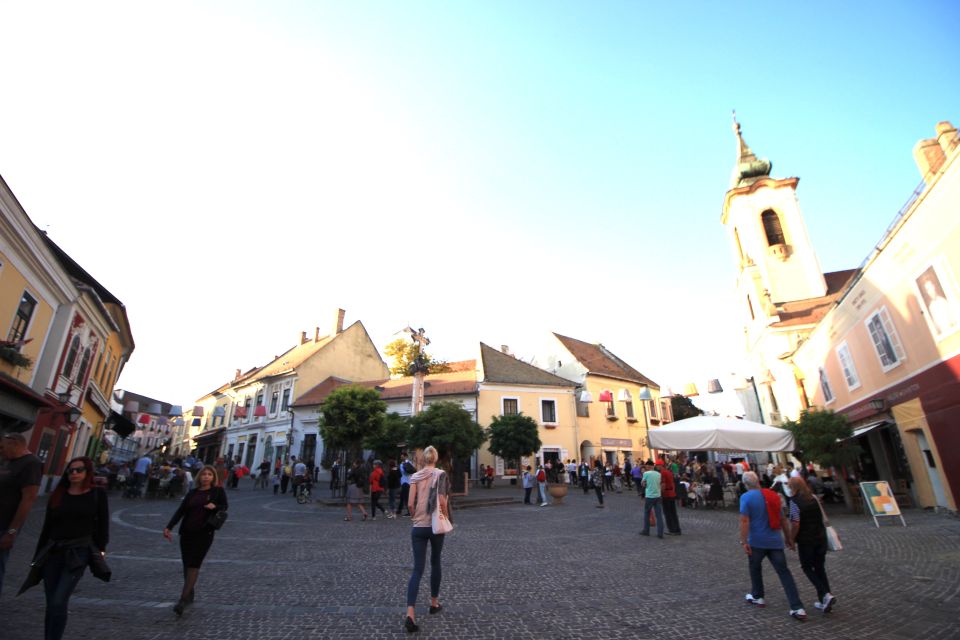
Szentendre is the emotional change of pace. Instead of royal stones and basilica scale, you get baroque town streets where browsing feels part of the experience.
The tour describes Szentendre as an artists’ village, and the walking plan supports that. You’ll wander narrow streets, see the town vibe up close, and then get time to browse shops before heading back.
What I’d focus on during your walk
You’ll get both guided time and scenic time. In Szentendre, I’d spend your energy on small observations:
- how the town’s layout creates quick photo angles toward the river
- the baroque feel in the street character
- shop windows and handmade items if that’s your style
Some people expect Szentendre to feel more like fine art studios and less like tourist retail. Your satisfaction here will depend on what you’re hunting for: atmosphere and browsing, or heavier art content.
How much time you get
The stop is long enough to feel like a real town visit, not a hurried photo stop. If you want more time in Szentendre, the most honest move is to arrive with a slower mindset and use the free/browse time well.
The return to Budapest: boat on weekends, bus in mid/late season
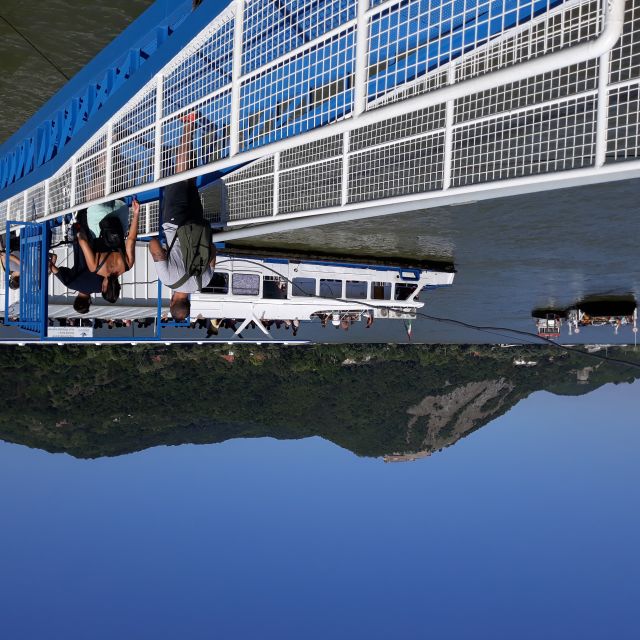
This is a major part of the tour’s value proposition: you’re not just going and coming by road all day. When the river cruise is running, the return by boat turns the final stretch into something relaxing.
When the boat works
The tour runs boat return on Fridays, Saturdays, and Sundays from May 15 to October 31.
When you’ll ride the bus instead
From September 11 to October 31, and also when water levels affect operations, the return can be by bus. That can change the feel of the last hour or so, so check what day you’re booked.
Boat crowding and seating reality
One thing to keep in mind: boats can be crowded. If you’re hoping for the best seat for photos, you’ll want to move quickly when you board and be ready for less comfort than a quiet ferry ride.
Also, remember the earlier warning: the boat return may end somewhere different from your pickup point in the city.
Guide quality: why names keep coming up
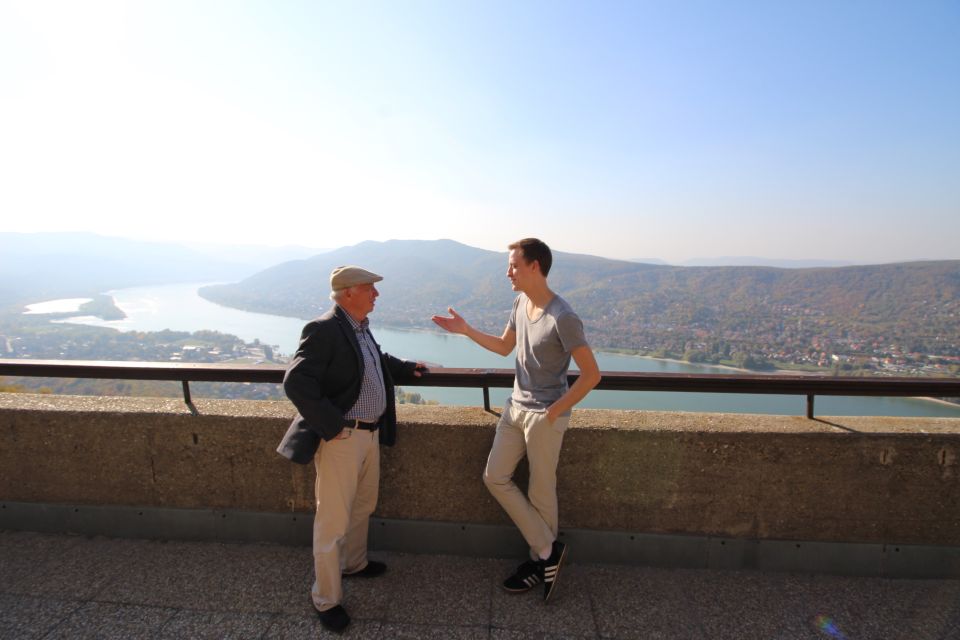
With group tours, the guide can make or break the day. Here, guide performance is one of the most praised parts.
Different languages are supported—Spanish, English, French, German, and Italian—and in some cases the tour may run with a bilingual guide. People have highlighted guides including Attila, Kristina, Yolanda, Maria, Clara, Adam, Ingrid, Gabriella, Elizabeth, and Martha for being engaging and for adding historical context that helps you connect the stops.
A practical tip: if a site is closed or weather forces changes, good guides still keep the day moving with explanations and workable alternatives. That kind of adaptability shows up repeatedly in how people describe the experience.
Lunch at Visegrád: what’s included, what to watch, and how to handle dietary needs
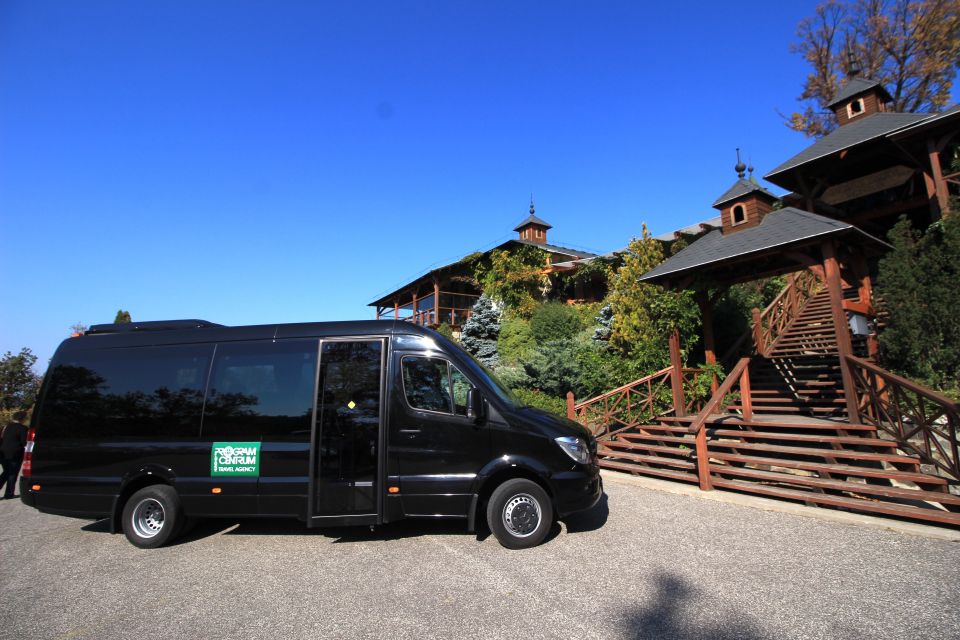
You’ll get a 3-course Hungarian lunch included in the price. Drinks are extra, so if you care about beverage costs, budget for that.
Dietary needs
One strong positive signal from the experience is that vegetarian requests have been handled without drama. If you need something special, tell the tour operator in advance rather than waiting until the table is set.
Service pace
Most descriptions of lunch are positive, but there are also mentions of slower service at the restaurant. That usually means you should treat lunch as part of a scheduled day, not as a standalone quick meal.
Price and value: is $128 fair for what you get?
At $128 per person, you’re paying for a lot more than “a ride plus a few photos.”
Here’s what your money covers:
- guided visits at major stops
- transportation in an air-conditioned bus
- lunch as part of the itinerary
- a boat return on many weekend days (seasonal)
In value terms, lunch inclusion matters. Eating on your own on a day trip with a set route often costs more in time than in money, and this tour saves you both.
My take: if you want to see Esztergom + Visegrád + Szentendre in one go—with time to walk and built-in meal time—this pricing looks sensible. If you only care about one town, you might feel like you’re paying for stops you’d skip. So be honest about what you want most: monuments, medieval viewpoints, or a charming town walk.
Who this tour fits best
This is a good match if you want:
- history plus viewpoints, not only one or the other
- a day outside Budapest without planning every step
- a mix of walking time and narration
It’s less of a match if you need easy accessibility support. The tour isn’t suitable for people with mobility impairments or wheelchair users, and it also doesn’t allow non-folding or electric wheelchairs.
Also, if you don’t like long days in general, this is still a full-day program at 9.5 hours. You’ll be on your feet during walking blocks and you’ll spend time in transit.
Should you book this Danube Bend & Szentendre tour?
I’d book it if you want a well-structured history-and-views day with lunch handled and—on the right days—a boat ride back.
The strongest reasons to choose it:
- Esztergom’s basilica and the river-facing border context
- Visegrád’s royal-residence stone walk paired with real panoramas
- Szentendre’s town walking and browsing
The main reason to think twice:
- the return isn’t always by boat, and even when it is, you might not end exactly where you started.
If your schedule puts you on a Friday/Saturday/Sunday during the May 15–Oct 31 window, you’re likely to get the best-feeling finish.
FAQ
How long is the Danube Bend & Szentendre tour?
The tour lasts 9.5 hours.
Where do I meet for the tour?
Meet at the Eurama office meeting point. Be there 30 minutes before departure and look for the blue Eurama Meeting Point flag.
Is lunch included?
Yes. Lunch is included as a 3-course Hungarian meal served at Visegrád.
How do I return to Budapest?
Return is by boat every Friday, Saturday, and Sunday from May 15 to October 31. Return is by bus every Wednesday in that same date range, and from September 11 to October 31 (and in case of low/high water levels) the return may be by bus.
What languages are the guides?
The tour is available with live guides in Spanish, English, French, German, and Italian.
What should I bring?
Bring your passport or ID card.