Budapest makes sense fast on this route. I like how this Spanish Hungarian history overview threads major eras together while you’re walking, so the city feels coherent instead of random. I also love the built-in Metro 1 ride, because it’s a fun way to connect the landmarks without wasting time.
One thing to consider: the tour keeps things moving and relies on good weather. You’ll see the Parliament from the outside, so if you want interior access, you’ll need a separate plan.
In This Review
- Key things to know before you go
- A smart first taste of Budapest, in Spanish
- Kossuth Lajos tér and Parliament: history explained from the curb
- St. Stephen’s Basilica: a quick lesson that changes the way you look
- Andrássy út and the State Opera lobby: luxury as a historical signal
- Heroes’ Square: symbolism you can’t unsee
- Varosliget (City Park): the green lungs and the setup for what comes next
- Széchenyi Baths and hot springs talk: practical advice, not pressure
- Vajdahunyad Castle: Dracula’s Castle, and why the myth fits
- Trianon emlékmű: where the stories get heavier (and included)
- Lajos Batthyányi Eternal Flame: built memory, not decoration
- Price and what you actually get for it
- The guide factor: when it’s personal, the city clicks
- How long it takes, where you start, and how to dress
- Who this tour is best for
- Should you book this Free Tour Budapest Essential?
- FAQ
- Where does the tour start and end?
- How long is the Budapest Essential tour?
- Does the tour include entering the Hungarian Parliament?
- What attractions are covered?
- Is there a metro ride included?
- What happens if the weather is poor?
Key things to know before you go
- A history thread you can follow: from Hungary’s early foundations and the Austro-Hungarian Empire through the world wars
- Metro 1 with your reservation: you get the 1896 metro experience as part of the route
- Opera House lobby access: you get inside at least the public spaces, not just a photo stop
- City Park + symbols: Heroes’ Square and Varosliget get explained in plain terms
- Memorial stops with included entry: the Trianon emlékmű and the Eternal Flame include admission/tickets
A smart first taste of Budapest, in Spanish
This is the kind of tour you book when you want orientation fast. In just under three hours, you get a structured walk across the classic “starter” sights: Kossuth Square, St. Stephen’s Basilica, Andrássy Avenue, the State Opera area, Heroes’ Square, and deep into Varosliget (City Park). The language is Spanish, which matters because most big landmarks come with stories—and those stories land much better when you can follow them in real time.
I also like that the tour is built to explain why these places matter, not just where they are. The guide connects big historical eras to what you’re looking at: statues and facades start to feel like they’re pointing at real people, real conflicts, and real political changes.
Group size is capped at 30, which helps keep the pace under control. And if you learn best by “seeing first, then understanding,” this format works well.
You can also read our reviews of more tours and experiences in Budapest.



Kossuth Lajos tér and Parliament: history explained from the curb
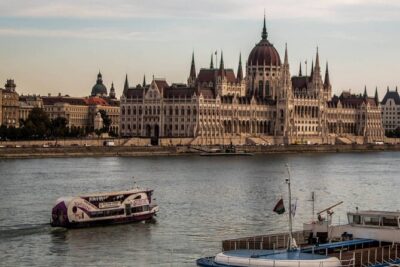
The tour starts at Kossuth Lajos tér (meeting point at Kossuth Lajos tér 10). Right away, you’re set in the right mood. The Hungarian Parliament Building dominates this square, and the guide uses the view to lay down the big timeline: early foundations of Hungary, the Austro-Hungarian Empire, and major 20th-century moments (including the first and second world wars).
A key detail: you do not enter the Parliament during the tour. You’ll learn the building’s secrets and symbolism from the outside, with a chance to visit the important monuments around the square. That’s a drawback if you want ticketed interior access, but it’s also practical. You spend time understanding what you see, instead of waiting in line.
If you’re the type who likes to take photos with context (not just selfies), you’ll probably enjoy this first segment a lot. It also helps you later, when you walk away and realize you’re reading the city like a map.
St. Stephen’s Basilica: a quick lesson that changes the way you look
After Parliament, the route moves to St. Stephen’s Basilica (Szent István Bazilika). This stop is short—about 10 minutes—but it’s still worthwhile because it’s not treated like a generic “pretty church” stop. You’ll get the history of the building and what makes it important in Budapest’s identity.
For me, the value here is timing. If you hit the Basilica later in your trip without any context, it can feel like another impressive structure. With the guide’s framing, you start noticing specific elements and asking better questions. Even if you only spend a little time, the meaning sticks longer.
No admission is included for this stop, so you’re viewing and learning rather than doing a full inside visit as part of the tour.
Andrássy út and the State Opera lobby: luxury as a historical signal
Next comes a stretch of Andrássy Avenue, a UNESCO-listed boulevard and often called one of the city’s most elegant thoroughfares. The tour doesn’t try to turn it into a long walk—it’s about showing you part of the avenue and explaining why it’s such a big deal visually and historically.
Then you move to the Hungarian State Opera House (Magyar Állami Operaház). This is one of the better “bang for your minutes” stops. You get to enjoy the building and enter the lobby, so you’re not limited to exterior photos. The guide’s story here is the payoff. Opera buildings are designed like statement pieces, and once you know what to look for, the details become more than decoration.
Admission is free for the lobby portion, and the time slot (about 20 minutes) is enough to get a feel for the interior without dragging the group.
Heroes’ Square: symbolism you can’t unsee
Heroes’ Square is next, with around 15 minutes on the clock. This is one of those places where the photo alone can feel confusing. The scale is huge, the figures are dramatic, and if nobody explains it, you might just shrug and move on.
The guide tackles that. You’ll understand why it’s important for Hungary and what the major elements are communicating. Expect the mood to shift here—Heroes’ Square has a “statement” quality, and you’ll get a clearer read on what it’s saying about national identity.
If you’re traveling with limited time, Heroes’ Square is a strong use of tour time because it’s dense with meaning and difficult to decode quickly on your own.





Varosliget (City Park): the green lungs and the setup for what comes next
After the big square moment, you head into Varosliget / City Park, Budapest’s green lung. The tour gives you a short walk through the park (around 10 minutes), which works well as a reset. City Park can look like it’s just pathways and scenery, but the guide treats it like a corridor to stories.
This is also where the tour’s “transition energy” shows up. You’re moving from political symbolism into atmosphere: castles, legends, and the human side of the city’s myth-making.
Széchenyi Baths and hot springs talk: practical advice, not pressure
One unique part of this tour is the hot springs focus. The tour frames thermal bathing as a real Budapest “must,” then spends time answering the doubts you might have. You’re likely to hear about Széchenyi Baths explicitly—plus the practical question everyone asks: are you actually going to get your swimsuit out?
Even if you don’t plan to bathe during the tour itself, this segment helps you avoid common mistakes: showing up unprepared, misunderstanding what kind of experience bathing is, or committing to a bad timing choice.
Think of it as a planning boost. It’s not just legend; it’s a small guide to how to make the baths work for your schedule and comfort.
Vajdahunyad Castle: Dracula’s Castle, and why the myth fits
Then comes the fairytale moment: Vajdahunyad Castle. The tour calls it Dracula’s Castle, and yes, the legend ties into why people love this spot. You’ll get about 20 minutes here, with enough time to enjoy the atmosphere and hear the connections the guide makes between Hungarian folklore and what you’re seeing in the architecture.
The castle setting is exactly why this stop works on first-time visitors. It gives Budapest a different flavor than the political monuments. You’re not only learning about power and history—you’re experiencing the city’s playful storytelling side.
Admissions here are listed as free, so you’re mostly enjoying the surroundings and learning on site rather than dealing with extra ticket hurdles.
Trianon emlékmű: where the stories get heavier (and included)
Next are the memorial sites, and this is where the tour turns more serious. You’ll visit Trianon emlékmű, entering the monument and hearing its symbolism. This stop runs about 20 minutes, and the admission/ticket is included.
Trianon is one of the most emotionally loaded topics in Hungarian modern history, and the tour doesn’t shy away from the controversy. The value for you is that you’re not just passively reading plaques—you’re hearing the meaning behind the design and why it still matters.
If you prefer your sightseeing to have emotional weight (or at least accurate context), this stop is essential. If you’re exhausted by heavy topics, you can take a slow minute to breathe—because the memorial’s intent hits harder than a typical landmark explanation.
Lajos Batthyányi Eternal Flame: built memory, not decoration
Right after Trianon comes the Lajos Batthyányi Eternal Flame memorial. Again, it’s about 20 minutes, and the ticket/admission is included. The guide connects it directly to the 1848 revolution and explains why it matters to Hungary.
This is another stop where the guide’s interpretation really helps. A memorial flame can look symbolic enough from a distance, but you need the background to understand why that flame stands for specific people and a specific era.
It’s also a nice emotional complement to the surrounding City Park area. Budapest isn’t only grand and scenic; it’s also remembrance.
Price and what you actually get for it
The published price is about $3.43 per person, which is strikingly low for a tour that includes real structure and some ticketed elements. Here’s the practical reality: the tour isn’t “free” in the way a bus ride is free. You’re paying a small amount that secures your reservation.
That payment matters because it unlocks the included pieces:
- the metro ticket is included with your reservation
- admission/tickets are included at Trianon emlékmű and Lajos Batthyányi Eternal Flame
So you’re not just buying information. You’re also buying access to specific parts of the experience that would cost money on your own.
And like many Budapest free-tour models, you’ll finish with a suggestion: pay the guide what you consider appropriate, based on your satisfaction. If you like what you heard—especially if the guide helped you connect the dots—you’ll probably feel good doing that.
The guide factor: when it’s personal, the city clicks
The reviews highlight one name in particular: Rafa. The praise isn’t about fancy language; it’s about how the tour feels. People say the time flies and that the guide gives strong recommendations for the rest of the stay. That matters more than you might think.
A good guide doesn’t just explain the buildings in front of you. They help you decide what to do next: where to spend your limited time, what’s worth it, and what to skip. If you’re new to Budapest, that kind of direction is basically free value.
If you want the city to click quickly, look for that energetic, recommendation-heavy guiding style. This tour seems to deliver it.
How long it takes, where you start, and how to dress
The tour runs about 2 hours 40 minutes. It starts at 10:30 am in front of Kossuth Lajos tér 10, 1055. It ends at Vajdahunyad Castle area (Vajdahunyad stny., 1146).
Because you’re walking between big open spaces and park paths, dress for real weather. The experience requires good weather, so if conditions are rough, you might be offered a different date or a refund. That’s a key planning detail if you’re scheduling your “first day” around the weather forecast.
Also, bring what you’d bring for a city stroll: water and comfortable shoes. The landmarks are famous, but your feet will still notice every step.
Who this tour is best for
This tour is a strong fit if:
- you’re arriving in Budapest for the first time and want an organized route
- you want the political and cultural story behind monuments, not just photos
- you’d like a guide to steer you toward a better plan for the rest of your trip
- you prefer a smallish group (up to 30)
It may not be your best pick if:
- you want lots of interior visits and don’t like “outside view plus explanation”
- you hate walking and want fewer stops
- you need a full day dedicated only to museums, not a mix of streets, squares, and park areas
Should you book this Free Tour Budapest Essential?
Yes, if your goal is to get oriented fast and understand what you’re seeing. This tour is built for first-time visitors and for anyone who wants Budapest’s big story in Spanish, with the bonus of an included Metro 1 experience and included tickets at major memorials.
If your priority is interior access to everything (especially Parliament), you’ll need to pair this with a separate plan. But as a “get your bearings fast” backbone for your trip, it’s excellent value—and the guide-driven energy can make it feel way more memorable than a checklist of sights.
FAQ
Where does the tour start and end?
It starts at Budapest, Kossuth Lajos tér 10, 1055 Hungary and ends at Vajdahunyad Castle (Vajdahunyad stny., 1146 Hungary).
How long is the Budapest Essential tour?
The duration is about 2 hours 40 minutes.
Does the tour include entering the Hungarian Parliament?
No. You do not enter the Parliament during the tour; it’s explained from the outside.
What attractions are covered?
You’ll see or visit: Hungarian Parliament Building (outside), St. Stephen’s Basilica, part of Andrássy Avenue, the Hungarian State Opera House lobby, Heroes’ Square, Varosliget/City Park, Vajdahunyad Castle (Dracula’s Castle area), Trianon emlékmű, and the Lajos Batthyányi Eternal Flame. The hot springs topic (including Széchenyi Baths) is also covered.
Is there a metro ride included?
Yes. With the payment, you secure your reservation and have the metro ticket included.
What happens if the weather is poor?
The tour requires good weather. If it’s canceled due to poor weather, you’ll be offered a different date or a full refund.