REVIEW · BUDAPEST
Explore Budapest from the Local’s Perspective – Public Transportation Tour
Book on Viator →Operated by Fungarian · Bookable on Viator
Budapest clicks into place when you ride like locals. This 3-hour public transportation tour pairs an expert guide with a 24-hour pass so you see major sights and learn how to move around efficiently. Two things I really like: you get practical transit skills fast, and the route hits the city’s big-name landmarks without turning your day into a slog.
The only real drawback to consider is time: at about 3 hours, stops are more about orientation and quick looks than long museum stays or deep, lingering visits.
In This Review
- Key highlights at a glance
- Public transport in Budapest is the secret sauce
- Andrássy Avenue and Heroes’ Square: the grand opening
- City Park time: Vajdahunyad Castle, Fine Arts, and the Hall of Art
- The tram-and-bridge rhythm: Nagykörút, Margaret Bridge, and Nyugati
- Deák Ferenc tér and Elizabeth Square: how Budapest pivots
- Buda Castle area, funicular choice, and the water-and-rail feel at Gellért
- Liberty Bridge to Gellért Hill views, then Kálvin tér for your next plan
- Price and what’s included at $118.58 per person
- How to get the most out of your ride day
- Should you book this Budapest public transport tour?
- FAQ
- How long is the tour?
- What’s included in the price?
- Is food included?
- Do you offer pickup from my accommodation?
- What language is the tour in?
- Is this tour private?
- Can kids join?
- Can I cancel for a full refund?
Key highlights at a glance
- 24-hour transportation pass included, so your guide teaches you how to use it right away
- Hands-on transit variety across multiple modes, plus a funicular option near Buda Castle
- World-famous sights in smart order, from Andrássy Avenue and Heroes’ Square to Gellért Hill
- Top transit hubs on the route, including Deák Ferenc tér and Nyugati pályaudvar
- Local flow through Danube crossings, with Margaret Bridge and Liberty Bridge on the day
Public transport in Budapest is the secret sauce

If you’ve ever felt overwhelmed by a new city’s transit system, this tour is built for that moment. Budapest’s network is efficient, and the big win is that you don’t just hear about it—you practice. You also leave with a 24-hour pass for any means of transportation, which turns the tour into day-long leverage instead of a one-and-done walking spree.
I love the idea of learning how to travel before you’re stuck hauling bags across districts you didn’t plan for. You’ll also get a rider’s booklet and a map showing the tour route, which helps you connect what you saw today with where you might go next.
One more practical plus: you can get picked up from your accommodation. That means you start with less friction and more city time, especially if you’re dealing with jet lag or you’re not sure how to reach the first stop.
You can also read our reviews of more tours and experiences in Budapest.



Andrássy Avenue and Heroes’ Square: the grand opening
The day starts in a part of Budapest that basically sets the visual tone: Andrássy Avenue. This boulevard dates back to 1872, with Neo-renaissance mansions and townhouses that make the street feel like an outdoor gallery. It’s also a World Heritage Site, and it works on two levels. You get the architecture and history you’d expect, but you also see how the avenue functions as a major shopping and café stretch—plus theaters, embassies, and luxury boutiques. In other words, this is Budapest as a living city, not just a postcard.
From there, you move to Heroes’ Square, one of the most iconic places in town. The statue complex represents the Seven chieftains of the Magyars and other key Hungarian leaders. There’s also the Memorial Stone of Heroes, which is often confused online with the Tomb of the Unknown Soldier. Either way, it’s free and it’s worth stepping in front of the monuments for the sheer scale.
What I’d watch for here: the tour keeps timing tight, so don’t expect a deep historical lecture at every corner. Instead, use it to get bearings. When you understand where Heroes’ Square sits relative to the rest of the city, you’ll feel more confident for the rest of your Budapest day.
City Park time: Vajdahunyad Castle, Fine Arts, and the Hall of Art
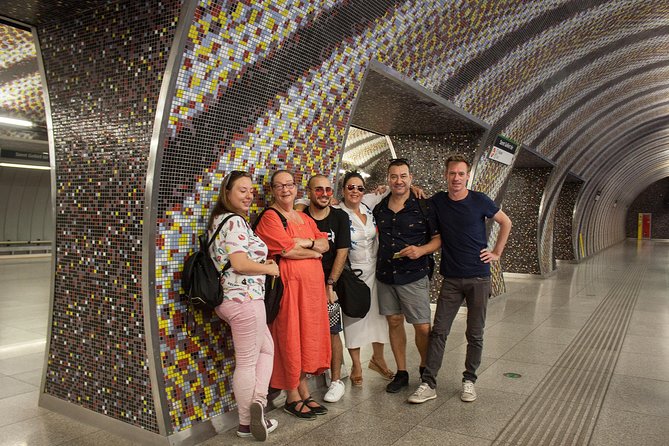
Next comes the green-and-stone combo of City Park, where you’ll see some of the most “Budapest-looking” buildings in a compact loop.
You’ll visit Vajdahunyad Castle, built in 1896 as part of the Millennial Exhibition celebrating 1,000 years since the Hungarian conquest of the Carpathian Basin. What makes it interesting is the design: it includes copies of landmark buildings from different parts of the Hungarian Kingdom, especially Hunyad Castle in Transylvania (now in Romania). This is a clever shortcut for understanding Hungary’s geography and identity in one place. The castle also houses the Museum of Hungarian Agriculture, which is described as the biggest agricultural museum in Europe.
Then you’ll head to the Museum of Fine Arts, facing the Palace of Art. Even if you don’t go inside, the building matters. It’s eclectic-neoclassical, built between 1900 and 1906, and its collection includes more than 100,000 pieces of international art (not just Hungarian). Nearby is the Budapest Hall of Art, a contemporary art museum inside a historic building on Heroes’ Square. It runs temporary exhibits, and it also has a bookshop, library, and a café overlooking the square. That café view is the kind of small win you’ll appreciate if you’re taking breaks during a packed transit-focused day.
You’ll also pass the City Park Ice Rink, opened in 1870. It’s one of the oldest ice rinks in Europe and the largest in City Park. If you’re in Budapest when it’s operating, you might catch it in action. Even outside skating season, it’s a nice reminder that Budapest’s major sites aren’t only for summer strolling.
The one consideration here is pacing: City Park can tempt you into lingering, but this tour moves on. If you’re the type who wants to go deep inside museums, treat these stops as orientation. You can always come back later with a pass or without the tight 3-hour clock.
The tram-and-bridge rhythm: Nagykörút, Margaret Bridge, and Nyugati
This is where the tour’s promise gets real: riding your way through Budapest’s everyday geography.
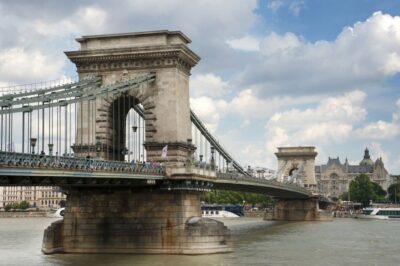
You’ll spend time near Jászai Mari tér, a sizable public transport hub and social meeting point at the eastern foot of Margaret Bridge. From there, you’ll cross Margaret Bridge, a three-way bridge connecting Buda and Pest across the Danube and linking Margaret Island to the city banks. It’s described as the second-northernmost and second-oldest public bridge in Budapest. That means it’s not just pretty—it’s a meaningful link in how the city connects itself.
One of the most practical parts comes next: you’ll learn about Budapest’s ring road (Nagykörút) and the major tram line(s) that run along it. The highlight notes legend says it’s the busiest tram line in the world, and it carries millions of passengers each year. The service intervals are often up to 15 minutes, and during rush hours they can be as frequent as every 2 minutes. For you, that translates into confidence. Once you know the rhythm of a line like this, you can plan routes with less guesswork.
You’ll also get near Nyugati pályaudvar, the Western railway station. Nyugati is one of Budapest’s three main railway terminals, located on the Pest side, and it’s easy to reach via the 4 and 6 tram lines and the M3 metro line. Around it, there’s plenty to do—restaurants, bars, and diverse stores. So even if you’re not taking a train that day, this stop helps you understand where transit meets real life.
In terms of “value,” I think this section is the heart of the tour. It’s not just about seeing bridges and stations. It’s learning how those places connect districts so you stop treating each sight as a separate project.
Deák Ferenc tér and Elizabeth Square: how Budapest pivots
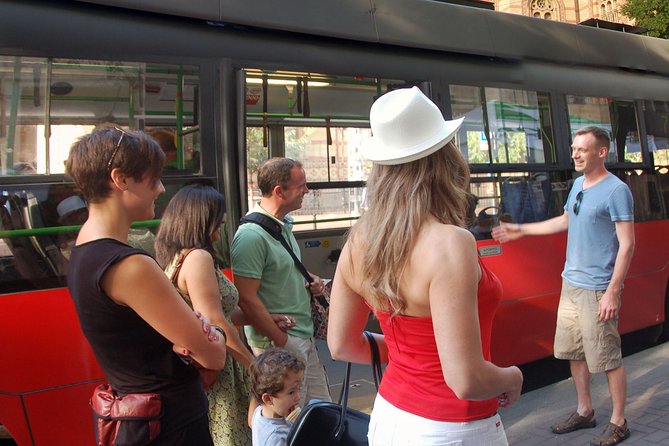
If you want one lesson in local logistics, it’s this: Deák Ferenc tér is a junction you should understand early. The square is named for Ferenc Deák, “The Wise Man of the Nation,” and it’s a major transport intersection where three metro lines converge underground. Tram lines 47 and 49 also originate here, along with several bus lines.
This is why the tour includes it. When you see a hub like this on the map and in person, you can start building your own plan. It’s the difference between wondering where you go next and knowing how to get there.
Right nearby is Elizabeth Square, a park area next to Deák Ferenc tér that’s known as a popular hangout for young people. The information notes alcohol is sold at the grassy area and it’s common for the area around Deák Ferenc tér to stay populated until midnight. You won’t hang out that long on a 3-hour tour, but it’s a useful reminder that public transport isn’t only for commuting—it also shapes the city’s evening social life.
One drawback to keep in mind: because these are transit-focused stops, you may not feel like you’re “touristing.” You’ll get your best payoff if you want practical movement skills more than slow sightseeing.





Buda Castle area, funicular choice, and the water-and-rail feel at Gellért
Next, you’ll shift into Buda’s higher-view territory and learn one of the key travel patterns: choosing the right route uphill.
The tour highlights Buda Castle area and offers a funicular option for getting there (a nod to traveling with less effort when the grade rises). Even if you don’t ride the funicular, knowing that option exists helps. It’s the kind of detail that saves time on a day when your energy is limited.
Then comes Szent Gellért Square, with a water-themed design. You’ll see wavy benches representing Danube waves, and a small fountain with a pond decorates the entry to the underground station. It’s a striking contrast after the grand open squares—Budapest doesn’t only do monuments, it also does design in daily infrastructure.
The tour also includes a stop connected to the Gellért Thermal Baths and Swimming Pool (Gellért fürdő) near Hotel Gellért. Even if you don’t go in (food and drinks aren’t included, so you’re not on a planned spa timeline), the area helps you connect the city’s geography: thermal culture, the river, and the hill all belong to one story.
I like this portion because it teaches you a mindset: in Budapest, a “scenic view” is often reached through transit decisions. Once you understand that, you start seeing options everywhere.
Liberty Bridge to Gellért Hill views, then Kálvin tér for your next plan
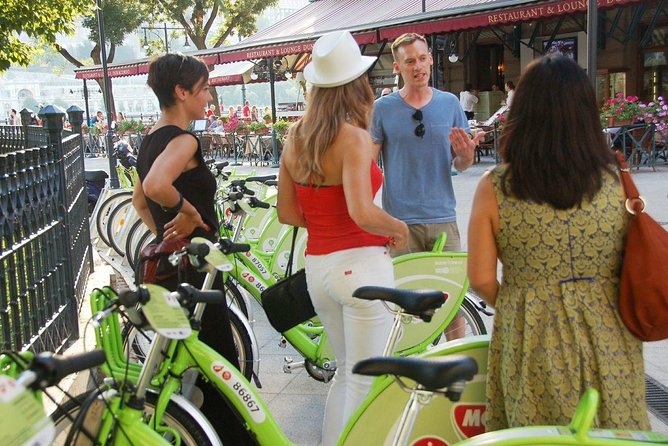
From Liberty Bridge (Szabadság hid), you walk toward the foot of Gellért Hill, one of Budapest’s best panorama viewpoints above the capital. The hill is 235 meters high, located in the 1st and 11th districts. It’s named after bishop Gellért, who came from Italy around 1000 AD. There’s also a story attached to his death—resisting pagans reportedly rolled him down the hill in a barrel into the Danube in 1046.
Even with a short stop time, the big takeaway is orientation. Once you’ve been on a route near Gellért Hill and seen how it overlooks the Danube, you can understand why people build itineraries around viewpoints and bridges.
Finally, you reach Kálvin tér, a major square and intersection in the city center. It’s named after the French Protestant reformer John Calvin, and the Hungarian National Museum is near the square. Kálvin tér also functions as a transport hub with tram, bus, and trolleybus routes serving it. Again, this is about practical next steps: you’ll leave with a mental picture of how to exit central areas and reach other parts of the city without guessing.
If you only take one thing from this last segment, take this: you’re not just collecting sights. You’re learning how Budapest’s transport backbone lines up with your sightseeing priorities.
Price and what’s included at $118.58 per person
At $118.58 per person for roughly 3 hours, the deal isn’t only “a guide.” You’re getting a structured way to earn back time and reduce stress with transportation competence.
Here’s what you get that directly affects value:
- A 24-hour public transportation pass (so you can keep using it after the tour ends)
- A local guide plus a map of the route
- A rider’s booklet (a manual for Budapest public transport)
- A notebook and souvenir pen (small, but helpful as a quick way to jot down routes)
- Pickup from your accommodation, which matters a lot on short tours
- A mobile ticket for the pass
What’s not included is also important: food and drinks. If you expect the tour to handle meals, it won’t. Plan a snack or meal before or after so you can focus on the rides and sights.
For me, the best value angle is this: a transit pass used well can make the rest of your stay easier. If you’re staying only a couple days, you’ll likely feel the benefit the moment you stop thinking and start moving.
How to get the most out of your ride day
This kind of tour rewards preparation. A few practical tips will make your experience smoother and more useful:
- Wear shoes you can walk in for short distances between transit segments. The route includes squares, bridges, and station areas.
- Bring your phone with enough battery. You’ll use a mobile ticket for your pass.
- Use the route learning moment. When you’re shown how to take a tram, metro connection, or another mode, try to repeat the logic: start point, line/route, transfer (if any), and where you exit.
- Ask your guide about where you’re headed next. Some guides go beyond the scheduled sights and can help with planning things like an airport departure or getting to a destination you need.
- Think of today as training. If you want museum time, shopping time, or extra viewpoints, you’ll do it better tomorrow with the skills you pick up today.
Also: this is private, meaning it’s just your group. That can make it easier to ask questions and adjust the pace to what you care about, even though the overall structure is still about covering key areas efficiently.
Should you book this Budapest public transport tour?
If your goal is to learn how to move around Budapest like you actually live there, I’d book this. The 24-hour pass, the public transport booklet, and the hands-on route through major hubs make it more than a sightseeing walk. It’s especially good if you want to cover a lot of ground without repeatedly stopping to figure out transit from scratch.
I’d skip it (or at least manage expectations) if you’re the type who wants long museum visits, slow wandering, and detailed indoor time. This tour is designed to get you oriented and riding. You’ll get the “big picture” and practical rhythm, then you can come back on your own when you want deeper time.
If you want a Budapest day that feels confident instead of chaotic, this is a smart, good-value way to start.
FAQ
How long is the tour?
The tour runs for about 3 hours.
What’s included in the price?
The price includes a 24-hour transportation pass, a notebook, a souvenir pen, a map of the route, a rider’s booklet about Budapest public transport, and a local guide.
Is food included?
No. Food and drinks are not included.
Do you offer pickup from my accommodation?
Yes. Pickup is offered from your accommodation. You’ll need to provide your address in the special requirements box.
What language is the tour in?
The tour is offered in English.
Is this tour private?
Yes. It’s a private tour/activity, and only your group will participate.
Can kids join?
Children must be accompanied by an adult.
Can I cancel for a full refund?
Free cancellation is available. You can cancel up to 24 hours in advance for a full refund.