REVIEW · BUDAPEST
Capital Budapest – Half Day Private Tour (4hr)
Book on Viator →Operated by Fungarian · Bookable on Viator
Four hours, but Budapest changes fast. This private tour packs standout Danube-and-Castle views with real neighborhood variety, not just big-ticket monuments. I also like the practical format: you move around with local transit and get a break built in. The main thing to consider is that several major stops have admission not included, so you may need to budget for tickets.
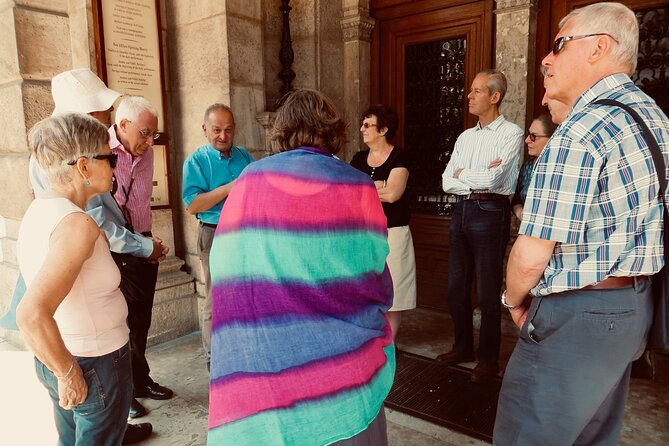
The feel of the day depends a lot on your guide. In at least one case, Miklós turned famous sights into story-filled city scenes, with the kind of historical detail that makes you look twice at facades and squares. You’ll also ride Metro Line M1 instead of spending all your time walking, which keeps the pacing sane for a half-day.
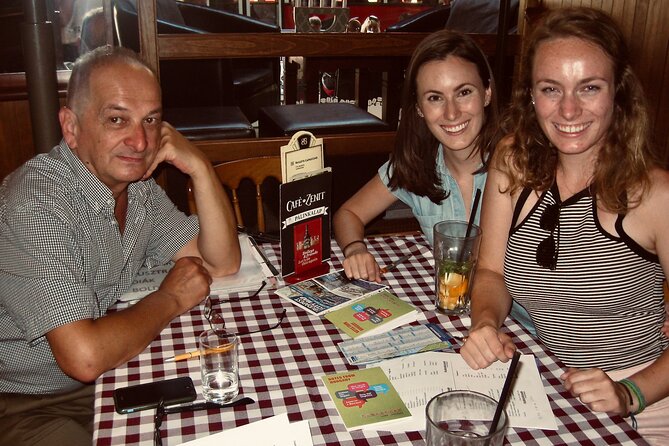
One more plus: the tour isn’t all sightseeing. You finish with a relaxed drink on a terrace near the synagogue—plus a city map and a small notebook with pen to help you plan what comes next. It’s offered in English, runs daily within a set window, and keeps your group tight.
In This Review
- Key highlights you’ll actually feel in 4 hours
- A 4-hour loop that connects Danube views, Castle lanes, and Pest landmarks
- Where you meet, where you end, and why the route feels efficient
- Liberty Bridge to St Gellért Square: learning the Danube’s “spine”
- Clark Square and the “meeting points” of the city
- Up toward the Castle District: Fisherman’s Bastion and the Royal Palace photo line
- Matthias Church and the Vienna Gate area: the small names that matter
- Disz tér and Castle District lanes: why old squares feel different up close
- Heroes’ Square, Parliament, and the Metro Line M1 ride that saves your legs
- St Stephen’s Basilica, Deák Ferenc tér, and the Great Synagogue contrast
- Kamara Café terrace: the perfect pace reset after big sights
- Price and value: when $489.24 for up to 4 actually makes sense
- Who this tour is best for
- Should you book Capital Budapest private tour?
- FAQ
- How long is the Capital Budapest private tour?
- What’s the group size and pricing?
- Is hotel pickup available?
- What language is the tour offered in?
- What’s included in the price?
- Do I need to pay admission at the stops?
- Where does the tour start and where does it end?
- What days and times does it operate?
- Is the tour private?
- What if the weather is bad?
Key highlights you’ll actually feel in 4 hours
- Hotel pickup and a private group up to 4 for a calmer pace and easy Q&A
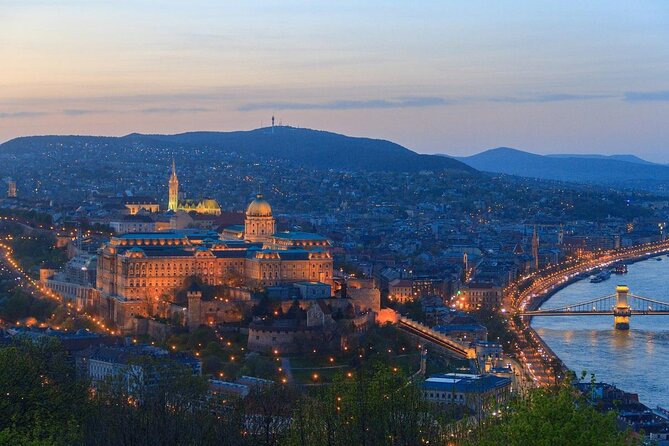
- Liberty Bridge and Castle District viewpoints that frame the Danube from multiple angles
- Fisherman’s Bastion + Matthias Church for iconic skyline views right in the Castle area
- A Metro Line M1 ride with context on why this line matters historically
- Heroes’ Square and Parliament Building as major national landmarks without the full-day slog
- Kamara Café terrace drink included to slow down and plan the rest of your trip
A 4-hour loop that connects Danube views, Castle lanes, and Pest landmarks
Budapest has a way of making you choose between “royal views” and “city life.” This tour threads that needle. You start in the central downtown area (and can also be picked up at your hotel or a nearby agreed meeting point), then work through the bridge-and-squares rhythm that locals use all the time.
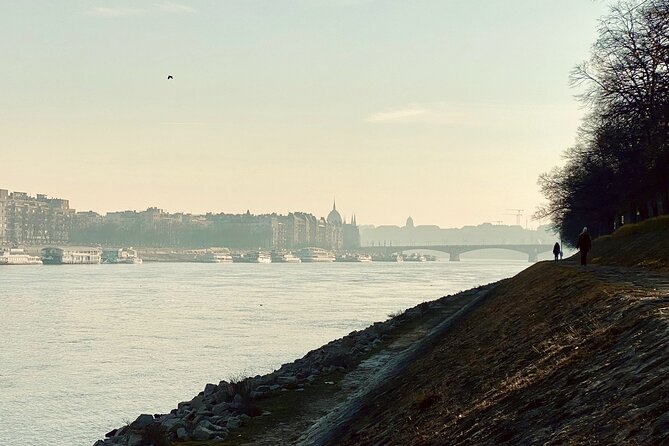
What I like is that you don’t just point at famous buildings. You move through the connective tissue of the city: river crossings, daily squares, and transport hubs. That helps you understand why Budapest feels like two cities—Buda and Pest—held together by movement across the Danube.
Also, it’s private. That matters more than it sounds. If you want slower photo stops at Fisherman’s Bastion or you need a quick rest break, you can usually make the day fit you.
You can also read our reviews of more private tours in Budapest


Where you meet, where you end, and why the route feels efficient
Your start point is listed near Dohány u. 4, close to the Great Synagogue area, but your exact meeting spot can shift. Pickup is offered from whichever hotel you’re staying at in Budapest, or you’ll meet at a central point you agree on. That flexibility is useful if you’re staying in Castle Hill streets, downtown, or the Jewish Quarter.
The tour ends at Károly körút by Astoria Metro (M), though the description notes the ending can vary and may be in the greater downtown area based on the personalized itinerary. For you, this means less time backtracking to get from one side of town to the other.
Timing is also built for a half day. With a 4-hour duration, you’re not stuck in one neighborhood for too long, and you still get major sights. The tradeoff: it’s fast enough that you won’t have hours inside churches or museums. For anything ticketed, you’ll be outside seeing the key elements rather than doing a deep, slow interior visit.
Liberty Bridge to St Gellért Square: learning the Danube’s “spine”
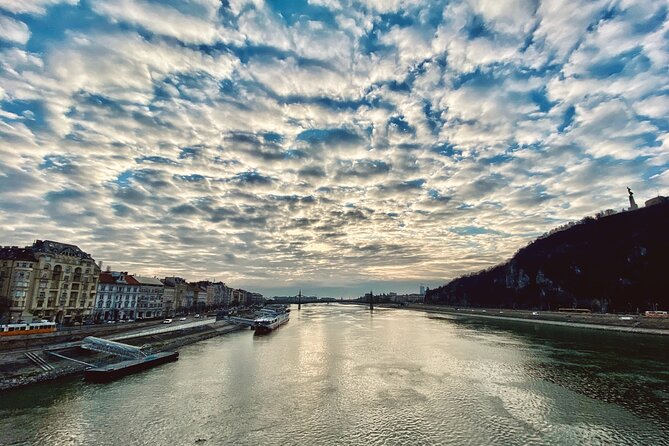
Your day gets off to a visual start at Liberty Bridge (Szabadság hid), connecting Buda and Pest. It’s the third southernmost public road bridge in Budapest, located at the southern end of the city center. You’ll also hear its earlier name: it was originally called Franz Joseph Bridge. That kind of detail helps you see the bridge as a historical marker, not just a crossing.
From there, St Gellért Square anchors you in Buda. The square is named after Bishop St Gellért, also called the Martyr for Hungarian Christendom. This stop works well because it’s less about one single photo and more about atmosphere—stone, scale, and how people use the space.
One practical benefit: you’re still in the “orientation” part of the tour, so you’re likely to start noticing relationships between landmarks—especially how Buda slopes connect to bridges and major streets.
Clark Square and the “meeting points” of the city
Next comes Clark Square (Clark Ádám tér), a key intersection where many major routes converge. This is the spot where the Chain Bridge, the tunnel leading beneath Castle Hill, and the funicular up to Szt. György Square by the Royal Palace all connect. Thousands of locals and visitors pass through each day, and the flower-laden roundabout in the middle has been part of Budapest for decades.
If you’re the type of traveler who likes to understand the city’s logic, Clark Square is your friend. You see how people actually move from one level to another—under hills, up funicular slopes, across the river—without needing a map with dozens of lines.
Possible drawback: if you’re hoping for long stops for shopping or sitting, this is more of a pass-through moment. It’s still worth it because it sets you up for the Castle District climb.
Up toward the Castle District: Fisherman’s Bastion and the Royal Palace photo line
As you head up, the route includes the winding approach that leads toward Buda Castle, turning right under Fisherman’s Bastion toward the Royal Palace. This is one of those “move-with-the-view” moments. You’ll see how the Castle District frames the skyline and river at close range, and you’ll likely get some of your best quick photos without needing a long walk.
Then you reach Fisherman’s Bastion (Halászbástya). It’s one of Budapest’s most recognizable viewpoints, known for its Neo-Romanesque lookout terraces and wide panorama over the city. The key detail I find useful: its seven high-pitched stone towers symbolize the seven chieftains who founded Hungary in 895. That symbolism gives meaning to what can otherwise feel like “just a pretty lookout.”
Note on tickets: Fisherman’s Bastion is marked as admission not included, so plan for extra cost if you want to go up and fully experience the terraces.






Matthias Church and the Vienna Gate area: the small names that matter
Right by Fisherman’s Bastion is Matthias Church (Mátyás-templom). It’s Roman Catholic and sits in front of the Bastion in the Castle District. The tour’s built-in context matters here: church tradition says it was originally built in Romanesque style in 1015, but no archaeological remains exist. So you get both the legend and the limit of what evidence can confirm.
This stop is brief, which is exactly right for a half-day tour. You get the big impression of the church’s place in the Castle District without losing your schedule.
The route also references the square area tied to the Vienna Gate (Bécsi kapu). The name tells you what it once did: it was the port connection between the Castle and the highway to Vienna. It’s a small detail, but it changes how you read a wall, a passage, or a viewpoint. It’s not random. There’s a city-planning logic behind it.
Disz tér and Castle District lanes: why old squares feel different up close
In the Castle District you’ll pass through Dísz tér, an area of mostly one- and two-storey old residential buildings running north-south. In the Middle Ages, this square held simple Gothic houses, and the remains of those structures can still be found in foundations and walls of some houses.
This is the part of the tour that helps you understand why Castle Hill doesn’t just look like a postcard. It’s lived-in architecture—layered, worn, and built over older footprints.
If you’re short on time, Dísz tér is a good compromise. It’s an outdoor area that gives you context without requiring an extended ticketed visit. But if you’re expecting a long guided walk through every courtyard and side street, this won’t replace that kind of deeper Castle District tour.
Heroes’ Square, Parliament, and the Metro Line M1 ride that saves your legs
Leaving the Castle area, you hit Széll Kálmán tér, a major transport interchange and one of the busiest squares in Buda. It used to be called Moszkva tér between 1951 and 2011, and it’s often considered a center of Buda because of its traffic and stores around it, including Mammut.
Then you connect to the big public-landmark zone: Heroes’ Square. This is known for its statue complex, featuring the Seven chieftains of the Magyars and other important Hungarian national leaders. A key detail here is the Memorial Stone of Heroes, which is often mistakenly referred to as the Tomb of the Unknown Soldier.
Heroes’ Square is one of those places that can feel too “monumental” for some people. But in a tour like this, it works because you’re not there for long enough to get bored. You’re there to register the scale and symbolism, then move on.
From there you travel using Metro Line M1 (Millennium Underground Railway), the oldest Budapest Metro line. It’s also the first underground on the European mainland, and the world’s third oldest after London Underground and Liverpool’s Mersey Railway. That’s a lot of ranking for a short ride, and it’s exactly why this stop is valuable: it adds a real-world reason to ride the transit instead of skipping it.
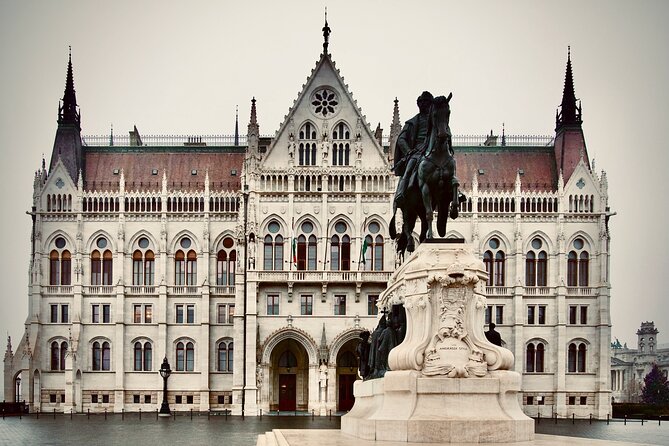
When you reach Hungarian Parliament Building, you get a major architectural landmark: designed in neo-Gothic style by Imre Steindl, opened in 1902, and it has been Hungary’s largest building since completion. It sits on Kossuth Square on the Pest side of the Danube. The tour frames what’s around it too—facing the building are the Museum of Ethnography and the Ministry of Agriculture—so the square feels like an organized civic stage, not random streets.
Parliament is also marked as admission not included, so you’ll mainly be observing from outside.
St Stephen’s Basilica, Deák Ferenc tér, and the Great Synagogue contrast
Next you shift from national civic icons to religious and cultural sites.
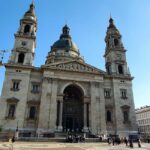
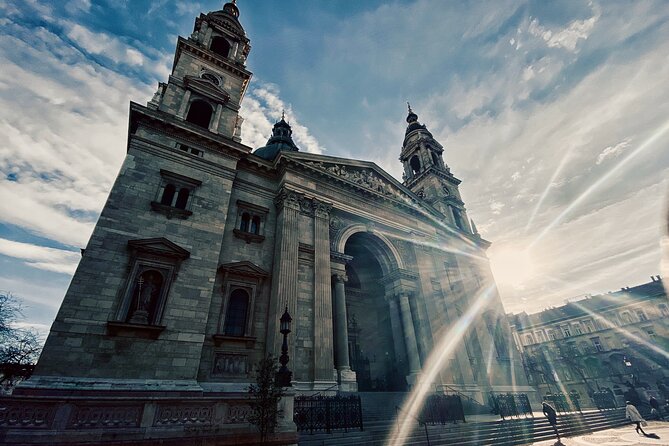
St. Stephen’s Basilica (Szent István Bazilika) is named after Stephen, the first king of Hungary. The tour notes that a supposed right hand is housed in a reliquary. It was the sixth largest church building in Hungary before 1920. Like Parliament, this is mostly an exterior-and-squares experience here, and marked admission not included.
You’ll then pass near Deák Ferenc tér, a busy area where a small park next to it is popular with younger people. The tour mentions alcoholic beverages sold on the grassy area and that the area is often populated until midnight. Even if you’re not going out late, this detail gives you a feeling for how Budapest lives after sightseeing hours.
Finally, you reach the cultural anchor on the other side of the story: Great / Central Synagogue (Nagy Zsinagóga), also known as the Dohány Street Synagogue. It’s in Erzsébetváros, the 7th district. It’s the largest synagogue in Europe, seating 3,000 people, and it’s described as a center of Neolog Judaism. This is marked admission not included, so again, your time here is about context and exterior impressions.
For me, the contrast is what makes this portion click. The skyline stops feel grand and official. Then you’re looking at a landmark that’s tied to identity, community, and continuity.
Kamara Café terrace: the perfect pace reset after big sights
After so many landmark moments, you end with a slower chapter: Kamara Café, a quiet and relaxed drink on a terrace near the synagogue. The beverage is included, and the point is less about caffeine and more about decompressing.
This end-of-tour drink is also practical. You can use it to plan what comes next—especially since you’re given a city map and a small notebook with pen. If you have your heart set on a museum, a thermal bath, or a specific neighborhood dinner, you’ll be in a better mental place to choose after sitting down.
Price and value: when $489.24 for up to 4 actually makes sense
At $489.24 per group (up to 4) for about 4 hours, this is not a budget tour. But it can be good value if it replaces multiple transit-and-guiding decisions.
Here’s the “value math” that matters:
- You’re getting private guiding, not a shared group format.
- You receive a public transport pass, so the day includes local movement instead of only walking.
- You get a city map and a notebook with pen, which sounds small, but helps you keep momentum after the tour.
- You get one hot or cold beverage included, so you’re not paying for the final stop.
If you’re traveling as a couple or small group and want a guided route that hits both Buda and Pest without you figuring it out from scratch, this can be worth it. If you’re solo and happy with a self-guided loop, you’d likely spend less by building your own route—just with more planning time.
Who this tour is best for
This tour is a strong fit if:
- you want a guided half-day that covers major landmarks in a logical route
- you prefer public transit + walking, not nonstop steps
- you like getting stories behind monuments, not just directions
- you’ll appreciate a quick finish at a café instead of rushing immediately to your next reservation
It’s also a good choice if you’re in Budapest for a short time and want your bearings fast across both halves of the city.
Should you book Capital Budapest private tour?
I’d book it if you want a guided, high-impact half-day with enough structure to feel easy—yet flexible enough to ask questions and linger at viewpoints. The inclusion of the public transport pass and the Metro Line M1 segment makes it feel like you’re using the city, not just touring around it. And the Kamara Café drink is a thoughtful close.
I’d think twice if you hate spending extra on tickets, because multiple marquee stops are marked as admission not included. Also, if you want deep interior time inside churches, the Parliament, or the synagogue, this tour won’t replace that kind of longer visit.
If your goal is a smart, story-led orientation to Budapest in just four hours, this one earns its place.
FAQ
How long is the Capital Budapest private tour?
It runs for approximately 4 hours.
What’s the group size and pricing?
It’s priced at $489.24 per group, for up to 4 people.
Is hotel pickup available?
Yes. You can be met at your hotel in Budapest, or at a central point you agree upon.
What language is the tour offered in?
It’s offered in English.
What’s included in the price?
A public transport pass, a city map, one hot or cold beverage, and a notebook with pen are included.
Do I need to pay admission at the stops?
Some major landmarks have admission tickets not included, while at least Liberty Bridge is marked as ticket free. You’ll want to plan for possible extra entry costs.
Where does the tour start and where does it end?
It typically starts near Dohány u. 4 (1074) and ends near Károly körút (Astoria M, 1072). The ending can vary within downtown depending on the personalized itinerary.
What days and times does it operate?
It operates Monday through Sunday, from 8:00 AM to 6:00 PM (within the listed date range).
Is the tour private?
Yes. It’s a private tour/activity, and only your group participates.
What if the weather is bad?
The experience requires good weather. If it’s canceled due to poor weather, you’ll be offered a different date or a full refund.