REVIEW · BUDAPEST
Budapest: Inner City Walking Tour in German
Book on GetYourGuide →Operated by Tourist Angel · Bookable on GetYourGuide
Budapest’s center hits hard in two hours. With a German-speaking professional guide, I loved how the tour stitched together architecture and gripping 20th-century stories, from St Stephen’s Basilica to the Danube memorial. If you like your sightseeing with context (and not just postcards), this one delivers.
My main caution: it’s in German, so if that’s not your strong suit, you may miss some of the history. Also, it’s a walking tour—great for getting oriented, but not ideal if you want to linger forever at each stop.
In This Review
- Key Highlights Worth Your Two Hours
- Getting Oriented Fast on Pest’s Inner-City Route
- Meeting at Molnár’s Kürtöskalács and Starting in the Right Mood
- Elizabeth Park and Budapest Eye: Views First, Then the Story
- Saint Stephen’s Basilica: Dome, Colonnade, and the Big Visual Payoff
- Traditional Pedestrian Streets and Mr. Safe’s Unexpected Humor
- Liberty Square: Learning the Hard Parts Without Losing the Plot
- Kossuth Square and the Hungarian Parliament Building: Dictatorship to 1956
- Shoes on the Danube Bank: A Quiet Ending by the River
- Price and Value: Why $23 Can Make Sense
- Who This Tour Fits Best (and Who Should Skip It)
- A Quick Word on the Guide Experience
- Should You Book This German-Language Inner City Tour?
- FAQ
- How long is the Budapest inner city walking tour in German?
- Where do I meet the guide?
- What language is the tour guide?
- What are the main sights included?
- Is the tour wheelchair accessible?
- What is the cancellation policy?
Key Highlights Worth Your Two Hours
- German-speaking guide who keeps the pace clear, personal, and question-friendly
- St Stephen’s Basilica for that instantly recognizable dome and colonnade moment
- Hungarian Parliament area with stories about dictatorship and 1956
- Liberty Square for the heavier chapter: Nazi occupation and Communist oppression
- Mr. Safe statue—a small detour that adds a smile to the serious stuff
- Shoes on the Danube Bank for a quiet, haunting finale by the river
Getting Oriented Fast on Pest’s Inner-City Route
This tour focuses on the heart of Pest, and that’s a smart choice. Budapest can feel like two cities stuck together—Buda up high, Pest down by the river—and getting your bearings in the inner streets helps the rest of your trip click into place.
I like that this isn’t just a parade of famous buildings. You get an overview of 19th-century architecture and major monuments, but the guide also connects them to real political turns—Nazi occupation, Communist oppression, dictatorship, and the 1956 revolution. That mix makes the walk feel like a story you can follow, not a checklist.
You’ll also notice the tour’s vibe: it’s built for a relaxed city-center pace. In practical terms, that means you can ask questions, get explanations that stick, and keep moving without that marathon feeling.
You can also read our reviews of more walking tours in Budapest



Meeting at Molnár’s Kürtöskalács and Starting in the Right Mood
You meet your guide in front of the café/pastry shop Molnar’s Kürtöskalacs. It’s a convenient inner-city landmark, and it sets the tone immediately: you’re starting your walk right where people actually snack, stroll, and go about their day.
This matters more than you’d think. A good meeting point reduces stress. And when you’re only out for two hours, that first 10 minutes count.
Also, keep an eye on the guide language. Everything here is German, and the best part of the tour is hearing the stories clearly as you pass each monument. If you read a little German, you’ll likely pick up more. If you don’t, you can still enjoy the sights—but you’ll want to be realistic about what you’ll understand.
Elizabeth Park and Budapest Eye: Views First, Then the Story
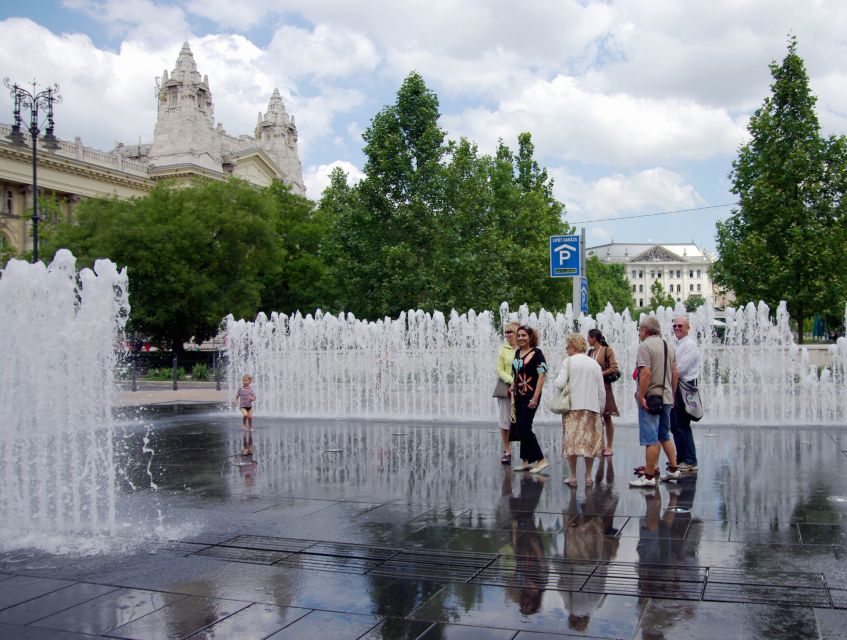
The tour starts with a stroll through Elizabeth Park. From there, you’ll see Budapest Eye, the largest Ferris wheel in Europe. Even if you don’t ride it, this is a good “anchor” moment early on—something visually big enough to help you picture the area around you.
Elizabeth Park is also a nice way to open the day. It gives you a breath of calmer space before you hit the grand monuments. That shift helps the tour feel balanced: greenery and city grandeur in quick succession.
If you’re thinking about photos, this is your early chance. Budapest’s central streets can be tricky in crowds, so grabbing a couple of images near the park and the ferris wheel before the historical stops gets hectic is a smart move.
Saint Stephen’s Basilica: Dome, Colonnade, and the Big Visual Payoff
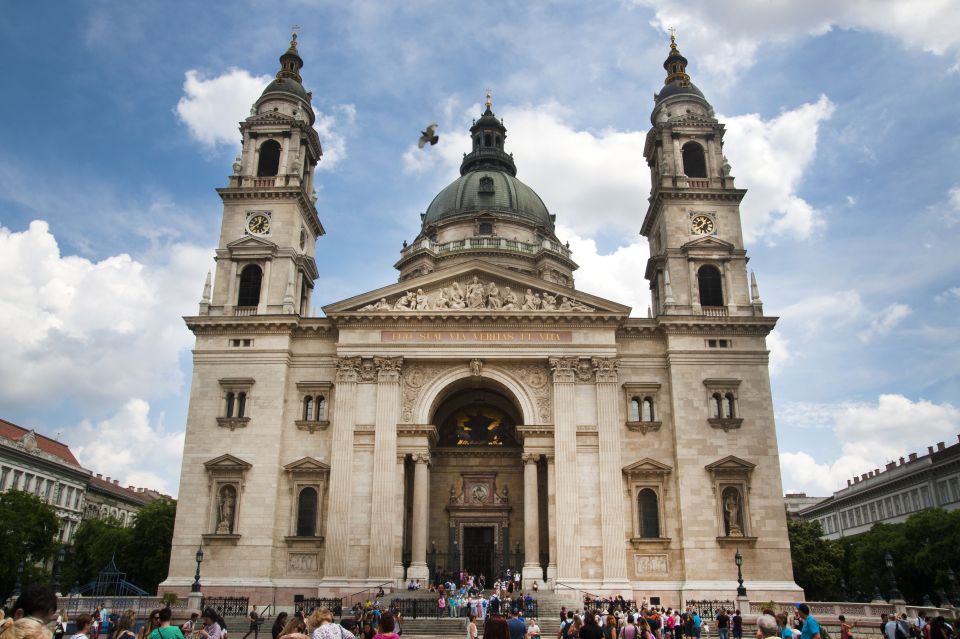
After the initial walk, the tour reaches one of its standout moments: St Stephen’s Basilica. You’ll admire its monumental dome and colonnade, and this is where the tour’s “iconic Budapest” identity becomes real.
Basilica stops can sometimes be a quick look-and-go. Here, it tends to feel more like a proper introduction. You’re not only staring at stone—you’re getting an overview of how Budapest’s history and identity shaped what you see on the street.
Practical note: it’s a major attraction area, so expect people around. The guide helps you keep the focus—what to notice, what to remember, and how the surrounding architecture fits into the bigger picture of Buda and Pest’s origins.
Traditional Pedestrian Streets and Mr. Safe’s Unexpected Humor
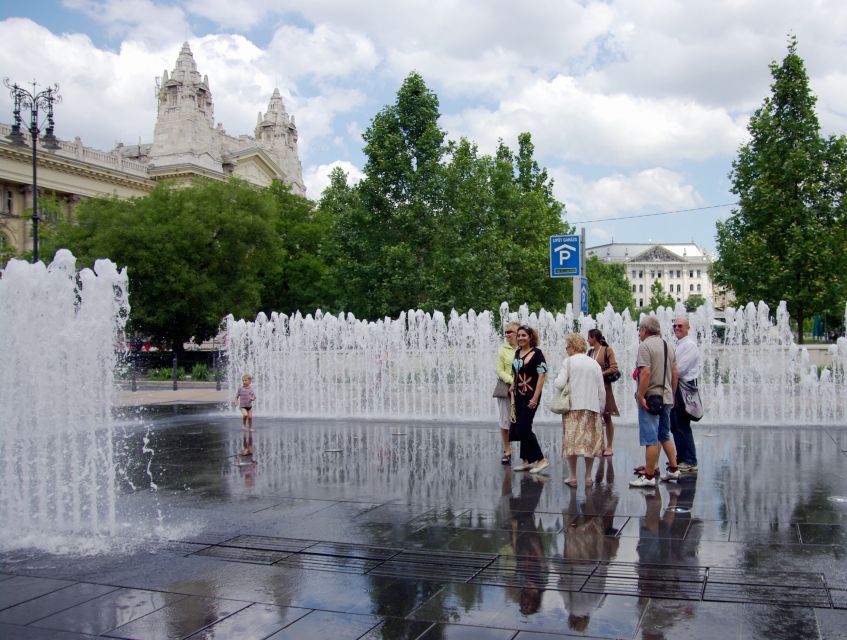
Next comes the city’s more relaxed side: traditional pedestrian streets in the center of Pest. This part is excellent for slowing your mind down just enough to take in how locals move.
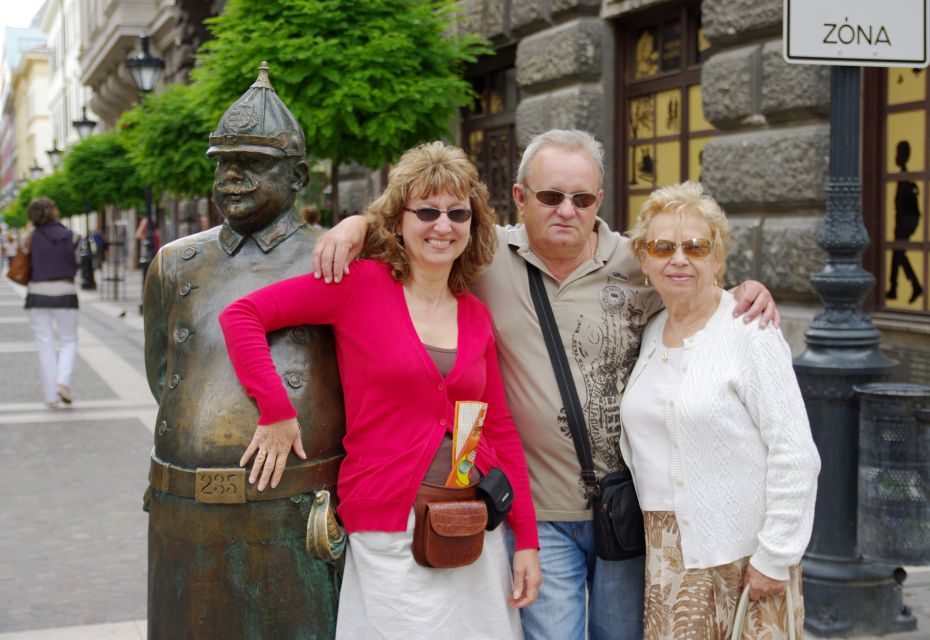
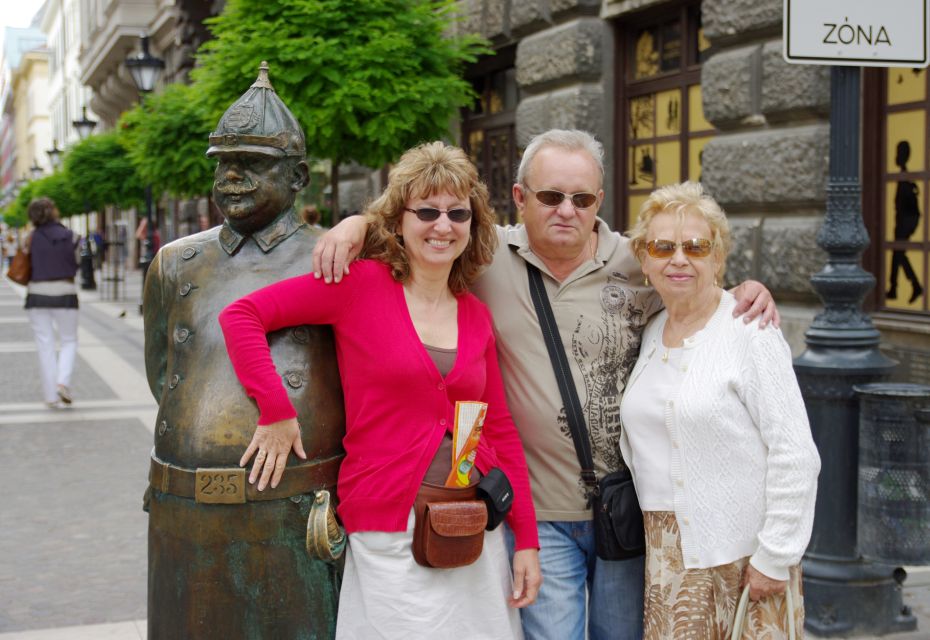
You’ll also see the statue of Mr. Safe. This small, quirky stop is a deliberate breather between heavy historical lessons. It’s one of those “only-in-the-city” moments that makes the tour feel more human and less museum-like.
Why I like this beat: not every tour lets you feel the lighter rhythm of a place. Budapest isn’t only about suffering monuments and big politics. The guide’s inclusion of Mr. Safe gives you a reminder that this is still a living city center—people laugh, take photos, and walk through.
You can also read our reviews of more city tours in Budapest




Liberty Square: Learning the Hard Parts Without Losing the Plot
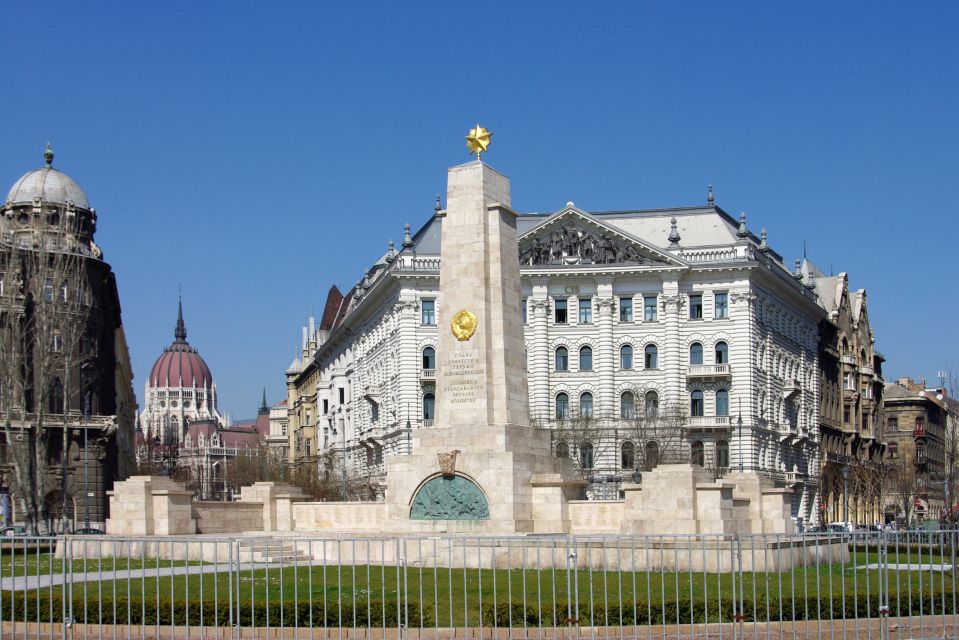
Then the tour turns serious at Liberty Square. This is where you learn about Budapest’s traumatic past as a center of Nazi occupation and Communist oppression.
Even if you know the broad themes of European 20th-century history, hearing it tied to the exact square where it unfolded makes it feel more concrete. The guide’s job here is crucial: connecting places to what happened there without turning the walk into a lecture that drains you.
You should be emotionally prepared. This is a heavier section of the day. If you’re traveling with kids or someone who doesn’t handle dark history well, plan how you’ll handle it—because the tour doesn’t shy away from the truth of what happened here.
Kossuth Square and the Hungarian Parliament Building: Dictatorship to 1956
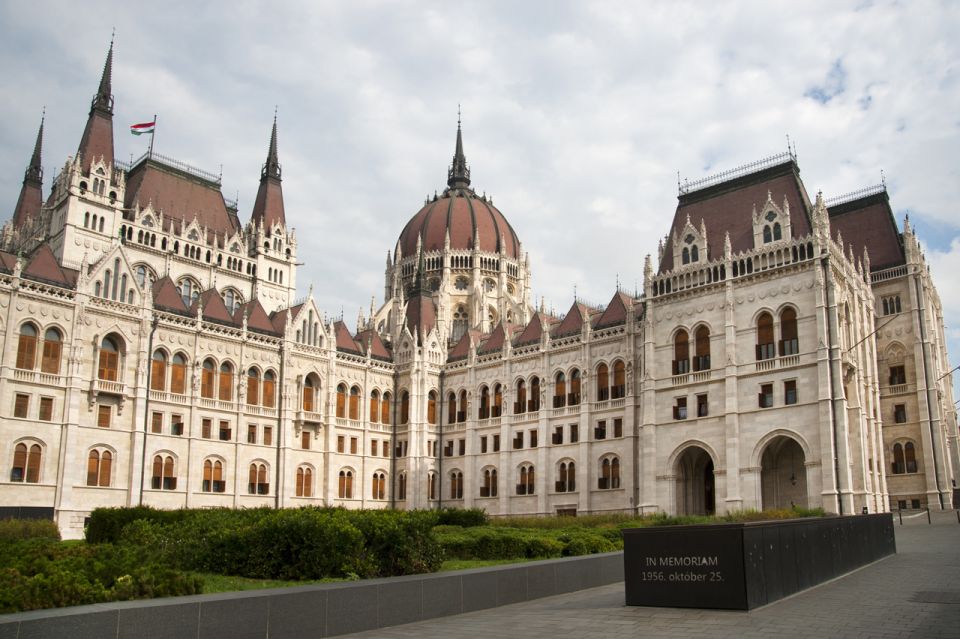
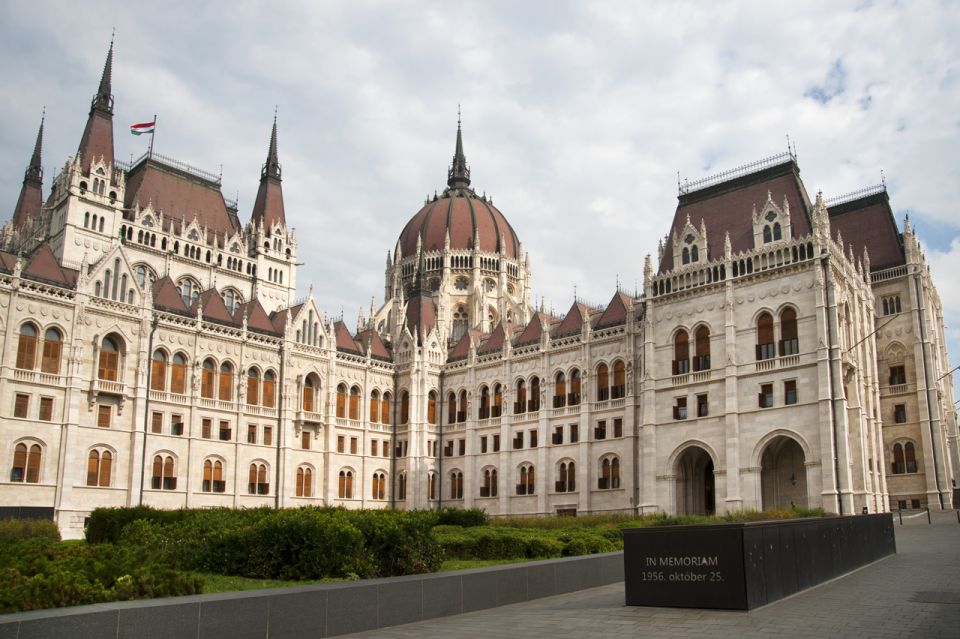
The finale of the main monument loop lands at Kossuth Square, where you’ll admire what surrounds the majestic Hungarian Parliament building. This is one of those Budapest views that hits you immediately—big lines, ceremonial space, and a sense of political theater even on a normal day.
Here, the guide shares stories of dictatorship and the 1956 revolution. That’s the key reason this stop is more than sightseeing. You’re watching political architecture in action: the building’s scale mirrors how power was presented, and the surrounding squares become stages for real historical turning points.
If you like your history grounded in human decisions—who had power, who resisted, what changed—this is the part that usually sticks in memory. The stories also give you a better lens for understanding why Budapest’s memorials and monuments aren’t just decoration.
Shoes on the Danube Bank: A Quiet Ending by the River
After the Parliament area, the tour either includes a visit to Shoes on the Danube Bank or gives you time for a stroll along the riverbanks. The monument is described as poignant, and you can feel why fast: it’s built for stillness.
This is where the tour’s pacing pays off. You’ve been through big architecture, heavy history, and square-level storytelling—then you land at something that asks for reflection. It’s not a dramatic photo op; it’s a “stand, look, think” moment.
If you’re sensitive to crowds, go slow here. People tend to gather around memorials, and you might have to pause while others take their time. If the guide offers options, choose the one that matches your comfort level. You’ll remember the moment better if you’re not rushing.
Price and Value: Why $23 Can Make Sense
At $23 per person for a two-hour walking tour with a professional local guide in German, I’d call this a good value if you want both sights and context.
Here’s the practical logic:
- You’re getting a guide for the full duration, not just a quick “meet and greet.”
- The route hits multiple major stops—St Stephen’s Basilica, Liberty Square, Kossuth Square, plus the Danube area.
- You also get story-based history tied to place, which is harder to stitch together on your own quickly unless you’re reading a lot or using multiple guides.
Also, the tour style matters. Recent feedback highlights that the guide often makes space for questions and can even run a bit over when conversations take a turn. That kind of flexible, human guiding is where you get real value—because you’re not just walking past landmarks, you’re understanding them.
Who This Tour Fits Best (and Who Should Skip It)
This tour is ideal if you:
- Want to see Pest’s biggest inner-city icons in a short time
- Prefer a German-speaking guide and clear explanations over solo wandering
- Like your history connected to specific squares and monuments (not just names in a guidebook)
- Appreciate the balance of serious topics and lighter city details like Mr. Safe
You might think twice if you:
- Don’t understand German well and you’d feel left out
- Want deep, slow time at each location instead of a tightly paced overview
- Need a very gentle walking schedule for health reasons (it is wheelchair accessible, but it still involves moving through the central area)
A Quick Word on the Guide Experience
The tour quality comes through in the way the guide works. One of the strongest themes in feedback is attention to people—adjusting for needs, answering questions, and keeping the explanations digestible.
You may also hear personal touches about everyday life and practical tips, including culinary ideas. That’s a win. It turns the walk from history-only into a street-level feel for how Budapest lives beyond monuments.
Names that have been mentioned in connection with this kind of guiding include Zsóka and Uschi, with praise for charm and clarity. Whoever you get, look for that same pattern: the guide should help you connect what you see to why it matters.
Should You Book This German-Language Inner City Tour?
If you want an efficient, story-led tour of Pest’s core sights, I’d say book it. The reason is simple: it’s built around the monuments that people actually talk about—St Stephen’s Basilica, the Parliament area, and the Danube memorial—while also giving you the emotional and historical context behind them.
But book with eyes open: the tour runs in German, and it covers painful history. If that fits your travel style and language comfort level, you’ll walk away with both better photos and a better understanding of Budapest’s 20th-century path.
FAQ
How long is the Budapest inner city walking tour in German?
The tour lasts 2 hours.
Where do I meet the guide?
Meet your guide in front of the café/pastry shop Molnar’s Kürtöskalacs.
What language is the tour guide?
The live tour guide speaks German.
What are the main sights included?
You’ll see St Stephen’s Basilica, the Hungarian Parliament building area (around Kossuth Square), Liberty Square, the Mr. Safe statue, and either Shoes on the Danube Bank or time along the riverbanks, plus the start around Elizabeth Park and Budapest Eye.
Is the tour wheelchair accessible?
Yes, the tour is listed as wheelchair accessible.
What is the cancellation policy?
There is free cancellation up to 24 hours in advance for a full refund.