REVIEW · BUDAPEST
Budapest Essential Walk&Food tasting
Book on Viator →Operated by Budapest Tour Guy · Bookable on Viator
Four hours, and Budapest clicks. This Budapest essential walk-and-food tasting strings together big landmarks you can actually reach on foot, plus metro rides and a real food break, all while your guide ties the sights to the stories behind them. You’ll also get your views of the Danube from multiple angles, not just one postcard spot.
Two things I like a lot: I really enjoy having the private guide’s explanations on the move—especially when you’re hopping between squares, the basilica area, and the Castle Hill viewpoints. And I love that the food moment isn’t an afterthought; the tour builds in a stop for a strudel and coffee break, with a chance to try something specific like poppy seed strudel when the group goes in.
One thing to consider: this experience requires good weather and you’ll spend a lot of time walking and using public transport. If it’s cold or wet, you’ll want layers and shoes that handle uneven sidewalk and subway/street transitions.
In This Review
- Key highlights you’ll feel fast
- Where you start and how the route makes sense: Deák tér to Chain Bridge
- Deák Ferenc Square: orientation, then the Opera area from the sidewalk
- Heroes’ Square and City Park: Vajdahunyad Castle through an architectural lens
- Széchenyi Baths and the pool peek: thermal-bath history without the full commitment
- St. Stephen’s Basilica: King Stephen, Catholic Hungary, and who else shapes the story
- Szabadság tér, Soviet remnants, and the Parliament-area walk by Danube
- Fisherman’s Bastion and Castle Hill: panoramic views, then down toward the Chain Bridge
- The strudel and coffee break: food that actually fits the walking pace
- Is it worth $90.11? Private guide value and why the route feels efficient
- Weather, comfort, and how to prepare for a smooth day
- Should you book Budapest Essential Walk&Food tasting?
- FAQ
- What is the duration of the Budapest Essential Walk&Food tasting?
- Where do I meet, and where does the tour end?
- Is this tour private or shared with strangers?
- Do I need to purchase admission tickets for the sights?
- Is there food included, and what will I eat?
- Is it okay to bring a service animal?
- What happens if weather is poor?
Key highlights you’ll feel fast

- Private group touring with only your group, so questions stay on topic
- A guide who adapts to real weather, including proceeding during downpours
- Multiple Danube vantage points, from Parliament-area ground level to Castle Hill panoramas
- Thermal-bath area time at Széchenyi, including a chance to peek at the outdoor pools
- Hungarian food in the middle of the walk, built around a strudel and coffee break
Where you start and how the route makes sense: Deák tér to Chain Bridge
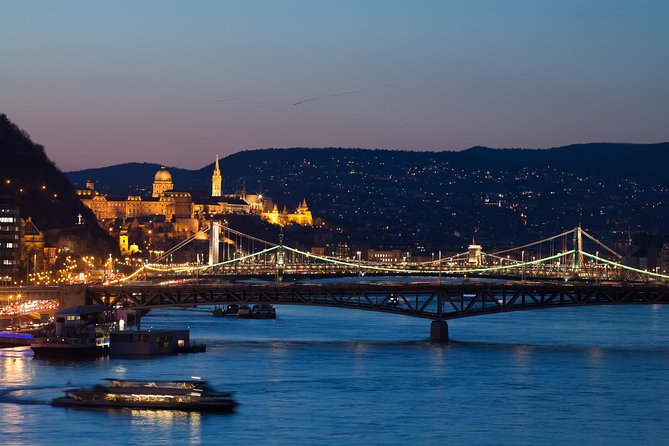
You meet at the stairs of the Lutheran Church at Deák Ferenc Square (Deák tér 4). From there, the route is designed to help you get oriented quickly, moving from downtown squares toward major sights and then back again before it finally climbs up to the Castle district.
The tour runs about 3 to 4 hours, and it’s paced so you’re not stuck staring at buildings for hours on end. You’ll use public transport along the way, including metro rides, which helps when your legs start complaining.
A small but useful detail: you’ll have a mobile ticket. That matters when you’re hopping between stops and don’t want to mess around with paperwork.
You can also read our reviews of more walking tours in Budapest

Deák Ferenc Square: orientation, then the Opera area from the sidewalk
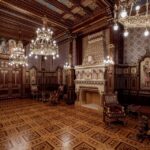
Your first meeting point is Deák Ferenc Square, and the plan begins with a short walk that touches both Elizabeth Square and the Opera House area. This is a smart opener: you start with a major hub and ease into Budapest’s layout, rather than launching straight into a hill climb.
Even though you’re not buying tickets to everything in this segment, the outside viewing is still valuable. Getting the buildings in your frame early helps the later stops feel connected, not random.
If you like having context, this is where your guide’s storytelling starts doing work. You’ll learn about the surrounding grandeur and why these buildings matter, even when all you’re doing is looking up.
Heroes’ Square and City Park: Vajdahunyad Castle through an architectural lens
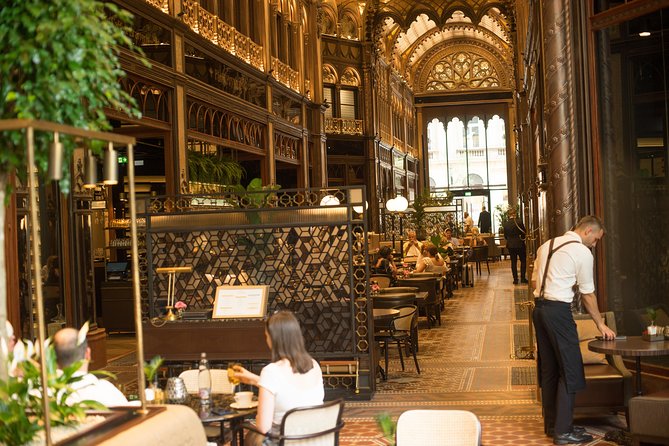
Next comes Heroes’ Square and then City Park, with a visit to Vajdahunyad Castle. The focus here is on architecture, so it’s more than a quick photo stop.
What I like about this setup is that it gives you a clear “theme” for the middle of the walk: you’re not just moving from place to place, you’re also learning how to look at what you see. You can walk the exterior views and pick up the cues the guide points out, which makes the area feel less like a blur.
You also ride on the Millennium Underground, described as Europe’s first underground. That’s not just a transport trick; it’s part of the experience, because it connects Budapest’s modern movement with its history.
Széchenyi Baths and the pool peek: thermal-bath history without the full commitment
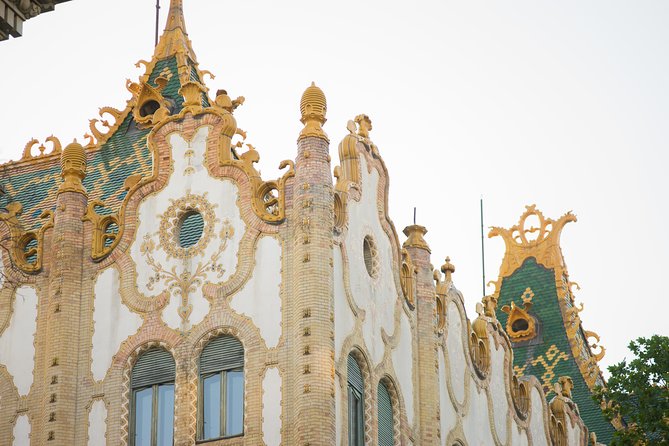
Széchenyi Baths is one of Budapest’s best-known thermal bath areas, and the tour gives you time to get acquainted with its history. If you’re curious but don’t want to plan a whole separate bath day, this works well.
The plan also includes a chance—if timing and entry allow—to glimpse the outdoor pools by using a side entrance. That’s a great “taste” of the vibe without forcing you into a full soak session.
One practical note: you’re moving from this thermal-bath stop to other downtown highlights afterward. So even if you’re tempted to slow down, remember the tour is designed to keep momentum and connect the stories across neighborhoods.
St. Stephen’s Basilica: King Stephen, Catholic Hungary, and who else shapes the story
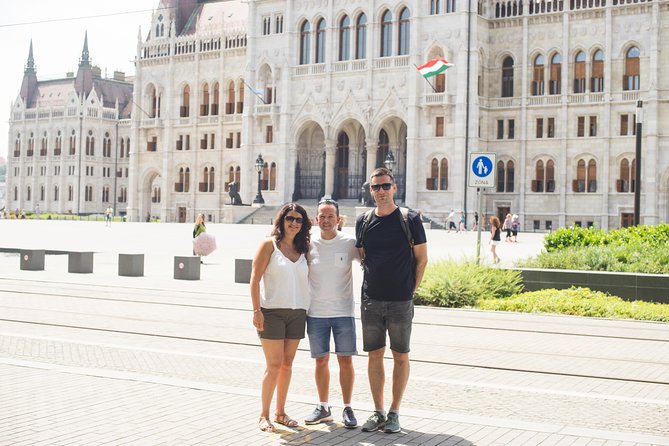
After Széchenyi, you head back toward the center and arrive at St. Stephen’s Basilica (Szent István Bazilika). This stop is built around the birth of Catholic Hungary and the role of state founder King Stephen.
I like this kind of grounding because it gives you a lens for everything else you see later—especially when your route touches politics, monuments, and national identity themes around the Danube.
You’ll also be introduced to major Hungarian personalities, including Ferenc Puskás. Even if you don’t know Hungarian history cold, the guide’s framing helps you understand why these names keep showing up.
You can also read our reviews of more food & drink experiences in Budapest





Szabadság tér, Soviet remnants, and the Parliament-area walk by Danube
From St. Stephen’s Basilica, the route continues toward Szabadság tér, with a break planned at a strudel house before you head into the bank district. This stretch is where the tour turns more outwardly political and reflective.
At Szabadság tér, you’ll learn about the last remaining Soviet Statue, the American embassy, and the memorial of the German occupation. That’s a lot to pack into a walk, but it’s exactly why a guide helps—otherwise these items can look like just more stone and signage.
Then you reach Kossuth tér and the Hungarian Parliament Building area. Here, the discussion includes architecture and both past and current issues. You also visit the Shoes on the Danube Promenade near the Parliament building, which brings the Danube story into a more sobering, memorial-focused context.
This section is not about quick sightseeing. It’s about slowing your brain down long enough to connect what you see to what it represents.
Fisherman’s Bastion and Castle Hill: panoramic views, then down toward the Chain Bridge
After the Parliament area, you move using the metro—specifically Metro 2 (the red line) under the Danube—and then climb onto Castle Hill for the Castle district portion of the walk.
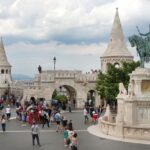
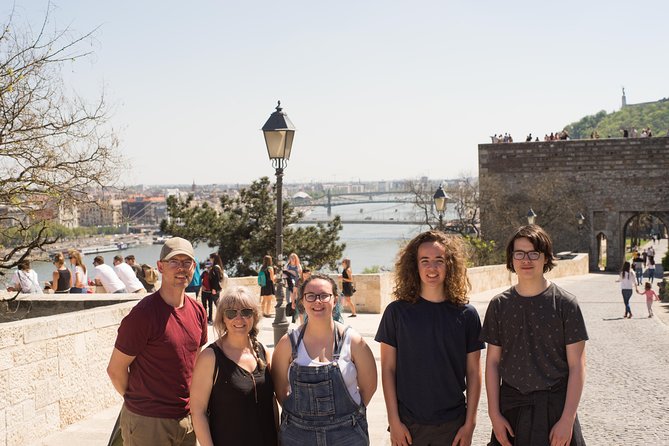
The first major highlight is Fisherman’s Bastion, starting with a panoramic view from the look-out terrace. This is the “okay, now I get it” moment for a lot of people, because the city opens up and the Danube stops being just a river and becomes a route connecting everything.
From there, you walk toward the Royal Palace area and then down Castle Hill along the funicular. Your route includes stories about Budapest’s iconic first permanent bridge and even details like the lions at the Chain Bridge area.
The final stretch lands at Széchenyi Chain Bridge, and your ending point is tied to the Castle district near Holy Trinity Square (Szentháromság tér), just off Matthias Church. It’s a nice finish because you end with the big landmark still in view.
The strudel and coffee break: food that actually fits the walking pace
This tour isn’t a full-on meal. It’s more like a smart pause so you can keep walking without feeling wrecked.
The plan includes time at a strudel house where you eat your strudel and coffee. In one example from the guide’s style, Gabor brought the group to the Strudel restaurant and the poppy seed strudel stood out as a highlight. That fits the spirit of a Budapest walk tour: simple, specific, and grounded in what’s near your route.
If you have dietary needs, the tour data doesn’t spell out options. So I’d treat the strudel stop as flexible in your mind and consider messaging questions before you book, especially if you’re sensitive to certain ingredients.
Is it worth $90.11? Private guide value and why the route feels efficient
At $90.11 per person for about 3 to 4 hours, this isn’t a bargain bus tour. It’s priced more like what you’re really buying: a private guide who can explain what you’re looking at while you’re moving through multiple neighborhoods.
It also helps that the listed admissions are free for each stop, so you’re not stacking extra ticket costs on top of the guide fee. That doesn’t mean you’ll always get inside every spot—some segments are outside viewing—but it keeps the total cost from climbing.
One more value point: the pacing mixes walking with metro rides, which helps you cover more ground without feeling like you’re doing all-day marathon sightseeing. And in at least one case, the tour ran later and the guide still found a way to get the group back to their hotel, showing flexibility when timing changes.
If you’re booking in advance, note that the tour is commonly booked about 21 days ahead. That’s a hint it sells out sometimes or at least fills slots, so earlier planning usually keeps your preferred time available.
Weather, comfort, and how to prepare for a smooth day
This is a good-weather experience. If conditions are poor, the tour can be rescheduled or refunded, and the guide may adjust the plan based on what’s workable.
Either way, plan like it could rain: bring a light layer you can move in, wear shoes with grip, and keep your phone protected for photo moments around the Danube and Castle Hill.
The good news is that the tour’s format holds up. In one real downpour with strong winds, guide Gabor kept the tour moving and didn’t let weather erase the plan. That’s the kind of practical confidence you want when you’re paying for a guided experience.
Should you book Budapest Essential Walk&Food tasting?
Book it if you want a focused introduction to Budapest that blends big-name sights with storytelling and a food pause that keeps your energy up. The private setup is a strong fit if you like asking questions as you go, and the mix of squares, thermal-bath area time, and Danube viewpoints is a good match for first-timers who don’t want to plan a day from scratch.
Skip it if you hate walking, want a fully indoor museum-style schedule, or are traveling with very limited time and prefer a faster point-to-point approach with no public transport.
If you’re the kind of traveler who likes learning while you move, this tour does that job well—especially with a guide like Gabor who stays flexible when the weather doesn’t cooperate.
FAQ
What is the duration of the Budapest Essential Walk&Food tasting?
The tour lasts about 3 to 4 hours.
Where do I meet, and where does the tour end?
You meet at the Lutheran Church of Ferenc Deák Square (Deák Ferenc tér 4, 1052 Hungary). The tour ends at Széchenyi Chain Bridge area (Széchenyi Lánchíd, 1051 Hungary), near Holy Trinity Square (Szentháromság tér) off Matthias Church.
Is this tour private or shared with strangers?
It’s a private tour/activity, and only your group participates.
Do I need to purchase admission tickets for the sights?
The itinerary lists free admission tickets for the stops included.
Is there food included, and what will I eat?
There’s a break at a strudel house where you spend time with your strudel and coffee.
Is it okay to bring a service animal?
Yes, service animals are allowed.
What happens if weather is poor?
The experience requires good weather. If it’s canceled due to poor weather, you’ll be offered a different date or a full refund.