REVIEW · BUDAPEST
Private Sightseeing Tour using Electric Tuk Tuk Ride in Budapest
Book on Viator →Operated by e-TukTour · Bookable on Viator
Budapest zips by on an electric tuk-tuk. In about two hours you cover Andrássy Avenue, Heroes’ Square, Parliament, the Jewish Quarter sights, and Buda Castle, with photo stops and time to cool down or warm up. I especially like that the ride lets you see more without turning the day into a long walk, and the guide’s setup often includes blankets and hot tea when the weather is chilly.
This is a private outing with a real chance to ask questions, and I like that the guide you’ll meet (Daniel is a standout name) explains what you’re seeing while still leaving you room to look around. The route is designed to connect the big Pest landmarks to the Buda highlights, so you don’t just collect photos. You get the why behind them, in plain language, and at a pace that doesn’t feel rushed.
One drawback to plan for: many major sights are photo stops or slow passes, not full interior visits. Also, admission tickets are noted as not included at the breaks, so you’ll want to decide in advance what you’re happy to view from outside.
In This Review
- Key highlights that make this tour worth your time
- Why an electric tuk-tuk is the best way to see Budapest fast
- Getting started at Oktogon 2, and what the ride feels like
- Andrássy Avenue and Heroes’ Square: the classic opening move
- Pest’s headline sights: House of Terror, Opera views, and Parliament stops
- Jewish Quarter sights, bridges, and the market hall connection
- Thermal bath views: Gellért and Rudas from the route
- The Buda Castle district: Fisherman’s Bastion and Matthias Church photo time
- Price and time: what $102.80 buys you in real terms
- Tradeoffs to expect (and how to handle them)
- Should you book this Budapest electric tuk-tuk tour?
- FAQ
- How long is the private electric tuk-tuk sightseeing tour?
- Is the tour private or shared?
- What language is the tour offered in?
- What attractions are included, and are entry tickets included?
- Where does the tour start and end?
- What if the weather is bad?
- Can I cancel for free, and how far in advance?
Key highlights that make this tour worth your time
- Electric tuk-tuk comfort for quick sightseeing: you ride close to the action and still get breaks built into the route
- UNESCO Andrássy Avenue start: you’ll roll right into one of Budapest’s most famous corridors
- Plenty of stop-and-look time at Heroes’ Square, Parliament, Buda Castle, Fisherman’s Bastion, and Matthias Church
- Photo-friendly pacing: the driver takes things slowly so you can frame shots at key angles
- Thermal bath views without the commitment: Gellért and Rudas show up as photo opportunities on the route
- Daniel’s practical warmth and hospitality: blankets, warm drinks, and helpful attention when the weather turns
Why an electric tuk-tuk is the best way to see Budapest fast
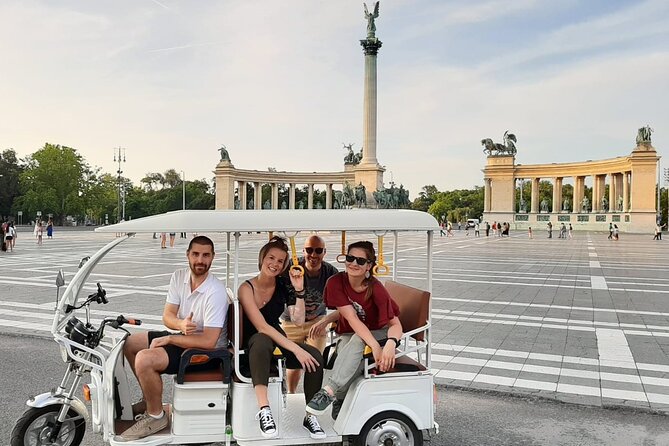
Budapest has a habit of looking closer on the map than it feels in real life. Between hills, bridges, and long stretches of pavement, a “quick highlights” day can turn into sore feet plus missed views. This tour solves that with an electric tuk-tuk that keeps you moving while staying close enough to landmarks for good photos.
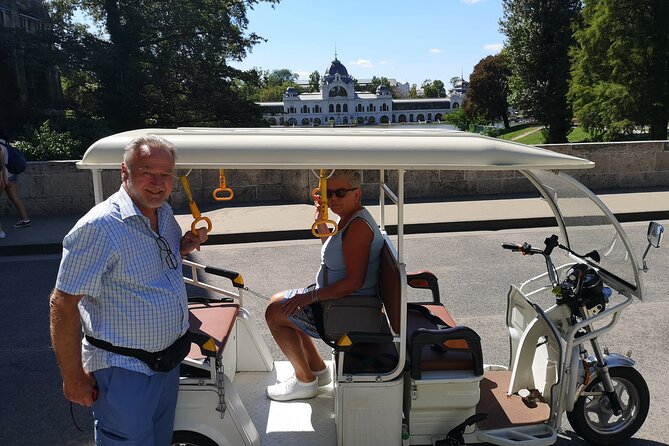
You’re not stuck behind glass like a bus ride. From the tuk-tuk, you sit at street level and see facades clearly as you pass: the grand scale of Parliament, the drama of the Church areas, and the skyline behind Buda Castle. Best of all, the itinerary is structured so you’re not constantly getting on and off.
And yes, the comfort matters. In chilly or windy weather, having blankets and warm tea can completely change the vibe. Even if you’re visiting in mild months, you’ll appreciate having a guide who keeps stops purposeful and short. It’s a smart way to get orientation fast, especially if it’s your first day.
You can also read our reviews of more private tours in Budapest


Getting started at Oktogon 2, and what the ride feels like
The tour starts at Oktogon 2, 1067 Hungary, and it ends back at the same meeting point. That’s helpful because you’re not trying to rebuild your evening plans from a random drop-off location.
Expect a smooth flow: you meet, get settled into the tuk-tuk, and then you start moving along the Pest side. The tour time is listed at about 2 hours, but that time includes driving plus the short breaks where you can walk, take photos, and re-orient your bearings.
The ride itself is simple. You get a narrative as you travel, but you’re not trapped listening the whole time. The guide’s job is to explain what you’re seeing and then let you do your part: look up at facades, frame the shots, and ask questions when something catches your interest.
If the weather is cold, plan to dress for it, but also know the guide often shows up prepared with warm extras. That makes the “waiting for a great photo angle” part of sightseeing far more tolerable.
Andrássy Avenue and Heroes’ Square: the classic opening move
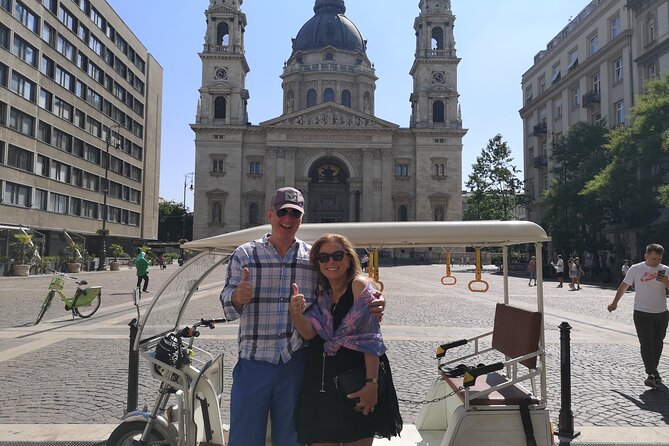
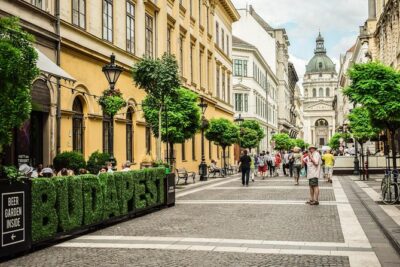
The first stretch takes you along Andrássy Avenue, which is part of UNESCO World Heritage. This matters because it sets the tone early. Instead of starting with a single building, you get a long view down a landmark street. You’ll notice the grand architecture and the sense of layout that makes Budapest feel like it has a plan, not just random beauty.
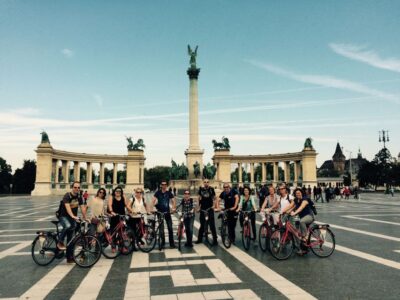
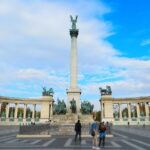
Then you arrive at Heroes’ Square for a 15-minute break. This is a pedestrian square, and it’s easy to see why it’s often called one of the most impressive spots in Pest. You get time to step closer, take in the statues and composition, and get a sense of how the square anchors the surrounding areas.
What I like here is the timing. You’re not rushed. Fifteen minutes is enough to walk around and grab a few photos without exhausting yourself before the bigger landmarks later. It’s also a great spot to ask a question or two, because you’re starting to piece together the city as a map: Pest as the flatter, grand boulevard side, and Buda as the hill and castle side you’ll reach later.
Pest’s headline sights: House of Terror, Opera views, and Parliament stops
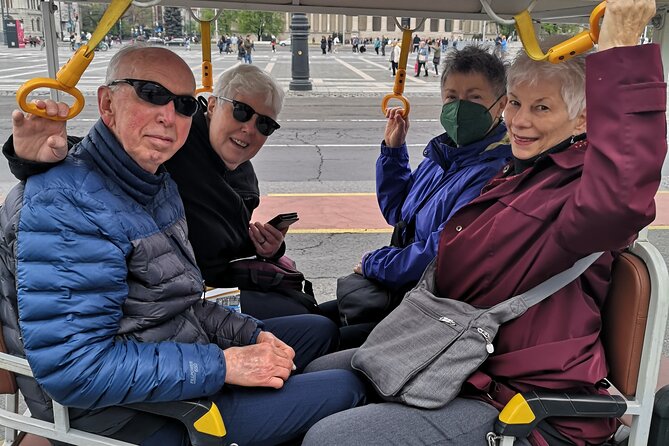
After Heroes’ Square, the route keeps you moving while still giving you slow moments for photos.
You’ll be shown Vajdahunyad Castle. Even if you don’t go inside (and you typically won’t on a short tour), it’s one of those Budapest buildings that instantly reads as “historic storybook.” It’s a useful visual anchor because it helps you understand why this city has so many layers.
Then you pass the House of Terror area. This building has a dark past: it was used as a headquarters by the Nazis. The key point for you is pacing. You’re not there to read every plaque for hours. Instead, the guide’s explanations help you connect what you see to the broader story without turning the experience into a sad marathon.
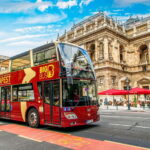
You’ll also pass by the Opera House, with the tour going slowly enough for photos while you learn about its history. This is one of those stops where speed would ruin the experience. A quick drive-by makes it harder to get the angles right, but a slow pass lets you capture the building details.
Next comes a big church photo opportunity. From the description, this aligns with St Stephen’s Basilica in central Pest (Budapest’s best-known “big church” on this side). The tour takes it slowly so you can photograph it properly rather than just clock it from the street.
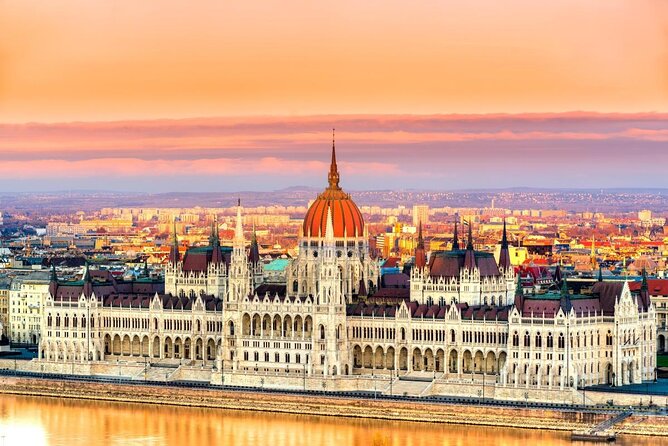
Then you reach Hungarian Parliament Building for the second 15-minute break. This is the “wow” moment for a lot of visitors. The building is iconic, and it’s also one of those places where context helps: the guide tells stories that make the architecture feel less like a random monument and more like a statement about the country.
Practical note: the break is time to view and take photos. Admission is listed as not included, so you should treat this as a viewing stop unless you’ve planned an extra visit separately.
Jewish Quarter sights, bridges, and the market hall connection
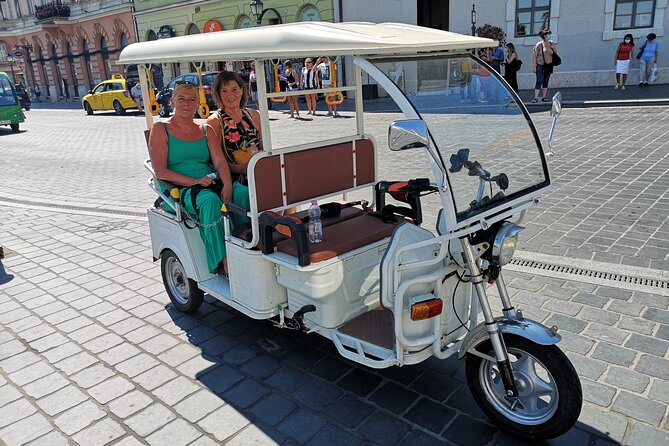
From Parliament, the tour moves through the area where Budapest’s Jewish heritage is strongly visible.
You’ll have photo time at the Great Synagogue and the Tree of Life Memorial. Even if you don’t enter, these exteriors hit hard. They give you a clearer sense of the neighborhood’s identity and the way memory is built into public space.
Next you pass the National Museum area slowly, so you can take photos at the scale and frontage. Then you get a view toward Grand Market Hall, which dates to 1897. This is a useful moment because it signals Budapest’s everyday life and trade history—markets and food culture are a huge part of why people fall in love with the city.
Then you cross Liberty Bridge, noted as the third oldest bridge in Budapest. Bridges are more than shortcuts here. They’re where you get motion, perspective, and a sense of how the Danube ties the city together.
This part of the route is also great for building your own map in your head. If you want to walk later on your own, you’ll know which landmarks are “north-ish” and which are on the line leading toward Buda Castle.






Thermal bath views: Gellért and Rudas from the route
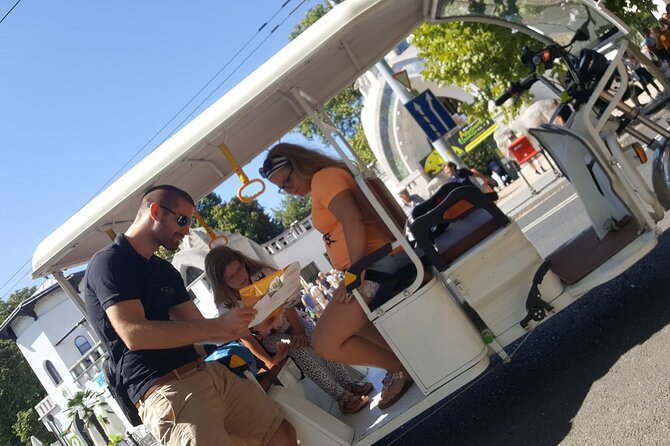
Budapest’s thermal bath reputation isn’t just marketing. On this tour, you’ll see Gellért and Rudas Bath from the Buda-side direction.
You’ll notice Gellért mentioned as one of the best thermal baths in Budapest, and you’ll also pass Rudas Bath, which is an original Turkish bath next to Elizabeth Bridge. The value for you is not paying admission twice on day one. It’s getting orientation and deciding later if a bath day fits your schedule.
Also, these sights help you understand Budapest’s “two-worlds” feel: grand European boulevards on one hand, and Ottoman-era bathing traditions on the other. Seeing them from the tuk-tuk keeps the tour moving without forcing you into long walks just to spot the place you might want later.
The Buda Castle district: Fisherman’s Bastion and Matthias Church photo time
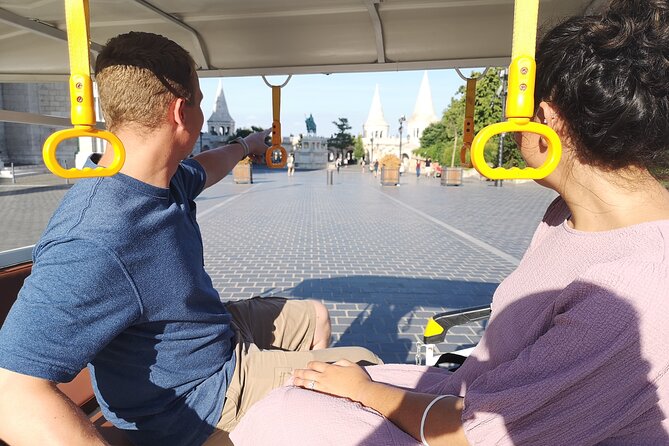
Now you shift to the hillier side. Buda Castle is stop number three, with a 15-minute break. The guide shows Buda Palace, described as the most historical building in Budapest. Even if you only have a short window, the views in this area do a lot of the storytelling. This is where Budapest starts to look like a postcard, because the city layout opens up.
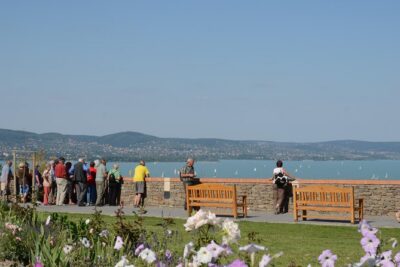
From there you go to Fisherman’s Bastion for another 15-minute stop. This is one of Budapest’s best viewpoints, and the description calls out the panorama. In a short tour, that matters. You’re not waiting around for hours for the “perfect moment.” You get time enough to look out, take photos, and move on before the daylight changes too much.
Then comes Matthias Church, also with a 15-minute break. The standout here is the colorful tiles. This is the kind of detail you can miss if you’re not looking closely, so the short, focused stop is a smart tradeoff. Instead of spending time in a long queue or inside somewhere, you get the best exterior impression and then you’re done.
Finally, you’ll also see the Chain Bridge along the way—described as the oldest and most beautiful bridge of Budapest. It’s a classic visual link between Buda and Pest, and after you’ve toured both sides, seeing it from the ride makes it click as the city’s central connection.
Price and time: what $102.80 buys you in real terms
The price is $102.80 per person, and the tour runs about 2 hours. That can sound high if you’re thinking “transport only,” but this tour isn’t just a ride.
You’re paying for:
- a private guide experience (only your group)
- a route that covers both Pest and Buda highlights in a tight window
- photo-friendly stops at major landmarks
- an English narrative that helps you understand what you’re seeing
- an easier pace than bouncing between far-apart sites on your own
Also, admission is explicitly noted as not included at stops like Heroes’ Square and Parliament. That means you’re not paying extra ticket fees during the tour breaks. You’re paying for guidance and transport—and you keep the option to add interiors later if you want.
So who does this match best? People who want to maximize a short stay, people who don’t want to spend the whole day walking up and down hills, and anyone who likes to understand a place rather than just collect photos.
Tradeoffs to expect (and how to handle them)
Two realistic considerations.
First, because the tour is built for coverage, you’ll spend time seeing from outside at many stops. The guide includes breaks at the major highlights, but you shouldn’t plan on deep interior visits during these windows.
Second, Budapest weather can flip fast. The experience requires good weather, and if it can’t run due to conditions, you’ll be offered a different date or a full refund. If you’re traveling in shoulder season, check the forecast and have a backup plan for the day.
One more small thing: the tour ends back at the meeting point. That’s convenient, but it also means you should have your next activity nearby or be ready to take transit afterward.
Should you book this Budapest electric tuk-tuk tour?
If it’s your first time in Budapest or you only have a half-day to get your bearings, I’d book it. The route lines up with the top hits on both sides of the Danube, and the private format makes it feel flexible instead of staged.
This is also a great pick if you’re traveling with someone who gets tired walking. The ride reduces the grind, and the guide can help keep things smooth when you need a hand in and out.
If you’re the type who wants to spend long hours inside museums or at major interiors, this probably shouldn’t be your only plan. Think of it as the fast orientation layer, then add deeper visits after you’ve seen the geography.
If I were choosing for you: book it early in your trip. You’ll come away with a map in your head, better photo angles remembered, and a short list of where you want to return on foot.
FAQ
How long is the private electric tuk-tuk sightseeing tour?
It’s listed at about 2 hours (approx.), including travel time and short breaks at key stops.
Is the tour private or shared?
This is a private tour/activity, so only your group participates.
What language is the tour offered in?
The tour is offered in English.
What attractions are included, and are entry tickets included?
You’ll see major sights along the route and have breaks at landmarks like Heroes’ Square, the Parliament Building, Buda Castle district, Fisherman’s Bastion, and Matthias Church. Admission tickets are noted as not included.
Where does the tour start and end?
It starts at Budapest, Oktogon 2, 1067 Hungary, and it ends back at the same meeting point.
What if the weather is bad?
The experience requires good weather. If it’s canceled due to poor weather, you’ll be offered a different date or a full refund.
Can I cancel for free, and how far in advance?
Free cancellation is available. You can cancel up to 24 hours in advance for a full refund. If you cancel less than 24 hours before the start time, the amount paid is not refunded.