REVIEW · BUDAPEST
Private Café Wandering: Excursion through Budapest’s Belle Epoque
Book on Viator →Operated by Insight Cities · Bookable on Viator
Budapest has a second face, and it’s served on porcelain. This private 3-hour café walk threads together the city’s Belle Époque social life, stopping in iconic coffeehouses tied to writers, artists, and thinkers. I like that the tour isn’t just photos and pastries; you get history tied to place, with an art historian leading you through the details.
Two things I especially like: you visit five classic cafés that shaped Budapest’s cultural mood, and you’re shown how each interior connects to its era’s status and rituals. A standout is the guide-led commentary, with guests specifically praising guides like Kata for being very informative and generous with her time.
One possible drawback to plan for: refreshments are not included, so you’ll want to budget extra for coffees and cakes at the end (and possibly at other stops). If you’re on a tight food budget, treat the included experience as the walking + stories, then choose your one or two best “yes” bites.
In This Review
- Key Highlights You’ll Actually Care About
- Café Culture in Budapest: Why These Rooms Matter
- Start at Vörösmarty tér and Café Gerbeaud’s Imperial Welcome
- The Tram-by-the-Danube Moment to Central Café
- Museum Café Since 1885: Guest Book, Zsolnay Tiles, and a Venetian Mirror
- Urania Café on Rákóczi Street and the Old Film Theatre Setting
- Blaha Lujza tér to New York Café: Belle Époque Grandeur You Can See
- The Muvesz Café Finale Near the Opera: Coffee and Cake at Day’s End
- Private Tour Format: How This Makes the 3 Hours Feel Right
- Price and Value: What $449.51 Per Group Really Buys You
- Practical Tips Before You Go (So the Tour Feels Smooth)
- Who This Café Walk Is Best For
- Should You Book Private Café Wandering in Budapest?
- FAQ
- FAQ
- How long is the café walking excursion?
- Where does the tour start?
- Is pickup available?
- Is this a private tour?
- How many people are in a group?
- What language is the tour offered in?
- Do refreshments, cakes, and coffees cost extra?
- What’s included in the tour price?
- Do I need a printed ticket?
- What is the cancellation policy?
Key Highlights You’ll Actually Care About
- Five café houses, one clear cultural story that follows Budapest’s 19th-century peak into the early 20th century
- Art historian commentary tied to interiors, guest culture, and what these spaces meant to Habsburg-era life
- Private group format (up to 10) that keeps the pace comfortable and questions welcome
- Real stops with standout features, like Zsolnay porcelain tiles and a grand Venetian mirror
- Easy transit mix, including a tram ride segment plus mostly walkable stretches
Café Culture in Budapest: Why These Rooms Matter
Budapest’s café houses weren’t just places to grab caffeine. They were where people met, argued, wrote, sketched, performed, and built careers—social life with rules, dress codes (sometimes), and a lot of meaning packed into the furniture.
That’s why this tour works. You’re not only looking at beautiful rooms. You’re learning how these cafés functioned like cultural engines. The guide’s job is to make the past feel concrete: who went there, what the room signaled, and how the city’s “golden age” lifestyle shaped art and ideas.
And because it’s private, you don’t feel rushed. If you want to linger in front of a specific detail—tiles, mirrors, décor—you can.
You can also read our reviews of more private tours in Budapest

Start at Vörösmarty tér and Café Gerbeaud’s Imperial Welcome
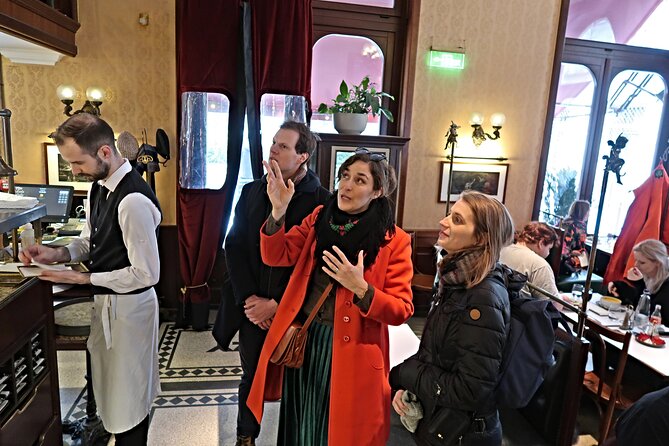
Your walk begins in Vörösmarty tér 7, a central square where Budapest likes to show off. The first stop is Café Gerbeaud, and it’s an excellent opener because it sets the tone for what “grand café culture” means in practice.
Gerbeaud has an interior that people describe as exquisite, and the café has more than 100 years of history. The key idea you’ll pick up is this: Gerbeaud acted as a kind of social hub, serving both locals and visitors during the late 19th century. In other words, it wasn’t just a destination—it was a meeting point for the city’s identity.
Practical tip: since this is the first stop, use it to get your bearings. You’ll get a quicker sense of the route and pacing, and you’ll be ready for the next scene change when you head toward the river.
The Tram-by-the-Danube Moment to Central Café

From Gerbeaud, you’ll take a tram by the Danube to the Central Café. That transit piece matters more than it sounds. Moving by tram gives you a different “reading” of the city than walking alone, and it breaks up the tour so you’re not mentally stuck on café interiors for three straight hours.
Central Café is described as dignified—its space is said to epitomize what café-house culture meant at the height of the Habsburg Empire’s economic and cultural power. When you sit or look around here, pay attention to how the décor and layout create a sense of ceremony. This isn’t casual; it’s controlled elegance.
You’ll also get a practical sense of what people did there: meals, desserts, and refreshing drinks in a setting designed for conversation and display. Even if you don’t order a full meal, noticing the rhythm of the space helps you understand why the city’s writers and thinkers were drawn in.
Museum Café Since 1885: Guest Book, Zsolnay Tiles, and a Venetian Mirror
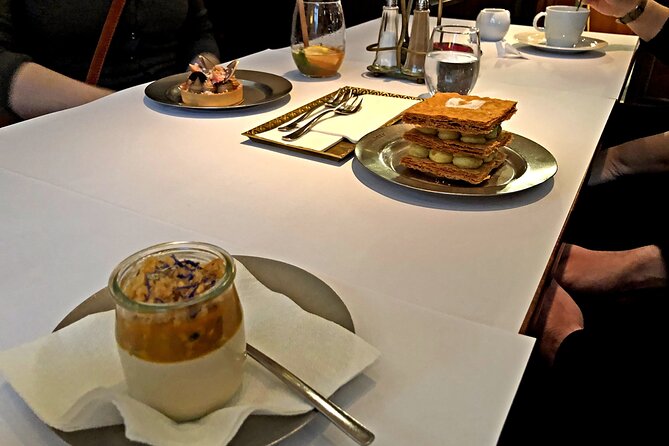
Next is Museum Café, in operation since 1885, and it’s one of the most story-rich stops on the route. The big reason: it has historical proof built into the experience, including a guest book that was regularly signed by prominent clientele.
The guest book is now a historical document, and it includes names of Members of Parliament, distinguished writers, and famous Hungarian actors. That turns the tour from “nice café” into “this place tracked cultural life in real time.”
Visually, the décor gives you even more to look at. The lavish walls are covered in tiles from the world-famous Zsolnay porcelain works, and there’s a grand 19th-century Venetian mirror. Those are the kinds of details that make you slow down, because you can see craft, cost, and prestige in the materials.
Possible consideration: this stop can invite lingering, which is a good thing for photos and atmosphere, but it may also shorten the time you want at later cafés. If you like to compare interiors carefully, tell your guide you want a bit more time per stop.
Urania Café on Rákóczi Street and the Old Film Theatre Setting
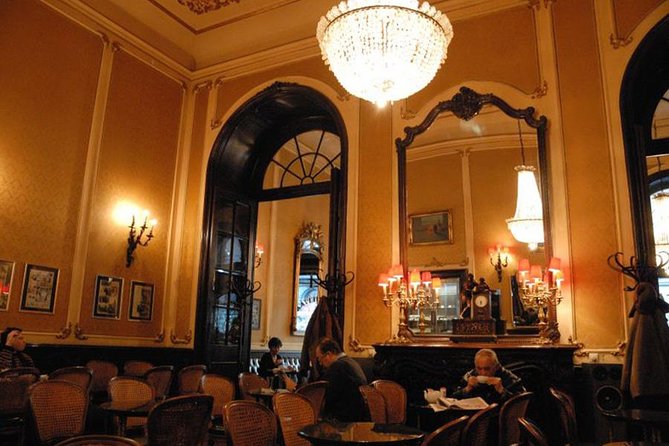
After another short walk, you reach Urania Café on Rákóczi Street. This stop feels different on purpose. It’s connected to the oldest Film Theatre in the city, and that gives the tour a bridge between older café society and modern-style public culture.
Urania is famous for lectures given by prominent intellectuals for large audiences of Budapest cosmopolitans. So rather than focusing only on art and literature in the classic writers’ sense, you also see how these public spaces supported big ideas and public conversation.
If you enjoy social history, this is a great “mindset shift” stop. You’re not only learning what people consumed; you’re learning how they gathered and listened. It’s the kind of detail that makes café culture feel like part of the city’s education system.
Tip: if you’re a fan of film or theater history, ask your guide how the café-theatre connection played out socially. You’ll likely get a clearer picture of why this matters, not just what it is.






Blaha Lujza tér to New York Café: Belle Époque Grandeur You Can See
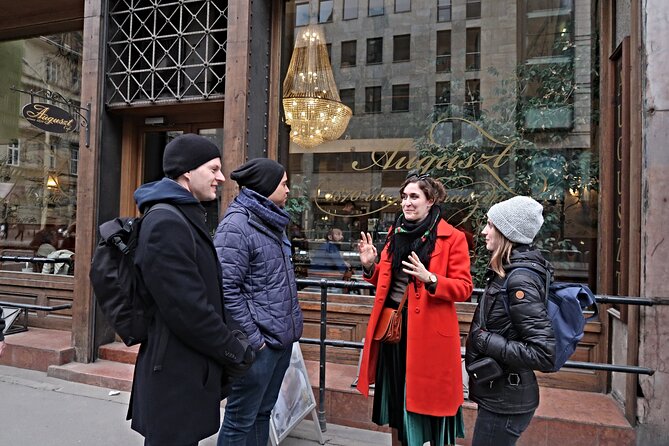
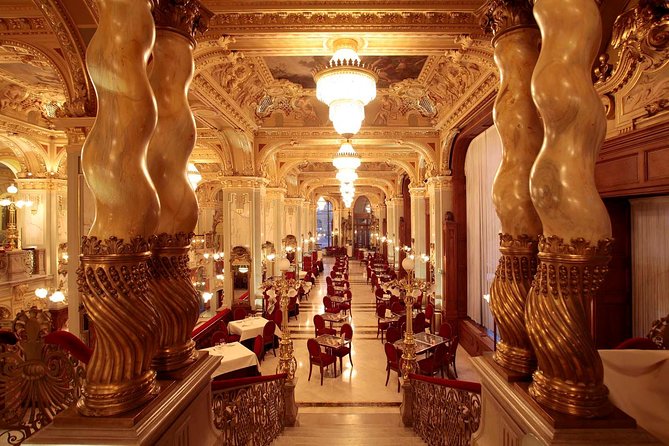
You then walk toward Blaha Lujza tér along a big boulevard to reach New York Café, one of the most beautiful café houses in the world. The tour’s pacing here is smart: you move from one culturally grounded setting into a stop that’s basically a showcase.
New York Café is “elegant” in the obvious sense, but the reason it lands so well on this itinerary is the cultural contrast. You can feel how café houses evolved into statement rooms—places where grandeur and public identity worked together.
This is the stop where you’ll likely notice how lighting, space planning, and décor all work like stage design. Even if you don’t order right away, take a minute to observe how the café guides your gaze. That’s often what your guide is pointing you toward: café culture as performance, not just hospitality.
If you prefer to keep things calm, you can still enjoy New York Café without turning it into a photo marathon. Focus on one or two architectural features, then move on.
The Muvesz Café Finale Near the Opera: Coffee and Cake at Day’s End
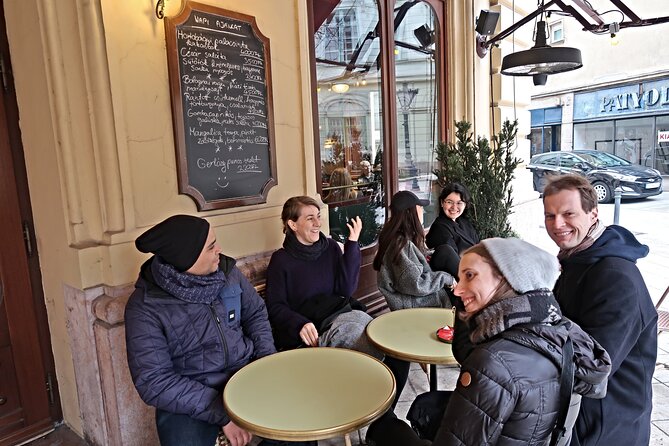
The tour ends with a seated moment at Muvesz Café on Andrássy Boulevard, near the Opera House. This finale is practical and human-sized: you’re not sprinting from one interior to the next forever.
Here you’ll sit down for coffee and cake, which is included as the final “reward” style stop. And there’s a fun context detail: actors and actresses are said to regularly patronize the venue during rehearsal breaks from nearby Budapest Broadway. It’s a reminder that even in a refined café setting, life keeps moving in the present tense.
If you’re choosing what to order, don’t overthink it. This is the part of the tour where you can relax and let the stories settle. I’d treat this as your cultural digest: you’ve walked the map of café society, now you get to enjoy it.
Private Tour Format: How This Makes the 3 Hours Feel Right
This is a private tour, operated with just your guide and your group of up to 10 people. That size matters. In a group that small, you’re more likely to get real answers instead of generic explanations—and you can ask follow-up questions without feeling like you’re hijacking the schedule.
The tour is also guided by an art historian, which shows in how the stops connect. You’re not just collecting facts. You’re learning how art, architecture, and social life braided together in Budapest’s 19th-century and early 20th-century café world.
Pace-wise, plan for a mix of walking and at least one tram ride segment. Since there are multiple cafés and short walks between some of them, wear comfortable shoes. The itinerary is designed to be doable for most people, but you’ll still be on your feet.
Price and Value: What $449.51 Per Group Really Buys You
The price is $449.51 per group (up to 10) for about 3 hours. On the surface, that can look steep if you compare it to a public walking tour. But private café history has costs: a dedicated guide, slower pacing, and the freedom to ask questions in each interior.
Also, the tour includes the guided experience: a 3-hour private walk with an art historian. What it does not include is refreshments and anything you choose to order at the cafés. That means your money is going toward interpretation and access to context—not toward paying for your dessert for the entire group.
If you have 4–8 people traveling together, the price often feels more reasonable because you split the group cost. If you’re traveling solo or as a couple, you’re mostly paying for a private experience, so your best value comes if you truly care about Budapest’s cultural history and want someone to “read” the cafés with you.
Practical Tips Before You Go (So the Tour Feels Smooth)
A few things help this go smoothly:
- Bring a light layer. You’ll spend time indoors and outdoors, and weather can swing quickly in Budapest.
- Plan a food budget. Refreshments aren’t included, so decide ahead of time how much you want to spend on coffee and cake.
- Arrive 15 minutes early if you’re meeting at Café Gerbeaud (unless hotel pickup is arranged). That extra buffer makes the start feel calm, not frantic.
- Use your seat time wisely. When you reach the “sit-down” moments, focus on one or two details your guide highlights, not on trying to do everything at once.
Also, the tour is offered in English, and you’ll receive a mobile ticket. So yes, it’s easy to show up—no paper chasing.
Who This Café Walk Is Best For
This is a great fit if you:
- love history that connects to real places, not just dates on a page
- enjoy café culture as a window into art, literature, and public life
- want a private guide instead of a noisy group experience
- like architecture and interior details as much as the food
If you’re the type who only cares about getting from one “must-see” photo spot to the next, you might find the tour slower than you want. But if you like learning how cities work—and why people gathered in certain rooms—this fits nicely.
Should You Book Private Café Wandering in Budapest?
I’d book it if you want Budapest with depth, but without a heavy academic vibe. The route is short enough to feel relaxed, and the café choices are strong: Gerbeaud, Central Café, Museum Café, Urania Café, New York Café, and a seated finale at Muvesz Café.
It’s also a smart pick for small groups who want a shared experience and can split the group cost. And if a personal, time-respecting guide matters to you, this tour has strong signals there—guests have singled out guides like Kata for being very informative and generous with their time.
Skip it only if you’re mostly seeking a food tour where drinks and pastries are included, or if you’re not interested in social history and interior details.
FAQ
FAQ
How long is the café walking excursion?
The tour lasts about 3 hours.
Where does the tour start?
It starts at Vörösmarty tér 7, 1051 Budapest, with the default meeting point at Café Gerbeaud (Vörösmarty tér 7-8, 1051 Budapest).
Is pickup available?
Pickup is offered, but if hotel pickup is not arranged, you meet your guide 15 minutes before the start time at the default meeting point.
Is this a private tour?
Yes. It’s private, and only your group participates.
How many people are in a group?
The price is per group for up to 10 people.
What language is the tour offered in?
The tour is offered in English.
Do refreshments, cakes, and coffees cost extra?
Yes. Refreshments and the cakes and coffees you select at the cafés are not included.
What’s included in the tour price?
You get a 3-hour private walk in the company of an art historian through Budapest’s iconic 19th- and early 20th-century café houses.
Do I need a printed ticket?
No. You’ll get a mobile ticket, and confirmation is received at booking.
What is the cancellation policy?
There is free cancellation. You can cancel up to 24 hours in advance for a full refund. Cancellation cut-off times are based on the local time of the experience.