REVIEW · BUDAPEST
Past and Present of Budapest Jewish District Tour
Book on Viator →Operated by Triptobudapest.hu - Free Budapest Walking Tours · Bookable on Viator
Budapest’s Jewish Quarter tells its story in street corners. This 1 hour 45 minute walk stitches together the Belle Époque and destruction narrative with stops at major synagogues and the memorial places you can see from outside.
I especially like the way the route stays focused while still packing in context. You also get a strong, story-first guide style, and names like Eszter, Gary, Dora, and Edith show up again and again in the best-rated tours.
One possible drawback: you’ll be out on the streets a lot, and you will not enter the synagogues. That works well for orientation, but if you want inside visits, plan a separate ticketed stop later.
In This Review
- Key highlights you should care about
- Erzsébet tér to Szimpla Kert: the route makes sense
- The story spine: from Golden Age to destruction
- Stop 1: Erzsébet tér and the big-sight orientation
- Stop 2: Deák Ferenc Square and the Gaudiopolis + Schutzpass thread
- Stop 3: Great/Central Synagogue (Nagy Zsinagóga) exterior highlights
- Stop 4: Rumbach Street Synagogue and the street art layer
- Stop 5: Gozsdu Udvar and the last piece of the ghetto wall
- Stop 6: Kazinczy Street Synagogue area and Orthodox community life
- Stop 7: Szimpla Kert (ruin bar) and final orientation
- Price and value: $3.63 is not the whole story
- What you should expect on the ground (walking, standing, and language)
- Who this tour is best for
- When the lack of synagogue entrances matters
- Should you book the Past and Present of Budapest Jewish District Tour?
- FAQ
- Do we enter any synagogues during this tour?
- How long is the Budapest Jewish District walk?
- Where does the tour start and end?
- What sights are included along the route?
- Is the tour only in English?
- Is there an admission fee for the synagogues?
Key highlights you should care about
- A tight 7 stop route across District VII, ending at Szimpla Kert with a final orientation.
- Exterior views only of the Great/Central Synagogue memorial courtyard and cemetery, plus other synagogues’ street presence.
- A clear historical arc from the Jewish community’s growth in Hungary through the Nazi years.
- Specific stories you don’t get in a generic walk, like Gaudiopolis and the Schutzpass rescue documents.
- Street art and restored facades at Rumbach Street Synagogue and around Gozsdu Passage.
- Small-ish group size (max 25), which helps when you ask questions.
Erzsébet tér to Szimpla Kert: the route makes sense
This tour is designed like a walking thread through Budapest’s District VII. It starts at Erzsébet tér, at the Ferris Wheel of Budapest, which is easy to find and makes the first meet-and-greet painless. The walk ends at Szimpla Kert, a well-known ruin bar on Kazinczy Street.
The ending spot matters more than you’d think. Szimpla Kert is a good place to regroup, process what you just learned, and decide what you want to see next. It also lines up with the tour’s “past and present” theme, because the area is full of layered use—faith, community, commerce, and modern hangouts.
Group size is capped at 25, so it feels manageable on crowded streets. Reviews also point to guides who keep a comfortable pace, including for seniors in group settings.
You can also read our reviews of more tours and experiences in Budapest.



The story spine: from Golden Age to destruction
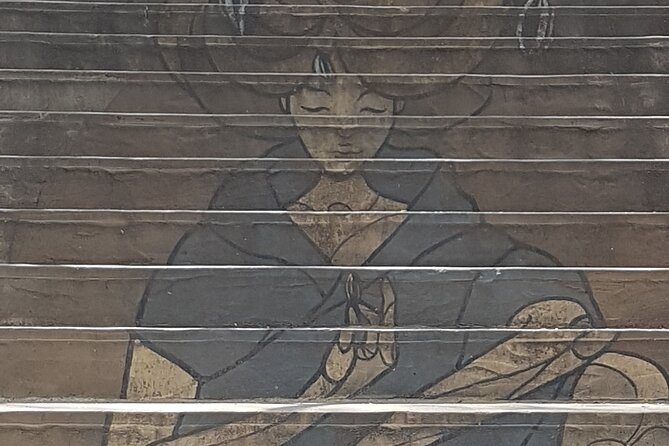
The heart of the experience is the guided narrative. The tour begins by sketching the itinerary and the big visual anchors along the way, then moves from the Jewish presence in Hungary during the Belle Époque / Golden Age toward the destruction in the Holocaust era.
You’ll hear the big connections, not just a list of buildings. You learn how Jewish life became woven into city life, then how that life was targeted, restricted, and devastated. Guides like Eszter and Gary are repeatedly praised for structuring this in a way that keeps meaning intact.
It’s also heavier than a casual sightseeing stroll. You’ll spend time standing and listening, and it can feel emotionally intense. That said, the strongest versions of this tour keep the pace humane and make room for questions, even if you’re new to this subject.
Stop 1: Erzsébet tér and the big-sight orientation
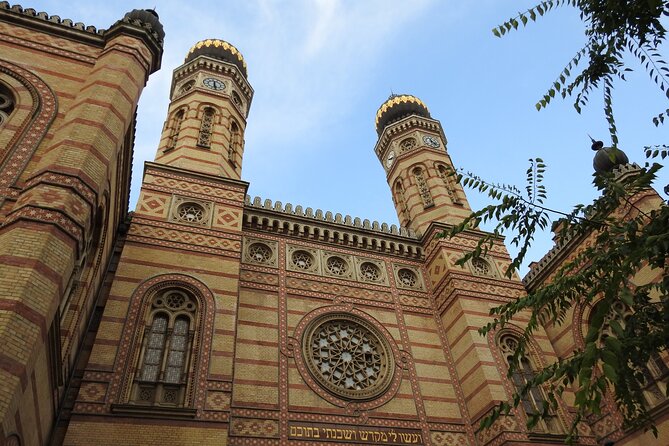
At Erzsébet tér (Elizabeth square), you meet your fully licensed local guide, and you get an opening map-in-the-air moment. The guide points out major sights you’ll see along the way—especially the largest synagogue in Europe, which becomes a recurring anchor in the story.
This first stop is only around ten minutes, so it’s not about lingering. It’s about orientation: what streets you’re walking, what buildings matter, and how today’s neighborhood connects to the past.
If you like tours that start with “here’s the frame,” this works well. If you hate waiting to start moving, you’ll still be grateful for the quick setup once you’re deep in the walk.
Stop 2: Deák Ferenc Square and the Gaudiopolis + Schutzpass thread
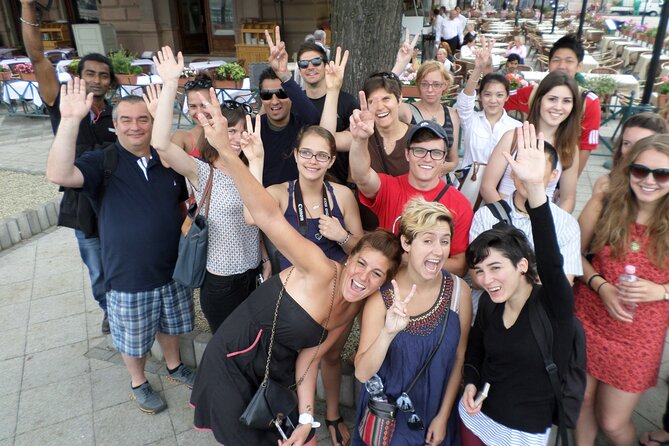
At Deák Ferenc Square, the tour slows down just enough for two story ideas that stick.
First is Gaudiopolis, described as the City of Joy in Latin. You’ll get the sense that “joy” here isn’t decoration—it’s a way to talk about flourishing community life, education, and culture before catastrophe.
Second is Schutzpass, the protection documents that helped save thousands of Jewish lives. This is the kind of detail that turns a broad tragedy into something you can picture and understand.
You also stop to view former medieval city wall ruins. These remnants matter because they show that exclusion wasn’t only later and worse—it was built into the rules of city life. The guide connects the wall to how Jewish people were restricted in where they could trade and operate.
This is a good stop to ask questions. It’s the kind of topic where one clarification can make the next hour feel clearer.
Stop 3: Great/Central Synagogue (Nagy Zsinagóga) exterior highlights
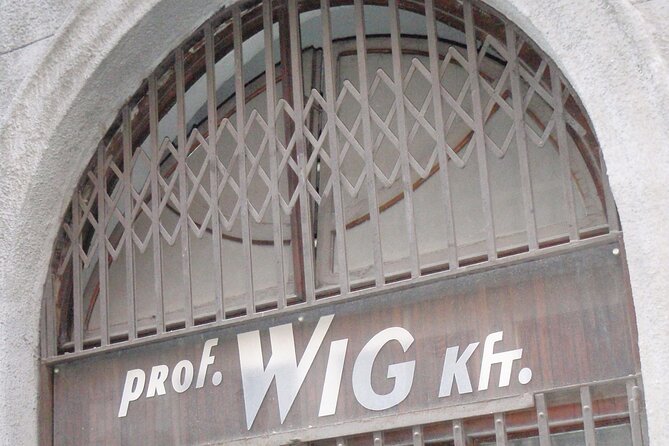
The Great/Central Synagogue (Nagy Zsinagóga) is a must-see visual stop. This tour does not enter, but you do get substantial framing for what you’re looking at.
You learn how the synagogue fits into movements like Neologue and Orthodox, and how Zionism relates to the wider currents of Jewish political thought. The guide also points you toward the parts you can see from outside, including the Memorial Courtyard and the cemetery.
Why this matters: you’re not just taking photos of a big building. You’re learning what parts are commemorative and what parts represent community direction. It’s also a practical choice. Inside visits take more time, and the walking tour is built around a fixed 1 hour 45 minute window.
If your goal is pure interior architecture, you’ll need a separate timed visit. But if your goal is getting the meaning right, this stop does a lot.





Stop 4: Rumbach Street Synagogue and the street art layer
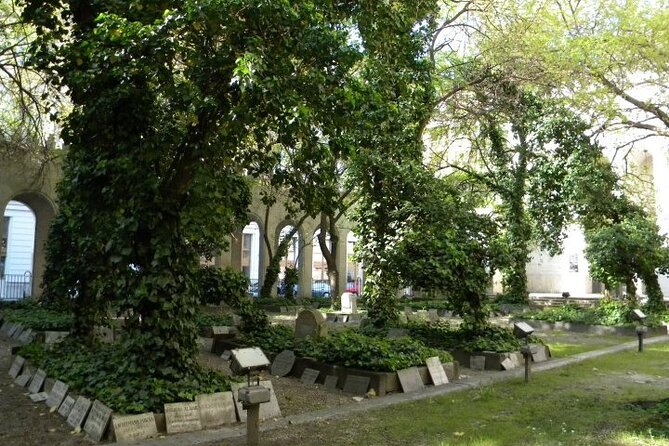
Next is the Rumbach Street Synagogue area. The focus here is the contrast between restoration and the city’s visual chaos. You learn about the synagogue’s beautifully restored presence and you also talk about the murals and other urban street art around it.
This stop helps you understand something important about Budapest. The Jewish Quarter isn’t frozen in time. It’s a living neighborhood where memory sits alongside street-level creativity.
You won’t enter the synagogue here either, but the guide keeps the exterior view purposeful. You’ll start noticing details—facade rhythms, how buildings sit against surrounding streets, and how art gets used to tell stories now.
If you love photography, this is a good area for it. Keep your hands free if you’re also taking notes, because you’ll want both.
Stop 5: Gozsdu Udvar and the last piece of the ghetto wall
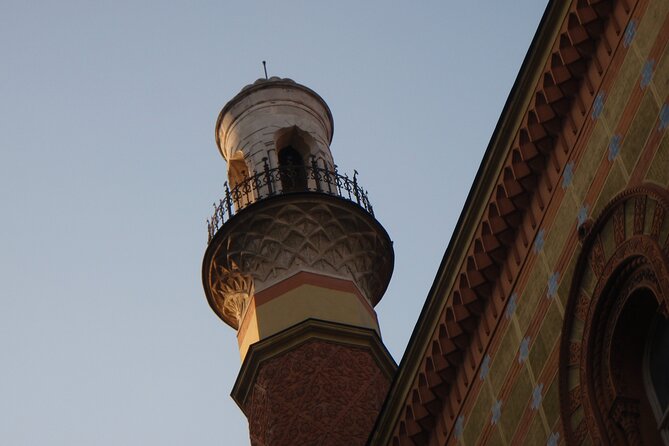
At Gozsdu Udvar, you pass Gozsdu Passage and learn how the space has changed from past use to today’s entertainment and dining scene. The tour description frames it as a mix of entertainment, gastronomy, culture, and market life.
Then the guide ties it back to the ghetto reality with one specific detail: you’ll see the last piece of the ghetto wall.
That combination is what makes this stop work. It’s not just “look at a cool passage.” It’s “look at continuity and rupture at the same address.” You’ll feel the neighborhood’s shift into a modern social zone while still seeing what survived from darker times.
This is also a good stop for pacing. Ten minutes of walking and context can leave your head spinning. Gozsdu Passage gives your eyes something different to process.
Stop 6: Kazinczy Street Synagogue area and Orthodox community life
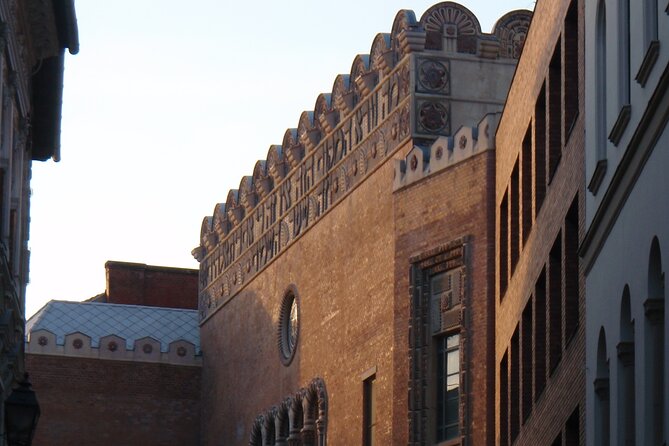
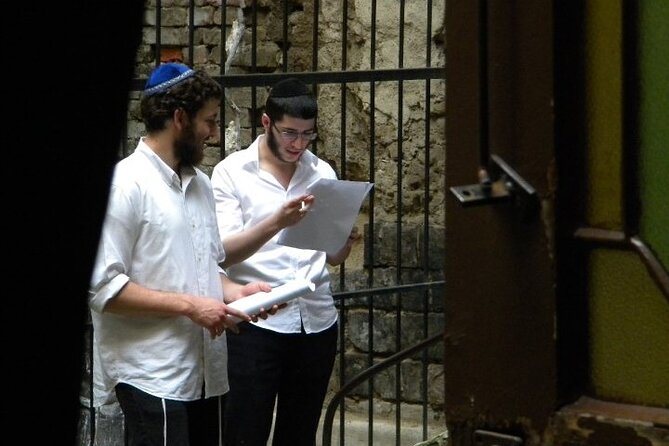
Next is the Kazinczy Street Synagogue area. You stop just outside, and the guide explains it’s tied to an Orthodox community of about 50 to 60 families.
You also hear about practical elements of community life: kosher food and a Jewish ritual bath (often associated with the mikveh concept). Again, there’s no synagogue entry, but the exterior stop still helps you understand how religious life affects daily routines.
This is where you’ll appreciate guides who answer questions clearly. Several reviews mention guides like Judith, Edi, and David bringing the story to life with both facts and an ability to respond to what people ask on the spot.
If you’re curious about how religion shapes community infrastructure, this stop is one of the most directly relevant.
Stop 7: Szimpla Kert (ruin bar) and final orientation
The tour ends at Szimpla Kert, a ruin bar with no entry fee for this stop. The guide shows you more murals and urban street art and gives a final orientation so you know what to look for after the tour.
There’s also mention of pop up exhibitions, which fits the tour theme: today’s District VII keeps making use of old spaces and surfaces.
I like ending here because it’s a real-world next step. You can grab a drink, use the restroom, and decide whether you want to return to any of the synagogue exteriors you studied earlier—or if you want to swap to something lighter after an emotionally intense narrative.
Price and value: $3.63 is not the whole story
The listed price is $3.63 per person for about 1 hour 45 minutes. That’s startlingly low for a guided walking tour, and it’s worth understanding where the value actually comes from.
You’re paying a small amount for the tour itself, plus a booking fee that goes to administration and does not contribute to the guide’s earnings. Instead, the guides depend on donations at the end, and the guide amount is your choice.
So the value equation is simple:
- You get a structured overview of District VII’s synagogue landmarks and key historical events.
- You get expert human interpretation, which is the real “product” here.
- You decide your donation level based on how the guide’s work landed for you.
If you’re the type who usually skips tours because of price, this one is worth a look since it’s built for orientation and context. If you only want a transactional experience with fixed ticket inclusions, you may prefer a tour that includes synagogue entries instead of relying on the exterior focus.
What you should expect on the ground (walking, standing, and language)
This is an outdoor walking experience, so bring comfortable shoes. Reviews explicitly mention that, and it’s practical advice: you’ll be stopping often, and you’ll be standing for explanations.
Most people can participate, and the group size is limited to 25. That said, one review called it a more “standing and listening” style than some other walking tours in Budapest. If you prefer constant movement, plan a short break for yourself halfway.
Language is English. Still, accent can vary by guide. One review mentioned a strong Hungarian accent making it harder to follow. If this is a concern for you, you might consider arriving early to get settled and ask a quick clarification at the start.
Who this tour is best for
You’ll probably love this tour if you want:
- A fast way to understand District VII through the lens of Jewish life and major synagogue landmarks.
- A guide who explains not just the what, but the why behind terms like Neologue vs Orthodox and the purpose of the Schutzpass story.
- Exterior highlights that help you plan future visits, since you won’t be entering synagogues during this walk.
It’s also a good choice for your first day in Budapest. The walk ends in a social area, which makes it easy to transition from learning into enjoying the city.
When the lack of synagogue entrances matters
This tour does not enter the synagogues. You’ll see key memorial and courtyard spaces outside the Great Synagogue, plus other synagogue exteriors along the route.
That limitation is not a flaw if your goal is orientation and historical framing. It becomes a drawback only if you specifically expected interior visits based on promotional wording.
If inside access is your priority, treat this as the foundation tour. Then add one or more ticketed synagogue visits on a separate day.
Should you book the Past and Present of Budapest Jewish District Tour?
I’d book it if you want a meaningful, well-structured overview in a short time, and you’re comfortable with an exterior-only route. The best versions of the tour, led by guides like Eszter, Gary, Dora, Edith, Jude, and David, are praised for clear structure, friendly engagement, and strong storytelling from the early community period through the darkest years.
I would skip it or pair it differently if you need synagogue interiors as part of the main plan. Also, if you know you struggle with accents, arrive early and be ready to ask follow-up questions.
For most people, this is a low-cost way to get bearings in Budapest’s Jewish Quarter with context you can’t easily get from a few photos. Put on comfy walking shoes, bring a donation plan you feel good about, and use the final stop at Szimpla Kert to choose what you want to see next.
FAQ
Do we enter any synagogues during this tour?
No. The tour focuses on major synagogue exteriors and memorial areas you can see from outside, including the Memorial Courtyard and cemetery area related to the Great/Central Synagogue.
How long is the Budapest Jewish District walk?
It runs for about 1 hour 45 minutes.
Where does the tour start and end?
It starts at the Ferris Wheel of Budapest on Erzsébet tér and ends at Szimpla Kert on Kazinczy u. 14.
What sights are included along the route?
You’ll stop at places around Erzsébet tér, Deák Ferenc Square, the Great/Central Synagogue area, Rumbach Street Synagogue area, Gozsdu Udvar/Gozsdu Passage (including the last piece of the ghetto wall), Kazinczy Street Synagogue area, and then Szimpla Kert.
Is the tour only in English?
Yes, it’s offered in English.
Is there an admission fee for the synagogues?
The tour includes free admission tickets for the stops it covers, but it does not enter the synagogues. Any synagogue interior visits would require separate plans.