REVIEW · BUDAPEST
Budapest: Concert on the Oldest Working Organ in the City
Book on GetYourGuide →Operated by Teleki Miklós · Bookable on GetYourGuide
One organ, one hour, pure calm. This Friday-evening style concert puts you in a Baroque church at St. Michael’s Church in Budapest, listening to performances on the oldest working organ in the city. The setup is intimate, so you don’t just hear the music—you feel how it’s built.
I love two things most: the virtuoso skill of the main organist (often Miklós Teleki) and the varied program that mixes Bach, Dubois, Handel, Liszt, Mozart, Vivaldi, and old Hungarian organ pieces.
The only real drawback is simple: the exact pieces depend on the date, so if you’re chasing one specific composer or work, check the program ahead of time.
In This Review
- Key highlights at a glance
- St. Michael’s Church: Why This Concert Feels Different in Budapest
- The Oldest Working Organ in the City: Small Instrument, Big Presence
- The 70-Minute Program: Bach, Liszt, Dubois, and Old Hungarian Organ Music
- Miklós Teleki (and Occasional Star Guests) at the Organ
- Solo Organ vs. Chamber Music Nights: When the Church Turns Into a Mini Stage
- Getting Ready: Intro in English, Leaflet on Hand, and the Screen for the Playing
- Where to Go: The White Church Corner Near the Danube (District V)
- Price and Value: Is $24 Worth It for 70 Minutes of Live Classical Music?
- Who This Concert Suits Best
- Should You Book This Budapest Organ Concert?
- FAQ
- FAQ
- How long is the concert?
- Where is the meeting point in Budapest?
- What do I hear: solo organ or chamber music?
- Who performs at the organ?
- Are there English materials for the concert?
- Can I record video or audio during the concert?
- Is this experience wheelchair accessible?
- Does the ticket include transportation and a guide?
- What is included in the ticket price?
Key highlights at a glance
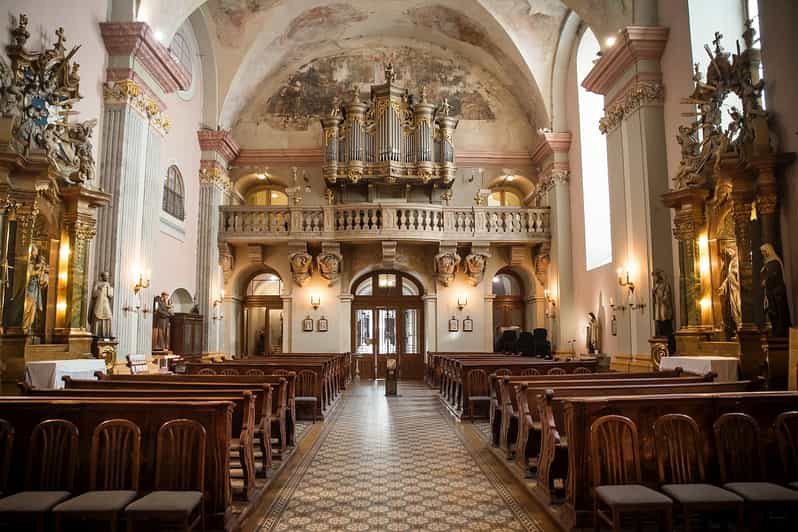
- Budapest’s oldest working organ in a Baroque church setting at St. Michael’s Church
- 70-minute format that fits neatly into an evening plan
- Teleki leads most concerts, with a few dates featuring other excellent organists
- Program booklet + short introduction in English and Hungarian so you follow the music
- No video/audio recording, which helps keep the room focused and calm
St. Michael’s Church: Why This Concert Feels Different in Budapest
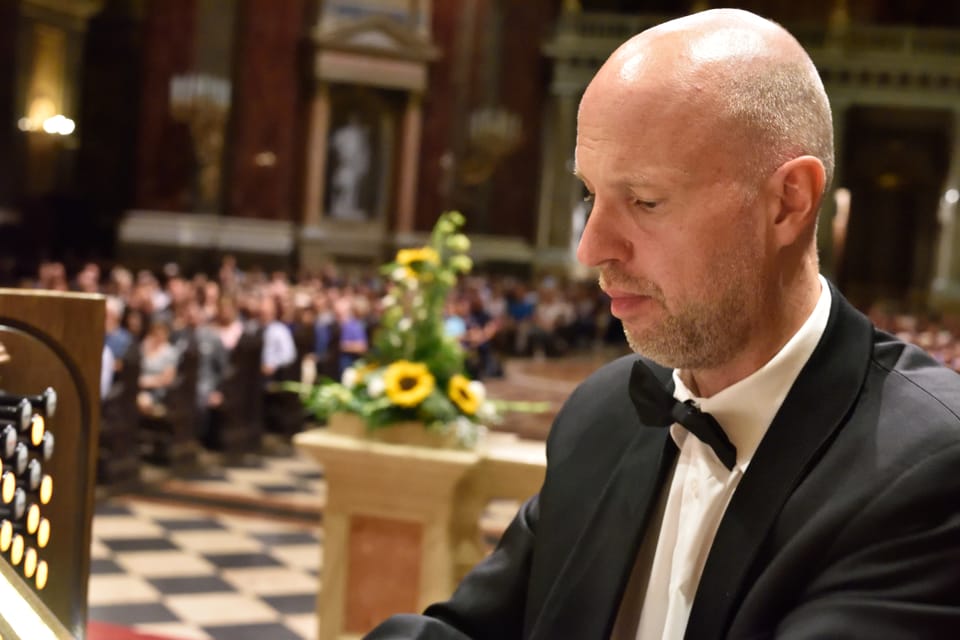
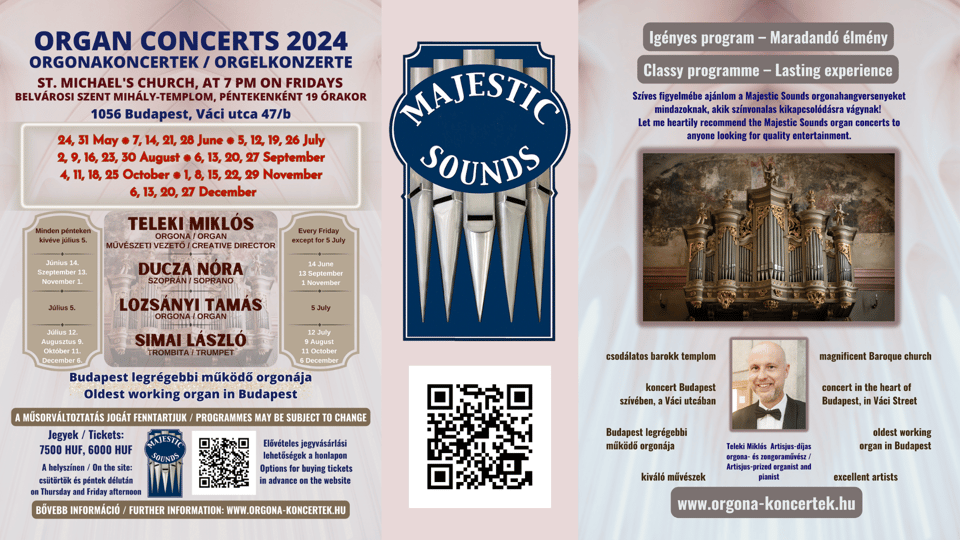
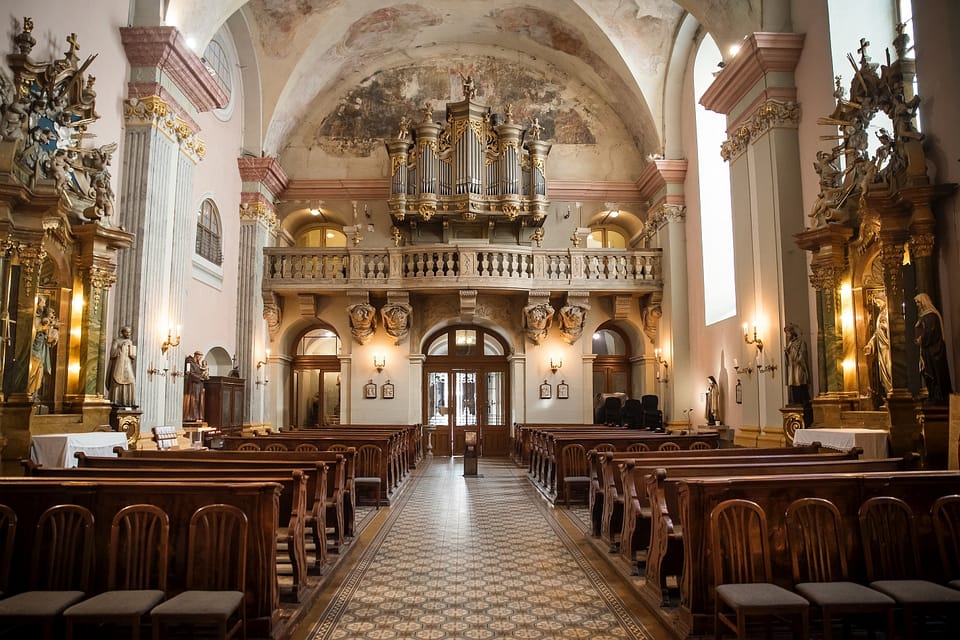
Budapest has plenty of concerts, but this one has a special kind of closeness. You’re not in a giant cathedral hall where sound bounces around for ages. Instead, you’re inside St. Michael’s Church, where the organ and acoustics share the same stage space.
That matters because the organ can be both thunderous and fragile. In this kind of listening setup, you catch the details—rhythm, phrasing, and how fast musical ideas come and go.
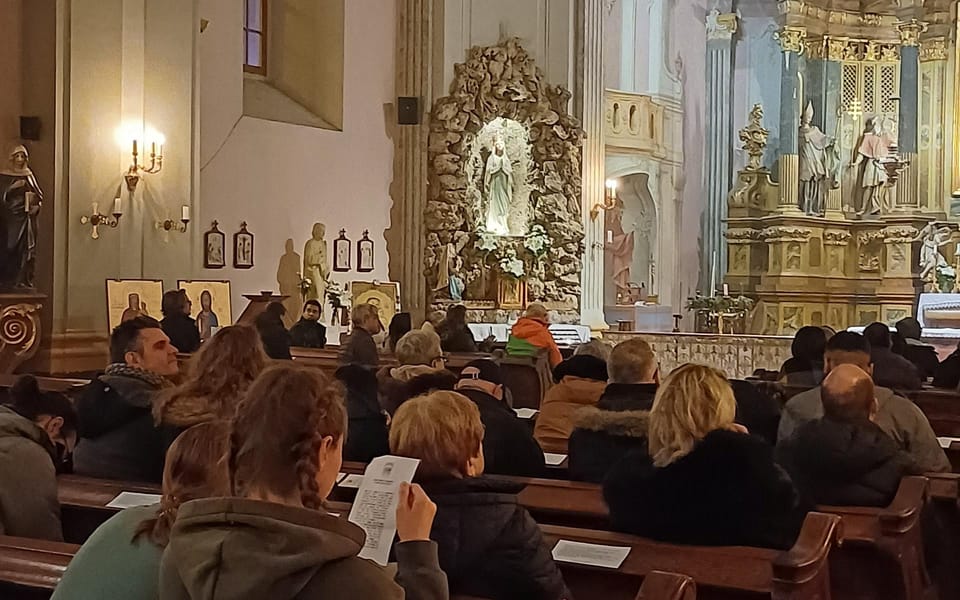
Also, the vibe is more relaxed than you might expect for classical music. You sit, you listen, and you let the program carry you forward like a well-written story.
You can also read our reviews of more city tours in Budapest



The Oldest Working Organ in the City: Small Instrument, Big Presence
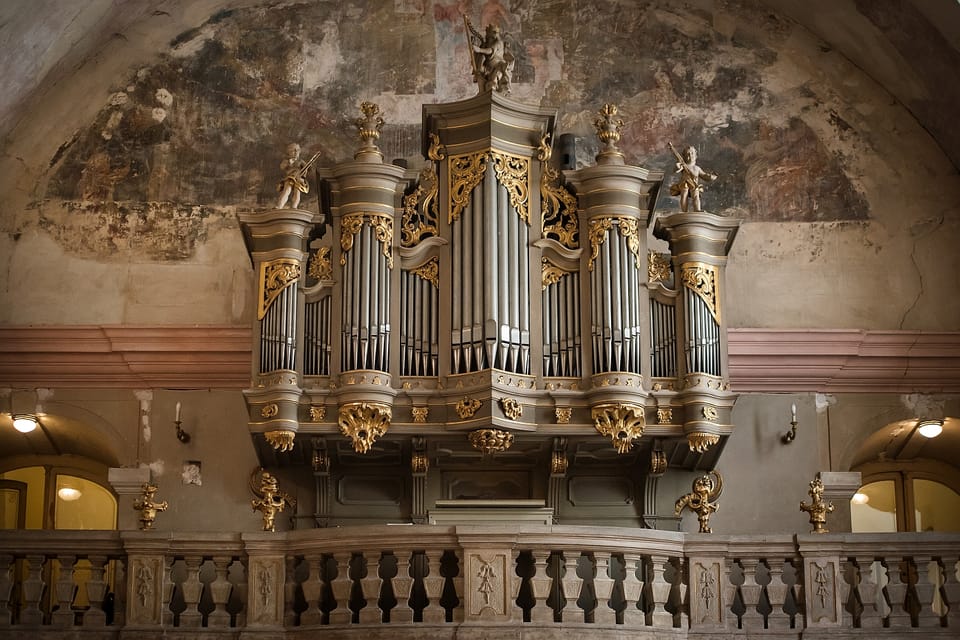
What makes this concert worth your time is the fact that it centers on a working piece of musical history. The church is home to Budapest’s oldest working organ, and it’s built for real performance, not just display.
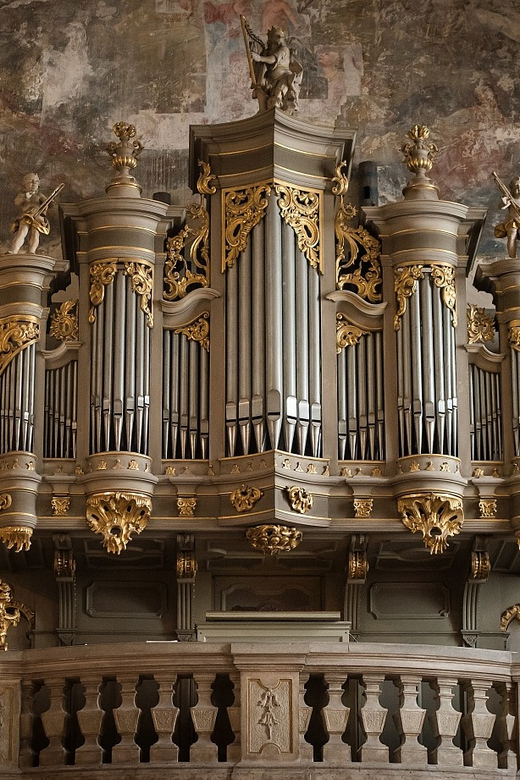
The instrument isn’t a huge cathedral organ. It’s described as a 25-pipe beauty, installed in the church with a close connection between acoustics and visual design. So even when the music gets dramatic, you’re not watching a distant giant—you’re seeing the player, and you’re hearing the instrument in a direct way.
You’ll also have practical help for understanding what you’re hearing. The organist playing can be followed on a screen, and the printed program leaflet includes information about the organ.
The 70-Minute Program: Bach, Liszt, Dubois, and Old Hungarian Organ Music
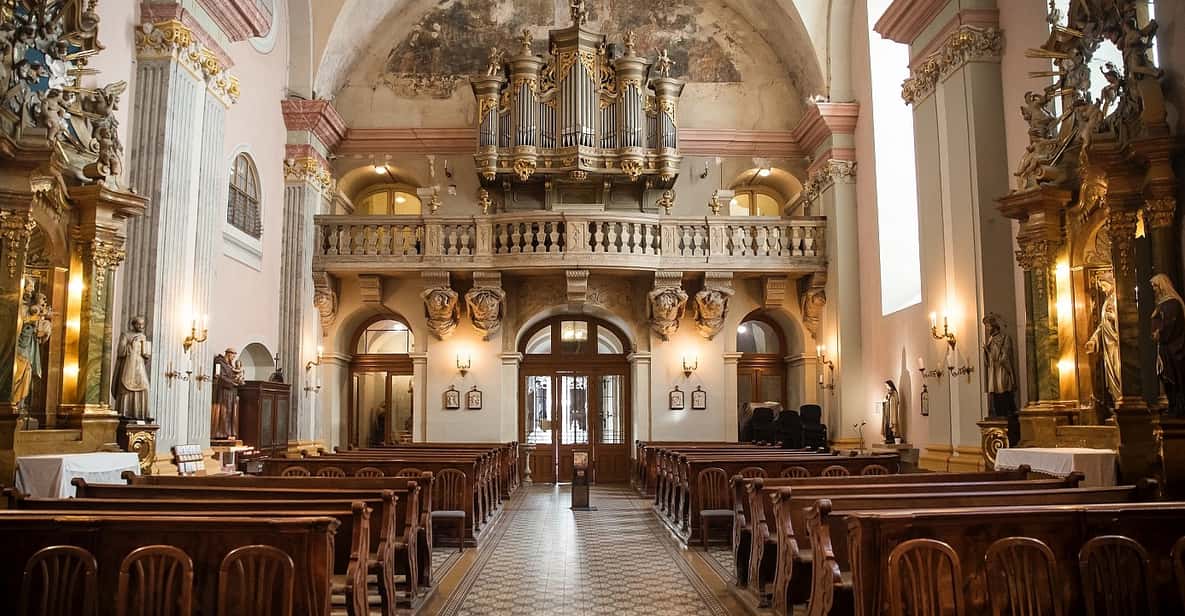
This concert is designed to be a focused music evening. The duration is about 70 minutes, which is long enough to feel complete, but short enough that you won’t be sitting there thinking about dinner plans.
The repertoire varies by date, but you can expect a mix of classical organ staples and selected composers. The music selection includes (among others) Bach, Dubois, Franck, Handel, Liszt, Mendelssohn, Mozart, Purcell, and Vivaldi, plus old Hungarian organ compositions.
Here are a few sample program combinations to give you a feel for what’s possible:
- A Bach-focused set might include Prelude and Fugue in B minor BWV 544, plus Trio Sonata in E-flat major BWV 525 and Bach-linked arrangements like Concerto in A minor BWV 593.
- Another program might move between styles and composers, with Mozart Fantasy in F minor, a series of old Hungarian organ compositions from Kilián Szigeti’s collection, and then transitions into works like Liszt’s Consolation in D-flat major and a choral piece such as Nun danket alle Gott.
- Some programs blend Bach and more French romantic energy, with pieces like Théodore Dubois’s In Paradisum and Toccata in G major, plus Bach works such as Nun komm, der Heiden Heiland BWV 659 or Toccata and Fugue in D minor BWV 565.
If you’re new to organ music, this variety is actually a good thing. You’ll hear different musical textures—fugal logic, lyrical hymn-like lines, and more rhythmic, toccata-style motion—without being stuck in only one style for the whole night.
Miklós Teleki (and Occasional Star Guests) at the Organ
Most of the time, the concert series is anchored by the creative director and main organist, Miklós Teleki. He’s described as an award-winning Hungarian musician who performs around 120 organ and piano recitals a year.
That level of activity matters. You can hear it in control—how he shapes phrases and how he controls dynamics on an instrument where timing and touch really matter.
On select dates, the series features other strong performers:
- Andres Uibo plays the organ on 4 July
- Tamás Lozsányi plays on 31 October
So if you know you want a specific performer, check your exact date. The series runs on certain Friday evenings, and there are also Tuesday-night concerts mentioned for 23 and 30 December in 2025.
Solo Organ vs. Chamber Music Nights: When the Church Turns Into a Mini Stage
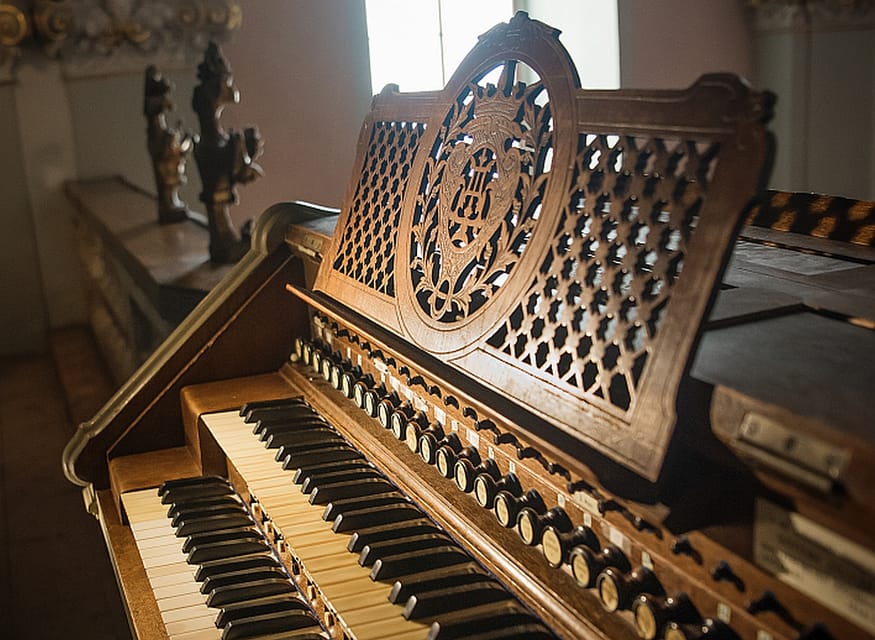
Depending on the date, you won’t always get only solo organ. The series sometimes switches into chamber music, with a vocalist joining.
When chamber music is on the schedule, you can hear a young soprano named Nóra Ducza with Miklós Teleki. The dates listed for chamber music are: 30 May, 18 July, 29 August, 17 October, and 23 December.
What changes in your listening experience? With a soprano in the mix, the program has more lyrical and text-driven moments. And because the space is still the same church, the combined sound can feel very “right”—organ color under human voice, with the building shaping the blend.
If your goal is pure organ focus, pick a date explicitly tied to the solo organ setup. If your goal is a bigger emotional range in one evening, the chamber dates are a smart choice.
You can also read our reviews of more tours and experiences in Budapest






Getting Ready: Intro in English, Leaflet on Hand, and the Screen for the Playing
This concert isn’t just “sit down and guess.” You get support.
At the start, there’s a short introduction in both English and Hungarian. The program leaflet is also available in English and Hungarian, and it includes details about the organ.
During the concert, you can follow the organist on a screen, which helps a lot if you’re not used to how organists use multiple manuals and the pedalboard. Even if you only understand a fraction, seeing the mechanics makes the sound feel more physical.
One important listening rule: no video recording and no audio recording. That’s not just for policy—it helps protect the quiet atmosphere so you can actually enjoy the sound instead of hearing phone clicks.
Where to Go: The White Church Corner Near the Danube (District V)
The meeting point is easy to miss if you arrive late, so give yourself a few minutes.
Go to the corner of Váci utca and Nyáry Pál utca, in Budapest’s 5th District. The zip code is 1056, and the place is quite near the Danube.
The event ends back at the meeting point, so you don’t have to plan extra routes afterward. This also means the concert fits smoothly into a longer Danube-area walking evening.
Price and Value: Is $24 Worth It for 70 Minutes of Live Classical Music?
At $24 per person, this isn’t a bargain in the way a street market snack is cheap—but it is solid value for what you get. You’re paying for a live performance centered on a special instrument (Budapest’s oldest working organ), in a historic church, with an on-the-spot introduction and a printed program.
Also, the total time is just 70 minutes. That’s a big deal in practice. You can do dinner beforehand, come in for the concert, and still have energy left for a relaxed walk afterward—without committing your whole evening.
If you like classical music but don’t want to sit through a two-hour lecture-style experience, this format feels like a sweet spot. And if organ music is new to you, the varied repertoire gives you several “entry points” into the sound world.
Who This Concert Suits Best
This is a great fit if you like any of the following:
- Live classical music with a focused runtime
- Organ music history you can actually hear, not just read about
- A calmer evening plan that still feels cultured
- Music fans who appreciate how performers shape phrasing and dynamics
It’s also a nice choice for couples and small groups because the setting encourages quiet attention. If you’re traveling solo, it works just as well; you’re not dependent on anyone else’s comfort level with concert etiquette.
The main “match check” is simple: verify the date’s program. Since the repertoire and even the format (solo organ vs. chamber music) can change, you’ll be happiest if your interests align with the scheduled pieces.
Should You Book This Budapest Organ Concert?
I’d book it if you want an authentic Budapest musical evening with real substance. The combination of a working historic organ, a small, performance-friendly instrument setup, and a program that includes both famous composers and old Hungarian organ music makes it more than a one-note experience.
You might skip it only if you’re strictly schedule-driven and can’t check the repertoire first. Because the program varies, it’s worth confirming the date before you commit—especially if there’s a composer or work you’re hoping to hear.
FAQ
FAQ
How long is the concert?
It lasts about 70 minutes.
Where is the meeting point in Budapest?
Meet at the white church building on the corner of Váci utca and Nyáry Pál utca, 5th District (1056), near the Danube.
What do I hear: solo organ or chamber music?
It depends on the date. Some concerts feature solo organ, while other nights include chamber music.
Who performs at the organ?
The creative director and main organist of the series is Miklós Teleki, and on certain dates other organists such as Andres Uibo and Tamás Lozsányi perform.
Are there English materials for the concert?
Yes. There is a short introduction in English and Hungarian, and the programme leaflet is also available in these two languages.
Can I record video or audio during the concert?
No. Video recording and audio recording are not allowed.
Is this experience wheelchair accessible?
Yes, it’s listed as wheelchair accessible.
Does the ticket include transportation and a guide?
Transportation is not included, and there is no guide included.
What is included in the ticket price?
The ticket includes entry and the organ concert at St. Michael’s Church, along with the classical music experience and a programme leaflet and introduction in English.