REVIEW · BUDAPEST
Budapest: The WWII Siege of Buda Castle & Bomb Shelter Tour
Book on GetYourGuide →Operated by Buda Castle Walks · Bookable on GetYourGuide
Underground Budapest tells a story you can’t forget. This English walking tour takes you above the ground on Castle Hill and below into the Buda Castle Cave system—where the WWII siege of Budapest becomes personal and physical, not just a date in a book. WWII Siege of Buda Castle stories, told from diaries and survivor accounts, give the place real weight.
I love how the tour pairs Buda Castle’s outdoor streets with a real underground labyrinth, so you can connect the city’s geography to the suffering below. I also love the diary-and-memoir style narration, which keeps the focus on what people actually endured during the Christmas Eve 1944 encirclement and the 52-day siege.
The main drawback is the setting: narrow corridors, steep stairs, and tight spaces make it a poor fit for anyone with claustrophobia, mobility limits, or a need for wheelchair access.
In This Review
- Key Things I’d Plan Around
- Why the Siege of Buda Castle Hits Different Under Ground
- Meeting at Dísz Square: Getting Started Without Stress
- Úri Street and Lovas Way: The Outdoor Part That Sets Up the Underground
- Budai Vár-barlang Caves: 12°C Reality Check and How Long You’ll Be Underground
- The Cellar and an Original WWII Bomb Shelter: What You’re Actually Experiencing
- “52 Days” in Your Head: How the Siege Story Gets Told
- Guides, Listening, and Why the Format Works
- Who Should Book (and Who Should Skip)
- Price and Value: $24 for Caves, Shelters, and a 90-Minute Story
- Quick Prep Checklist for a Comfortable (and Safe) Underground Walk
- Should You Book This Budapest WWII Bomb Shelter Tour?
- FAQ
- Where does the tour start?
- Where does the tour end?
- How long is the tour?
- Is the tour in English?
- Is the tour indoors or outdoors?
- What should I wear or bring?
- Is the tour suitable for people with mobility challenges?
- What about claustrophobia?
- What age is recommended?
- Does the tour run in bad weather?
- How punctual do I need to be?
Key Things I’d Plan Around
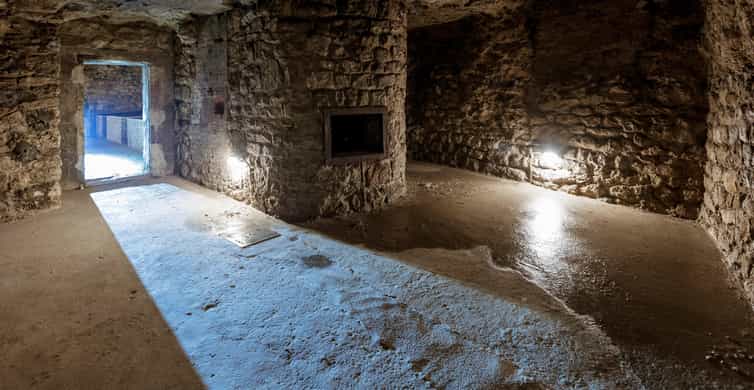
- Above-ground clues + underground spaces: you see the district, then step into the cave and shelter network beneath it.
- A 90-minute format that stays focused: you get the core story without turning this into a long, dragging history lecture.
- Season-proof temperature: the cellar/cave is about 12°C / 54°F year-round, so layers matter.
- Steep, uneven surfaces: cobbled streets and sometimes wet floors are part of the experience.
- Strong English storytelling: the tour is led in English, with a setup designed so you can hear the guide clearly (headphones are mentioned in feedback).
- Not for everyone: it’s designed for ages 14+ and not suitable for wheelchair users.
Why the Siege of Buda Castle Hits Different Under Ground
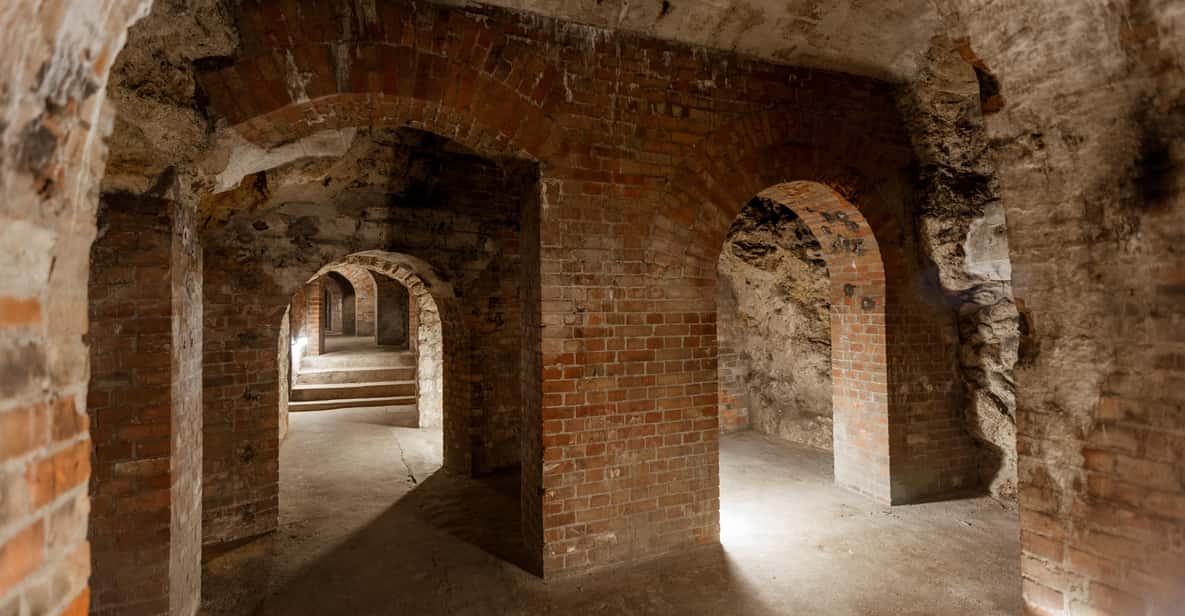
Budapest’s WWII story isn’t only about battles on maps. This tour brings you into the exact kind of spaces people relied on when the Soviet Red Army encircled German-occupied Budapest on Christmas Eve 1944. From there, the siege plays out over 52 grim days—close quarters, fear, cold, and a daily fight for survival.
What makes it stick is the contrast. You start on Castle Hill’s streets, where you can look around and imagine daily life. Then you go underground into cellars and an original bomb shelter in the cave system beneath the historic residential quarter of Buda Castle. The story isn’t abstract anymore; it’s about darkness, overcrowding, lack of water and food, and diseases—conditions that are hard to understand until you’re actually in the space.
And yes, the tour’s framing—comparing the brutality of this siege to Stalingrad—matters. It’s not meant to turn tragedy into drama. It’s meant to explain why historians put these sieges in the same brutal category: encirclement, slow collapse, and constant terror.
You can also read our reviews of more tours and experiences in Budapest.



Meeting at Dísz Square: Getting Started Without Stress
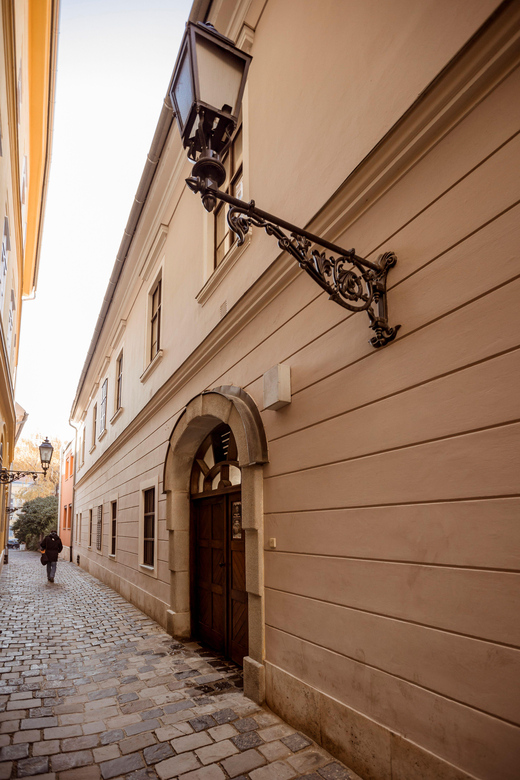
The tour begins at De la Motte–B.-Palace, Dísz tér 15 (Dísz Square 15), right next to the Posta building. Look for the big green gate and a guide holding a turquoise umbrella with the Buda Castle Walks logo.
This start point matters because timing is strict. The program starts promptly at the stated time and you won’t be waited for if you’re late. Since the area around Buda Castle can have closures and shifting foot traffic, I’d also check the operator’s on-site visit planner before you go. It shows real-time traffic conditions and closures in the palace district, and you can access it without registration here:
https://webapp.budavaripalotanegyed.hu/en
Your route finishes at Szentháromság tér (Szentháromság Square). That’s helpful: after the underground part, you can come back up near a lively square instead of getting dumped back at the starting point.
Úri Street and Lovas Way: The Outdoor Part That Sets Up the Underground
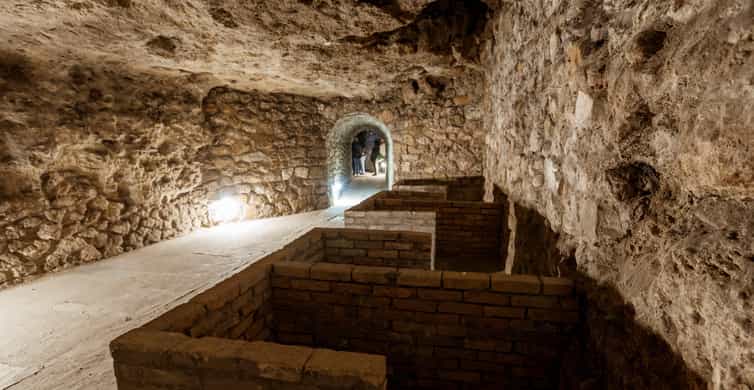
After meeting, you walk through the palace district with a guided storyline that connects streets to survival tactics. The walking sections aren’t filler. The point is to help you read the district like a map of WWII choices.
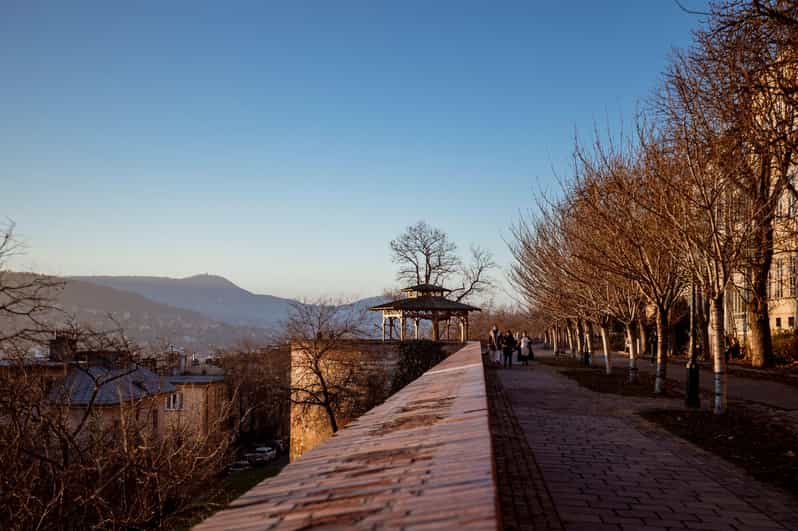
You’ll cover Úri Street, then continue along Lovas Way as the guide points out the district’s structure and what it meant during the siege. Even without dramatic ruins, city layout can be meaningful: routes, access points, and how people moved (or tried to move) when everything above ground became unsafe.
This outdoor time also helps with pacing. You get a chance to adjust your body for what comes next: cobbled streets, steep steps, and the reality that you’ll be moving between light and dark.
Budai Vár-barlang Caves: 12°C Reality Check and How Long You’ll Be Underground
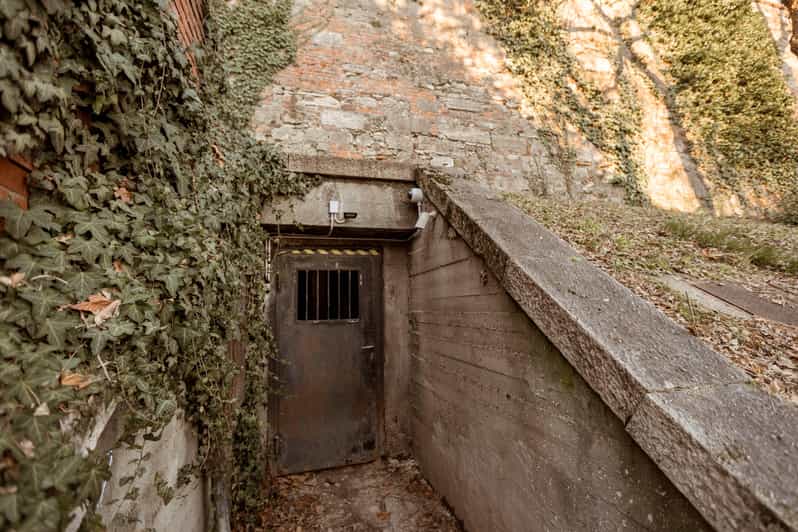
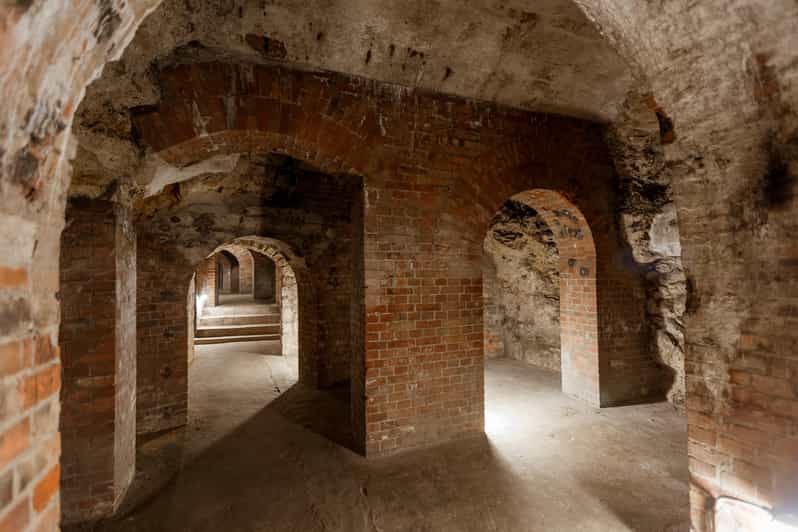
The core “wow” moment is the time in Budai Vár-barlang (Buda Castle Cave), listed at about 35 minutes. You’ll also get cellars and underground passages that connect to the same survival story—so the caves aren’t only scenery; they’re part of the narrative route.
Two practical things to plan for:
First, temperature. The cellar and cave system run around 12°C / 54°F all year, so you’ll feel it quickly once you drop below. Even in warm months, you’ll want layers you don’t mind wearing for a longer period.
Second, the movement style. This is not a flat, stroll-and-look tour. Expect steep stairs, narrow corridors, and solid surfaces that can be wet. The tour is held in all weather conditions—including rain—so the footing and surfaces can shift. Good shoes are a bigger deal here than on most Budapest walks.
There’s also an emotional factor. One consistent theme in the guide’s approach is what those spaces meant when people faced cold, darkness, overcrowding, and illness while trying to salvage belongings and palace treasures. That’s heavy material, and going underground makes it harder to mentally “distance” yourself from it.
The Cellar and an Original WWII Bomb Shelter: What You’re Actually Experiencing
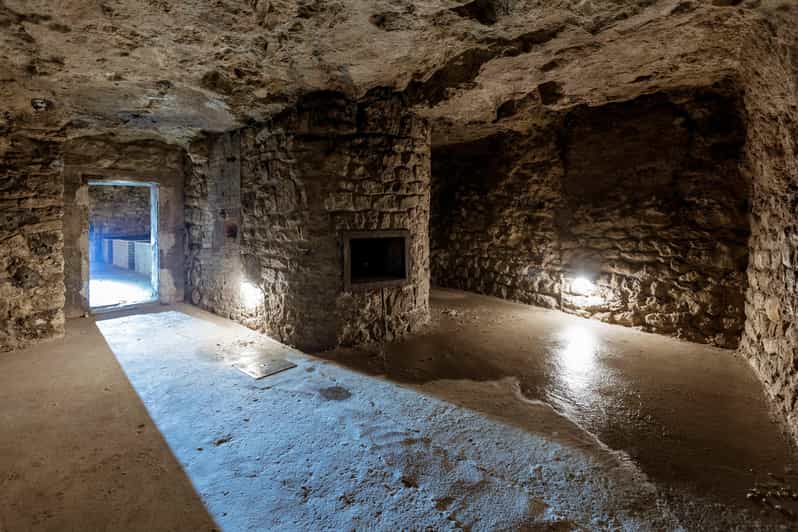
The tour’s strongest practical value is that it mixes storytelling with tangible structures: you visit an old dwelling house cellar and an authentic Second World War bomb shelter within the cave system beneath the district.
This matters because the siege story often gets reduced to headlines—encirclement, dates, numbers. Here, you’re guided through the physical evidence of how people tried to live through that fear. Cellars and shelters weren’t just places to hide. They were survival systems: crowded rooms, limited space, and an environment you had to share with strangers, the wounded, soldiers, and civilians.
Some guides and routes also point out siege traces you can spot in the district, like signs connected to the conflict (things such as bullet holes, secret doorways, and ventilation shafts running upward from shelters have been mentioned in feedback). Even if you don’t notice everything at first, the guide’s direction helps you learn what to look for when you’re outside afterward.





“52 Days” in Your Head: How the Siege Story Gets Told
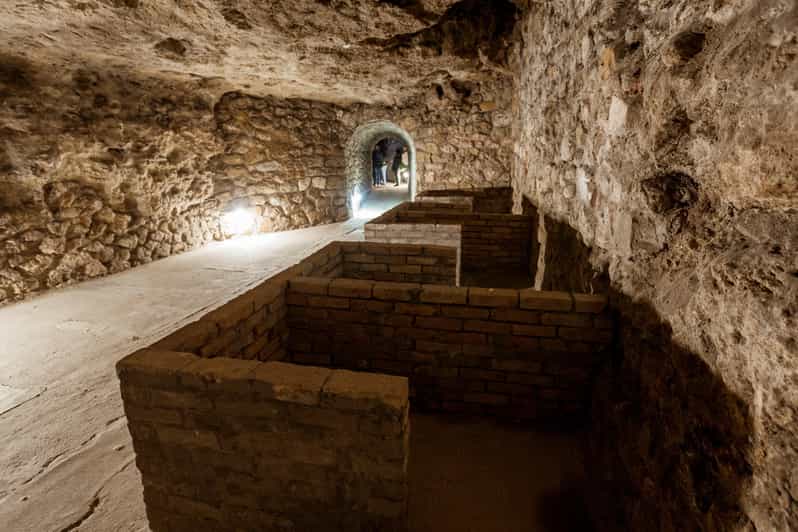
The tour walks you through the arc of the siege in a way that’s meant to be understood, not memorized. You start with the lead-up conditions—German-occupied Budapest—and then land on the turning point: the Soviet encirclement on Christmas Eve 1944.
From there, you follow the survival reality for tens of thousands who sheltered in Buda Castle. The tour emphasizes who was down there: German and Hungarian soldiers, the wounded, and civilians. The focus is on the shared terror of death, mixed with the instinct to live—plus the relentless problems of cold, lack of food and water, darkness, overcrowding, and disease.
The guide’s style leans on diaries and memoirs, which helps translate large-scale history into lived detail. And that’s where the Stalingrad comparison becomes meaningful. Encirclement siege warfare didn’t just kill people in one moment—it ground down lives day after day.
Guides, Listening, and Why the Format Works
The tour is led by an English live guide. Names showing up in feedback include Rita, Jonas, Kopp, and Balacsz, and each is described as keeping people engaged with a strong link between Budapest’s story before, during, and after WWII.
Another detail I appreciate from the practical side: hearing support. One visitor specifically called out the personal headphones as helpful for not missing key parts of the talk. If your group uses them on your date, take advantage. Under ground, sound can carry oddly, and you don’t want to spend the time craning your neck just to follow the story.
The pacing is also built around a short duration: 90 minutes total. That’s a sweet spot for a difficult topic. You get enough time to feel present in the spaces without the session turning into an endurance test.
Who Should Book (and Who Should Skip)
This tour fits best if you want history you can walk through—and you don’t mind a real underground environment.
It’s recommended for ages 14 and up. It’s also not suitable for:
- people with mobility impairments
- wheelchair users
- anyone with claustrophobia
- children under 14
If any of those apply to you, skip this one and look for an above-ground WWII history walking tour instead.
If you’re generally comfortable with tight spaces and uneven ground, you’ll probably appreciate the value. It’s a focused, high-impact route that turns Budapest’s dramatic WWII story into something you can experience with your feet and senses.
Price and Value: $24 for Caves, Shelters, and a 90-Minute Story
At $24 per person for about 1.5 hours, the value is strong for one simple reason: you’re not just paying for a guide. You’re paying for access to the cave district experience, including a cellar and an original bomb shelter element, plus the guided interpretation that ties it together.
In a city full of “look at the exterior, read the plaque” tours, this one spends time where people actually hid—underground. That physical access usually costs more than the guide portion, so the price-to-experience ratio is pretty compelling, especially if you care about WWII details beyond broad timelines.
Also, the format can feel more personal than you expect. Some feedback mentions a solo booking turning into a private-feeling experience, which is a nice bonus if you prefer asking questions without a crowded group rhythm.
Quick Prep Checklist for a Comfortable (and Safe) Underground Walk
Do yourself a favor and prepare for the cave environment rather than the Budapest sidewalk:
- Comfortable shoes with grip (cobbles and wet areas can be unforgiving)
- Warm clothing + layers (about 12°C / 54°F underground)
- Water and snacks (the tour is short, but you’ll be moving)
- A mindset that this is part outdoor walk, part indoor underground route
- Expect a prompt start and wear clothes you can move in
And if the topic affects you emotionally, that’s normal. This is the sort of history that can feel sad and heavy fast—especially once you’re in confined spaces built for fear and survival.
Should You Book This Budapest WWII Bomb Shelter Tour?
I’d book it if you want more than a lecture about Budapest in WWII. You’ll learn the siege story—why the Red Army encircled the city, what the 52 days meant, and how tens of thousands used Buda Castle’s underground shelter options—and you’ll see it in the district’s real cave and cellar setting.
Skip it if you hate tight spaces, struggle with stairs or uneven surfaces, or need wheelchair-friendly access. Those constraints aren’t minor details here; they’re built into the route.
If you’re in Budapest with a history brain and you like experiences that mix city layout with real locations, this tour is a smart use of 90 minutes—short enough to keep it moving, heavy enough to stay with you after you leave the cave.
FAQ
Where does the tour start?
Meet at De la Motte–B.-Palace, Dísz tér 15 (1014 Budapest), next to the Posta building at the big green gate. Look for the guide with a turquoise umbrella.
Where does the tour end?
The tour finishes at Szentháromság tér (Szentháromság Square).
How long is the tour?
The duration is about 90 minutes (1.5 hours).
Is the tour in English?
Yes. The tour includes a live guide in English.
Is the tour indoors or outdoors?
It’s both. You do an outdoor walk through the palace district and also spend time underground in the cave/shelter area.
What should I wear or bring?
Bring comfortable walking shoes, warm clothing/layers, and also water and snacks. The cave/cellar area stays around 12°C / 54°F year-round.
Is the tour suitable for people with mobility challenges?
No. The tour is not suitable for people with mobility impairments due to steep stairs, narrow corridors, and sometimes wet, solid surfaces.
What about claustrophobia?
This is not suitable for people with claustrophobia, since the route includes underground labyrinth-like passages and narrow spaces.
What age is recommended?
It’s recommended for ages 14 and upwards. It’s not suitable for children under 14.
Does the tour run in bad weather?
Yes. The tour is held in all weather conditions, including rain, and you’ll still follow the route.
How punctual do I need to be?
The program starts promptly at the time indicated, and the tour cannot wait for latecomers.