REVIEW · BUDAPEST
Budapest Dohany, Heroes’, Rumbach synagogues & Jewish Ghetto Tour
Book on Viator →Operated by Hidden Treasure Tours · Bookable on Viator
Synagogues and memory, right on Budapest’s streets. This 2-hour, 20-minute walk strings together Budapest’s Jewish Quarter with Holocaust-era sites and synagogue architecture, from the Great / Dohány Synagogue to the Rumbach Synagogue. You’ll also get a guided path through the streets where Jewish life shaped (and was reshaped by) history, including stops tied to Raoul Wallenberg and Carl Lutz.
I like how the tour includes admission tickets to the biggest interior moments, so you’re not stuck budgeting or scheduling around separate entries. I also like the way the guide experience comes through in the storytelling names like Milan, David, and Micki that get highlighted for mixing careful detail with personal, human comments.
One thing to plan for: the synagogues enforce a dress code. Shoulders must be covered and clothing should reach the knee, and you may need to cover up on the spot.
In This Review
- Key highlights worth your attention
- A tight 2-hour walking route through Budapest’s Jewish Quarter
- Great / Dohány Synagogue: Europe’s largest, and the Neologue story inside
- Raoul Wallenberg Memorial Park: remembrance on ghetto ground
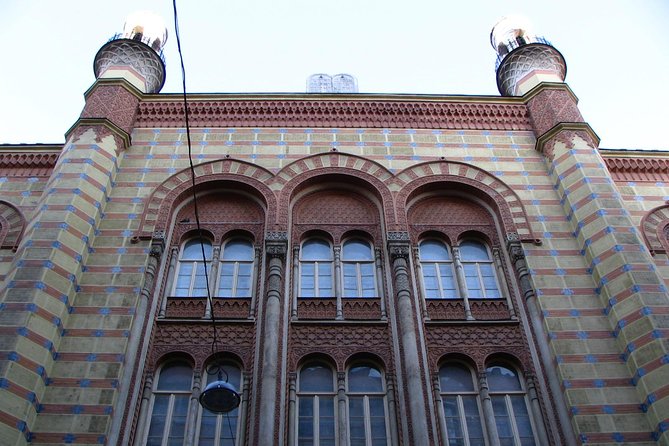
- Rumbach Street Synagogue: Otto Wagner’s Moorish masterpiece, reopened
- Királ(y) Street and Gozsdu Udvar: former Jewish commerce, now culture and food
- Carl Lutz, Spinoza Színház, and the power of small stops
- Dob Street and Kazinczy Street: ghetto-era geography meets Orthodox today
- Price and value: what $63.52 gets you, and why it’s fair
- Who should book this tour (and who might want to skip it)
- Should you book Hidden Treasure Tours’s Budapest Synagogue & Ghetto Walk?
- FAQ
- How long is the Budapest Jewish Ghetto Tour?
- What does the tour cost?
- Is the tour offered in English?
- Where does the tour start and end?
- Which stops have admission included?
- Is admission included for the Kazinczy Street Synagogue?
- What dress code do I need to follow for synagogue visits?
- How large is the group?
- Can I cancel for a full refund?
- What happens if the tour is affected by weather or a synagogue closes?
Key highlights worth your attention
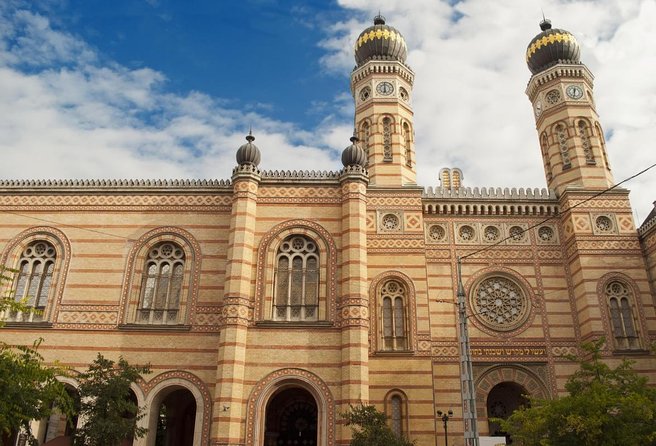
- Great / Dohány Synagogue interior time with the story of Hungarian Neologue Jewry and the Franz Liszt organ connection
- Raoul Wallenberg Holocaust Memorial Park plus the Emmanuel Tree of Life and a ghetto cemetery with 2,000+ victims
- Rumbach Street Synagogue by Otto Wagner—a Moorish-style building reopened after renovation
- Királ(y) Street and Dob Street as former Jewish high streets and ghetto-center corridors where Jewish life has returned
- Kazinczy Street Synagogue area with an Orthodox Jewish center and Secession/Art Nouveau architecture nearby
- A quick kosher-flodni moment in the Jewish district (a sweet stop to anchor the day)
A tight 2-hour walking route through Budapest’s Jewish Quarter
This tour is built for people who want more than a photo stop. You cover a compact slice of the Jewish district on foot, with short street segments between heavier memorial and synagogue moments. It’s paced around group movement (max 35 people) and the practical reality that synagogue interiors take time—especially when you’re learning what you’re seeing.
At a glance, you’re looking at about 2 hours 20 minutes, starting at Dohány u. 2-4 and ending at Rumbach Sebestyén u. 13. The route also leans into the neighborhood’s “why here?” logic: the streets, the places of worship, and the memorial sites connect into a single story rather than separate attractions.
If you’re the type who likes to understand what’s behind a building before you admire it, this format works well. And because the tour is in English, you can follow the details without decoding on the fly.
You can also read our reviews of more tours and experiences in Budapest.



Great / Dohány Synagogue: Europe’s largest, and the Neologue story inside
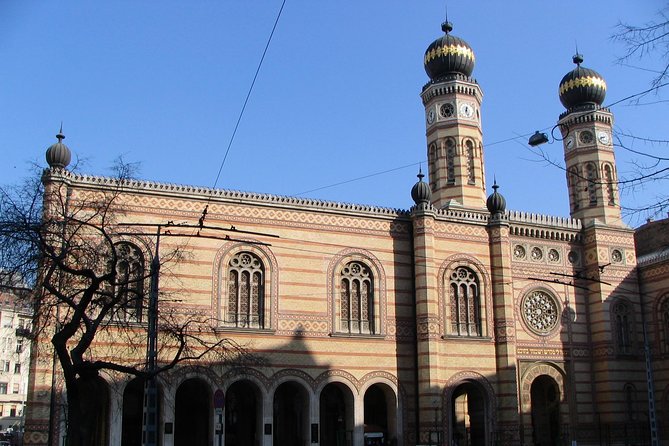
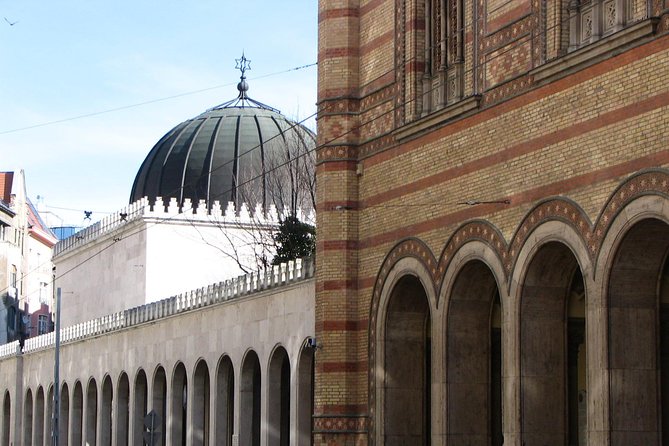
You begin at the Great / Central Synagogue, known as Nagy Zsinagóga (Dohány Street). Expect a real interior visit, not just a quick glance at the facade. You’ll spend about 30 minutes here, and the tour includes the admission ticket.
This is the anchor stop because the Great Synagogue isn’t just a big church-like landmark. It’s tied to the Hungarian Neologue Jewish community—a major current of Jewish life in Hungary—and to how Hungarian Jews expressed identity through architecture. You’ll also hear about the organ and the note that Franz Liszt played it, which helps make the building feel woven into broader Hungarian cultural life, not locked away in a niche past.
Practical tip: plan to arrive a few minutes early. Between dress rules and the usual slow-down that happens when everyone prepares to enter, it helps to not start the tour already behind.
Raoul Wallenberg Memorial Park: remembrance on ghetto ground
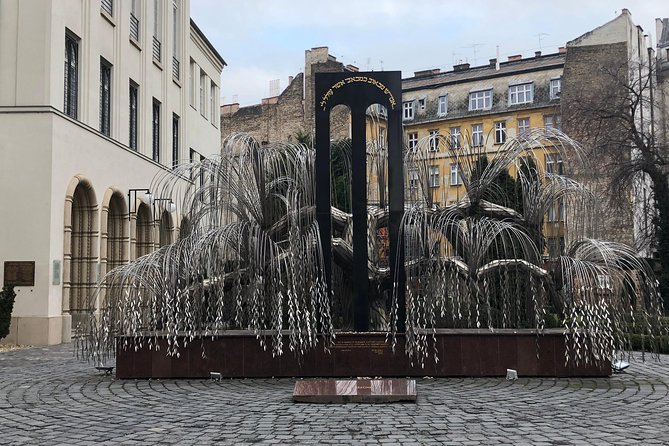
After the synagogue, the tone shifts—gently, but clearly—toward the Holocaust and the people who tried to save others. Stop two is Raoul Wallenberg Holocaust Memorial Park, where you learn about the Hungarian Holocaust and the role of Righteous Gentiles who risked their lives to save tens of thousands of Hungarian Jews.
You’ll spend about 20 minutes, with admission included. Two details make this stop especially meaningful:
- the Emmanuel Tree of Life Memorial
- the Holocaust Cemetery on territory of the Budapest ghetto, with the resting place of more than 2,000 victims
This is one of those stops where the guide’s job is not only to explain events, but to help you read the place. If you’ve ever felt awkward walking through memorials without context, you’ll appreciate having a guide put names, choices, and timing into a clear order.
It’s also a good contrast with the synagogue architecture you saw earlier. The tour doesn’t treat these sites as separate categories (beauty here, tragedy there). It uses them together to show how Jewish life and Jewish destruction were both real parts of the same city story.
Rumbach Street Synagogue: Otto Wagner’s Moorish masterpiece, reopened
The next major interior moment is the Rumbach Street Synagogue. You’ll have about 45 minutes here, and entry is included.
The standout detail is the architect: Otto Wagner, a major figure in European architecture, designing the synagogue in 1872. The building’s style is Moorish, which makes it feel visually different from what many people expect when they hear “synagogue.” The result is a true architectural surprise, especially in a neighborhood where you also see Art Nouveau-era details in nearby buildings.
The tour also flags that the synagogue has reopened after many years of renovations. That matters because it changes the feel of the visit: you’re not just looking at a historic shell; you’re seeing an active, cared-for space that’s back in use after restoration.
One more practical consideration: because this stop is longer, it’s also where the time-to-look ratio matters. If you like slow reading of details, save your best attention for Rumbach.
Királ(y) Street and Gozsdu Udvar: former Jewish commerce, now culture and food
Between major sites, you’ll walk through street sections where the neighborhood explains itself. Stop four is Királ(y) Street, historically a high street of Pest in the 18th and early 19th centuries. It was a commercial and trade center, and the guide frames it as a cradle of Jewish life in Pest.
Then you move to Gozsdu Udvar, described as the most colorful spot in the Jewish district, tied to entertainment and cultural life. You’ll hear what lived there in the past—kosher salami stores, food stores, and apartments—and what fills the space today, including local Jewish artists and places to eat and drink.
These street stops aren’t filler. They’re where you get your bearings. When you later pass a sign, a courtyard, or an old building line, the tour gives you a reason to connect it to Jewish community life.
Because these segments are short (about 10 minutes each), don’t expect full browsing. Think of them as orientation points you can come back to on your own after the tour ends.





Carl Lutz, Spinoza Színház, and the power of small stops
There are several quick, high-impact points here, each adding a layer.
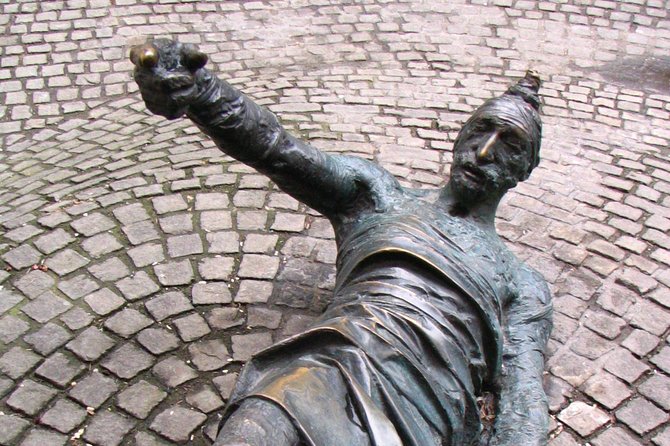
First, the Carl Lutz Memorial (about 5 minutes) recognizes another crucial rescuer story: Lutz as a Righteous Gentile who helped save thousands of Hungarian Jews during the Holocaust. Even though this is a brief stop, the tour uses it to keep the narrative human—one person, then the ripple of impact.
Next, Spinoza Színház (also about 5 minutes). The theater/restaurant/gallery stage named for Baruch (Spinoza)—a Jewish Dutch philosopher of Portuguese Sephardi origin. The tour ties him to the Enlightenment and the early 17th-century intellectual world, which adds a non-Holocaust angle without minimizing the earlier stops. It’s about how ideas and identity traveled alongside community life.
Then there’s a short moment for kosher flodni—Hungarian Jewish cake—at a well-known spot in the district. The tour doesn’t position it as a full food tour. Still, if you care about experiencing local Jewish culture in everyday form, it’s the kind of detail that sticks because you can follow up after you’ve learned the context.
Dob Street and Kazinczy Street: ghetto-era geography meets Orthodox today
You’ll also walk along Dob Street, running parallel to Királ(y). Historically it was a central street of the Jewish district of Pest and in the center of the Budapest ghetto. Today, the guide frames it as part of the revival of Jewish life and Hungarian Jewish orthodoxy. It’s another example of the tour’s core strength: using street geography as evidence.
Then comes Kazinczy Street Synagogue time (about 15 minutes), where the guide points out the area’s Art Nouveau feel—often called Secession in Budapest—and you see the Orthodox Jewish center. The tour notes that this complex includes a synagogue, a mikveh, kosher restaurants and cafes, schools, a butcher, and kosher food stores.
One important money detail: admission for Kazinczy Street Synagogue is not included. So if your main goal is synagogue interior time across the board, the Great Synagogue and Rumbach are the core “musts” with included entry.
Overall, this final synagogue area helps you understand how Jewish life continued and changed after the Holocaust, not just what was lost.
Price and value: what $63.52 gets you, and why it’s fair
At $63.52 per person for roughly 2 hours 20 minutes, the price is worth thinking about in terms of time and admissions. You’re paying for a guided walking route plus included tickets for multiple key stops, including:
- the Great Synagogue interior (admission included)
- Raoul Wallenberg Memorial Park (admission included)
- the Rumbach Street Synagogue (admission included)
Kazinczy Street is shorter and not fully ticketed in the same way (admission not included), so your money is concentrated in the big interior moments and the memorial park.
Another value signal: the tour is capped at 35 travelers and runs in English, with guides consistently praised for pacing, answering questions, and adding personal context. Names that came up in the guide feedback include Milan, David, Micki, and Daniel, and the common thread is how the guide connects architecture, geography, and history so it feels like one coherent story rather than disconnected facts.
If you’re choosing between DIY exploration and a guided route, this tour wins for one simple reason: synagogues and memorial sites can be visually impressive but emotionally heavy. The guide’s role is to keep it understandable, respectful, and ordered.
Who should book this tour (and who might want to skip it)
Book this tour if you want:
- a walking overview of Budapest’s Jewish Quarter that actually explains what you’re looking at
- synagogue architecture context (including Ott(o) Wagner and Neologue vs Orthodox differences)
- Holocaust remembrance tied to specific named sites (Wallenberg park, Emanuel Tree of Life, and the ghetto cemetery)
You might consider skipping or swapping to something else if:
- you’re mainly after a long food crawl or nightlife plan, because much of your time goes to memorial and synagogue interiors
- you’re very sensitive to formal dress rules, since shoulders and knee-length coverage are required for entry
Also, if you hate unpredictability, keep in mind the tour depends on decent weather and synagogues can close temporarily without advance notice.
Should you book Hidden Treasure Tours’s Budapest Synagogue & Ghetto Walk?
If your goal is to understand Budapest’s Jewish story through buildings, streets, and memorials, I think this is an excellent use of your time. The strongest part is how the tour ties big, dramatic places (Great Synagogue, Rumbach, the Holocaust memorial park) to the street-level geography where community life happened before and after catastrophe.
If you book, go prepared for the dress code. Bring a layer you can shrug off later and don’t plan on last-minute improvisation.
And if you’re debating whether it’s worth paying for a guide: the interior synagogues alone make it feel like you’re buying access plus interpretation. Add the named Holocaust sites and the street context, and the value math starts to feel pretty solid.
FAQ
How long is the Budapest Jewish Ghetto Tour?
The tour lasts about 2 hours 20 minutes.
What does the tour cost?
The price is $63.52 per person.
Is the tour offered in English?
Yes, the tour is offered in English.
Where does the tour start and end?
It starts at Budapest, Dohány u. 2-4, 1075 Hungary, and ends at Rumbach Street Synagogue, Budapest, Rumbach Sebestyén u. 13, 1074 Hungary.
Which stops have admission included?
Admission is included for the Great / Central Synagogue (Nagy Zsinagóga), Raoul Wallenberg Holocaust Memorial Park, and the Rumbach Street Synagogue.
Is admission included for the Kazinczy Street Synagogue?
No. Admission for the Kazinczy Street Synagogue is not included.
What dress code do I need to follow for synagogue visits?
Shoulders must be covered, and clothing must reach the knee or be covered before entering. Clothing covers may be available for purchase on the spot, and men can get a head cover upon entry.
How large is the group?
The maximum group size is 35 travelers.
Can I cancel for a full refund?
Yes. You can cancel up to 24 hours in advance for a full refund.
What happens if the tour is affected by weather or a synagogue closes?
The tour requires good weather. If canceled due to poor weather, you’ll be offered a different date or a full refund. Synagogues may close temporarily without notice; if one closes, the provider will offer an alternative visiting time, but refunds aren’t offered since it’s a package. If all synagogues close, you’ll be offered alternative hours/dates or a full refund.