REVIEW · BUDAPEST
Accessible Budapest Tour
Book on Viator →Operated by Tourist Angel · Bookable on Viator
A day in Budapest can mean stairs. This private, wheelchair-friendly tour is built to help you see the big sights without constantly fighting steps and steep levels. You get a licensed English guide who can adjust pace and access so the views happen without the stress.
What I like most is the focus on access-first sightseeing—skipping the awkward bits and steering you toward places with usable amenities. I also love that you’re not just dropped off at landmarks; the guide adds context while you move from St. Stephen’s Basilica through Buda Castle and on to Heroes’ Square.
One thing to keep in mind: access and admissions are not the same everywhere. The Basilica includes entry, but other major spots involve separate admissions or inside limits (especially for Matthias Church), and timing can affect how much you fit in.
In This Review
- Key things to know before you go
- Why This Accessible Budapest Tour Fits Mobility Needs
- Pickup, Timing, and the Starting Point at Szent István tér
- St. Stephen’s Basilica: Elevator Access and the Royal Hand
- The Danube Crossing and Buda Castle Terrace Views Without the Climb
- Fountain of King Matthias and Sandor Palace Guards: Quick Hits, Good Payoff
- Fisherman’s Bastion and Matthias Church: Big Views, Limited Inside Access
- Andrássy Avenue to Heroes’ Square: Budapest’s Grand Promenade
- Vajdahunyad Castle, City Park, and the Anonymus Courtyard Moment
- Price and Value: What You Pay for at $142.97
- Practical Tips to Avoid Hassle on a Mobility Day
- Should You Book This Accessible Budapest Tour?
- FAQ
- How long is the accessible Budapest tour?
- Is hotel pickup included?
- Is this tour private or shared?
- What’s the starting and ending point?
- Is St. Stephen’s Basilica entry included?
- Can wheelchair users go inside Matthias Church?
- Are tickets for Fisherman’s Bastion included?
- Do I need to buy public transport tickets?
- Is cancellation free?
Key things to know before you go
- Wheelchair-focused routing that skips steps and levels where possible
- St. Stephen’s Basilica entry included, with an elevator for wheelchair access (except tower/treasury/panoramic terrace)
- Buda Castle panoramic terrace included, with free admission time for those views
- Accessible bus legs used to connect areas without constant climbing
- Private group only with hotel pickup/drop-off and an English-speaking licensed guide
- Flexible plan options, including an accessible minibus if you request it
Why This Accessible Budapest Tour Fits Mobility Needs
This tour is designed for wheelchair users and people with mobility issues, which matters a lot in Budapest. Many of the most famous viewpoints sit on hills, and some of the classic “photo spots” require stairs or uneven transitions. Here, the whole point is to keep you moving in a way that feels doable for your body.
You’ll also get the kind of guide help that’s hard to fake. The guide can tailor timing and routing to your needs, which can mean fewer last-minute detours and less time spent asking strangers for directions on the wrong side of a curb. The tour is private, so you’re not stuck waiting while a larger group tries to negotiate accessibility barriers.
And yes, you’ll still get the essentials: the Danube, the Castle District views, and the grand monuments in Pest. This isn’t a “slow sightseeing parade.” It’s more like a smart route that saves you effort while keeping the best angles of the city in play.
You can also read our reviews of more tours and experiences in Budapest.



Pickup, Timing, and the Starting Point at Szent István tér

The meeting point is Szent István tér 4, 1051. The tour runs about 4 to 6 hours, depending on how the pacing lands for your group, and it operates in all weather, so plan for rain and cold as needed.
Pickup is available, and the guide can meet you at your hotel reception or in front of your accommodation. If you’re traveling with a wheelchair or mobility aid, that pickup detail can be a big deal. You don’t want to spend the first 20 minutes wrestling with getting across a busy street or into the right bus entrance.
You also get flexibility in departures. If you want an accessible minibus, you can organize that, which can reduce stress compared with relying on public transport in every stretch. I’d treat that as a planning option worth discussing early—especially if you use a wheelchair full-time.
St. Stephen’s Basilica: Elevator Access and the Royal Hand
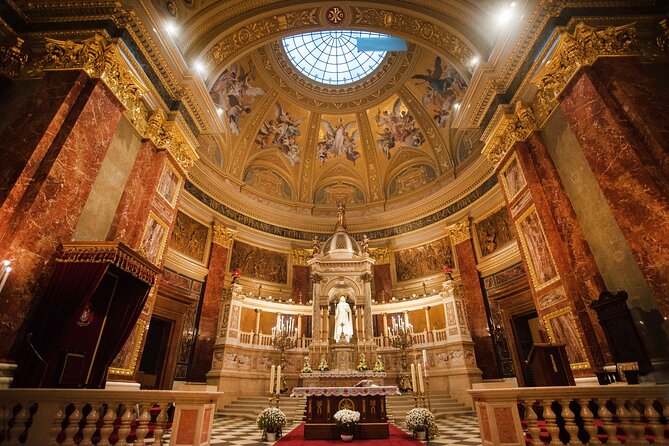
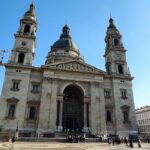
St. Stephen’s Basilica is one of Budapest’s most impressive interiors, and this stop is set up with real accessibility in mind. You’ll spend about 45 minutes here, with admission included (with the exception of Sunday morning religious services).
The biggest practical win is the accessible elevator. You can use it to get into the church area for wheelchair users. That said, the elevator does not cover every area—tower access and parts tied to the treasury and panoramic terrace are not included in this wheelchair route.
Inside, you’re in for plenty to look at: statues, frescoes, and a detail that feels straight out of a history book—the mummified right hand of the first Hungarian king. It’s the kind of moment that makes the visit feel more personal than just seeing a pretty church from the outside.
Dress code matters here. You’ll want legs and shoulders covered when you’re in church areas, so bring a light layer even if it’s warm outside. If you’re visiting on a Sunday morning, expect the possible restriction due to religious service.
The Danube Crossing and Buda Castle Terrace Views Without the Climb
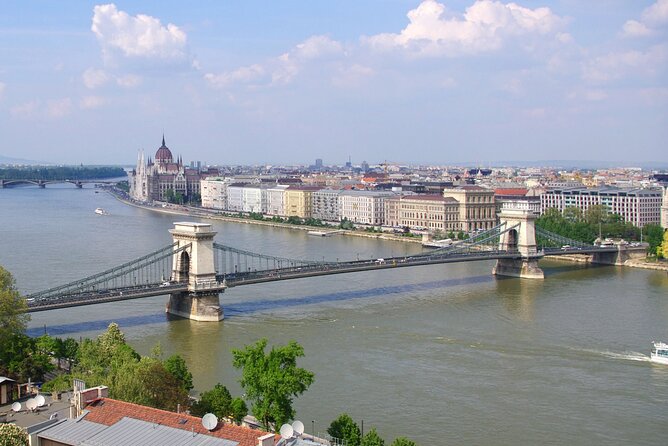
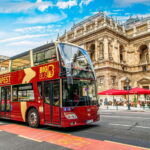
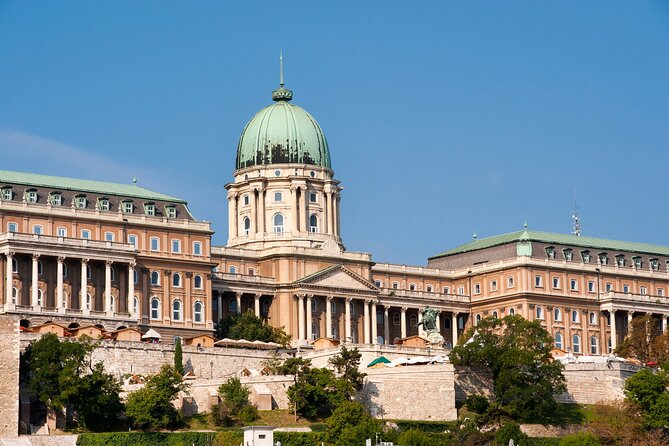
After you get your bearings near the city’s central traffic junction, you’ll move toward Buda. The tour uses an accessible public bus to reach the Castle of Buda, and it helps avoid the worst of the hill struggle that many visitors face on their own.
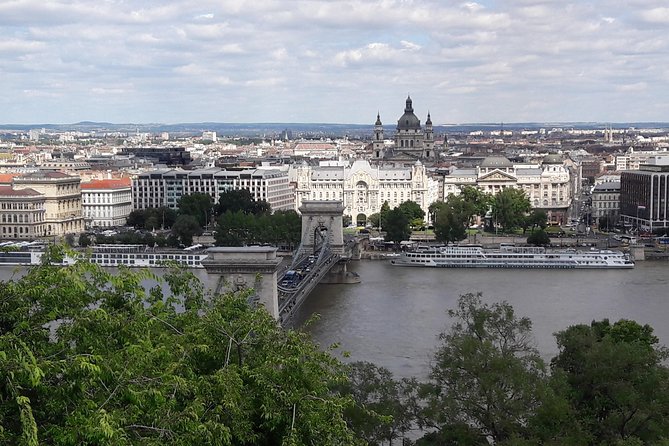
There’s a Danube moment built into the plan. You’ll cross to the Castle side and then focus on the Royal Palace panoramic terrace, which is where the best city angles typically come from. You’ll get about 45 minutes at this stop, and admission for the terrace time is free.
This is the part of the day where your effort pays off visually. From the terrace, you can see how the neighborhoods stack up and how the Danube lines up with the landmarks in Pest. If you’re using a wheelchair, I like that this experience doesn’t pretend views come only from stairs. It’s designed so you can actually spend time looking.
Fountain of King Matthias and Sandor Palace Guards: Quick Hits, Good Payoff
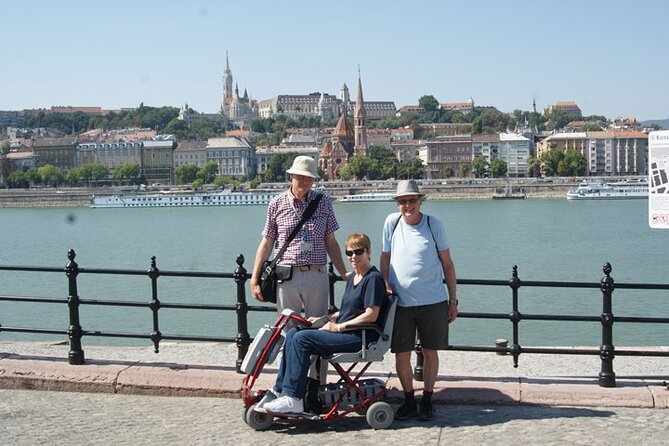
You don’t waste the middle of the day sitting in transit. After the Castle terrace, you’ll pause at smaller, high-recognition stops that add flavor without demanding lots of walking.
At the Fountain of King Matthias, you’ll have around 10 minutes. It’s a 19th-century monument that makes a nice break from big views and gives you something detailed to photograph up close.
Then you’ll shift to Sandor Palace, about 10 minutes. This is the president’s palace, and the tour includes time to see the guards in historical uniforms. Even if you don’t catch every ceremonial moment, it’s the kind of street-level spectacle that feels unmistakably Budapest.
These two stops are “short and sweet” on purpose. They help you keep energy for the longer view-heavy blocks and reduce pressure on bathroom or rest breaks—especially important for anyone managing mobility needs.





Fisherman’s Bastion and Matthias Church: Big Views, Limited Inside Access
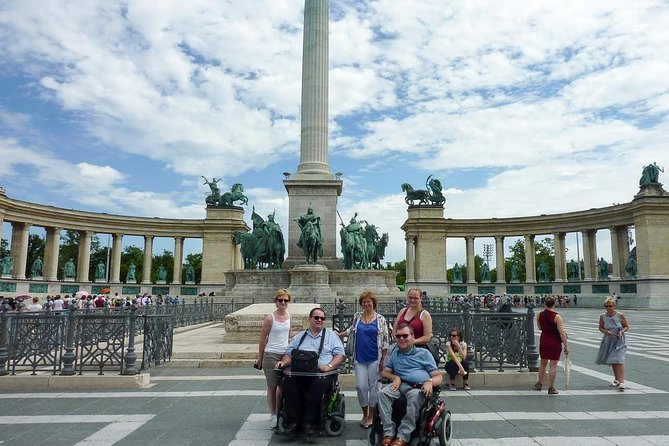
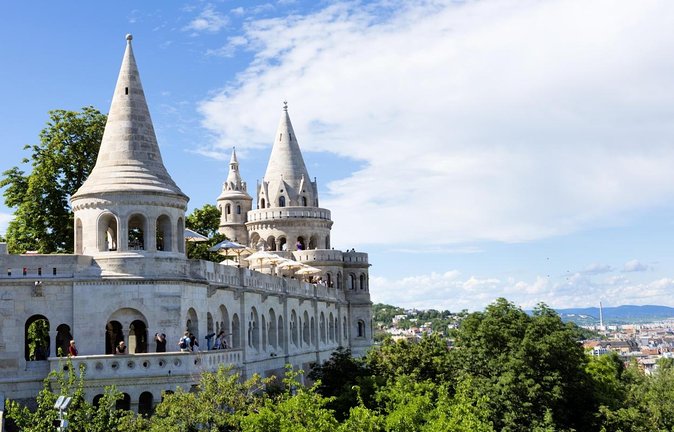
Next comes one of Budapest’s most photographed areas: Fisherman’s Bastion. Expect around 15 minutes here. Admission is not included, so treat this as a view stop rather than a full-entry experience unless you decide you want to pay for additional access on your own.
The reason it’s worth it is the panorama. You get the classic line of sight toward the Danube and the Hungarian Parliament building. This is also where the day starts to feel like a proper “Budapest highlights” tour—if your body allows time to sit and watch, take it.
Then you’ll reach Matthias Church for a short 10-minute moment. Here’s the key accessibility reality: the church is not accessible inside for wheelchair users. The tour focuses on walking around the exterior, so you still get the Gothic character without the interior restriction.
If you’re traveling with a group and some people can handle more walking, there may be an option for walkers to do an additional visit on request. Since access inside is restricted for wheelchair users, I’d confirm specifics with the guide beforehand so nobody ends up feeling rushed.
Also, note that an iconic bridge in this area has had renovation activity referenced for the period 2021 to 2022. That can affect how you cross or what you can see at certain angles, so don’t be shocked if a familiar view is slightly different on your date.
Andrássy Avenue to Heroes’ Square: Budapest’s Grand Promenade
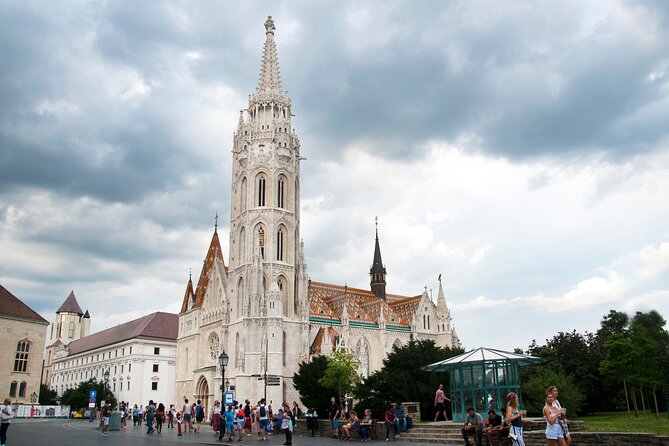
After the Castle District stops, you head back toward Pest’s monument zone. You’ll ride along Andrássy Avenue, described as a long, historical thoroughfare of about 2 miles. Instead of walking it all, you’ll take an accessible public bus along the avenue to reach Heroes’ Square.
This route choice is practical. Andrássy Avenue is lovely, but on a mobility day it can be a long stretch to cover on foot. By using transit, you get the sense of the city’s grandeur without turning the day into a stair-and-stamina test.
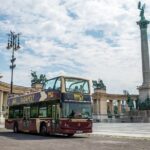
At Heroes’ Square, you’ll have about 10 minutes. It’s the largest square in Budapest and a prime spot for classic monument photos. In the center stands the Millennium Monument, and on the sides you’ll spot the Arts Hall and the Fine Arts Museum.
Then you’re right at the monument itself for another 10 minutes. The Millennium Monument commemorates 1000 years of Hungarian history, and you’ll see the grave of the unknown heroes in front. Around it are colonnades with statues of major kings and leaders.
This is a strong pair of stops because they work at two levels: you get the overall composition from the square, then the finer details up close without needing to travel across town again.
Vajdahunyad Castle, City Park, and the Anonymus Courtyard Moment
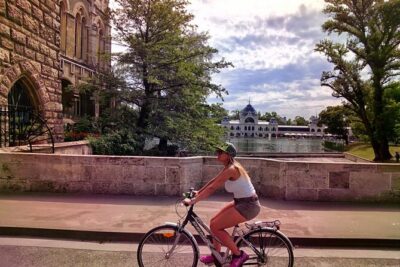
From Heroes’ Square, the tour shifts into a softer, more relaxed side of Budapest with Vajdahunyad Castle in City Park. City Park is described as the oldest public park in the world, and this stop gives you a break from strictly monumental architecture.
You’ll spend around 15 minutes at Vajdahunyad Castle. The castle area sits on a lake island, and you reach it by crossing a bridge. In the courtyard, you’ll see copies of buildings representing different periods and styles of Hungarian architecture, which makes it a fun stop for people who like comparing “then and now” building styles.
There’s also a short, interesting follow-up: Anonymus Szobor—a statue of Anonymus, described as the first history writer of Hungary from the 12th century. You’ll have about 10 minutes, in the castle’s inner courtyard.
This is one of those moments where accessibility matters again. You get the payoff of a picturesque place without turning the end of your day into a long hike. It’s also a calmer final sequence than some tours that slam you with one last steep viewpoint right before you’re done.
Price and Value: What You Pay for at $142.97
The price is $142.97 per person, and for an accessible private tour that includes hotel pickup, a licensed guide, and admission for a major church, it can be good value—especially if you want someone to handle routing decisions for your mobility needs.
Here’s what’s included that helps justify the cost:
- A professional licensed guide in English
- Hotel pickup and drop-off (using public transport or car depending on the selected option)
- Admission to Saint Stephen’s Basilica (with the Sunday-morning church-service exception)
- A private setup, so your group is the only group in the schedule
Here’s what’s not included, and it’s worth planning for:
- Matthias Church entry is not included, and access inside is not available for wheelchair users
- Fisherman’s Bastion entry is not included
- Sandor Palace is listed as not included
- Public transport tickets are not included
- Lunch costs are not included, though a one-hour optional lunch break is possible and may be excluded from tour duration
So the smart mindset is this: you’re paying for a guide who helps you get the right experiences in the right order, not for a checklist where every ticket is already paid. If you’re expecting every interior admission without extra cost, you may feel a bit surprised.
Practical Tips to Avoid Hassle on a Mobility Day
A few small choices can make a big difference on a tour like this.
First, bring the right clothing for churches—cover legs and shoulders. Even if you’re only inside briefly, you’ll want to meet the dress expectations.
Second, decide early how you want to handle transport. If public transport is manageable for you, great. If you’d rather reduce transfers and waiting time, request the accessible minibus option.
Third, set expectations about interiors. This tour is great for views and accessible exterior exploration, but it is honest about places where wheelchair access is limited, like the inside of Matthias Church.
Finally, if you need extra time at a stop, tell the guide sooner rather than later. Timing can run tight when you add in boarding, lining up, and weather changes. In a private setting, that small communication often buys you a better pacing outcome.
Should You Book This Accessible Budapest Tour?
If you use a wheelchair or have mobility limits and you want to see Budapest’s major highlights without constantly planning around stairs, this tour is a strong match. The biggest selling point is the guide-led accessibility focus, including an elevator route at St. Stephen’s Basilica and practical public transport connections that reduce climbing.
I’d especially consider it if:
- you want private attention rather than a larger group pace
- you value step-free or step-reduced routing
- you’d like someone to help you manage what you can enter and what you can view
Skip or rethink if:
- you expect every major landmark to be an included paid-entry stop regardless of accessibility
- you’re the kind of traveler who needs long, unhurried time in interiors with no schedule pressure
For most mobility travelers, it’s an efficient, thoughtful way to see Budapest in one day—views included, stress reduced, and the day shaped around your needs instead of the other way around.
FAQ
How long is the accessible Budapest tour?
The tour lasts about 4 to 6 hours.
Is hotel pickup included?
Yes. Hotel pickup and drop-off are included, with the guide meeting you at your hotel reception desk or in front of your accommodation.
Is this tour private or shared?
This is a private tour/activity, so only your group participates.
What’s the starting and ending point?
It starts at Budapest, Szent István tér 4, 1051 Hungary and ends back at the same meeting point.
Is St. Stephen’s Basilica entry included?
Yes. Entry to Saint Stephen’s Basilica is included, except for Sunday morning religious service times.
Can wheelchair users go inside Matthias Church?
No. The tour notes that Matthias Church is not accessible inside for wheelchair users. The church stop focuses on exterior viewing, and a walkers-only optional visit may be possible upon request.
Are tickets for Fisherman’s Bastion included?
No. Fisherman’s Bastion admission is not included in the tour.
Do I need to buy public transport tickets?
Yes. Public transport tickets are not included. The guide handles transport by bus/minivan depending on the option selected, but you’ll be responsible for the tickets.
Is cancellation free?
You can cancel for a full refund if you cancel at least 24 hours in advance of the experience start time.
If you want, tell me your mobility details (wheelchair full-time, power chair, can you manage steep ramps, etc.) and your travel dates. I can help you think through which parts of the day are most likely to feel comfortable.