REVIEW · BUDAPEST
101 things in Budapest – Full Day Tour with Lunch & Metro Pass
Book on Viator →Operated by Budapest Urban Walks · Bookable on Viator
Budapest is a city you feel fast. This full-day tour strings together iconic sights and classic Hungarian food with a relaxed pace that still covers a lot of ground in one day. I like that it’s built around real neighborhood-to-neighborhood walking, not just photo stops.
Two things I’d put at the top: you get traditional Hungarian lunch plus dessert (and alcoholic beverages are included), and the guides bring the place to life with architecture and history tied to what you’re actually seeing. Names I’ve seen praised include Rebecca, Fanny, Ferenc, Gabriella, Emese, Odea, Sándor, and Mario.
One consideration: it’s a long walking day, and a few major stops you’ll approach have admission that isn’t included, so you may want cash/whatever ticket method you prefer for the spots marked as not included.
In This Review
- Quick hits before you go
- A 7.5-hour Budapest day that hits both banks
- What the pace feels like
- Heroes’ Square: where Hungary’s story gets staged in stone
- A quick tip
- Széchenyi Baths: the warm reset you’ll remember
- Practical reality check
- City Park’s Vajdahunyad Castle: the photo stop with substance
- Andrássy Avenue: a straight shot through grand architecture
- A smart detail
- Hungarian State Opera House: architecture that looks like it performs
- St. Stephen’s Basilica: the stop you’ll want to plan around
- Liberty Square and the Parliament approach: big civic Budapest
- How to decide on tickets
- Chain Bridge: the Danube moment you can’t fake
- Great / Central Synagogue: a major landmark outside the usual route
- Matthias Church and Fisherman’s Bastion: the Buda Castle view machine
- Buda Castle: the big complex, explained simply
- Central Market Hall: food grounding after a monument-heavy day
- Lunch, dessert, and drinks: the value part people actually feel
- Price and value: what $204.81 buys you in real life
- Transit and timing: the part that makes or breaks the day
- Who should book this tour
- Should you book 101 things in Budapest with lunch and metro pass?
- FAQ
- How long is the Budapest tour?
- Where do I meet, and where does the tour end?
- Is the tour in English?
- What’s included in the price?
- Do I need to buy tickets for major churches and Parliament?
- Is there a minimum age for alcohol?
- Can I cancel for a refund?
Quick hits before you go
- Széchenyi Baths includes entry time to Europe’s largest medicinal bath, fed by thermal springs at about 74–77°C.
- Metro pass + mobile ticket helps you keep moving without turning your day into a ticket-stand scavenger hunt.
- Castle District panoramas come from the Fisherman’s Bastion area, one of the best view platforms in Budapest.
- Lunch, dessert, and drinks are built in, so you’re not hunting for food between monuments.
- Small group size (max 20) makes it easier to ask questions, even when the day is full.
A 7.5-hour Budapest day that hits both banks
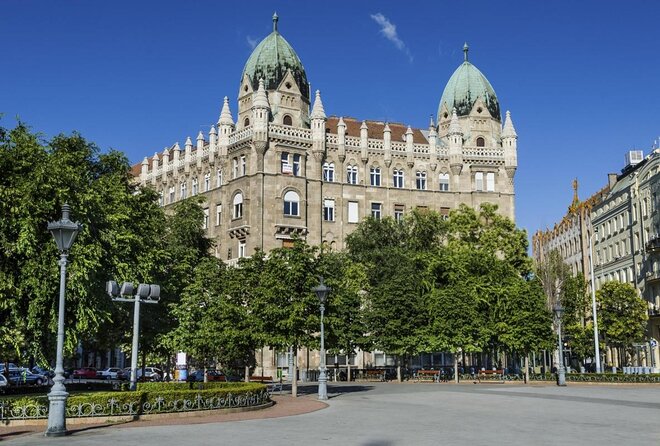
This tour is designed for people who want a strong overview fast, but still want it to feel human. You start at the Hungarian State Opera area (Andrássy út 22) at 9:00 am and finish back there. Along the way, you’ll cross from the grand city center into the Castle District, and you’ll get those Danube views that make Budapest feel instantly photogenic.
The best value here is the mix: monuments, architecture, and food all in the same rhythm. It’s not just a “look and move” march. You stop long enough at key places—often around 10–25 minutes—to actually orient yourself and notice details. And since the group is limited to 20 people, it’s typically easier to keep up than with larger bus crowds.
The “101 things” idea matters in a practical way: you’ll leave with a mental map. By the end, you can point to where Andrássy Avenue sits, understand how the Castle District fits over on Buda, and get why the Danube is the spine of the city.
You can also read our reviews of more tours and experiences in Budapest


What the pace feels like
Some stops are quick (10–15 minutes), while others are longer breaks for views or a sit-down meal. Reviews often describe it as manageable on the ground—terrain isn’t described as extreme—but still long. If you know you need frequent breaks, wear shoes you trust and plan on a slower day afterward.
Heroes’ Square: where Hungary’s story gets staged in stone
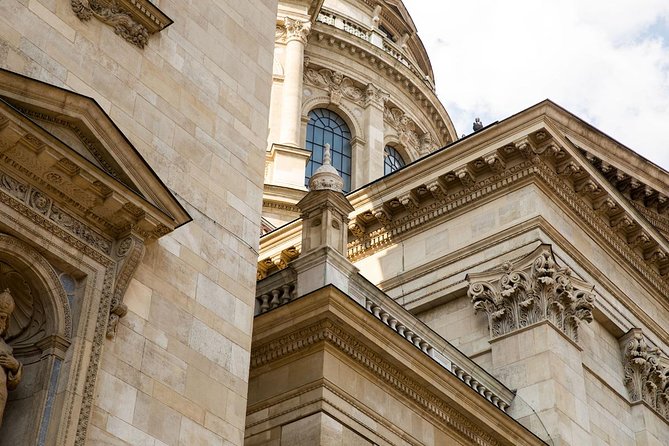
You kick off at Heroes’ Square (Hősök tere), one of Budapest’s biggest visual statements. The main attraction is the statue complex: the Seven chieftains of the Magyars plus other major figures tied to Hungarian national identity. There’s also a memorial stone that many people misname—so it’s worth paying attention to the correct story you’ll hear on the tour.
Even if you only spend about 15 minutes here, this stop sets the tone. It’s not random sightseeing. It’s Hungary using monumental art to tell a timeline in public space. If you like understanding what you’re looking at, this is a great early anchor.
A quick tip
Arrive with your phone ready for a wide-angle shot, but also look up. The scale is what hits first—then the symbolism makes sense.
Széchenyi Baths: the warm reset you’ll remember
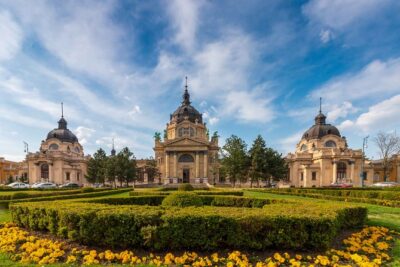
Next comes Széchenyi Medicinal Bath, often the most memorable part of a day like this. You get time here (and entry is listed as free for the stop), and you’ll learn why the place matters beyond “it’s a bath.”
Széchenyi is supplied by two thermal springs with water temperatures around 74°C and 77°C. That heat is the whole point: it’s a medicinal bath tradition in a setting that looks grand and old-school. You don’t have to be a serious spa person to appreciate it. You just need to enjoy the idea of swapping streets and statues for warm water and steam.
You can also read our reviews of more tours and experiences in Budapest



Practical reality check
This stop can feel like a true break—yet it’s still on a timed itinerary. If you tend to take your time in changing areas, build in extra patience. Also remember that bath areas can be slick; comfortable footwear for outside walkways matters.
City Park’s Vajdahunyad Castle: the photo stop with substance
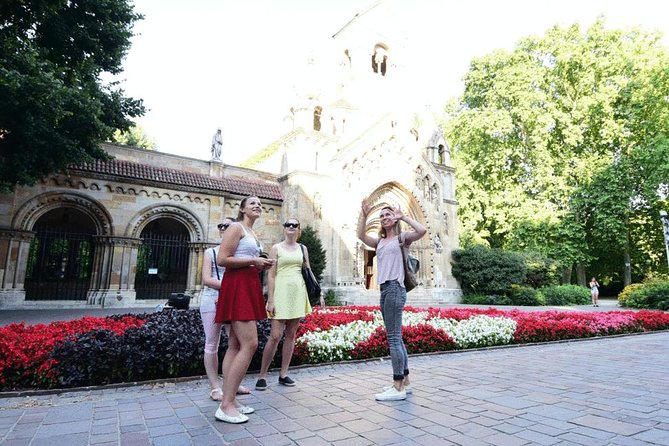
From the baths you head toward Vajdahunyad Castle, located in City Park. The castle you see is tied to the 1896 Millennial Exhibition, created to celebrate 1,000 years of Hungary since the Hungarian Conquest era. That date gives the building extra weight: it’s “historic-looking” on purpose, built to represent the long arc of the country in one carefully staged complex.
Even with only around 15 minutes, the stop works. It’s long enough to walk the area, spot the style, and get your eyes used to Budapest’s mix of eras—then it helps you transition smoothly back into city-center architecture.
Andrássy Avenue: a straight shot through grand architecture
Then you move onto Andrássy Avenue, the boulevard linking Erzsébet Square to Városliget. It dates back to 1872 and is lined with Neo-renaissance mansions and townhouses. The avenue is also a UNESCO World Heritage Site, which you’ll feel immediately once you see how planned and formal it is compared with some older streets.
This is where the tour slows down just enough to let you notice facades rather than just landmarks. The Avenue also becomes a route marker: once you get it, a lot of Budapest starts clicking into place.
A smart detail
Since multiple stops here are clustered, you’ll see how Budapest’s “big statement buildings” sit right in the flow of everyday streets.
Hungarian State Opera House: architecture that looks like it performs
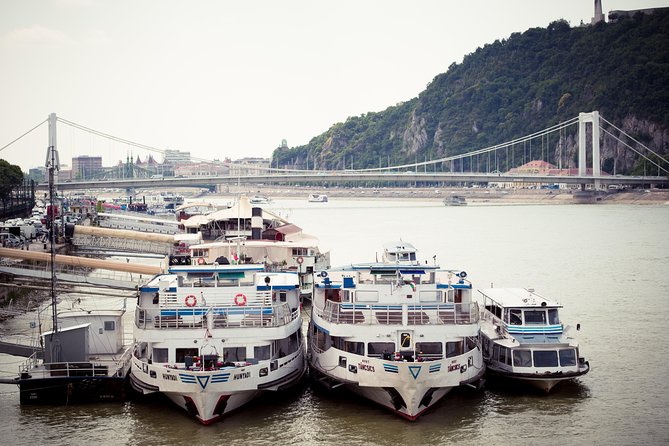
Right on Andrássy út is the Hungarian State Opera House (Magyar Állami Operaház), a neo-renaissance opera house. It was originally known as the Hungarian Royal Opera House, and it was designed by architect Miklós Ybl.
You won’t be treated like this is a museum lecture. The value is that you get a guided lens for the building: what style you’re looking at, why it’s placed where it is, and how it fits the grandeur of the avenue. Entry is listed as free for this stop, so it’s a low-cost way to add real architecture to your day.
St. Stephen’s Basilica: the stop you’ll want to plan around

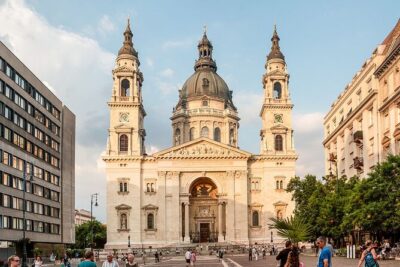
Next is St. Stephen’s Basilica (Szent Istvan Bazilika). The tour includes time for you to take it in (about 15 minutes), but admission is not included.
That matters because a large basilica can be a “quick glance” moment or a “I want to go inside” moment depending on your interests. If you’re the type who likes seeing interiors and religious art, budget extra time for ticketing and entry.
You’ll also hear about the basilica’s connection to Stephen, the first King of Hungary, whose right hand is housed in a reliquary.
Liberty Square and the Parliament approach: big civic Budapest
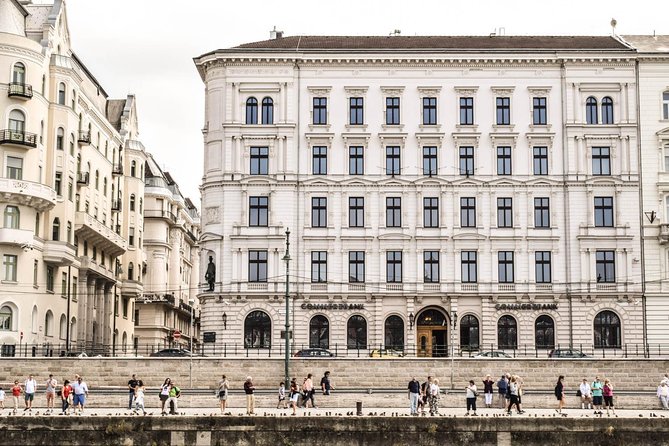
From there you head to Szabadság tér (Liberty Square). This square is a mix of business and residential, and it’s notable for landmarks like the US Embassy on one side and the Hungarian National Bank’s historicist headquarters.
Then you reach the Hungarian Parliament Building, commonly called Országház. Like St. Stephen’s Basilica, admission isn’t included. You’ll still get time to take in the building and soak up the location—this is one of Budapest’s most “wow from outside” structures.
How to decide on tickets
If you want interiors, make your call early. The tour’s schedule is tight, and these stops are marked as not included, so you’ll want to avoid last-minute surprises.
Chain Bridge: the Danube moment you can’t fake
Next comes Széchenyi Chain Bridge (Széchenyi lánchíd), which spans the Danube between Buda and Pest. This bridge is one of the city’s defining visuals, and your time here (about 15 minutes) is exactly enough to understand why the Danube shapes everything.
What I like about this stop is that it’s not just a “bridge selfie.” It’s a transition point: you go from civic monuments and grand avenues into the Castle District and the older fabric of the city.
Great / Central Synagogue: a major landmark outside the usual route
You’ll also pass the Dohány Street Synagogue area, also called the Great Synagogue (Nagy Zsinagoga). Admission is not included for this stop, so again: you can focus on what you see from outside or plan for tickets if you want to go in.
This synagogue is one of Budapest’s most important historic buildings, so even an exterior stop adds important context to the city’s cultural story.
Matthias Church and Fisherman’s Bastion: the Buda Castle view machine
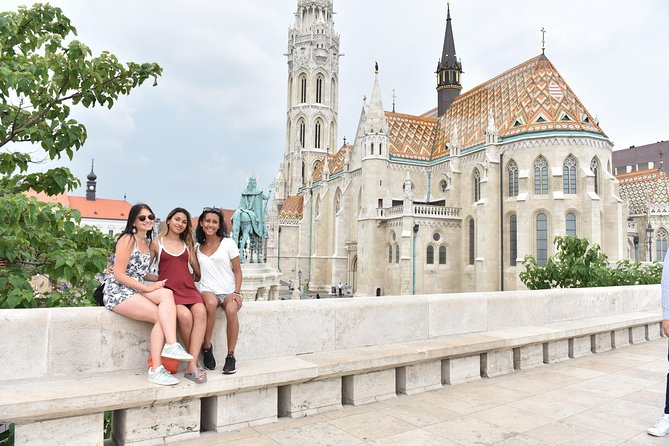
On the Buda side, you’ll spend time at Matthias Church (Mátyás-templom). Admission is not included, but you’ll get a solid look at the church in the setting of Holy Trinity Square, near the Fisherman’s Bastion area. Matthias Church is often called the Assumption Church of Buda Castle, and it’s one of those places where the architecture feels like it belongs at the center of a story.
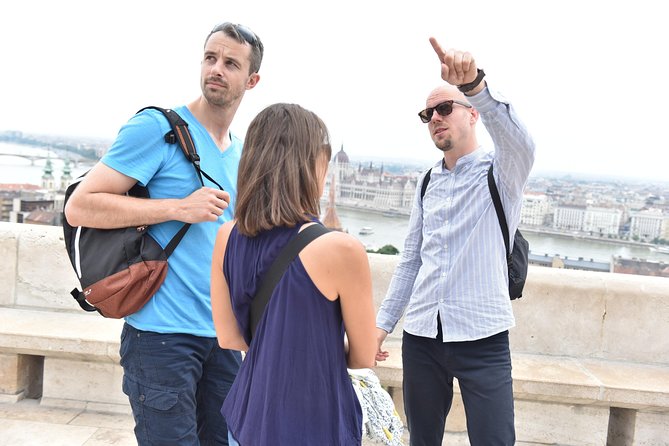
Then you reach Fisherman’s Bastion (Halászbástya). This is your big panorama payoff. Entry is listed as free, and you’ll use the terraces for the kind of view people come to Budapest for: the Danube, the Parliament area, and the spread of both sides of the river.
With about 15 minutes here, you should be able to get a couple of angles without rushing. Just don’t expect a long sit-down. It’s a viewpoint stop—so prioritize photos early, then enjoy the view with your own eyes afterward.
Buda Castle: the big complex, explained simply
After the views, you’ll move into Buda Castle (Budavári Palota). The current Baroque palace bulk is built between 1749 and 1769, but the site traces back much earlier, with major completion in 1265.
This stop gives you context for why the Castle District feels like more than one building. It’s a whole complex that’s been remade across centuries. With about 20 minutes, you won’t “tour the palace” in a full museum sense, but you can learn the logic of the space—and that helps when you decide what to do on your own later.
Central Market Hall: food grounding after a monument-heavy day
To round out the experience, you’ll visit Central Market Hall (Nagyvásárcsarnok), the largest and oldest indoor market in Budapest. This is one of the best times to connect Budapest’s big visual identity to everyday life.
The idea for the market hall came from the city’s first mayor, Károly Kamermayer, and he even participated in the opening ceremony on February 15, 1897. It’s the kind of fact that makes a market feel anchored in time, not just “a place to snack.”
You’ll also have already had lunch on the tour, so the market stop is a chance to look, taste thoughtfully, and buy something if you want. Entry is listed as free for this stop.
Lunch, dessert, and drinks: the value part people actually feel
This is a food-forward tour, and it matters. Lunch is included, along with a traditional Hungarian dessert and alcoholic beverages. The key detail for you: minimum drinking age is 18, so alcohol isn’t for everyone.
In practical terms, included meals lower the stress of a long day. You don’t have to gamble on finding a good place between monuments. And you’re more likely to try something you’d miss if you were winging it.
The guides can also steer you toward what’s worth ordering and how Hungarian cuisine varies across the day. Names like Fanny and others have been praised for organizing a memorable meal and keeping it tied to local flavor rather than just serving food for convenience.
Price and value: what $204.81 buys you in real life
At about $204.81 per person for roughly 7 hours 30 minutes, this tour isn’t “cheap.” But you’re paying for a tight mix of guided city coverage plus included food and transit support.
Here’s what you get that’s hard to replicate on your own without time costs:
- A structured day with timed stops across both banks of Budapest
- Entry included for select sights (for example Heroes’ Square, Széchenyi Baths, Vajdahunyad Castle, Chain Bridge, Fisherman’s Bastion, Buda Castle, and Central Market Hall)
- Food included: lunch + traditional dessert + alcoholic beverages
- A metro pass and a mobile ticket to keep travel smoother
- A small group model (max 20) that makes Q&A realistic
Where the value can dip for some people: several major buildings have admission not included (St. Stephen’s Basilica, Parliament, Great Synagogue, and Matthias Church). If you plan to go inside every single one, you may spend extra on tickets. If your priority is exterior views and orientation, the cost aligns well with what the schedule delivers.
Transit and timing: the part that makes or breaks the day
The tour includes a metro pass, and guides have been praised for helping people figure out transit basics and using metro and buses with confidence. That’s important in Budapest because learning the transit flow can save a lot of wasted time.
You’ll also want to accept the schedule reality: many stops are short. This is great for overview. It’s less great if you want a slow museum day. Think of it as “get oriented, see the highlights, then return later for deeper tickets if you want.”
The day runs in all weather conditions, so dress appropriately. Budapest can swing from sunny to rainy fast, and you’ll still be walking.
Who should book this tour
This tour fits you best if:
- You want a first-time Budapest day that covers both sides of the Danube
- You care about architecture and want the why behind what you’re seeing
- You like the idea of included lunch and dessert so your day stays smooth
- You can handle a long walking block without needing constant breaks
You may want to choose something else if:
- You need lots of indoor time or very long stops at interiors
- You’re not comfortable adding separate tickets for Parliament, basilica, synagogue, or Matthias Church
- You have mobility concerns beyond moderate physical fitness needs
Should you book 101 things in Budapest with lunch and metro pass?
I’d book it if you want a guided “map of Budapest” day with food included and a route that naturally builds understanding. The strongest selling points are the Széchenyi Baths stop, the Castle District viewpoints, and the fact that lunch + dessert + drinks are part of the package, so you don’t lose your momentum hunting for meals.
If your dream day is mostly inside-ticket attractions, or you hate long walking, you might feel the schedule pressure. But if you’re the kind of traveler who wants to see a lot, ask questions, and then pick a few favorites for a return trip, this is a smart way to spend your first full day.
FAQ
How long is the Budapest tour?
It runs for about 7 hours 30 minutes.
Where do I meet, and where does the tour end?
You meet at the Hungarian State Opera in Budapest (Andrássy út 22, 1061 Hungary). The tour ends back at the meeting point.
Is the tour in English?
Yes, it’s offered in English.
What’s included in the price?
The tour includes lunch, a traditional Hungarian dessert, alcoholic beverages, and a metro pass. It’s also described as having a mobile ticket.
Do I need to buy tickets for major churches and Parliament?
For St. Stephen’s Basilica, the Hungarian Parliament Building, the Great Synagogue, and Matthias Church, the admission is listed as not included. Other stops list free admission for that visit.
Is there a minimum age for alcohol?
Yes. The minimum drinking age is 18 years.
Can I cancel for a refund?
Yes. Free cancellation is available up to 24 hours before the start time for a full refund.