REVIEW · BUDAPEST
Transylvania Tour from Budapest to Bucharest: 4 days
Book on Viator →Operated by One Excellence Tours · Bookable on Viator
Four days, one smooth route, and castle days. This Budapest-to-Bucharest Transylvania trip is built for no backtracking, with a small group that keeps the pace human. I like that you get breakfast plus a private guide, so the trip feels organized without feeling rushed.
My favorite part is how much ground you cover without driving yourself—Arad, Timisoara, Corvin Castle, Alba Iulia, Sibiu, Sighisoara, Brasov, Bran, and Peles all get connected into a single story. You also get live commentary on the way, so the scenery comes with context instead of silence.
One thing to consider: castle entrance fees aren’t included, and Peles Castle timing can change depending on the day it’s closed. Budget extra for tickets and plan for a more flexible Day 4 if Peles is limited.
In This Review
- Key highlights you’ll actually feel on the ground
- Budapest to Bucharest in Four Days: The Real Value of No Backtracking
- The Small-Group Advantage: How You Stay Flexible on a Tight Schedule
- Day 1: Arad Town Stroll and Timisoara’s Architecture After the Border
- Day 2: Corvin Castle Gothic Drama and Alba Iulia’s 1918 Turning Point
- Day 3: Sighisoara’s Fairytale Streets and Brasov’s Black Church Day
- Day 4: Bran Castle Inside the Vlad Story, Plus Sinaia and Peles
- Hotels and Breakfast: Where Comfort Saves Your Energy
- Transportation, Timing, and Ticket Realities You Should Plan For
- Price and Value at $1,685.76: What You’re Really Paying For
- Who This Tour Fits Best (and Who Should Skip It)
- Should You Book This Transylvania Tour from Budapest to Bucharest?
- FAQ
- What cities does the tour include from start to finish?
- How long is the Transylvania tour?
- What language is the tour offered in?
- How big is the group?
- Are meals included?
- Are entrance fees included?
- Does the tour include hotel stays?
- What about Peles Castle if it is closed?
- Where do you meet on day 1?
- Where does the tour end, and how does drop-off work?
Key highlights you’ll actually feel on the ground
- Small-group pace that keeps time for guided walks and breathing room between stops
- No backtracking: you travel forward from Budapest to Bucharest in four days
- Guides who manage logistics so you spend less time stuck in lines and more time seeing
- Castle lineup: Corvin, Bran, and Peles—plus the medieval towns that make Dracula culture make sense
- Hotel locations near old town areas with breakfast included to start your mornings right
Budapest to Bucharest in Four Days: The Real Value of No Backtracking
This is the kind of route that makes sense: you start in Budapest and end in Bucharest, so the trip feels linear. You’re not doing the mental gymnastics of turning around, repeating roads, or losing half a day to transfers back and forth.
In four days, that matters. You’ll cross into Romania via Arad, then keep moving through central Transylvania toward the south, finishing with Sinaia and Bucharest. The benefit is simple: you spend your limited sightseeing hours looking at churches, gates, town squares, and castles—rather than watching your schedule unwind.
Also, the tour is set up for a small group. Even though the booking details list a maximum of 8 travelers in one place and the description says capped at 6 in another, the point stays the same: you’re not in a bus swarm. That means questions get answered, and the guide can adjust when a group moves slowly (or suddenly wants one more photo).
You can also read our reviews of more tours and experiences in Budapest.



The Small-Group Advantage: How You Stay Flexible on a Tight Schedule
A group this size changes everything about how fast you move through sights. When you only have a handful of people, your guide can keep the day flowing without herding everyone like luggage.
In the same breath, it makes your guided time feel more personal. Past guests specifically praised guides such as Marius, Alex, Andrei, and Emmanuel for taking care of the group and moving quickly in and out of castles and churches once tickets were sorted. You don’t have to be the type who plans like an operations manager—your guide helps handle entrance tickets, so you can focus on what you’re actually seeing.
You should still expect walking. Some stops are short town strolls; others are classic castle-and-old-streets walking days. If you have moderate mobility limits, it’s wise to wear supportive shoes and go in with an easy-go mindset.
Day 1: Arad Town Stroll and Timisoara’s Architecture After the Border
Day 1 is where the trip turns from travel into story. You meet your guide in Budapest and head toward Romania, crossing the border at Arad. After the drive, you get a short walking orientation in Arad that helps you understand Transylvania’s setting beyond Dracula posters.
In Arad, your guided walk is built around standout architecture and a “read the city” approach. You’ll see major landmarks such as City Hall Palace, the Palace of Culture, and churches that reflect different styles—like the Red Church (neo-gothic and secessionist influence) and the large domed Roman Catholic Church. You may also pass sights like the State Theatre. It’s a quick start, but it’s a smart one because it trains your eye for what comes next.
Then, in the afternoon, you reach Timișoara, known for its layered influence. The city was named European Capital of Culture in 2019, and your stop centers on the Historical Center and its architecture, including strong Austro-Hungarian presence and Turkish influence. For your first day, this is a good balance: not too much castle fatigue, but enough atmosphere to feel like you arrived somewhere specific.
Practical note: lunch isn’t included. If time allows, you’ll want to grab something local near your route rather than searching far away. Think simple: pastries, sandwiches, or a set lunch where you can eat and return to the group without stress.
Day 2: Corvin Castle Gothic Drama and Alba Iulia’s 1918 Turning Point
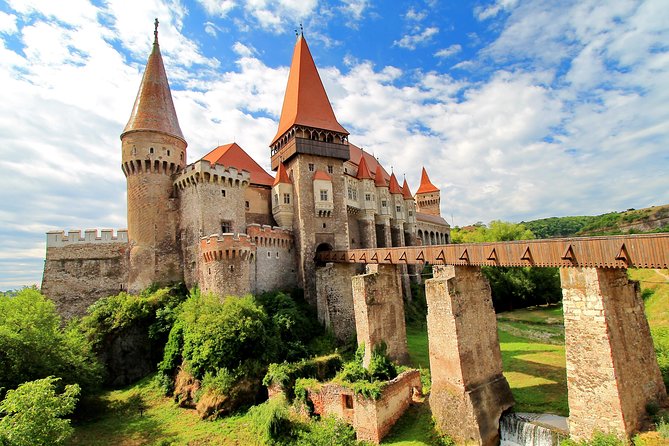
Day 2 is where you hit your first big castle moment: Corvin Castle (Castelul Corvinilor). In the morning after breakfast, your guide brings you there for a guided visit. Corvin is famous for its gothic look, and it’s the kind of place where the walls feel like they were built to hold secrets. You’ll spend about an hour there, and entrance is not included, so plan to buy tickets through your guide.
Here’s why this stop works for most travelers: Corvin isn’t only about atmosphere. A good guided visit turns the castle into context—who built it, how it functioned, and why it looks the way it does. Without that framing, you’d just see a cool stone building. With a guide, it starts to feel like a real location tied to real people.
Then you head to Alba Iulia. This is where the tour shifts from castle drama to national history. Alba Iulia is tied to the unification treaty signed in 1918, which your guide will connect to Romania’s modern story. You’ll stroll the Old Town area for about an hour, focusing on its medieval and historic character.
One consideration: Alba Iulia is more “walk and observe” than “one star building.” If you like cities where you read the street plan and notice how the old town is structured, you’ll probably enjoy it. If you want constant big-ticket sights, you may find yourself wishing for just one extra landmark stop. Still, it’s a useful pivot before the more fairy-tale visuals later.
In the afternoon you continue to Sibiu and get a walking tour in the Old Town. Sibiu is smaller than some of the bigger Romanian cities, but it earned European Capital of Culture status in 2007. Your time is short—around 30 minutes—but it’s enough to pick up the layout and the vibe, which pays off when you return to it in your imagination later.
Day 3: Sighisoara’s Fairytale Streets and Brasov’s Black Church Day
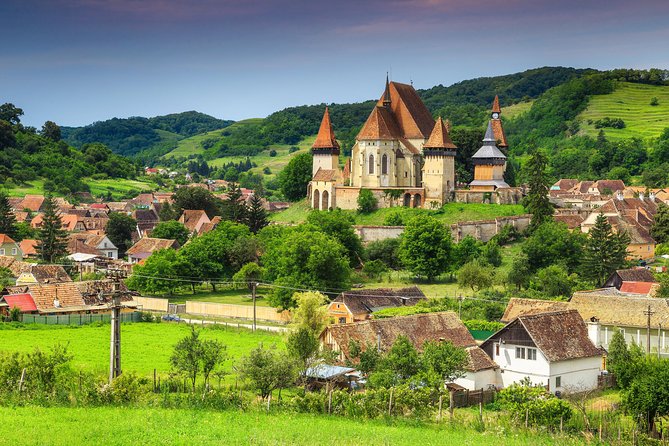
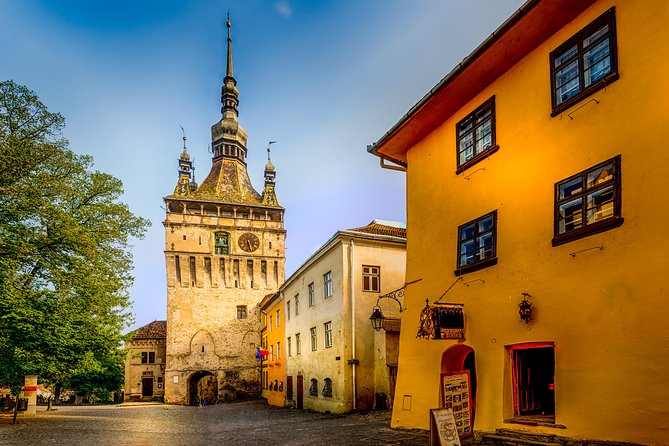
Day 3 starts with a town that really does look like a storybook from a distance: Sighișoara. You’ll take a guided walk in the Centrul Istoric (historic center) for about an hour. The tour connects the place to Vlad Dracula legends, noting he was born in 1431. Even if you’re not chasing horror lore, Sighișoara is worth it for the medieval street pattern and the way the town feels compact and walkable.
A good walking tour here matters because the magic isn’t only in one view—it’s in how the streets funnel you toward the next point. With a guide, you get the context behind what you see, so you’re not left guessing why one building looks different from the one two corners away.
After that, you travel on to Brașov. This is one of the most popular stops for Romanian travelers, and your time includes a guided look at the Old Town. The big targets are the Black Church and the main city gates. If you like city sightseeing that feels immediate—squares, lanes, and the sense of entering the old city core—Brașov delivers.
The tour gives you about 30 minutes on this walking segment. That’s short, so prioritize what matters to you: if Black Church is your priority, plan to spend a little extra time there when your guide suggests it. If gates and street structure are your thing, keep your camera ready at every turn because the old town layout often creates dramatic sightlines.
This is also a good day to mentally prep for Bran and Peles on Day 4. Brașov acts like a bridge: it brings you into the region’s cultural identity before the Dracula-themed stops.





Day 4: Bran Castle Inside the Vlad Story, Plus Sinaia and Peles
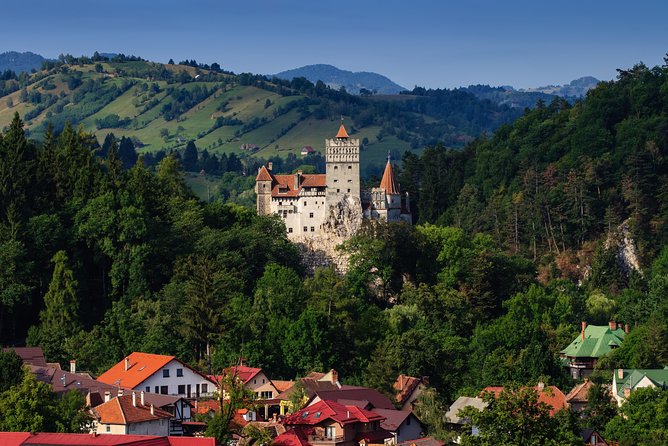
Day 4 is the classic “Dracula and royal Romania” finale. You start early with Bran Castle, also known as Dracula’s Castle. You’ll visit the inside of this 14th-century castle for about two hours, and entrance fees aren’t included.
Why Bran is such a strong closing stop on this specific tour: it’s more than a name. A guided visit helps you separate the legends from the historical setting, and you end up with a clearer idea of how the Vlad story became attached to places in the popular imagination. If you like being able to explain what you just saw, this is your day.
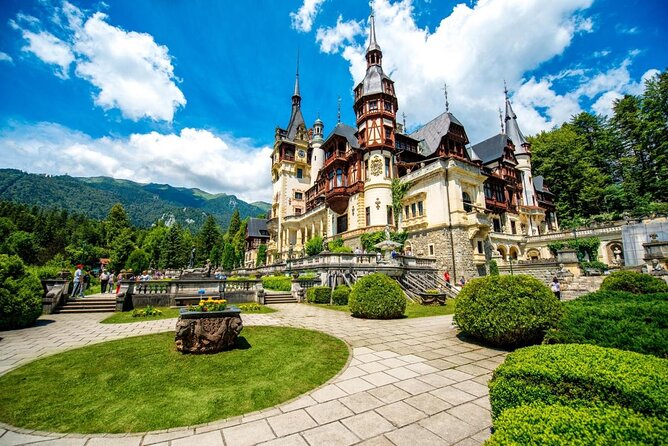
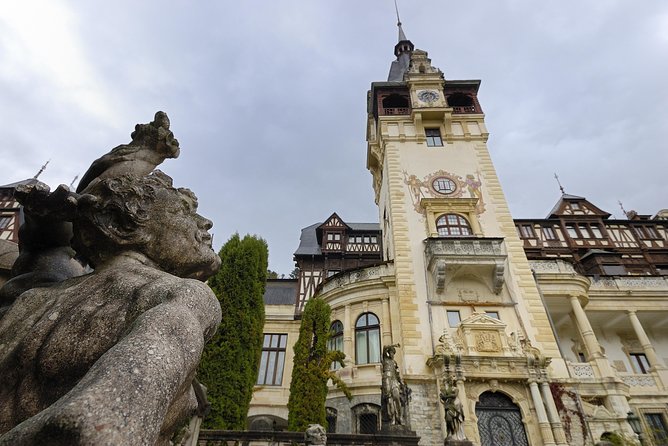
After Bran, you head toward Sinaia for Peles Castle, then on to Bucharest to end the service. Peles is a 19th-century royal castle built by Romania’s royal family, and it’s preserved in the way it was over a century ago. Your time includes visiting in the afternoon, but there’s an important catch: Peles is closed on Mondays year-round, and on Tuesdays from 1 August 2024 to 1 May 2025. If your date falls in that window, you’ll likely see Peles from the outside and spend more time at Bran and Brașov instead (subject to castle policy).
So treat Day 4 as plan-with-flexibility territory. If you’re traveling during those closure periods, don’t panic. The itinerary adjustment is designed to protect your overall castle experience.
Then you arrive in Bucharest and the tour ends. Drop-off is made at a location of your choice, which is handy if you’re staying near a specific neighborhood.
Hotels and Breakfast: Where Comfort Saves Your Energy
This tour includes 3–4 star accommodation and breakfast each morning. That sounds routine until you remember what you’re doing: driving between towns, walking old streets, and then doing castle visits. Breakfast included means you don’t start the day hunting for a meal while everyone else is already on the move.
Guests also praised the hotel selection as comfortable and well located, often near old town areas like Timișoara, Sibiu, and Brașov. That’s not just a nice detail. Staying near where the action is means your free time is more useful. You can step out for a quick stroll, find a nearby café, or do a relaxed dinner without crossing half a city.
One more practical perk: the pace leaves evenings open enough for you to try local food and even something like craft beer, which has been specifically mentioned in guest feedback. That kind of freedom matters after long sightseeing days.
Transportation, Timing, and Ticket Realities You Should Plan For
Your day-to-day movement is handled with a group vehicle and live commentary on board. In the feedback, guests noted the vehicles were modern and the guides could get everyone moving quickly once tickets were in hand.
Still, not everything is included. Entrance fees for sights like Corvin Castle and Bran Castle are not included, and Peles Castle is also not included in the entry fees list. Your guide assists with purchasing entrance tickets, which is a big deal if you don’t want to deal with payment lines or figuring out where to go.
Also note the tour includes “live commentary on board,” but food is not included unless specified. You’ll want a small daily buffer for lunch and snacks, especially on days where you’re doing a morning castle and an afternoon town stop.
One more line item you should check before you arrive: there’s an entry listed for Liberty Bridge as not included. It isn’t clearly attached to a specific stop in the provided schedule, so treat it as a “possible add-on” and confirm with your guide if it comes up.
Price and Value at $1,685.76: What You’re Really Paying For
At $1,685.76 per person for about four days, this isn’t a cheap “budget bus” trip. The value comes from how the package is put together: professional guiding, breakfast, and 3–4 star hotels, plus the fact you avoid the hassle of coordinating intercity driving on your own.
If you were to rent a car, you’d pay for vehicle rental, fuel, parking, and time lost dealing with navigation and entry logistics. Even when people plan to self-drive, the guidance here is that a guided route makes the experience smoother and more informative. Guests specifically noted they saw and learned more than they would have on their own, and they appreciated that the guide handled the fastest route into and out of sights.
It’s also a value play because Transylvania logistics are part of the experience. You’re moving through several towns with different vibes—Arad and Timișoara’s architecture, Sibiu’s Old Town feel, Sighișoara’s medieval streets, and then Bran and Peles. A good guide turns that sequence into a story you can remember.
You’ll still pay extra for entrances and food, so go in with a realistic mindset. If you want low-friction comfort and guided context across multiple countries and towns, the price starts to feel more reasonable.
Who This Tour Fits Best (and Who Should Skip It)
This tour fits you if you want a guided Transylvania overview without the stress of renting a car or building a route from scratch. It’s a strong match for couples, small groups, and solo travelers who enjoy walking, old towns, and castle interiors.
You should consider alternatives if you’re the type who wants total independence, long independent free time, or you strongly dislike guided pacing. The days are packed enough that you’ll spend meaningful time on the move, and you’ll trade some flexibility for the structure that keeps everything efficient.
Also, while the tour says moderate physical fitness, it’s best for people who can handle city sidewalks and castle stairs without planning for a lot of long breaks.
Should You Book This Transylvania Tour from Budapest to Bucharest?
I think it’s a good booking if your priority is sequence + guidance. The “no backtracking” route matters in four days, and the combination of Arad and Timișoara, then castles and medieval towns, gives you a rounded sense of Transylvania rather than just one Dracula-day.
Book it if you:
- want small-group pacing and a guide who keeps things moving
- prefer guided context over wandering and guessing
- value breakfast and good hotel locations near old town areas
Consider waiting or clarifying before you book if:
- your travel dates may include Peles closure days, and you’re counting on being inside
- you have strong sensitivities about entrance fees, since ticket costs aren’t included
- you need clear pickup/drop-off confirmation, because the details list pickup/drop-off in one place but also note they do not provide it—ask the operator before you go
If you want Transylvania with less planning brainpower, this is the kind of tour that does the heavy lifting and leaves you free to enjoy the views, the towns, and the castles.
FAQ
What cities does the tour include from start to finish?
The tour starts in Budapest, crosses into Romania at Arad, and includes stops through Arad, Timișoara, Corvin Castle area, Alba Iulia, Sibiu, Sighișoara, Brașov, Bran Castle, Sinaia, and then ends in Bucharest.
How long is the Transylvania tour?
It’s listed as approximately 4 days.
What language is the tour offered in?
The tour is offered in English.
How big is the group?
It’s described as a small-group tour capped at only 6 travelers, and it also states a maximum of 8 travelers.
Are meals included?
Breakfast is included, but food and drinks are not included unless specified.
Are entrance fees included?
No. Entrance fees are not included, and your guide can help you purchase tickets.
Does the tour include hotel stays?
Yes. It includes accommodation in 3–4 star hotels, and breakfast is included each morning.
What about Peles Castle if it is closed?
Peles Castle is closed on Mondays year-round and on Tuesdays from 1 August 2024 to 1 May 2025. If that affects your date, you may see it from the outside and spend more time at Bran Castle and Brașov, depending on castle policy.
Where do you meet on day 1?
The meeting point is Budapest, with a start time of 9:00 am. The tour sets the daily departure point and time.
Where does the tour end, and how does drop-off work?
The tour ends in Bucharest, and drop-off is made at a location of your choice.