REVIEW · BUDAPEST
Life Under Communism with House of Terror or Statue Park
Book on GetYourGuide →Operated by FUNGARIAN · Bookable on GetYourGuide
Budapest under communism still feels close. What makes Life Under Communism work is the way everyday life turns into a story you can picture—starting at Bambi Eszpresszó. I especially like the private, interactive format (dialogue is part of the program), and I also love that the tour begins at a meeting place tied to the 1980s. The one thing to weigh is the pace: it’s a 3-hour walk-and-talk style experience, and it’s not suitable for people with mobility impairments.
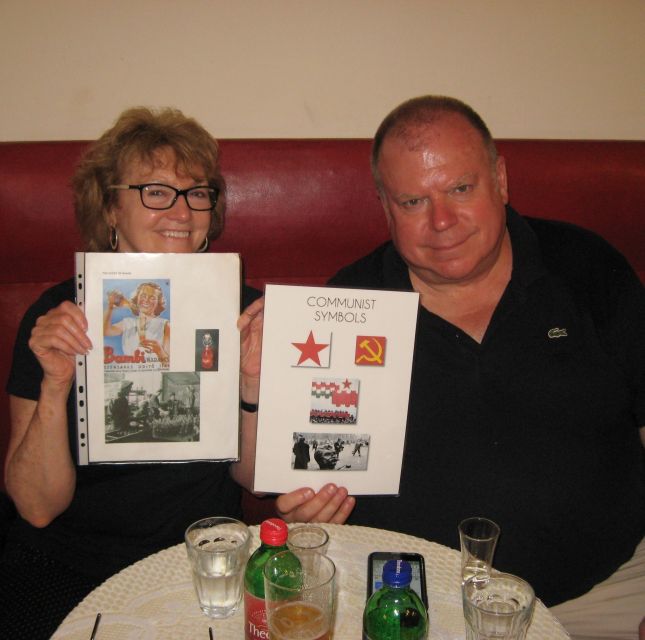
You’ll meet Annamaria and Miklós, and they run the show as a personal presentation with printed materials plus notebook-and-pen handouts. You get pickup at your accommodation in Budapest, then you head together to the first stop. Expect the guide to tailor the flow to your interests and your group’s knowledge level, which makes it far more than a set lecture.
In This Review
- Key things I’d circle before you go
- Starting at Bambi Eszpresszó: the 1980s mood-setter
- How the tour works: a private, interactive mini-lecture
- Everyday life under communism: what you’ll learn (and why it clicks)
- Budapest beyond the postcard: walk time plus public transit
- House of Terror or Statue Park: two visual paths through the same era
- Price and value: $282 per group up to 5 people
- Who should book this communism tour
- What to bring and how to get the most from 3 hours
- Quick practical FAQ
- FAQ
- How long is the tour?
- What does it cost, and how big is the group?
- Where does the tour start?
- Do I get picked up in Budapest?
- What languages are available?
- What’s included in the tour?
- Is transportation or food included?
- Is it accessible for people with mobility impairments?
- Should you book this communism tour?
Key things I’d circle before you go
- Bambi Eszpresszó start: you begin in a place that feels like a real 1980s meeting point.
- Private group, flexible pacing: the guide can shape the tour around what you want to understand.
- Interactive presentation plus take-home materials: you’ll get printed info, notebooks, and pens.
- Annamaria and Miklós at the wheel: the program is delivered by these two guides.
- Public transportation time built in: you’ll get a chance to ride and see parts of Budapest you might miss.
- Two possible “big visual” stops: the experience pairs with House of Terror or Statue Park.
Starting at Bambi Eszpresszó: the 1980s mood-setter
Most history tours start with buildings. This one starts with a place where people actually met. You begin at Bambi Eszpresszó, a symbolic meeting spot from the 1980s, and that choice matters more than it sounds.
Why? Because it frames the whole visit. The goal isn’t just politics. It’s how ordinary people used time, space, and conversation under a communist system. Starting at a café-style landmark helps you drop into the right mindset fast: you’re not just reading about the past—you’re learning how daily life felt while it was happening.
One practical note: plan to wear comfortable shoes. This is a 3-hour experience with walking and changing locations, so treat it like an active cultural tour, not a sit-down show the whole time.
You can also read our reviews of more tours and experiences in Budapest.



How the tour works: a private, interactive mini-lecture

This isn’t a crowded group shuffle. It’s a private group experience, with a duration of 3 hours, and the guide leads a personal presentation you can ask questions about.
You’ll also get some physical goodies: printed materials, plus notebooks and pens. That small detail changes how you remember the tour. Instead of trying to catch everything by brain alone, you can jot key ideas the moment they land—especially helpful when you’re learning how the communist system worked on multiple levels.
The guides (again, Annamaria and Miklós) are set up for dialogue. In practice, that means you’re not stuck watching a monologue. If your group wants to focus more on day-to-day routines—work, shortages, rules, relationships—the guide can steer the conversation there.
Also, you’ll have options in the language lineup: the tour is offered in English, German, and French. If you’re traveling with mixed language needs, this can be a lifesaver.
Everyday life under communism: what you’ll learn (and why it clicks)
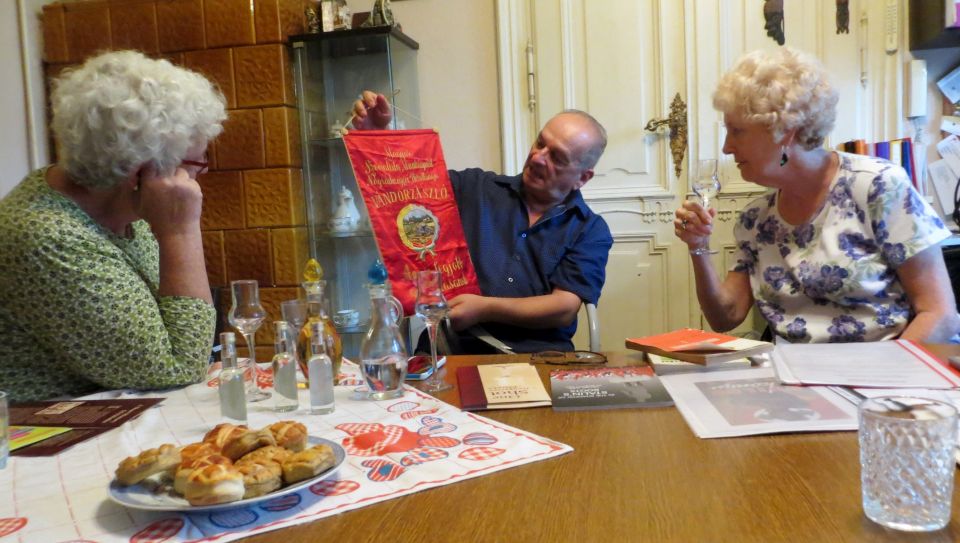
The headline promise is clear: you learn about how the communist system worked and what everyday life in Budapest looked like from the 1960s through the late 1980s. The smart part is that the tour uses daily reality as the lens.
Instead of treating communism as an abstract ideology, you’ll get it as lived experience. That typically includes themes like how authority shows up in ordinary decisions, how people cope with limits, and how social expectations shape what you can say—and when.
A standout feature is the contrast built into the program. You get the historical explanation, then you see how the changes of roughly the past fifty years connect back to those communist-era years. The result is less “memorize dates” and more “understand cause and effect.”
You should also expect a human angle. The guides can share personal context from the era, which is exactly what turns a lecture into something you feel in your bones.
Budapest beyond the postcard: walk time plus public transit
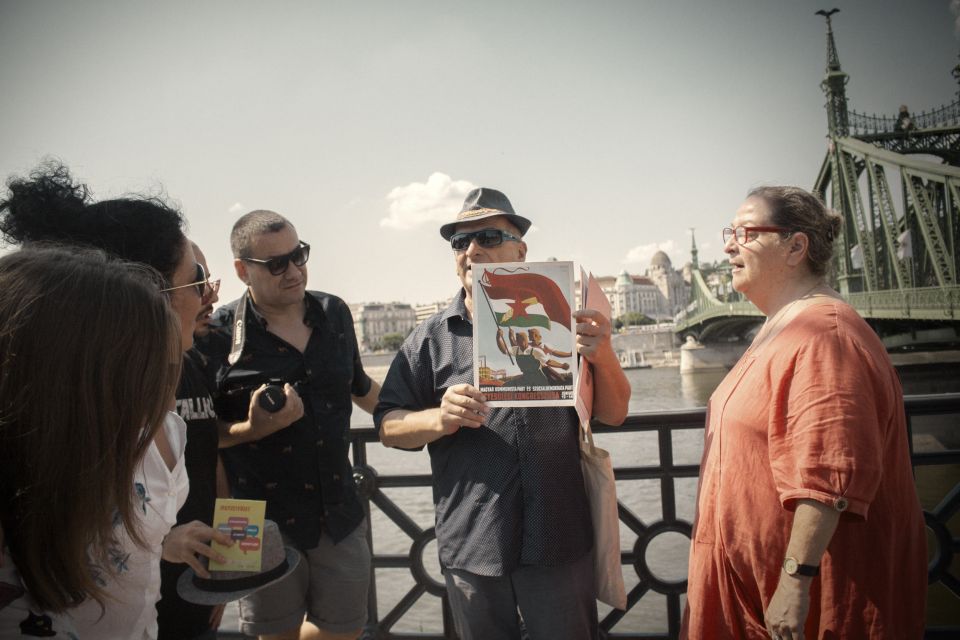
One reason this tour feels different is that it doesn’t rely only on museum-style stops. You also get real movement through the city.
Your guide meets you at your accommodation in Budapest, then you go together to the first stop. From there, the experience includes a chance to ride the public transportation system. That’s valuable for two reasons:
- It’s a practical way to see how the city functions.
- It lets the guide explain everyday geography—routes, neighborhoods, and how people pass through the city.
You’ll also see parts of Budapest you might otherwise miss, not because the guide is chasing novelty, but because the route follows the story they’re telling. It’s the kind of tour where you’ll finish with better orientation—plus a few “I noticed that” moments for your next day of wandering.
Since transportation isn’t included, bring a little budget sense. You may need to buy or validate transit tickets as directed by the guide.
House of Terror or Statue Park: two visual paths through the same era
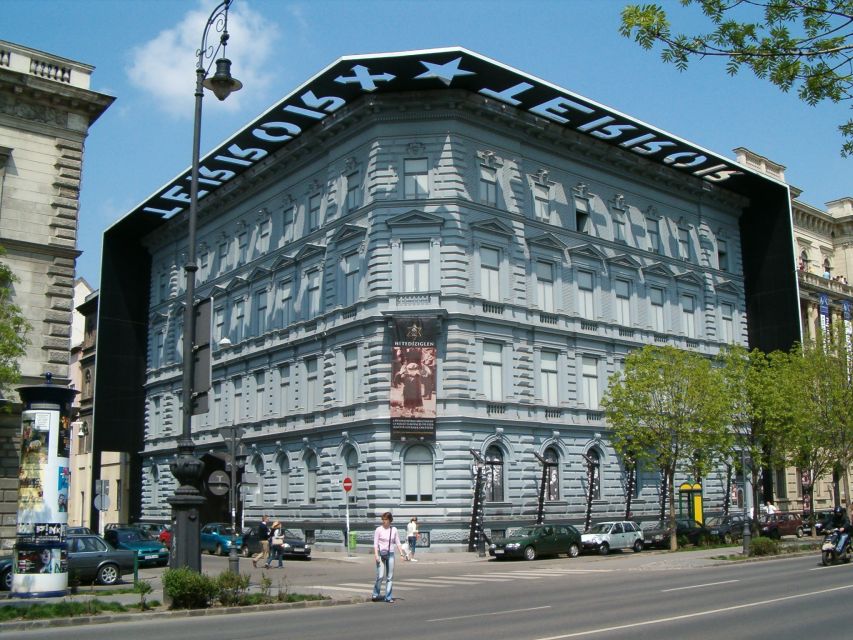
The experience is titled with two options: House of Terror or Statue Park. That signals the tour aims to give you both historical weight and striking visuals—without forcing you into one single approach.
Here’s how to think about it so you can choose wisely:
- House of Terror (indoors, museum-memorial feel): best if you want a heavier, more direct confrontation with the machinery of political terror and repression. It tends to support a more “what happened and why it matters” style.
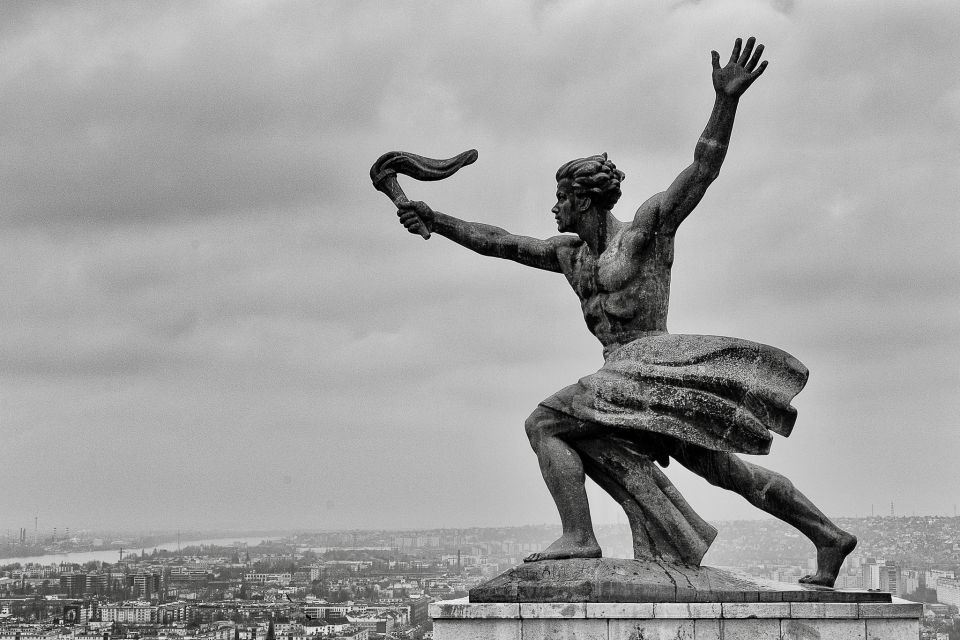
- Statue Park (outdoors, open-air feel): best if you want a visual, walkable way to see how ideology was displayed in public space. It often helps the story land through images and atmosphere rather than documents.
Either way, the tour’s core stays the same: you’re learning the everyday system behind the headlines. The “big stop” you choose just changes the flavor of how the history sticks.
Try to match the stop with your temperament. If you prefer reflective, quiet learning, go for the more solemn museum approach. If you like walking and spotting symbols in real space, Statue Park will likely feel more natural.





Price and value: $282 per group up to 5 people
This is a private tour priced at $282 per group (up to 5) for 3 hours. That sounds like a lot until you do the math and compare it to what you’d pay for a similar private guide elsewhere.
If your group fills to 5, the cost works out to about $56 per person. Even with fewer people, it’s often still good value because you’re not just paying for a guide—you’re paying for:
- a tailored experience for your group,
- pickup from your accommodation,
- an interactive presentation with materials,
- and a guided route that includes public transportation time and specific historical stops.
One more value point: you’re getting a guided experience that’s built around understanding everyday life. That’s the kind of theme that usually costs more than a standard “top sights” tour, because it takes skill to make it feel clear, balanced, and personal.
Who should book this communism tour
I’d book this if you fit one of these boxes:
- You’re a history fan, but you want lived context, not only dates and laws.
- You like interactive tours where you can ask questions and get real dialogue.
- You want an Istanbul-style “side streets matter” effect—meaning you care about seeing how people move through the city, not just taking photos.
- You enjoy guided pacing rather than building your own route puzzle.
It’s also a strong option for couples or small groups who want something more thoughtful than a general walking tour. The private group format makes it easier to ask about what you’re most curious about.
If you have mobility limitations, take note: the tour is not suitable for people with mobility impairments. With a walking-heavy structure, it’s better to choose a different format.
What to bring and how to get the most from 3 hours
Bring the basics so your comfort doesn’t steal your attention:
- Comfortable shoes
- Weather-appropriate clothing
- Comfortable clothes
Since the tour runs for 3 hours, you’ll also feel the benefit of dressing like you plan to be out and moving. If it’s cold or rainy, layer up; if it’s warm, keep breathable options ready.
One small planning tip: if you have specific interests—work life, propaganda, daily routines, the practical “how it worked”—tell the guide ahead of time. The program is designed to adapt as much as it can.
Quick practical FAQ
FAQ
How long is the tour?
It lasts 3 hours.
What does it cost, and how big is the group?
The price is $282 per group up to 5 people.
Where does the tour start?
It starts at Bambi Eszpresszó.
Do I get picked up in Budapest?
Yes. Your guide meets you at your accommodation in Budapest, then you go to the first stop together. You should inform the local partner where you’d like pickup.
What languages are available?
The live guide is available in English, German, and French.
What’s included in the tour?
You’ll get an interactive, personal presentation, plus some printed materials, notebooks, and pens.
Is transportation or food included?
Food and drinks are not included, and transportation is listed as not included.
Is it accessible for people with mobility impairments?
No. It is not suitable for people with mobility impairments.
Should you book this communism tour?
If your goal is to understand communism as real life—rather than just political history—this is an excellent choice. The private, interactive format with Annamaria and Miklós, the start at Bambi Eszpresszó, and the built-in chance to ride public transportation add up to a tour that feels grounded in daily reality.
Book it if you want a guided, human explanation of Budapest from the 1960s to the late 1980s, with a clear path through two major visual options (House of Terror or Statue Park). Skip it if mobility limits make walking hard for you. Otherwise, this is the kind of tour that leaves you with a clearer mental map of the past—and how it still shapes the city today.