REVIEW · BUDAPEST
Café Wandering: An Excursion through Budapest’s Belle Epoque
Book on GetYourGuide →Operated by insightcities.com · Bookable on GetYourGuide
Budapest’s cafés turn into classrooms. This 3-hour walk mixes 19th–early 20th century architecture with café-house culture, so you’re not just looking—you’re learning how the city thought, talked, and entertained. I especially loved the chance to study Café Gerbeaud’s interior and to have an art historian explain what you’re seeing rather than tossing out vague facts. One thing to keep in mind: refreshments, cakes, and coffees at the cafés aren’t included, so you may want a little extra cash if you want to sample.
You’ll start at Café Gerbeaud near Vörösmarty Square, then move through multiple legendary coffee stops—classic grand rooms, film-theater culture at Urania, and design details that include Asian motifs. The best part for me is the pacing: short stretches of walking plus local transit (you take a tram along the Danube), which keeps the tour feeling like a city day, not a museum march. And yes, the small group matters; you can actually ask questions, and the guide quality is high—one review specifically called out an excellent guide named Kota.
If you dislike walking or you want a tour that feels like a full meal (not just café stops), this may not match your style. But if you enjoy architecture, interiors, and the social world of Habsburg-era Budapest, you’ll get a lot out of this compact route.
In This Review
- Key things I’d circle in advance
- How This 3-Hour Belle Époque Walk Fits Your Day
- Starting at Café Gerbeaud: Imperial Budapest in One Room
- Central Café and Restaurant 1887: Café Dignity on the Danube Axis
- Café Astoria: Lavish Interiors and the Art of Noticing Details
- Művész Coffee House and the Asian Motifs Question
- Museum Cafe Walls and Why Lavish Rooms Matter
- Urania Café on Rakoczi Street: Coffee Meets Film Culture
- New York Palace Café: A Guided Look at Another Kind of Grandeur
- Kazinczy Street Synagogue: Art Nouveau Meets Orthodox Tradition
- Price and Logistics: Is $123 Worth It?
- Who This Tour Suits Best
- Should You Book Café Wandering?
- FAQ
- How long is the Café Wandering tour?
- Where does the tour start?
- What language is the guided tour in?
- How big is the group?
- What’s included in the price?
- Are refreshments or café purchases included?
- Can I cancel for a full refund?
- Is there an option to reserve without paying right away?
Key things I’d circle in advance
- Small group size (up to 8) keeps the experience personal and question-friendly
- Art historian guide type of expertise, including professors and doctoral students
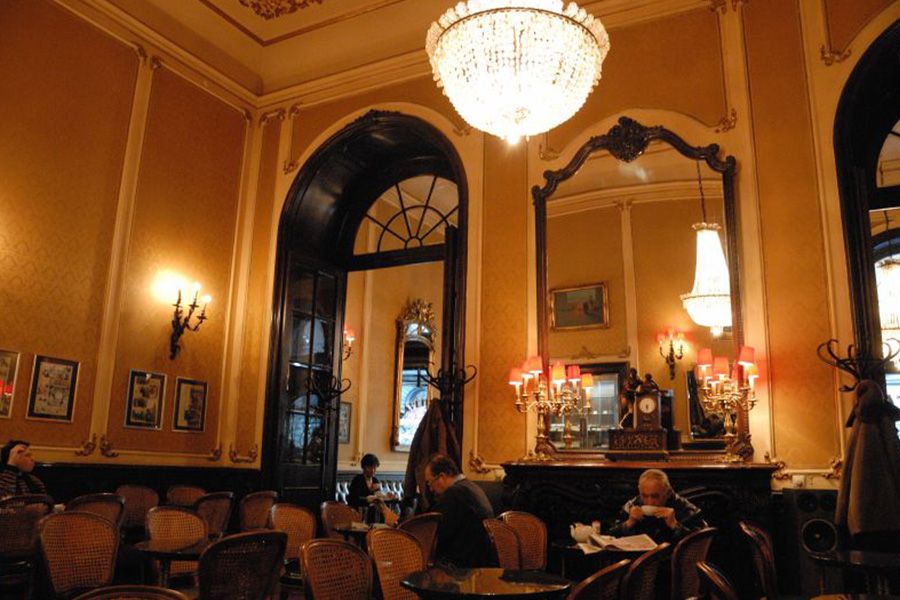
- Gerbeaud and Astoria interiors give you that real Belle Époque feel
- Tram along the Danube connects the café story to the city’s main axis
- Asian motifs in café design help you spot how designers borrowed and blended styles
- End at Kazinczy Street Synagogue where art nouveau meets religious heritage
How This 3-Hour Belle Époque Walk Fits Your Day
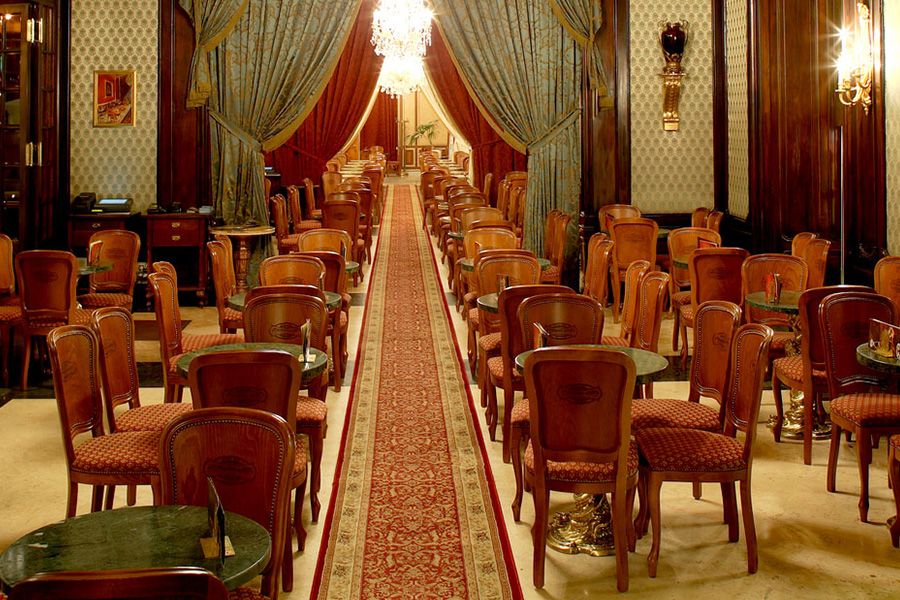
This is a 3-hour guided walk built for people who want to see the “grand” side of Budapest without signing up for a full-day schedule. You start at Café Gerbeaud (Vörösmarty tér 7-8), and the tour keeps moving with a mix of walking and local transit. That matters because café culture is social—and you experience it better when you’re not trapped in one tight museum room for hours.
You’ll also be on your feet more than you might expect from the word “café” in the title. Plan for comfortable shoes. And if you’re the type who loves taking photos, that’s great—just don’t expect long “photo breaks” between every stop. This tour is designed for quick observations, then guided interpretation.
You can also read our reviews of more tours and experiences in Budapest.



Starting at Café Gerbeaud: Imperial Budapest in One Room
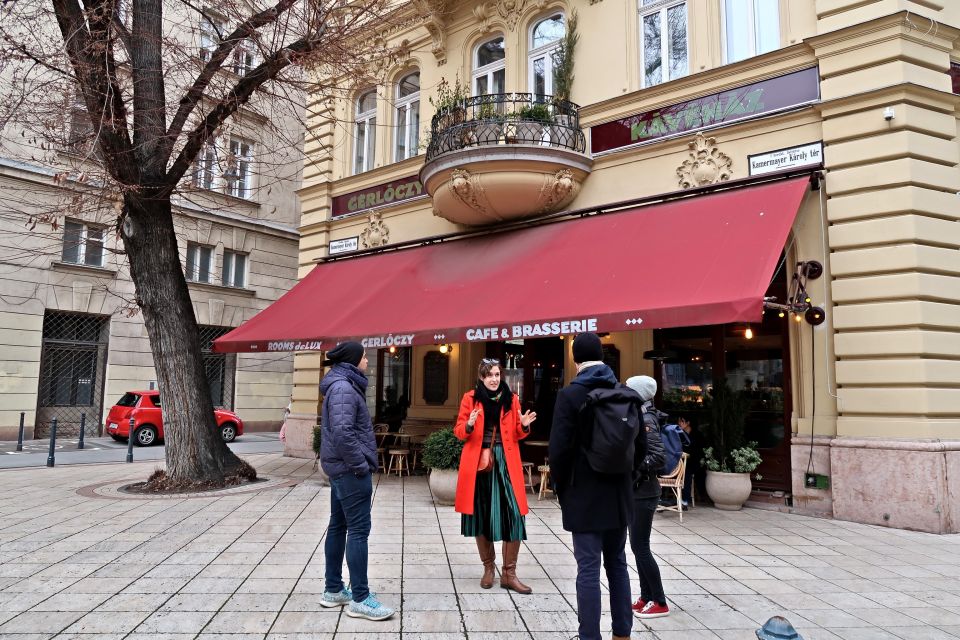
You begin at Café Gerbeaud, and the reason this is a smart starting point is simple: it’s an anchor. Café culture in Budapest isn’t a vague concept here. You’re standing at a place with deep roots in the late 1800s social scene, when cafés acted like public living rooms for locals and visitors.
What I like about the way Gerbeaud is handled on this tour is that you don’t just get a pretty interior. The guide frames it as a window into how Imperial Budapest functioned as a cultural and social hub. The commentary helps you notice design choices you might otherwise gloss over—furnishings, room feel, and the overall sense of occasion that made cafés so important in that era.
Because the group is small, you can ask follow-up questions right when something catches your eye. That’s a big advantage on an architecture-and-interiors tour. You don’t have to wait until the end to clarify what a feature actually represents.
Central Café and Restaurant 1887: Café Dignity on the Danube Axis
From Gerbeaud, you take a tram along the Danube to reach the Central Café area. This part is more than a transfer. The Danube is the city’s great spine, and seeing the café story connected to the river helps the whole theme click.
Then you enter Central Café and Restaurant 1887—a space described as dignified and representative of café-house culture at the height of Habsburg Empire power. I love stops like this because they give you a sense of scale: cafés weren’t just places to drink coffee. They were where the public absorbed ideas, made plans, and performed cultural identity through style and service.
Even if you don’t plan to order anything, you can still read the room: how the décor is arranged, how the space feels “official,” and why desserts and drinks mattered as part of the experience. If you do buy something, it’s one of those rare moments where a small spend can make your understanding feel real.
Café Astoria: Lavish Interiors and the Art of Noticing Details
Next comes Café Astoria, often treated like the gold-standard example of classic European coffee-house grandeur. The way this stop is pitched is useful: you’re not just being told it’s old or beautiful. You’re guided to look at how the café’s interior works as a display of status and taste.
I appreciate Astoria on tours like this because it rewards attention. You can spot how the room communicates prestige through materials, layout, and the overall sense of ceremony. And because the guide is an art historian type, you’re encouraged to interpret rather than memorize.
If you’re the kind of person who enjoys comparing places, Astoria also creates an easy “A vs B” mental exercise. Gerbeaud feels like a specific era’s social hub; Astoria often feels like a grand performance of that idea—more theatrical, more showy, depending on what you notice first.
Művész Coffee House and the Asian Motifs Question
At Művész Coffee House (Artist Café), the tour shifts into a design-think mode. One of the tour’s listed highlights is that you’ll examine Asian motifs and elements used by designers. That’s a fascinating angle, because it turns cafés into an international design canvas—not just local heritage.
This is where the tour earns its “art historian” label. Instead of assuming that decorative styles are just decoration, you’re prompted to see how designers borrowed and blended visual ideas. You start asking practical questions like: Is this motif ornamental, symbolic, or just fashionable? Does it match the rest of the room’s language?
If you like design history, this is the stop you’ll probably remember most later. Even if you don’t love cafés, the “look closer” approach can turn any interior into a story you can explain to friends.



Museum Cafe Walls and Why Lavish Rooms Matter
The route also includes a café stop noted for lavish, century-old walls at the Museum Café. You may not have the time or patience for a full interior deep-study on your own, but this is built to give you the essentials: what you’re seeing, why it was made that way, and how it fits the Belle Époque mood.
Lavish interiors can feel intimidating at first. On this tour, the guide helps you break that barrier by pointing out what elements to focus on. And once you know what to notice, the room stops feeling like noise. It becomes structured—like a visual argument for why the café experience should feel special.
Urania Café on Rakoczi Street: Coffee Meets Film Culture
After more walking, you reach Urania Café on Rakoczi street, a place tied to the oldest film theater in the city. This stop adds a layer people often forget when they think “Belle Époque”: the café world wasn’t frozen in the 1900s. It also connected to the next wave of entertainment and public intellect.
Urania is described as known for lectures given by prominent intellectuals before large audiences. So yes, you’re still in café culture—but now it’s café culture with a brain and a microphone. This is where the guide’s background matters. When the guide talks about why lecture culture fit into café society, the stops stop feeling random.
If you’re curious about how Budapest hosted public life, this is a great point in the tour to sit back for a moment. You’ll understand better why cafés were so central to people who wanted ideas, not just coffee.
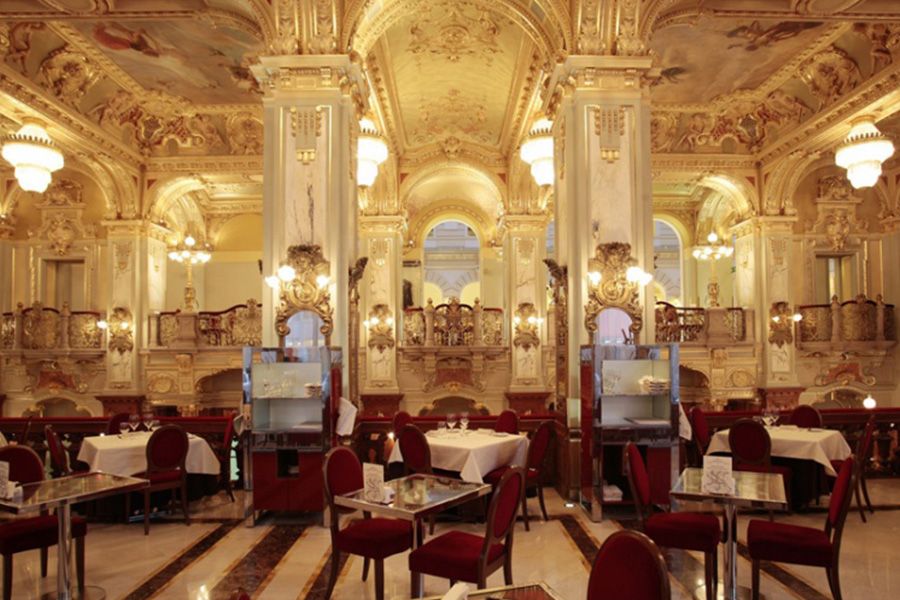
New York Palace Café: A Guided Look at Another Kind of Grandeur
The itinerary includes New York Palace Café with a guided tour of the space. This is another “read the room” moment, and it plays well after Urania because it shifts the mood back toward spectacle and design performance.
What I like about including a place like New York Palace is that it reinforces the tour’s real theme: cafés as cultural stages. Each stop has a different personality—imperial social hub, dignified empire-era space, lavish grandeur, artist-focused room, lecture-linked venue, and palace-level showpiece. Together, they make a pattern you can feel.
Don’t worry if you’re not into decorative details. The guide will keep steering you toward the meaning of what you see, so you’re not left staring at beauty with no explanation.
Kazinczy Street Synagogue: Art Nouveau Meets Orthodox Tradition
You finish at the Kazinczy Street Synagogue, described as art nouveau and also identified as an orthodox synagogue. Ending here works because it closes the loop between architecture and identity. You started with café interiors as social engines; you end with religious architecture as cultural engine.
This part is valuable even if you’re not “synagogue fluent.” You’ll get guided attention to how style and tradition coexist in the built environment. And since art nouveau is all about design language—curves, ornament, the joy of crafted form—this finish feels like a natural visual conclusion to the interior-focused theme of the tour.
Price and Logistics: Is $123 Worth It?
At $123 per person for a 3-hour small-group tour, the value comes from what’s included: a live guide who’s specifically an art historian, plus the guided walk through multiple major interiors. You’re not paying just for access—you’re paying for interpretation and direction.
The big “cost reality check” is that refreshments, cakes, and coffees are not included. For me, that’s actually part of the value logic. It lets you control your spending. If you want a quick drink, you can buy one. If you’d rather keep costs down, you can still learn plenty without ordering.
Also, the group size is limited to 8 participants, and that helps. In larger groups, architecture and interior tours become a conveyor belt. Here, you can ask about motifs, room design, or the cultural angle behind the cafés.
English language support is included, and the tour is led by well-credentialed professionals (professors, doctoral students, historians, journalists, art critics, and published authors). That matters because this kind of tour can go either way—either you get surface-level “pretty places,” or you get real explanation. The overall feedback points strongly toward the informative end, including an excellent guide named Kota.
Who This Tour Suits Best
This experience is ideal if you:
- enjoy architecture and interior design, especially from the 19th and early 20th centuries
- like culture that has a social side (cafés as meeting points for poets, artists, and writers)
- want a guided walk that uses local transit (tram along the Danube) so it feels like city living
It may be less ideal if you:
- hate walking for 3 hours, even with short transit segments
- want a tour where food is fully included
- prefer purely outdoor sightseeing with minimal indoor stops
If you’re a first-time visitor, this is a smart way to learn how Budapest’s “grand” identity shows up in daily life. If you’re a return visitor, it’s a fun way to look at familiar streets through a fresh lens.
Should You Book Café Wandering?
I’d book it if you want a guided experience that treats café culture like serious cultural history—while still keeping it fun. The strongest reason to choose this tour is the combination of expert commentary and high-impact interiors, starting at Café Gerbeaud and ending at Kazinczy Street Synagogue. And because the group is capped at 8, you’re more likely to get answers than just follow along.
If you’re on the fence, do one simple check: ask yourself whether you’d enjoy spending part of your day looking closely at rooms and ornament, not just taking quick photos. If yes, this tour will feel like money well spent.
FAQ
How long is the Café Wandering tour?
It lasts 3 hours.
Where does the tour start?
The meeting point is Café Gerbeaud, Budapest Vörösmarty tér 7-8 1051.
What language is the guided tour in?
The tour is offered in English.
How big is the group?
It’s a small group, limited to 8 participants.
What’s included in the price?
You get a 3-hour guided walk with an art historian guide.
Are refreshments or café purchases included?
No. Cost of refreshments, cakes, and coffees selected at the cafés are not included.
Can I cancel for a full refund?
Yes. You can cancel up to 24 hours in advance for a full refund.
Is there an option to reserve without paying right away?
Yes. You can reserve now & pay later, so you can book your spot and pay nothing today.