REVIEW · BUDAPEST
Budapest: Aeropark Admission Ticket
Book on GetYourGuide →Operated by Légiközlekedési Kulturális Központ · Bookable on GetYourGuide
One ticket, real airplanes, and a whole lot of hands-on fun. This open-air aviation museum in Vecsés lets you walk among aircraft tied to Hungary’s aviation story, then climb into the cockpit to feel what flying is like. I especially like the way it mixes big engineering with simple, interactive stops—perfect when you want your sightseeing to be more than just looking.
Two things I really enjoyed: the Malév-era collection, including Tupolevs you may recognize from the region’s aviation past, and the cockpit time that turns history into an experience. If you choose the guided option with a pilot, you also get pilot-style anecdotes that make the machines feel less like exhibits and more like real working aircraft. One possible drawback: the visit is only about 1.5 hours, so if you’re hoping for a super long museum day, you’ll likely want to pair it with something else nearby.
In This Review
- Key Things to Know Before You Go
- Aviation Nostalgia in Vecsés: What Aeropark Is
- The 1.5-Hour Plan: From Outside Walk to Cockpit Pretend Flight
- Communist-Era Giants and Malév Aircraft You Can Actually See
- Interactive Exhibits: Where Aviation Meets Science
- Cockpit Time: The Moment Adults and Kids Both Like
- Guided Tour With a Pilot: Stories From the Air
- Flight Simulator on Weekends: Small Add-On, Not Always Included
- Getting There From Budapest Airport: The Bus 200E Shortcut
- Price and Value: What $9 Buys You in Real Time
- Who Should Book This Ticket (and Who Might Skip It)
- Quick Tips for a Better Visit
- FAQ
- How long does the Aeropark admission last?
- Where is the meeting point?
- Is hotel pickup or drop-off included?
- What’s included in the ticket price?
- Is the flight simulator included?
- When is the flight simulator available?
- Are there guided tour options?
- Is the Aeropark wheelchair accessible?
- Can I cancel for a refund?
- Should You Book This Aeropark Ticket?
Key Things to Know Before You Go
- Open-air Aeropark setting makes the aircraft feel close and real, not trapped behind glass.
- Cockpit access is the highlight: you get the pilot-at-the-controls vibe without needing any flying license.
- Malév aircraft (including Tupolevs) connect the collection to Hungary’s national airline era.
- Interactive exhibits explain aviation tech and science in an easy-to-follow way.
- Guided tour with a pilot (optional) adds real-life flying stories from the people who’ve done it.
- Flight simulator is only available on weekends and costs extra (€2).
Aviation Nostalgia in Vecsés: What Aeropark Is
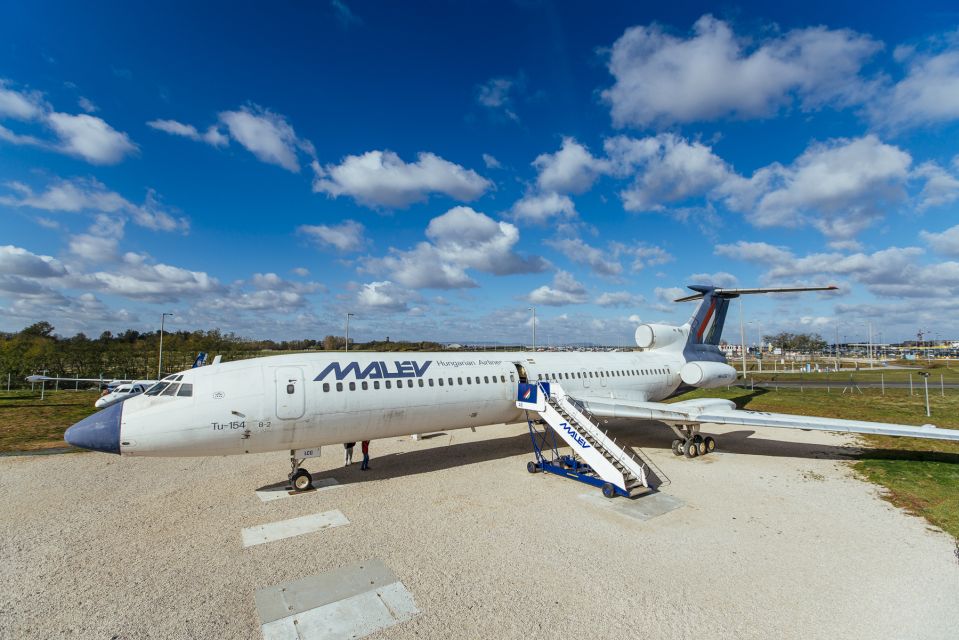
Aeropark is an air-focused museum built around something you can actually do: walk through the grounds and get close to aircraft. The theme is 60 years of Hungarian aviation, with a special emphasis on the former national air fleet, Malév, and the era of large communist-era airplanes.
You’re in the right spot if you like transportation museums, because aircraft are built to be watched from a distance and from up close. Here, you get both. The open-air layout means you can take in the shape, size, and details that are hard to appreciate in photos, from the massive bodies of older planes to the scale of cockpit entry stairs.
Even if aircraft aren’t your main interest, the museum is also teaching science and technology through aviation. That makes it a good fit for mixed groups—some people want the aircraft, and others want the “how does it work?” explanation.
You can also read our reviews of more tours and experiences in Budapest



The 1.5-Hour Plan: From Outside Walk to Cockpit Pretend Flight
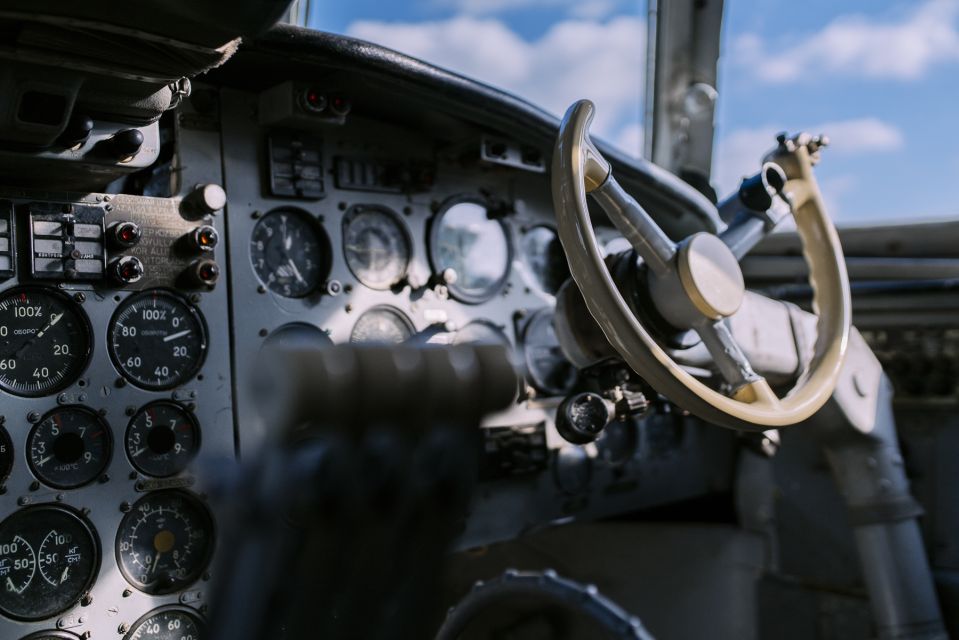
This experience is designed to move at a comfortable pace in about 1.5 hours. That’s a sweet spot: long enough to feel like you did something, short enough that you can still keep the rest of your day flexible.
When you arrive at Repülőmúzeum in Vecsés, you’ll start with an orientation to the exhibits and the aircraft on display. From there, the flow is basically:
First, you explore the open-air museum grounds, taking in the planes and reading the info tied to Hungarian aviation over time. Expect you’ll spend time just looking—large aircraft are easier to understand when you can pace around them.
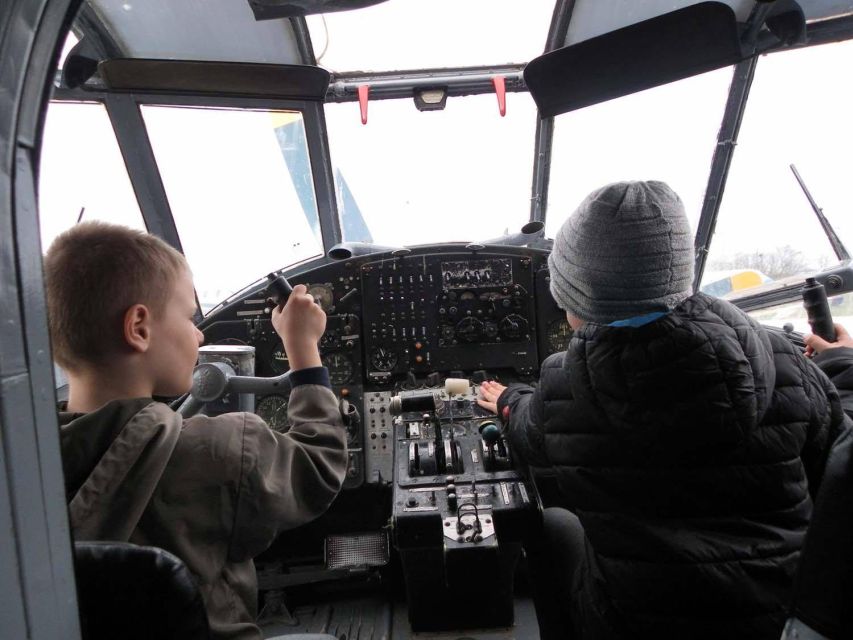
Then comes the hands-on highlight: you climb up into the cockpit. It’s not just a photo moment. The point is to help you understand what pilots face: the layout, the steps, and the feeling of being in the machine instead of behind a barrier.
If you pick the guided tour with a pilot, you’ll get that same structure, just with a more personal narrative—plus pilot-style context that helps you connect the dots between aircraft design and how flying used to be.
The visit ends after you’ve gotten your fill of aircraft history and cockpit time. If you’re the type who could spend hours reading every sign at a museum, you might wish it were longer—but the pace keeps it fun rather than tiring.
Communist-Era Giants and Malév Aircraft You Can Actually See
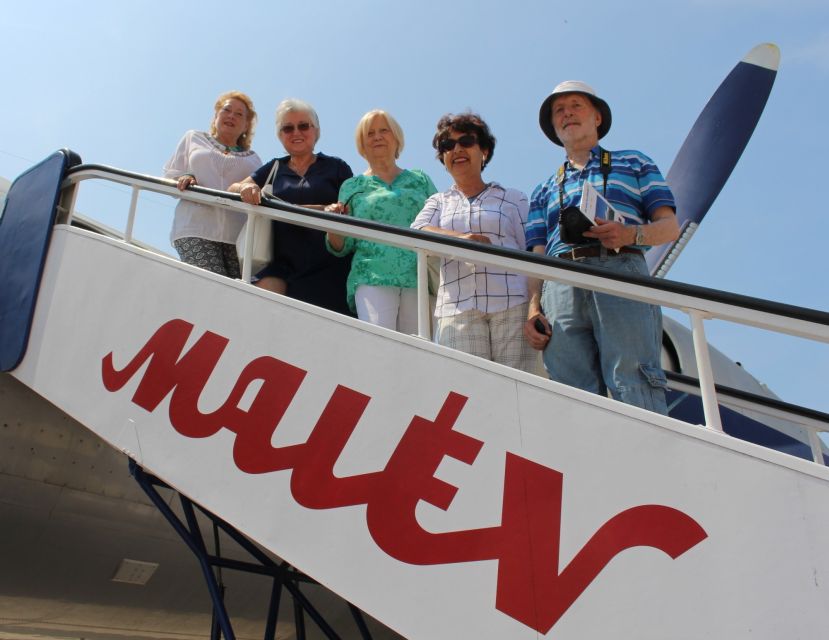
One reason this place pulls you in quickly is the lineup. You’ll encounter some of the largest airplanes of the communist era, which is the kind of statement that’s hard to appreciate until you’re standing near an aircraft built to move serious numbers of people.
You’ll also see planes from Malév, the former Hungarian national air fleet. A special mention here is Tupolevs that still fly today. That matters because it bridges the gap between “old museum aircraft” and “this design type isn’t purely historical.”
In practical terms, this kind of aircraft viewing works best if you let yourself compare details. Older airliners can feel similar until you slow down and look: engines, cockpit placement, fuselage proportions, and how the aircraft’s size changes your sense of scale.
If you’re coming with kids, this section often does double duty. Big airplanes are naturally exciting, and the contrast between “huge plane” and “tiny cockpit steps” can make the experience feel like a real adventure.
Interactive Exhibits: Where Aviation Meets Science
Aeropark isn’t only a row of aircraft. It leans into technology, science, and aviation through interactive-style exhibits. That’s the part that helps you move from gawking to understanding without turning the visit into a lecture.
The museum’s story is paced around aviation evolution—how Hungarian aviation changed over 60 years and why those changes mattered. One of the most useful themes is the idea that flying used to be far more difficult and treated more like a luxury than a routine service.
That context helps you interpret what you’re seeing. You can look at older aircraft and think beyond aesthetics: the engineering choices, the operational limits, and the reality that flying used to be a bigger deal.
This is also why I think it works well for non-experts. You don’t need airline trivia to get value. You just need curiosity.
Cockpit Time: The Moment Adults and Kids Both Like
The cockpit is the big “yes” for a lot of people, and for good reason. Climbing the stairs and sitting in the cockpit changes the whole museum feel. Suddenly you’re not just observing—you’re in the role, even if it’s pretend.
Here’s why that’s valuable: it turns aviation history into bodily understanding. You notice how access works. You see the cockpit’s design as a system. You can imagine the attention required to fly, even before you get any extra explanation.
If you’re traveling with children, this is where the excitement usually peaks. Big planes are fun, but cockpit access is the part that makes it feel personal.
If you’re an adult, you’ll still likely appreciate it. It’s rare to get a museum experience where you can physically position yourself as part of the story.





Guided Tour With a Pilot: Stories From the Air
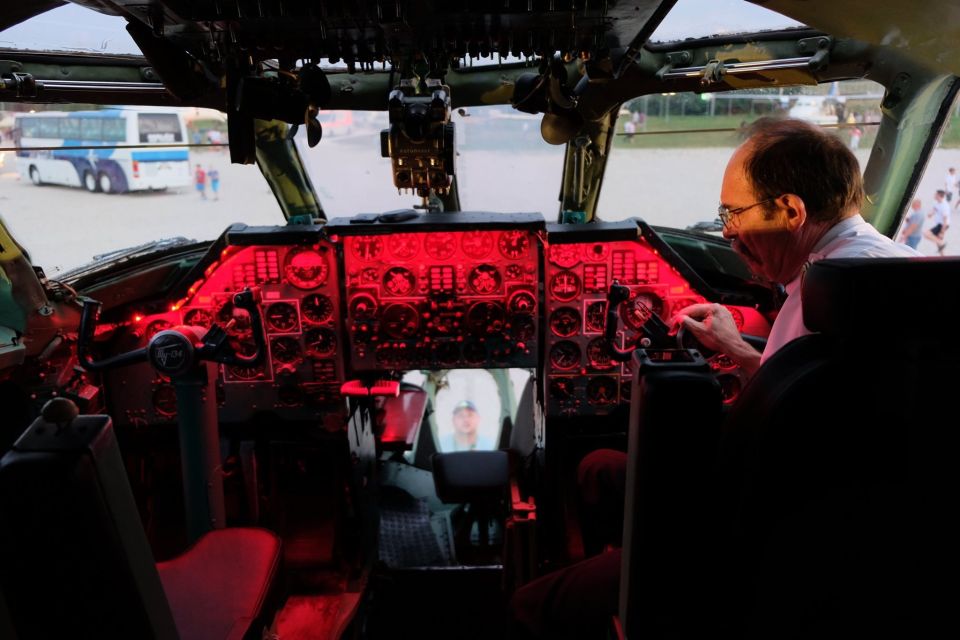
The guided option with a pilot is the upgrade worth considering if you like real-life explanations. The concept is simple: you explore with an experienced pilot who has flown the aircraft on display.
That matters because it changes the museum’s voice. Instead of generic descriptions, you hear anecdotes that connect what you’re looking at to what flying actually felt like. You get an added layer of “why” rather than only “what.”
If you book the guided tour, go in with a few mental questions so you can get the most out of it. Even without having to be technical, you can ask things like:
- What does a design choice like this mean for everyday flying?
- What surprised you most when you first flew aircraft like these?
- How did conditions and flying expectations differ back then?
You don’t need to know aviation terms to benefit. The value is in getting context you can’t read on a placard.
Flight Simulator on Weekends: Small Add-On, Not Always Included
There is a flight simulator, but it’s not part of the base ticket. It’s also only in service on Saturday and Sunday, and there’s an additional charge of €2.
This is worth planning around. If you want the simulator, check your calendar before you go—because on weekdays, you’ll likely miss that extra tech element.
Also, keep your expectations aligned. The main value here is still the open-air aircraft museum and the cockpit time. The simulator is a bonus, not the core reason to visit.
Getting There From Budapest Airport: The Bus 200E Shortcut
Location logistics are straightforward once you know the route. The meeting point is in Vecsés, at Repülőmúzeum (2220 Hungary). There’s no hotel pickup or drop-off included, so you’ll want to plan your transport.
If you’re coming by public transport, the key tip is bus 200E:
- Take bus 200E all the way to the terminus at Budapest Airport Terminal 2B.
- Stay on the bus through the terminus area.
- Get off at the first stop after the terminus.
- That stop is Repülőmúzeum.
Why this helps: it reduces guesswork. You don’t have to figure out multiple transfers or interpret a confusing local route at the end of your trip. You ride straight through to the airport bus’s endpoint logic, then exit quickly.
A practical note: since there’s no pickup, build extra time in case you’re figuring out schedules. One small delay can make a short 1.5-hour activity feel rushed.
Price and Value: What $9 Buys You in Real Time
At around $9 per person, this is a low-cost way to get a high-value experience. The math works because you’re paying for:
- Admission to an open-air museum with aircraft you can walk around
- Cockpit access
- Interactive-style exhibits connected to Hungarian aviation history
- An optional guided tour with a pilot (depending on which ticket you choose)
For families, $9 is the kind of price that feels safe to try without turning it into a long-money gamble. For aviation enthusiasts, it’s also good value because the focus is direct contact with real aircraft rather than a purely indoor museum experience.
If you’re on a tight schedule, the timing helps too. A 1.5-hour visit means you can fit it into a larger day without spending your whole trip on museum logistics.
The one potential “cost surprise” is the simulator, but that’s clearly add-on and only on weekends. Most people will still get the main value even if you skip it.
Who Should Book This Ticket (and Who Might Skip It)
Book this if you:
- Want a hands-on aviation museum rather than a glass-and-label experience
- Are traveling with kids who like big vehicles and cockpit pretend-play
- Prefer short, focused activities that fit into a day
- Want Malév and Hungarian aviation history without needing to be an aviation nerd first
- Like guided context from real pilots (if you choose that option)
You might consider skipping or pairing it differently if you:
- Expect a long, full-day museum marathon
- Are looking mainly for museums with large indoor collections (this is very much an aircraft-on-the-ground experience)
- Need the simulator every time you visit—because it’s only on weekends and costs extra
Quick Tips for a Better Visit
A few small moves make the experience more satisfying:
- Bring time for the cockpit moment. That’s the part you’ll remember, not just the aircraft shapes.
- If you’re interested in how aviation evolved, choose the guided tour with a pilot. The flying stories give the exhibits a sharper meaning.
- If you care about the simulator, time your visit for Saturday or Sunday and budget the extra €2.
- Dress for outdoor walking. Since it’s open-air, weather matters more than in a fully indoor museum.
FAQ
How long does the Aeropark admission last?
The visit duration is about 1.5 hours.
Where is the meeting point?
The meeting point is Vecsés, Repülőmúzeum, 2220 Hungary.
Is hotel pickup or drop-off included?
No. Hotel pickup or drop-off is not included.
What’s included in the ticket price?
The ticket includes admission.
Is the flight simulator included?
No. The flight simulator is not included in the base ticket.
When is the flight simulator available?
The flight simulator is only in service on Saturday and Sunday, and it has an additional charge of €2.
Are there guided tour options?
Yes, you can choose a guided tour with a pilot.
Is the Aeropark wheelchair accessible?
Yes. It is wheelchair accessible.
Can I cancel for a refund?
Yes. There is free cancellation up to 24 hours in advance for a full refund.
Should You Book This Aeropark Ticket?
Yes, I’d book it if you want a short, satisfying aviation stop with real aircraft, cockpit time, and hands-on science/tech exhibits. At around $9, it’s strong value—especially if you’re traveling with kids or you like your history to come with a physical experience.
If you’re visiting on a weekday and you really care about simulators, it’s not a dealbreaker, but it’s smart to know you’ll be skipping that weekend-only extra. And if you can, seriously consider the pilot-led guided tour—that’s the best way to turn a pretty cool museum visit into something that actually explains what you’re seeing.