Castle Hill rewards smart walking. This guided loop strings together the big-name sights plus a few quieter corners on the hill, so you come away with context fast. I like how it’s built around viewpoints and photo moments, not museum trivia.
I also love the Ruszwurm stop for a real taste of Hungarian cake culture, and the ride-and-walk balance that keeps things from feeling like endless stairs. One thing to plan for: this is a hill day. Expect steps, and if it’s hot or pouring, you may not want to rush every last corner.
In This Review
- Key highlights you’ll feel on the walk
- The value: a guided Castle Hill loop for a surprisingly low price
- Start point to end point: where the route makes sense
- Matthias Church: the outside view that still tells a story
- Fisherman’s Bastion: a fairy-tale terrace with real payoff
- Trinity Square and the Holy Trinity Column: a monument with a timeline
- Ruszwurm Confectionery: your sweet break that feels old-school
- The András Hadik statue: bronze luck and local character
- Arpád Tóth Promenade (Setány) and the hill’s quieter rhythm
- Hospital in the Rock and the old labyrinth paths: stories without the ticket
- Sandor Palace and the Carmelite Monastery: where power meets architecture
- Buda Hill Funicular, Királyi Lovarda, and Matthias Fountain: three quick hits
- Buda Castle: finish with the biggest canvas in the area
- What the guides do well: more than facts
- Timing, weather, and the walking reality
- Who should book this Castle Hill walking tour
- Should you book Buda Castle Tour with Fisherman’s Bastion views?
- FAQ
- How long is the tour?
- How much does it cost?
- Is English offered on this tour?
- Do I need an admission ticket for Matthias Church?
- Is Fisherman’s Bastion free to visit during the tour?
- Does the tour enter Hospital in the Rock?
- How big is the group?
- Where do I meet and end the tour?
- Are service animals allowed?
Key highlights you’ll feel on the walk
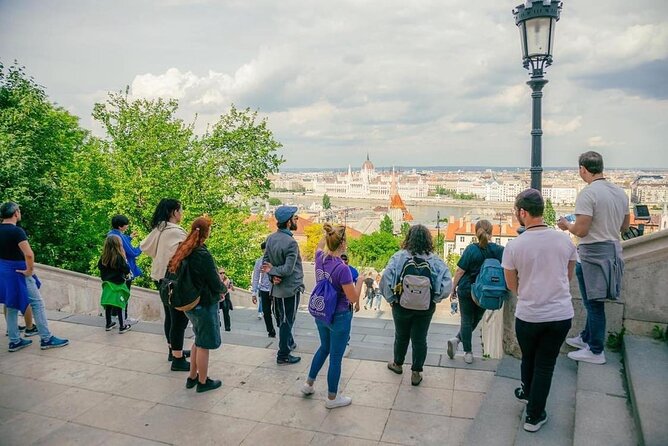
- Max 10 people means you get more back-and-forth with your guide
- Matthias Church exterior stop (entry ticket not included) plus classic photo angles
- Fisherman’s Bastion is a free viewpoint break with Danube city panoramas
- Ruszwurm Confectionery brings you to a Budapest institution dating to 1827
- Touch the bronze of András Hadik for a local good-luck superstition
- Buda Hill Funicular gets you from the river area up the hill with historic charm
The value: a guided Castle Hill loop for a surprisingly low price
At about $3.63 per person, this is priced like a budget add-on, not a full sightseeing day. That matters in Budapest, where you can easily spend your walking time and still miss the meaning behind what you’re seeing.
You’re paying mainly for two things: a guide to connect the dots, and a route that keeps you moving efficiently around Buda Castle District. The tour also includes tailored suggestions for restaurants, bars, and museums, which is where cheap tours often fall short.
The downside is that you’re not buying lots of ticketed entrances. For example, Matthias Church is listed with admission not included, so you’ll want to decide ahead of time if you’ll pay separately once you’re there.
You can also read our reviews of more tours and experiences in Budapest.



Start point to end point: where the route makes sense
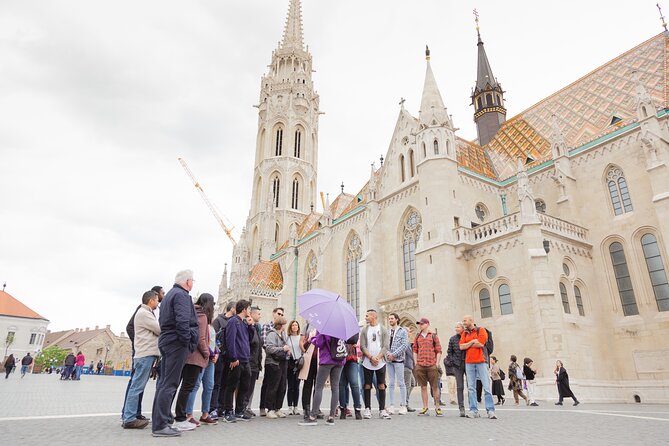
You begin at Szentháromság tér (1014), and the walk ends in the Castle area near Szent György tér, at the entrance of the National Gallery. That setup is practical: you get dropped into the heart of the district where the rest of your day can continue, whether you want more museums or just more wandering.
Because the group is small (up to 10), the pace tends to work better for people who don’t want to sprint from one landmark to another. It still feels like a hill walk, though. Wear shoes you trust on uneven stone.
English is available, and you’ll have a mobile ticket. If you like starting your day with clarity instead of hunting for meeting points, this kind of setup helps.
Matthias Church: the outside view that still tells a story
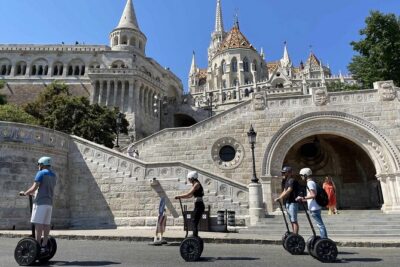
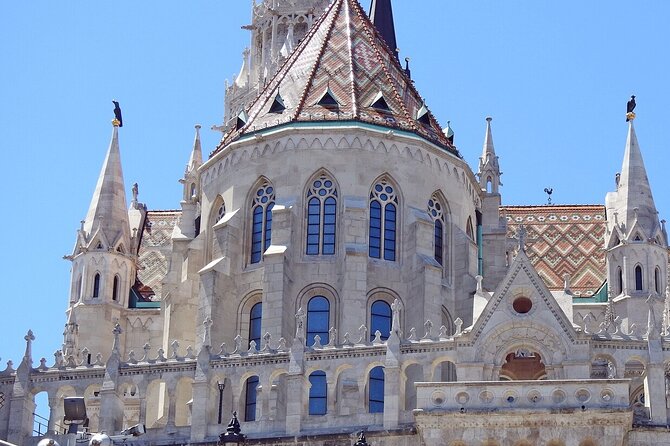
The tour kicks off at Matthias Church, a Gothic Revival landmark in the Castle District. Even with the emphasis on photos outside, it’s a strong first stop because the church’s look gives you instant visual cues about style and era.
The tiled roof and decorative roofline details are hard to appreciate if you’re just passing by. Here, you get time to look, frame photos, and pick up the royal and artistic backdrop that makes the building feel more than just pretty walls.
One practical note: Matthias Church is listed with an admission ticket not included. So you can treat this as a front-of-house introduction, then decide later whether you want to pay for interior access on your own schedule.
Fisherman’s Bastion: a fairy-tale terrace with real payoff
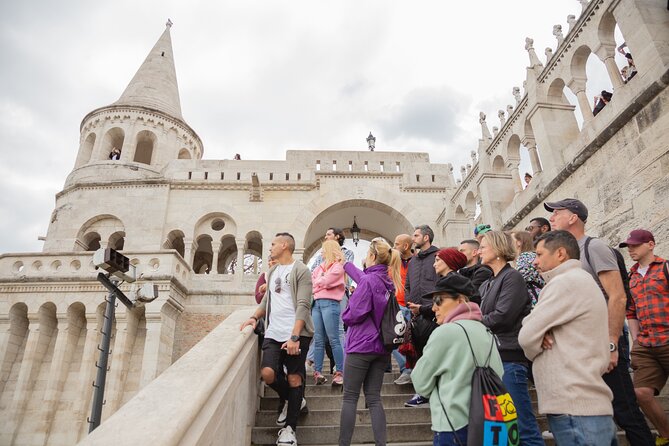
Next comes Fisherman’s Bastion, and yes, it’s as storybook as the postcards. What I like about this stop is that you’re not just staring at architecture. You’re using it as a viewpoint platform.
The terrace design—neo-Gothic and neo-Romanesque with turrets, arches, and pathways—creates built-in angles for photos of the Danube and the city skyline. It’s one of those places where the scenery works best when you slow down and let your eyes follow the structure.
Best part: the stop is listed as free, so you don’t have to budget extra just to enjoy the views. It’s also short, about 15 minutes, which keeps it from eating your whole day.
Trinity Square and the Holy Trinity Column: a monument with a timeline
A quick move brings you to the Holy Trinity Column in Castle District. This isn’t a random statue stop. It’s tied to the end of an 18th-century plague, and that context changes how you read the carvings and the monument’s towering presence.
The column sits in Trinity Square, and the idea here is simple: you’ll learn what the monument is commemorating, then you get a moment to register the scale and detail. This is a good contrast after the airy terrace of Fisherman’s Bastion.
It’s also listed as free, so you’re only spending time, not money.





Ruszwurm Confectionery: your sweet break that feels old-school
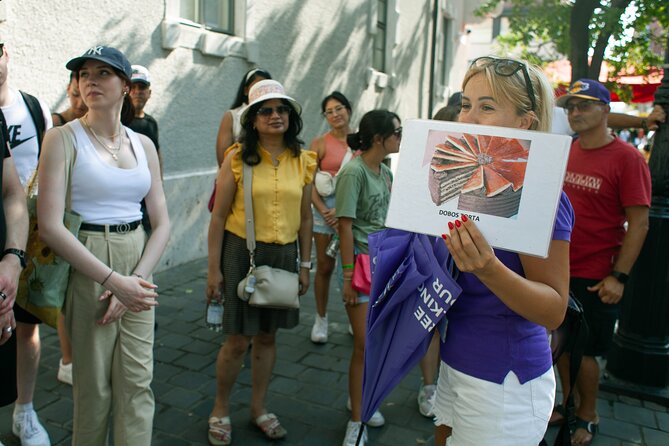
Then you get to a stop I think is worth planning around: Ruszwurm Confectionery, famous since 1827. This isn’t a drive-by snack. It’s a guided arrival at one of Budapest’s classic pastry rooms, where locals and visitors have long understood the value of a cake break done properly.
Ruszwurm is especially known for Hungarian favorites like Dobos torta and krémes. Even if you don’t order those exact items, you’ll still be stepping into a setting that feels historical in the practical way—because it keeps serving the same idea of comfort.
The tour lists this stop as free for the experience, which means your cost is basically whatever you choose to buy. For me, that makes it better value than paid tasting tours, because you’re in control.
The András Hadik statue: bronze luck and local character
At András Hadik’s mounted statue, you’ll hear the story of a legendary soldier and Maria Theresa’s favorite general. The name is tied to bold victories, but the real charm is the superstition.
There’s a tradition here: touching the shiny bronze horse is said to bring good luck. It takes seconds, but it’s one of those moments that makes a tour feel local instead of scripted.
The stop is brief (around 5 minutes) and free, so it fits cleanly into the flow. It also works well if you want one small, memorable interaction during a day full of stairs.
Arpád Tóth Promenade (Setány) and the hill’s quieter rhythm
Next is Arpád Tóth Promenade (Setány), a more residential slice of the hill. This is where you see Buda Castle District as a living neighborhood, not a museum set.
The tour keeps this stop around 10 minutes, and the idea is less about grand sights and more about getting your bearings. You’ll feel how the hill shapes daily movement—especially if you’ve been tempted to see everything as one big attraction zone.
This kind of stop is valuable because it reduces the feeling of rushing. You get a breather while still staying oriented.
Hospital in the Rock and the old labyrinth paths: stories without the ticket
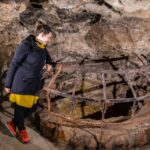
The tour then points you toward the Hospital in the Rock area, but with an important detail: you do not enter. You get the story, and then you pass by.
That approach is smart if you want context without turning your two-hour plan into a ticketed museum marathon. It’s also a good way to decide later whether the interior museum experience is worth your time based on your interests.
You also get time for the labyrinth-like paths in the Castle hill area. This is one of those parts of Buda that’s easy to walk past without understanding why the streets and paths feel the way they do. With guidance, you start noticing the logic behind the layout.
Sandor Palace and the Carmelite Monastery: where power meets architecture
You’ll then pass Sandor Palace, known as the official residence of Hungary’s President. The palace is connected to its original owner, Count Sándor Móricz—famed as the Devil’s Rider, a nickname tied to daring equestrian stunts.
It’s a short stop, but it adds a different dimension to the hill. This isn’t only about medieval imagery. The buildings also point to modern state power, and your guide links the past to what stands in front of you now.
After that comes Karmelita Kolostor (Carmelite Monastery). The monastery’s story includes multiple transformations: it started as a monastery, then served as a theater and concert hall, and today it houses the Hungarian Prime Minister’s Office.
That range matters. It helps you see the Castle District as a place that keeps reusing important buildings instead of turning everything into a frozen theme park.
Buda Hill Funicular, Királyi Lovarda, and Matthias Fountain: three quick hits
The route adds the Buda Hill Funicular, operating since 1870, connecting the Chain Bridge area to the Castle District. This is one of my favorite kinds of tourism moves: you save your legs for walking viewpoints and stairs you actually want, while still enjoying the ride itself and the views over the Danube and city.
Then you pass Királyi Lovarda, the Riding Hall. It’s described as a beautifully restored structure that originally served as a royal equestrian facility. This stop keeps the theme going: power, ceremony, and performance—seen through architecture rather than just dates.
Finally, you reach Matthias Fountain, a Baroque-style monument dedicated to King Matthias Corvinus. The central sculpture of the king riding a horse ties the artwork to the message: power and cultural flourishing in the 15th century.
All three are free stops and fairly quick, which is exactly what you want in a two-hour plan. They create variety without demanding that you spend your whole day on tickets.
Buda Castle: finish with the biggest canvas in the area
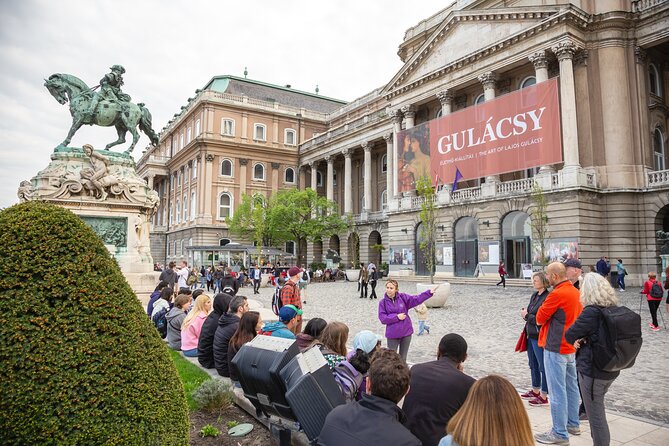
The tour ends at Buda Castle, the Royal Palace complex with museums that include the Hungarian National Gallery, the Budapest History Museum, and the National Library.
The tour lists the Castle stop as free, so you can use it as a launchpad. If you’re the type who likes to linger at one place, this is a great moment to choose your next move based on what grabbed you most: art, city history, or books and manuscripts.
If you prefer a more relaxed day, you can also treat the Castle area as a wander zone. Even without diving into museums, you’ll likely want to circle around for more photos once the main landmarks have done their job.
What the guides do well: more than facts
The guides behind this tour tend to bring energy and humor into the group flow. In past groups, I’ve seen names like Sou, Nacho, Ignacio, Bayler, and Sophie associated with entertaining delivery, quick involvement, and helpful local suggestions.
That matters because Castle District can feel like a blur if you’re reading signs alone. A good guide helps you connect what you’re looking at to why it matters—without turning it into a lecture you’ll forget by the next bend.
If you want the tour to feel extra useful, ask for restaurant and museum picks during the walk. The tour is designed to offer tailor-made recommendations, not just point-and-go sightseeing.
Timing, weather, and the walking reality
This is listed as about 2 hours, but your real time depends on the hill, the steps, and the weather. Reviews note both extreme heat and heavy rain affecting how much people could finish. That’s normal for Castle Hill.
So here’s my practical approach:
- Start with comfortable shoes with grip.
- Bring water and sun protection if it’s hot.
- Pack a light rain layer if weather looks unstable.
- Don’t plan to sprint to every last viewpoint if conditions are rough.
The route is short enough that you can still salvage the spirit of the tour even if you slow down. The best moments are the ones where you take time to look.
Who should book this Castle Hill walking tour
This tour fits you if:
- You want a focused Castle District introduction in a manageable chunk of time
- You like architecture plus viewpoints, with a food stop that feels genuinely local
- You prefer a small group (up to 10) and a guide who can tailor recommendations
- You don’t want to commit to multiple paid museums right away
It might not be your best choice if:
- You hate stairs and uneven surfaces
- You’re expecting a fully ticketed museum experience inside multiple venues
- You want long stays at each landmark rather than a brisk loop
Should you book Buda Castle Tour with Fisherman’s Bastion views?
Yes, if you’re trying to see the Castle District efficiently and leave with a better sense of what’s in front of you. For the price, the mix of viewpoints, landmark context, and the Ruszwurm pastry stop makes it a strong value play.
Book it if you can handle a hill day and want the guide’s help connecting the dots. Skip it (or plan a slower alternative) if stairs and weather stress you out, because this area will test your comfort level no matter how good the route is.
FAQ
How long is the tour?
The tour lasts about 2 hours.
How much does it cost?
The listed price is $3.63 per person.
Is English offered on this tour?
Yes, it’s offered in English.
Do I need an admission ticket for Matthias Church?
Matthias Church has an admission ticket not included for that stop.
Is Fisherman’s Bastion free to visit during the tour?
Yes, Fisherman’s Bastion is listed as free for the stop.
Does the tour enter Hospital in the Rock?
No. The tour tells the story of Hospital in the Rock but does not enter; it passes by.
How big is the group?
The tour has a maximum of 10 people.
Where do I meet and end the tour?
You start at Szentháromság tér, 1014 Hungary, and the tour ends at Buda Castle near Szent György tér, with the National Gallery entrance as the endpoint.
Are service animals allowed?
Yes, service animals are allowed.