REVIEW · BUDAPEST
From Budapest: Danube Bend Day Trip in English
Book on GetYourGuide →Operated by Cityrama Budapest Travel Agency · Bookable on GetYourGuide
Danube Bend in one long day. This Budapest excursion strings together Visegrád, Esztergom, and Szentendre along the river so you get big scenery and real history without planning anything. It’s the kind of route where the stops feel different from each other—castle ruins and panoramas, a major cathedral, then a baroque artists’ town.
I especially like the photo-friendly rhythm: you’re repeatedly pointed toward the Danube valley and even across toward Slovakia. I also like that the tour is driven by a live guide, so you’re not just walking from sight to sight—you’re getting the story behind what you see, like why Esztergom matters to Hungary and the Catholic Church.
One heads-up: it’s an 8.5-hour day with three towns. If you want long, slow wandering and deep museum time, some parts may feel a little time-tight, and lunch is not included.
Danube Bend’s best-angle viewpoints
- Visegrád panoramas over the river valley, with old stones that still feel tied to medieval power.
Esztergom’s cathedral detail, not just the exterior
- Outside views of the Esztergom Basilica, plus a focus on major features like the Bakócz Chapel and the Renaissance elements you’ll spot on-site.
A Danube crossing moment toward Slovakia
- A built-in stop where you can take in the river and the view across to Slovakia.
Szentendre’s narrow streets and climb
- Baroque streets with medieval foundations, plus a panorama point that’s worth the effort.
Seasonal boat ticket
- A boat ticket (May–September, except Mondays) adds variety to the day, depending on the departure schedule.
Bilingual English/Spanish realities
- The tour runs with live guidance in English and Spanish, and sometimes both languages run at once—plan for some switching in how much detail you hear.
In This Review
- Why the Danube Bend Day Trip From Budapest Makes Sense
- Meeting Point and How the Day’s 8.5 Hours Really Breaks Down
- Visegrád Royal Residence: The 750-Year-Old Stones and Big Valley Views
- Esztergom Basilica and the Bakócz Chapel: Hungary’s Catholic Center
- The Slovakia-Over-The-River Photo Stop (This One Is Worth Waiting For)
- Szentendre’s Baroque Streets: Artists, Medieval Roots, and a Panorama Point
- Boat Ticket Season (May–September): Why the River Ride Changes the Mood
- Guides, Language Switching, and What You’ll Actually Hear
- Price and Value: Is $91 a Good Deal?
- Practical Tips: How to Enjoy It Without Feeling Rushed
- Should You Book This Danube Bend Day Trip?
- FAQ
- How long is the Danube Bend Day Trip from Budapest?
- What does the tour cost?
- What stops are included?
- Is lunch included?
- What languages is the tour offered in?
- Is a boat ride included?
- Where do I meet the group?
- Can I cancel for a refund?
- Is the drive bumpy or motion-related?
Why the Danube Bend Day Trip From Budapest Makes Sense

This is one of those tours that fits the geography of Hungary. The Danube Bend isn’t just pretty from a postcard. Up close, you understand why this river corridor mattered—politically, spiritually, and commercially—because the viewpoints keep showing you how narrow and strategic the area becomes.
You also avoid the hardest part: figuring out how to connect three historic places in one day. With air-conditioned transport and a guide coordinating timing, you spend your energy on walking, looking, and asking questions, not on transfers.
Meeting Point and How the Day’s 8.5 Hours Really Breaks Down
You meet at the Cityrama & Gray Line Hungary office. From there, expect a long, structured day: bus time between towns, guided time at key landmarks, and then free time for photos and strolling.
The practical truth: you’ll be on your feet for parts of the day, and the walkways can be uneven or up a bit of a slope—especially as you get closer to viewpoints in the towns. It’s totally doable, but it’s not a “sit and sightsee” format.
Also note the language setup. The tour is listed as English and Spanish, and occasionally the tour may be held in English and Spanish simultaneously. That doesn’t mean you’ll be lost, but it does mean you might hear your history framing differently depending on how the guide splits the group.
You can also read our reviews of more tours and experiences in Budapest



Visegrád Royal Residence: The 750-Year-Old Stones and Big Valley Views
Visegrád is where you start feeling the Danube Bend as a landscape, even though this stop leans historical more than decorative. You’ll walk close to the 750-year-old stones of the former Royal Residence. Entry fees aren’t included, so what you can go into (or how far you can explore) depends on what’s open and what the stop time allows.
What I like about this stop for your money: the panoramas do the heavy lifting. Once you’re standing where medieval rulers looked out, the Danube valley makes more sense. You’re not only taking photos—you’re learning to read the geography. And since the Danube is visible in multiple towns on this route, those views start to connect into one mental map.
Esztergom Basilica and the Bakócz Chapel: Hungary’s Catholic Center
Esztergom is the emotional weight of the day. Here you get the sense that you’re at the northern gateway of Budapest—only the main character isn’t the capital. The main character is faith and power.
The largest cathedral in Hungary is the highlight. Your tour includes an outside look at the basilica, which is still meaningful because the building’s size and presence hit you fast. You’ll also hear why Esztergom matters as the center of the Catholic Church in this region.
The Bakócz Chapel is specifically called out on this experience, including its Renaissance elements. If you’re the type who notices craft and style, you’ll likely enjoy focusing on details you can spot during your outside viewing—this isn’t just a general “pretty building” moment.
One more useful context: the tour frames Esztergom as a burial place connected to major Hungarian church figures, including Primate József Mindszenty. That detail turns the cathedral stop from architecture-only into something you can connect to modern Hungarian identity.
The Slovakia-Over-The-River Photo Stop (This One Is Worth Waiting For)
One of the best parts of this day is the brief, high-impact viewpoint where you look over toward Slovakia across the Danube. It’s the kind of moment that makes the Danube Bend feel larger than Hungary’s borders.
Even if you don’t do a lot of cross-border travel, this stop helps you understand why the river corridor was historically significant. You’ll also get that easy, natural-photo setup—because the view is doing the composition for you.
Keep your camera ready. You’re not wandering for hours here; it’s a targeted moment designed to land at the right time.
Szentendre’s Baroque Streets: Artists, Medieval Roots, and a Panorama Point
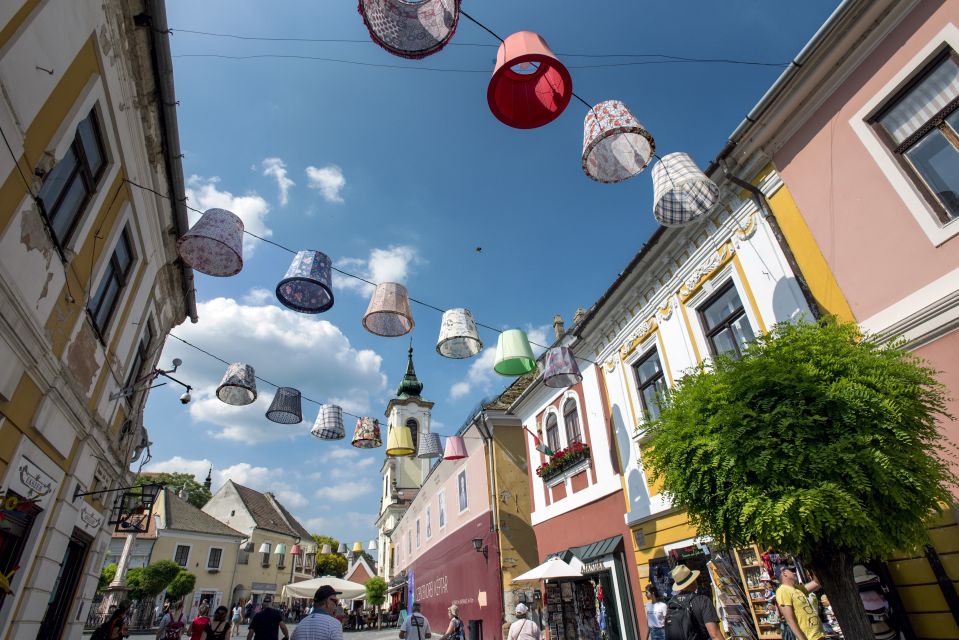
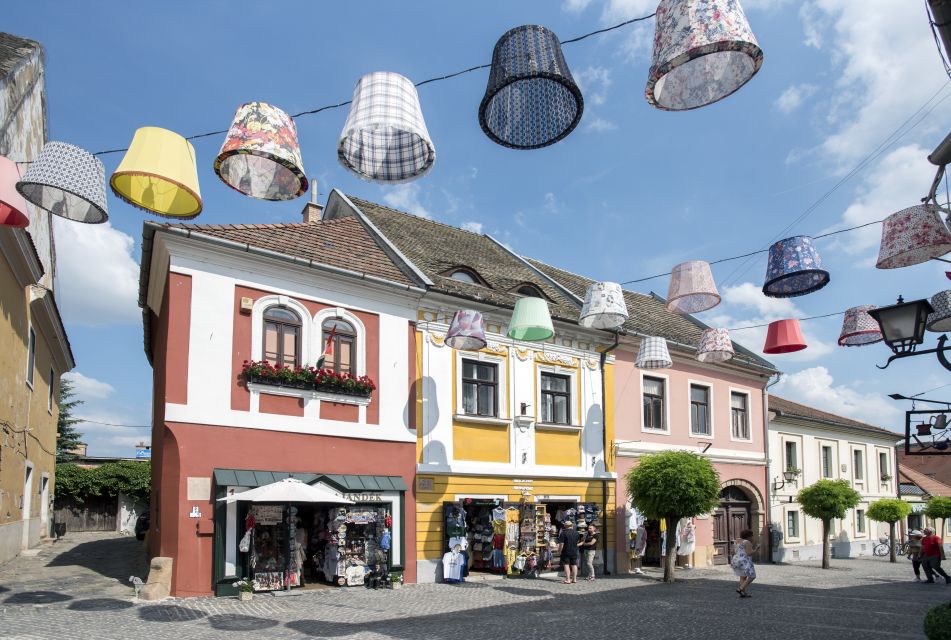
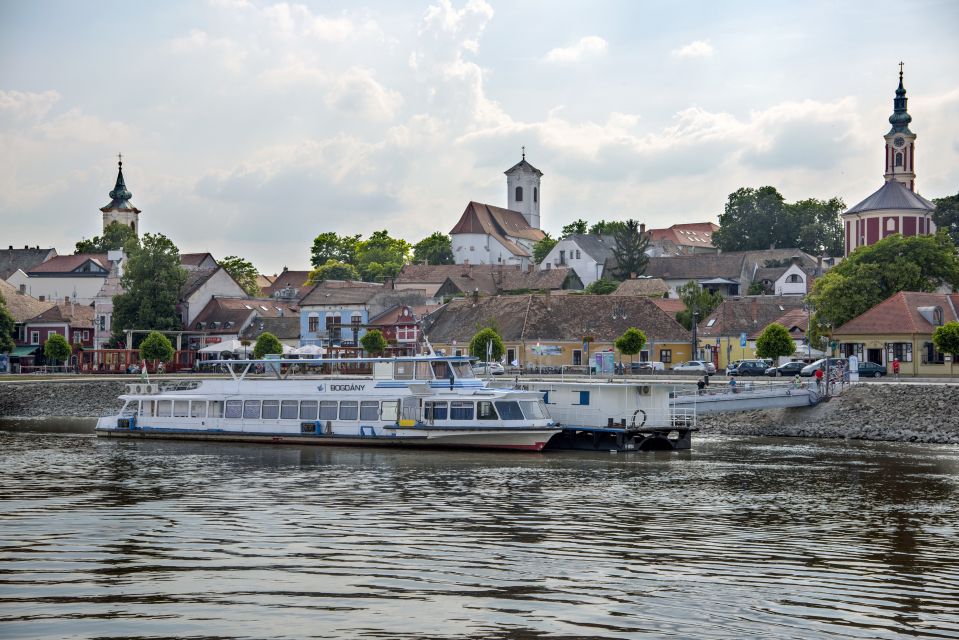
Szentendre is the palate cleanser and the fun stop. It’s described as a small baroque city at the gate of the Danube Bend, where the Danube River meets the Pilis Mountains. In plain terms: you get a compact town with enough charm to slow you down.
You’ll walk around the baroque settlement, built on medieval ruins, then move through narrow streets toward a panorama viewpoint over the Danube. This is where you’ll feel the tour’s pacing shift—from guided explanation to you exploring at your own speed.
I like Szentendre for two reasons. First, the architecture and streets help you imagine how people lived there long before modern tourism. Second, it’s one of the few places on this itinerary where the walking is about atmosphere, not just ticking off highlights.
Also, don’t expect Szentendre to be all one thing. Depending on the day and how much time you get, you might find extra stops or side interests like an art-related visit (some departures include the chance to see places like a marzipan museum, if you’re keen on quirky local culture).






Boat Ticket Season (May–September): Why the River Ride Changes the Mood
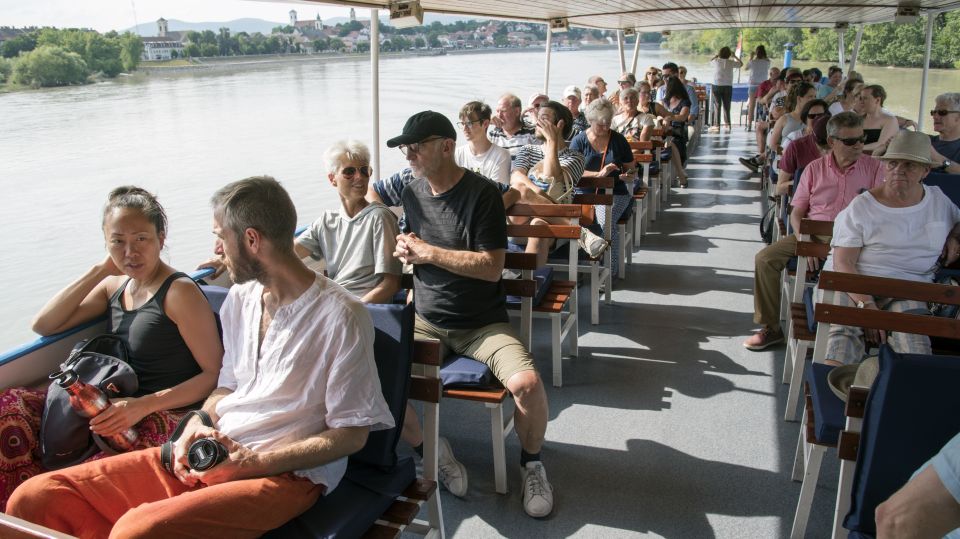
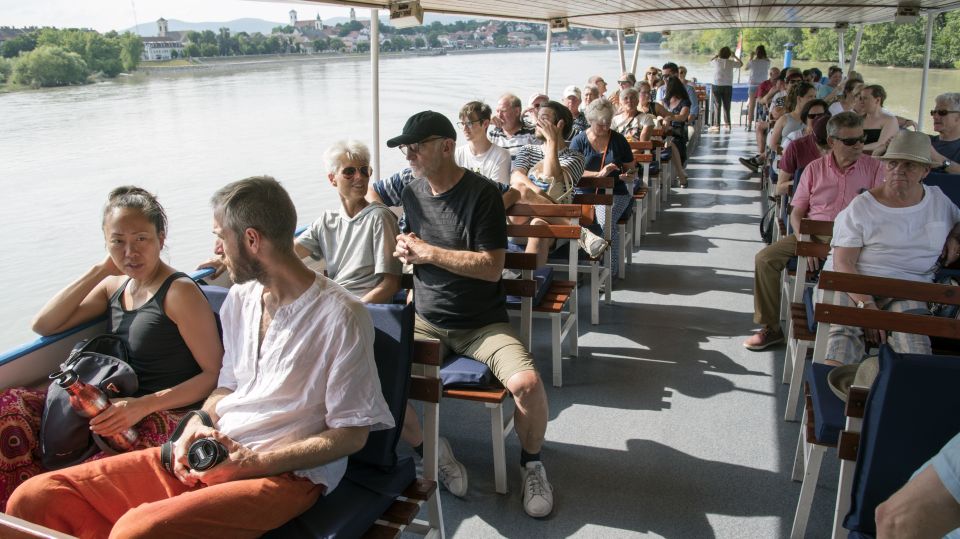
Included with this tour is a boat ticket from May to September, except Mondays. That matters because it breaks the day into something more varied than back-to-back bus rides.
Even when you’re not spending tons of time on the water, a river segment changes your pacing. You go from “walking and listening” to “watching and noticing,” and it gives your eyes a different job—tracking the riverbanks, the bends, and the way the valley narrows.
One more practical note: a few people mention the overall route can include twisting and bumpy stretches of road. If you’re prone to motion sickness, plan ahead. Bringing motion-sickness medication is a smart idea for this kind of itinerary.
Guides, Language Switching, and What You’ll Actually Hear
The tour is built around a live guide, and the guide quality is a major part of why this experience scores well. Different guides have different styles, but the common thread is that you’re getting explanations as you go, with time for questions.
Names showing up in real departures include guides like Vera, Eva, Ana Maria, Mercedes, Szilvia, and Maximo. You can’t guarantee a specific guide, but it’s a good sign that the operation often assigns people with strong storytelling skills and clear group control.
For English speakers, pay attention to one detail: the tour can run in English and Spanish simultaneously. If your group is in English mode, you should get more direct detail in that language. If your departure is split or the guide rotates attention, you may feel the narration shifts at times. Either way, you’ll still get the structure—stop, walk, look, photo moment, then move on.
Price and Value: Is $91 a Good Deal?
At $91 per person for about 8.5 hours, this is priced like a classic “three sights plus transport plus guide” day. The value depends on two things you should check in your mind:
1) You’re paying for guided time and coordination. Without a tour, Visegrád, Esztergom, and Szentendre are doable, but connecting them efficiently from Budapest in one day is the work. This tour handles transport and timing.
2) You’re getting a boat ticket in season, plus river-focused viewpoints. Boat inclusion is a real cost saver during the months it runs. Even if you think you can skip the boat, it still adds a different angle and helps the day feel less like a checklist.
What you’re not paying for: lunch. Some people end up happy with the lunch stop, while others wish it were faster or better timed. Plan for it either way. If you want to protect your energy, consider bringing a snack you can grab quickly if there’s a timing gap.
Practical Tips: How to Enjoy It Without Feeling Rushed
Here’s how I’d prep if you want the best version of this day.
- Wear shoes that handle uneven town stones and short climbs. You’ll be walking close to historic sites and heading up to panorama points.
- Bring a light layer. River towns can feel cooler near the water, and your comfort matters when you’re out for hours.
- Motion sickness support is worth considering. Twisting and bumpy roads can be part of the drive.
- Bring some flexibility around pacing. With three towns, every stop has a defined time window, so don’t plan on exhaustive exploring. Move with purpose: photo first, then settle into the guided walk.
- Bring cash or a card for meals and any optional entry fees. The tour notes that entry fees for some areas (like the Visegrád Royal Residence area) are not included.
Should You Book This Danube Bend Day Trip?
Book this tour if you want a straightforward way to experience the Danube Bend from Budapest in one day, with a guided history thread connecting Visegrád, Esztergom, and Szentendre. It’s a strong choice when you value viewpoints, clear explanations, and a guided route that keeps the day organized.
Skip it if you’re the type who needs long time in one place to feel satisfied, or you hate the idea of an organized schedule. Also, if you’re highly sensitive to road motion, you should plan carefully before you go.
If you want my simple rule: this is a great one-day Hungary outside Budapest pick—especially if you love rivers, cathedrals, and the charm of a town where the streets make you slow down.
FAQ
How long is the Danube Bend Day Trip from Budapest?
The tour lasts about 8.5 hours.
What does the tour cost?
The price is $91 per person.
What stops are included?
You’ll visit Visegrád, Esztergom, and Szentendre.
Is lunch included?
No. Lunch isn’t included.
What languages is the tour offered in?
The tour offers English and Spanish, and sometimes it may run in both languages at the same time.
Is a boat ride included?
A boat ticket is included from May to September, except Mondays.
Where do I meet the group?
Meet at the Cityrama & Gray Line Hungary office.
Can I cancel for a refund?
Yes. Free cancellation up to 24 hours in advance is available for a full refund.
Is the drive bumpy or motion-related?
The route can include twisting and bumpy roads, so if you get motion sickness easily, you may want medication.