REVIEW · BUDAPEST
Budapest Danube Sightseeing Cruise with Unlimited Drinks
Book on Viator →Operated by Silverline Cruises Kft. · Bookable on Viator
Danube cruise time feels like Budapest fast-forward. This 1-hour boat ride gives you a clear view of the city’s biggest sights from the water, plus unlimited drinks from the onboard menu while you take photos. I especially like how the route lines up photo angles for the Parliament Building, Fisherman’s Bastion, and the Buda Castle complex without you fighting traffic or finding parking.
I also like the vibe: the better boats are less crowded, and that matters when you want to move around and frame shots. One possible drawback is that the best views depend a lot on where you sit, since parts of the deck can be covered or limited, and you may not get the exact angle you want if you board later.
In This Review
- Key things to know before you board
- Why a 1-hour Danube cruise saves you time (and energy)
- Where you start at Jane Haining rkp, and how to aim for the best deck spot
- Unlimited drinks: what’s included, what to expect, and how to order smart
- Gellért Hill, Liberty Bridge, and the Hotel Gellért angle from the water
- Széchenyi Chain Bridge and Gresham Palace: the classic Budapest double feature
- Parliament Building from the Danube: how to frame it for real photos
- Fisherman’s Bastion and Buda Castle: the photo hour people usually remember
- Gellért Baths and Gellért Hill Cave: the “souvenir facts” moment
- The river-side science, theatre, and arts stops you can actually spot
- Budapest University of Technology and Economics (BME)
- National Theatre and Müpa Budapest
- Music, timing, and service: the part that can make or break the hour
- Price and value: is $42.05 worth it for your style?
- Should you book this Danube cruise?
Key things to know before you board
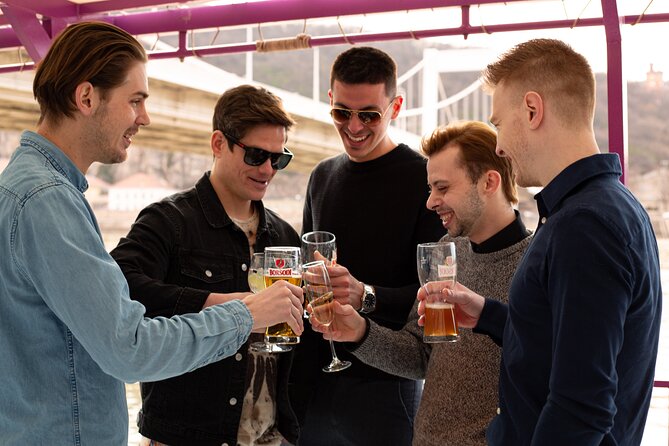
- Unlimited drinks from the drink menu during the cruise, with beer and wine repeatedly showing up as the included baseline
- Great photo opportunities along the Danube, especially around Buda Castle and Fisherman’s Bastion
- A shorter, smarter way to see multiple landmarks in about an hour, avoiding road congestion
- Smaller-than-mass-market groups (max 80 travelers) help with comfort and movement
- Service is usually praised, with some reported hiccups around speed, music start time, or add-on food
- Deck viewing depends on your spot, so arrive early if photos matter to you
Why a 1-hour Danube cruise saves you time (and energy)
Budapest is a walk-and-street-corridor city. That’s great for exploring, but it can also turn sightseeing into a lot of waiting: long crossings, slow traffic, and time wasted getting from one “must see” to the next.
This cruise is built for the opposite feeling. In about an hour, you’re sliding along the Danube while the big-name buildings and bridges come to you. That means you can focus on photos and orientation, and still leave with your legs feeling mostly intact.
The value isn’t just that you see landmarks. It’s that you see them in a way that helps you plan the rest of your trip. After a cruise like this, you usually understand where the river fits into the city, and you’ll know which areas are best to tackle on foot next.
You can also read our reviews of more boat tours in Budapest

Where you start at Jane Haining rkp, and how to aim for the best deck spot
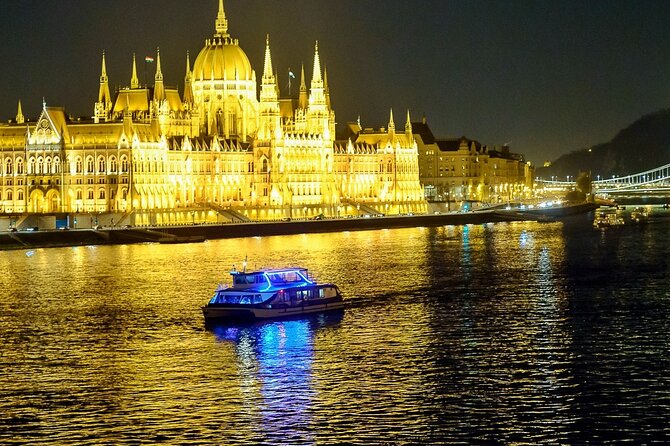
Your meeting point is Budapest, Jane Haining rkp. 11, 1052 Hungary, and the cruise ends back where you started. That makes things simple: you can grab a drink, find your seat, and not worry about a long transfer at the end.
Two practical tips based on what people report:
First, plan to arrive early. If you board later, you can end up in a section of the boat where the view is less open, including spots behind covered areas. One guest described the back half of the boat as having less of a view, so getting your pick of seating really matters.
Second, think about your photo style. If you’re doing smartphone panoramas, you’ll want a clear sightline to the skyline. If you’re okay with framing from a slightly angled perspective, you can be a bit more flexible. Either way, early boarding is the safer move.
Unlimited drinks: what’s included, what to expect, and how to order smart
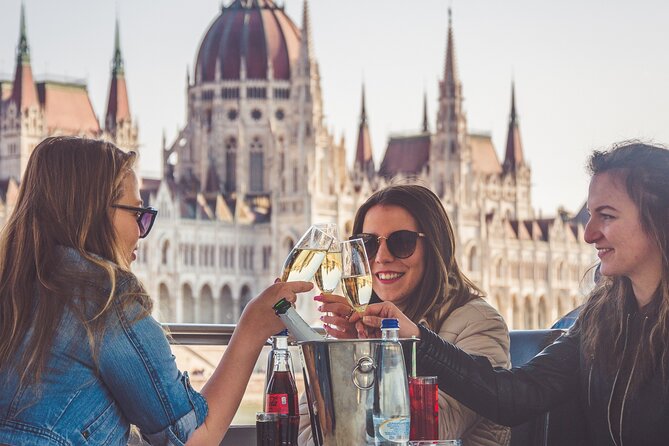
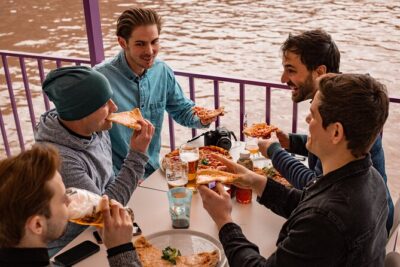
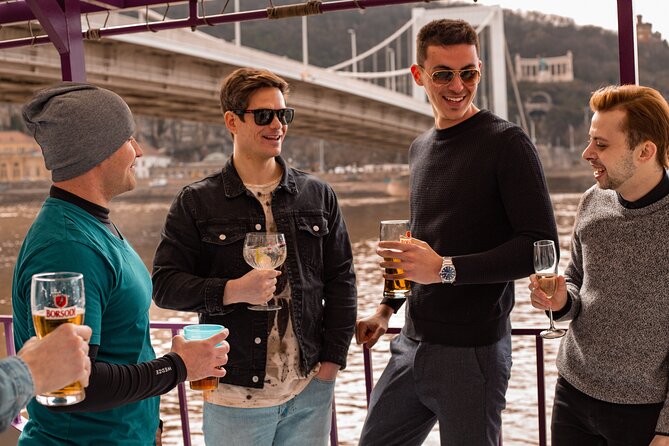
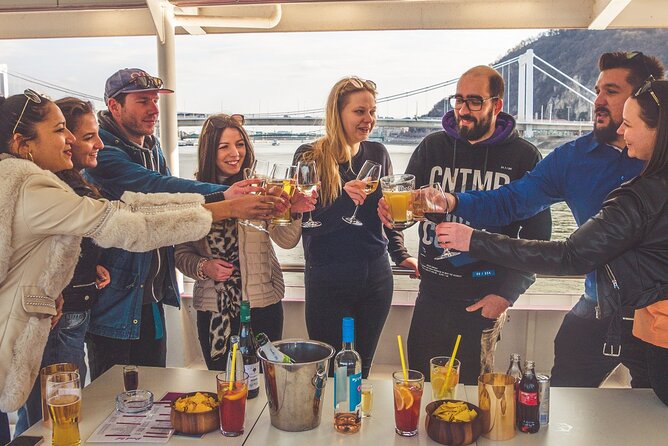
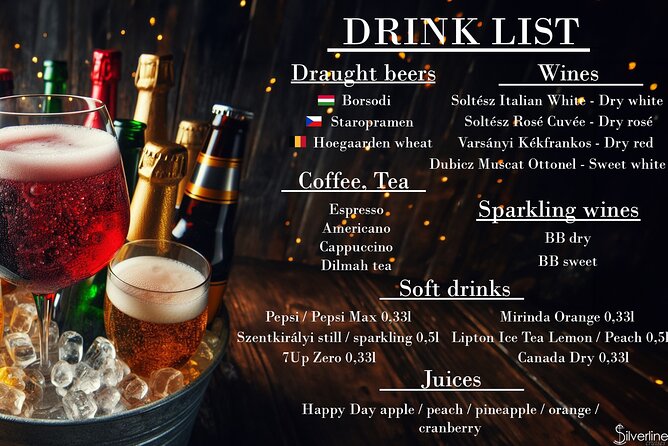
The tour lists unlimited alcoholic beverages from the drink menu. That’s a strong selling point for a cruise where drinks often become part of the experience instead of a separate expense.
Here’s the honest part: several reviews indicate the included base is beer and wine, while cocktails are more complicated. Some guests said cocktails were not available under their package, or that unlimited meant more like unlimited beer and wine plus soft drinks or coffee. That doesn’t make the drink perk useless, but it does mean you should confirm what you personally want to drink before you commit your expectations.
What I’d do on board:
- Start with a quick check of the drink menu when you order your first round.
- If cocktails are important to you, ask what’s included under your package during that first stop at the bar.
- If you’re not picky, lean into wine and beer, since those show up as the most consistently included options.
Also note the operator rules: alcohol is not served to guests under 18, and passengers who appear intoxicated may not be allowed to board. That’s standard for cruises and it keeps the experience safer and more comfortable for everyone.
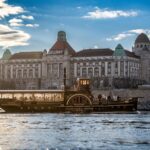
Gellért Hill, Liberty Bridge, and the Hotel Gellért angle from the water
One of the first views is Gellért Hill, a 235 m (771 ft) hill overlooking the Danube. It sits in the 1st and 11th districts, and it comes with more than one reason it looks dramatic from the river.
There’s the landmark feel: the hill rises above the river like a natural backdrop for photos. At the foot of the hill, you’ll see Gellért Square, the Hotel Gellért, and the Gellért Baths, with Liberty Bridge nearby. The tour also notes the Gellért Hill Cave on the hill, facing the hotel and the Danube.
Why this stop matters for you:
- It gives you immediate context. You can identify where Buda side elevation starts and where the river-facing hotel and baths sit.
- It sets up later comparisons. When you see Buda Castle further along, you can read the city’s “layers” along the water.
If you’re the kind of traveler who likes learning what you’re seeing, this is a good moment. The hill is named after Saint Gerard, who was thrown to death from the hill—one of those grim-but-interesting historical details that helps the view feel real, not just postcard-perfect.
Széchenyi Chain Bridge and Gresham Palace: the classic Budapest double feature
Next up is the Széchenyi Chain Bridge, the famous bridge spanning the Danube between Buda and Pest. The tour information highlights the engineering story: it was designed by English engineer William Tierney Clark and built by Scottish engineer Adam Clark. It was also the first permanent bridge across the Danube in Hungary.
From a rider’s perspective, bridges are where a cruise wins. You get a moving perspective that streets can’t match, and you can shoot without constantly repositioning.
Then you glide past the Gresham Palace (Gresham-palota), an Art Nouveau building completed in 1906. Today it’s connected to the Four Seasons Hotel Budapest Gresham Palace, and it sits along the river near Széchenyi Square and the eastern end of the Chain Bridge.
What you’ll notice:
- The architecture looks especially crisp from the water.
- The bridge and palace together create a “front page” Budapest skyline that’s easy to understand and easy to photograph.


Parliament Building from the Danube: how to frame it for real photos
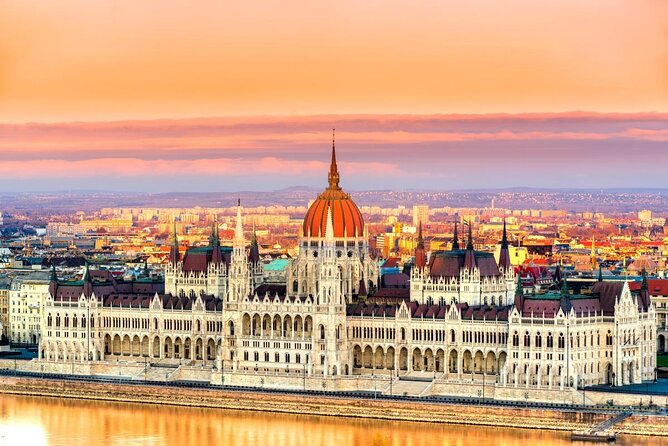
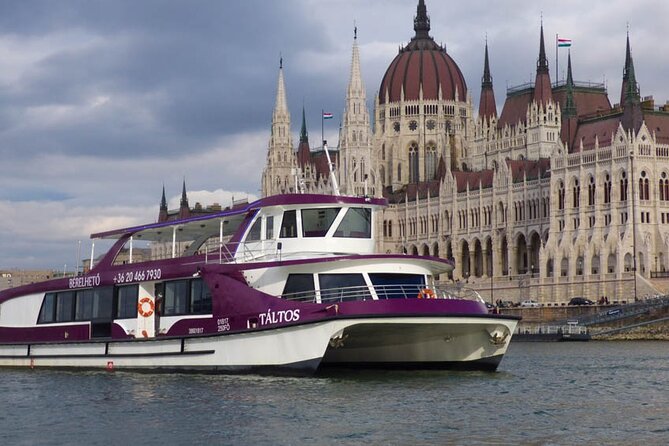
When the Hungarian Parliament Building comes into view, you’re looking at one of the city’s biggest photographic targets. The tour info calls it the seat of Hungary’s National Assembly, located on Kossuth Square on the Pest side, on the eastern bank of the Danube.
It’s designed by Imre Steindl in a neo-Gothic style and opened in 1902. The building is described as the largest building in Hungary since completion, which helps explain why it feels so dominant even from far away.
Practical photo advice:
- Don’t rush to snap the first moment. Wait for the boat’s angle to open up.
- If you’re on a less open section of the deck, raise your aim slightly. The details are vertical, so your framing benefits from a higher sightline.
- If you want a “river plus monument” shot, hold your camera steady when the Parliament is centered in your view.
Also, don’t ignore what’s happening around the Parliament. This is where you can clearly see the Danube as the city’s spine: it separates the two sides while also stitching them together visually.
Fisherman’s Bastion and Buda Castle: the photo hour people usually remember
No cruise review about Budapest escapes this part. You approach the Buda side and Fisherman’s Bastion (Halászbástya) is near Buda Castle in the 1st district. The tour info notes it’s one of the best-known monuments, loved for the panorama from Neo-Romanesque lookout terraces.
The description gives you specific visual cues:
- Fisherman’s Bastion’s main façade runs about 140 meters.
- It includes seven high-pitched stone towers that symbolize the seven chieftains of the Hungarians who founded Hungary in 895.
Then you move along to Buda Castle (Budavári Palota), the royal palace complex. The historical timeline is part of why it looks layered: it was first completed in 1265, while the major Baroque palace you recognize today was built between 1749 and 1769. The complex now houses the Hungarian National Gallery and the Budapest History Museum.
Why this segment is so valuable:
- It’s the moment you see Buda Castle in a way that feels grand, not just distant.
- Even if you later visit the sites on foot, the cruise helps you understand how the castle complex sits above the river and why certain viewpoints feel so dramatic.
Drawback to keep in mind: some parts of the boat can limit your deck angle, so you might not capture the exact “perfect” angle if you didn’t choose your seat early. If photos are your priority, treat boarding time like it’s part of the experience.
Gellért Baths and Gellért Hill Cave: the “souvenir facts” moment
After the big skyline pieces, you get a more grounded sense of Budapest’s identity through the Gellért Baths area. The tour info describes the bath complex as built between 1912 and 1918 in the Secession Art Nouveau style and rebuilt after WWII damage.
It also includes a long timeline for the healing-water story: references go back to the 13th century. During the Ottoman Empire, baths were built there too. The “magical healing spring” was used by the Turks in the 16th and 17th centuries. The name Sárosfürdő is explained as meaning muddy bath, linked to the mineral mud settling at the bottom of pools.
From the water, you likely won’t be able to appreciate every architectural detail, but you’ll get something equally useful: a sense of where the baths belong in the city. If you want a thermal-bath day later, the cruise helps you pick the right neighborhood without guesswork.
Gellért Hill Cave is also mentioned on the hill. If you like linking views to stories, this is one of those moments where the sight becomes more than just scenery.
The river-side science, theatre, and arts stops you can actually spot
Budapest isn’t only castles and cathedrals. This cruise route also points out a few modern-ish icons that help the city feel current, not frozen in time.
Budapest University of Technology and Economics (BME)
The Budapest University of Technology and Economics (Budapesti Műszaki és Gazdaságtudományi Egyetem, BME) is highlighted as founded in 1782 and described as one of the earliest places in Europe to train engineers at university level. The tour notes it has eight faculties, 110 departments and institutes, and a sizable international student presence.
Why it’s here: it’s a reminder that Budapest’s riverfront isn’t only for sightseeing. It’s a living corridor with education and work happening right beside the Danube.
National Theatre and Müpa Budapest
You also pass the National Theatre, originally opened in 1837. The current National Theatre building opened March 15, 2002, after the organization moved through several locations over time.
Nearby is Müpa Budapest (Palace of Arts), opened in March 2005 and designed by the architectural office Zoboky, Demeter and Partners. It’s close to Rákóczi Bridge and sits as part of a larger Millennium City Center area being created around the theatre complex.
Why you’ll care: these buildings show you Budapest’s cultural identity at full scale. From the water, you can spot the cluster and understand that this isn’t just a tourist district. It’s a real hub for performances and events.
Music, timing, and service: the part that can make or break the hour
Most people seem to treat this cruise as a fun, easy night-or-afternoon activity. The overall rating is strong, and the strongest repeated praise is about staff friendliness and the drink service being on top of things.
A few small-but-real patterns show up in the reviews you provided:
- Many guests said drinks were served often, with staff checking in during the cruise.
- People also praised the cozy feeling, even in colder weather, which suggests the boat setup works for seasons.
- Some named staff members like Zoltan and Vincent, described as excellent and helpful.
At the same time, there are a couple of red flags worth knowing so you aren’t surprised:
- In one case, a guest said they weren’t served for the first 25 minutes and that orders after that were slow.
- Another report said a coffee machine was broken when they asked for coffee.
- A few reviews mention that music didn’t start until late in the cruise.
So here’s the balanced take: for most visitors, the cruise runs smoothly and feels good. For a smaller number, the experience can lag if the bar or ship operations hit problems. You can reduce the odds of disappointment by arriving early, ordering your first drink right away, and staying flexible about timing.
Price and value: is $42.05 worth it for your style?
At $42.05 per person for roughly an hour, you’re paying for three things: time saved, access to the river views without planning your own transport loop, and that unlimited drinks perk.
That’s good value if you want:
- a straightforward highlight tour
- a social vibe with drinks
- quick photo stops along a packed sightseeing stretch
It might not feel like a bargain if you’re expecting unlimited everything in every category. The drink package appears to center on beer and wine in practice, with cocktails possibly limited depending on what’s offered under your package. If cocktails are your main goal, confirm the menu first so you don’t end up thinking you bought one thing and got another.
Also consider where you want to spend your money. If you already planned a full day on foot and just want a quick river view, this is a fine add-on. If you’re building your entire Budapest itinerary around paid tours, make sure you’re choosing this for its strengths: speed, views, and drinks.
One last note on group size: the maximum is 80 travelers. That’s not huge, and reviews often describe it as less crowded than other boats, which is exactly what you want for moving around with your camera.
Should you book this Danube cruise?
If you want Budapest highlights with minimal friction, I think this cruise is an easy yes. You get a tight timeline, multiple landmark backdrops, and the drink perk that helps the hour feel like a real hang-out instead of a stiff “tour bus but on water” event.
Book it if:
- you value river views and want the castle-and-Parliament skyline in one go
- you like social energy and don’t mind that the best seats are first-come
- you’re happy with the likely included drink mix of beer and wine
Skip it or ask extra questions before booking if:
- cocktails are your main target and you want certainty on which drinks are covered
- you’re very sensitive to slow service or you expect perfect logistics
- you’re traveling with a need for kid-friendly late-night sailing, since night cruises are noted as not child-friendly
If you do book, my best advice is simple: show up early for the deck, check the drink menu at your first order, and plan to use this as your orientation moment for the rest of Budapest.